
Missed calls cost you money, and pulling staff to answer the phone costs you speed. Restaurants lose an estimated $20 billion annually to missed calls, and the average restaurant misses about 32% of calls between 5 and 8 p.m. The ones that do get answered pull someone off the floor. This comparison covers the best AI phone answering systems for restaurants to find which ones close the loop from order to payment without adding manual work. Here's the full breakdown.
TLDR:
An AI phone answering system is a voice-powered agent that picks up your restaurant's phone calls and handles them start to finish, without a human on your end. A caller can say "a large pepperoni and a Caesar salad for pickup in 20 minutes," and the system confirms the order and sends a clean ticket to the kitchen.
A QSR Magazine analysis by Loman's CEO estimates the cost of unanswered restaurant calls at $20 billion annually. See how missed calls drain restaurant revenue at a single location.
Here's what separates these systems for restaurant operators:
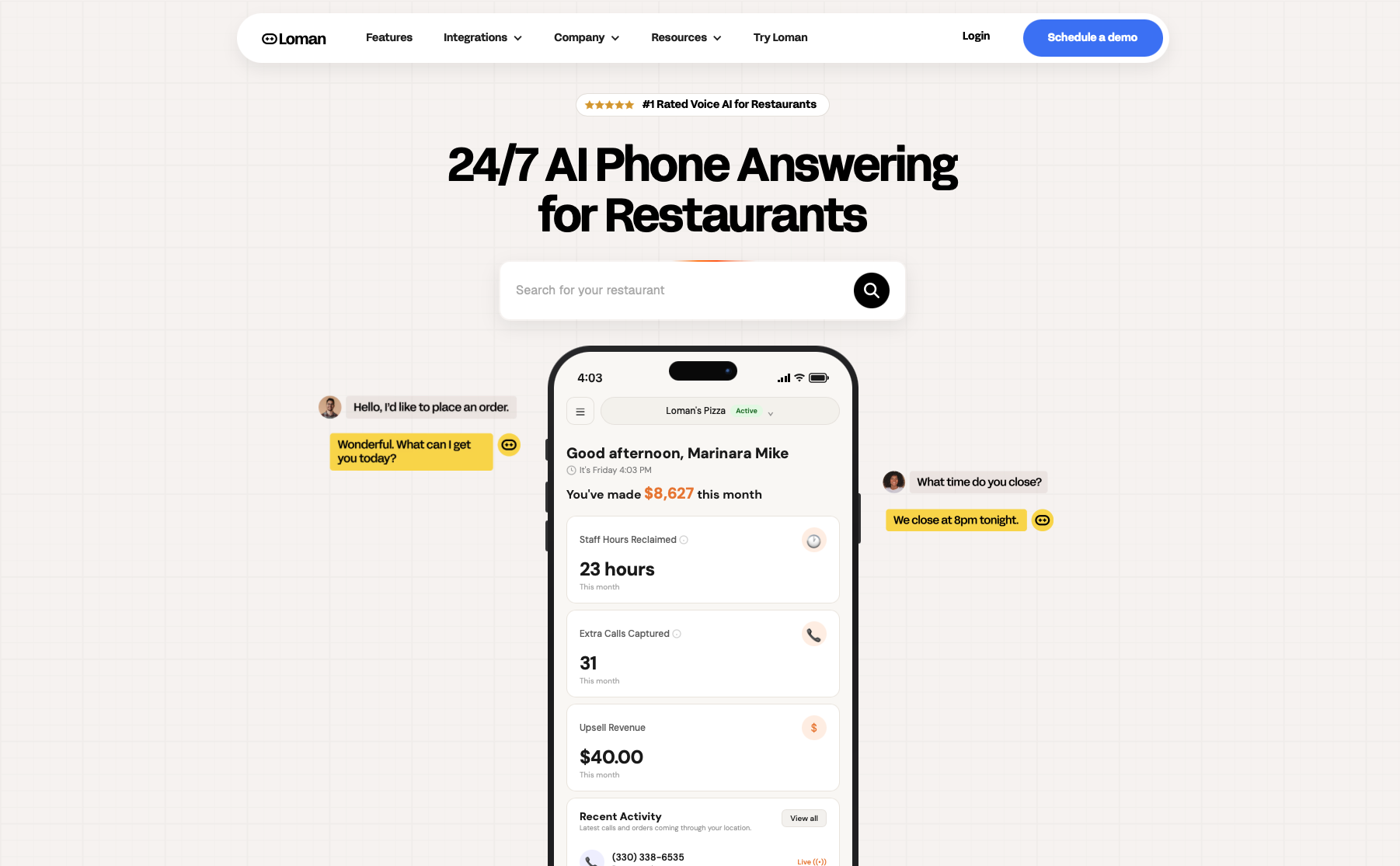
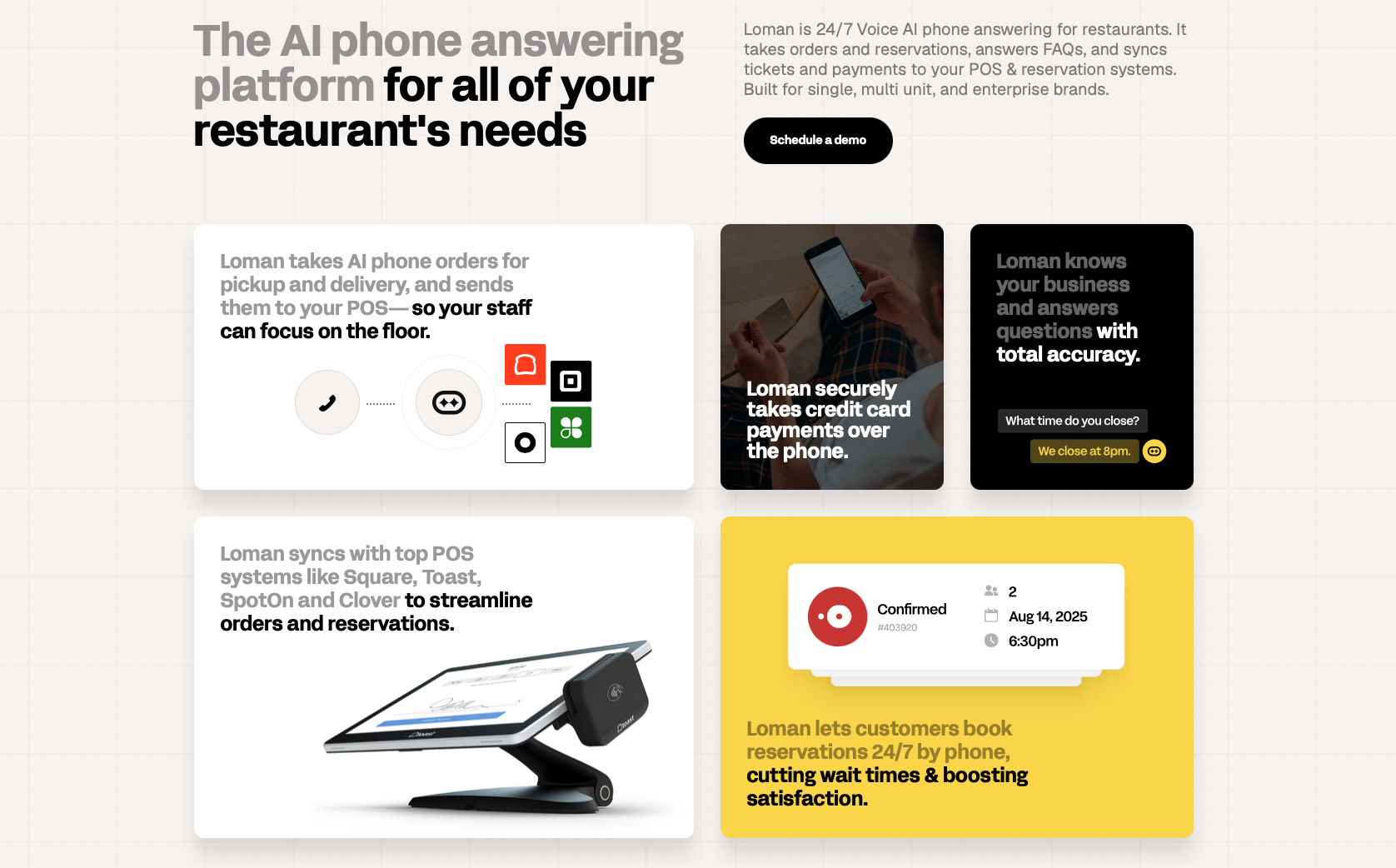
Loman is a voice AI phone agent built for restaurants that lose revenue every time a call goes unanswered. It answers calls instantly, takes orders, handles reservations, and responds to FAQs without a human on the line.
Where basic answering systems stop at message-taking, Loman upsells. It suggests add-ons, confirms orders, and routes complex requests to staff. Operators using Loman report up to a 23% increase in revenue per order, plus lower labor costs.
Most restaurants go live in under 24 hours, no coding or IT required. Loman supplements your existing POS by connecting directly to it (see how restaurant AI POS integration works), so orders flow without manual re-entry.

Revmo is an AI phone answering system built for restaurants and hospitality businesses. It handles calls, menu questions, phone orders, and reservations without staff picking up the phone. For a deeper look, see the full Loman vs. Revmo comparison.
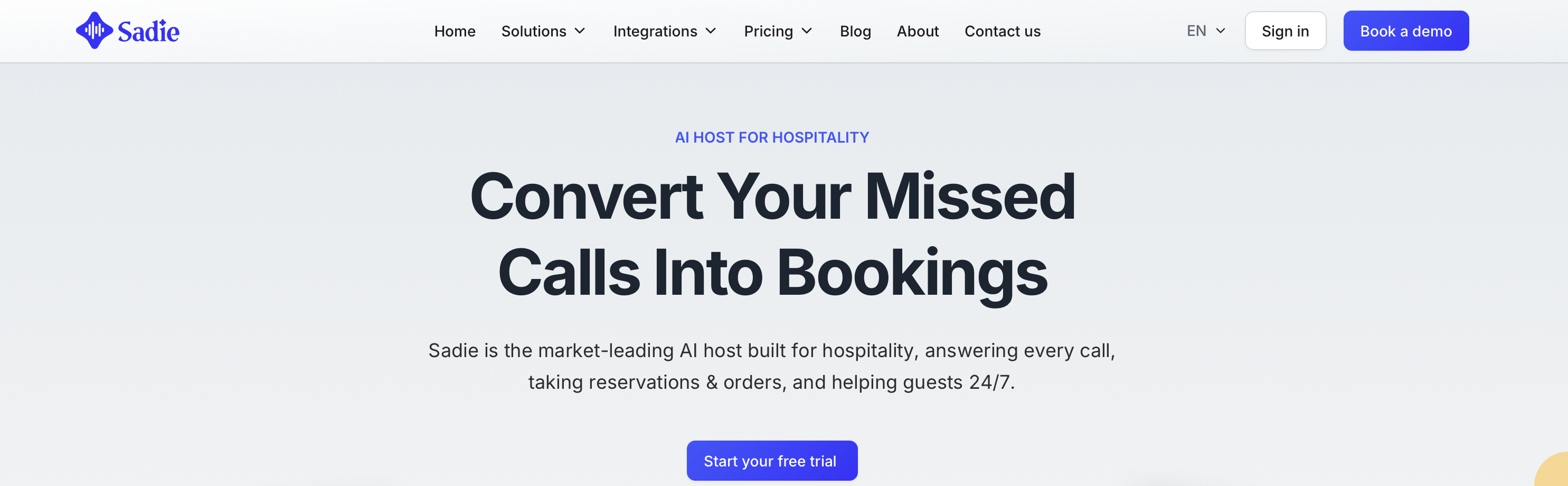
Sadie is an AI voice host for hospitality, owned by Valsoft and headquartered in Montreal. Its OpenTable integration (announced September 2025) positions it for reservation-driven venues that want fewer interruptions at the front desk.
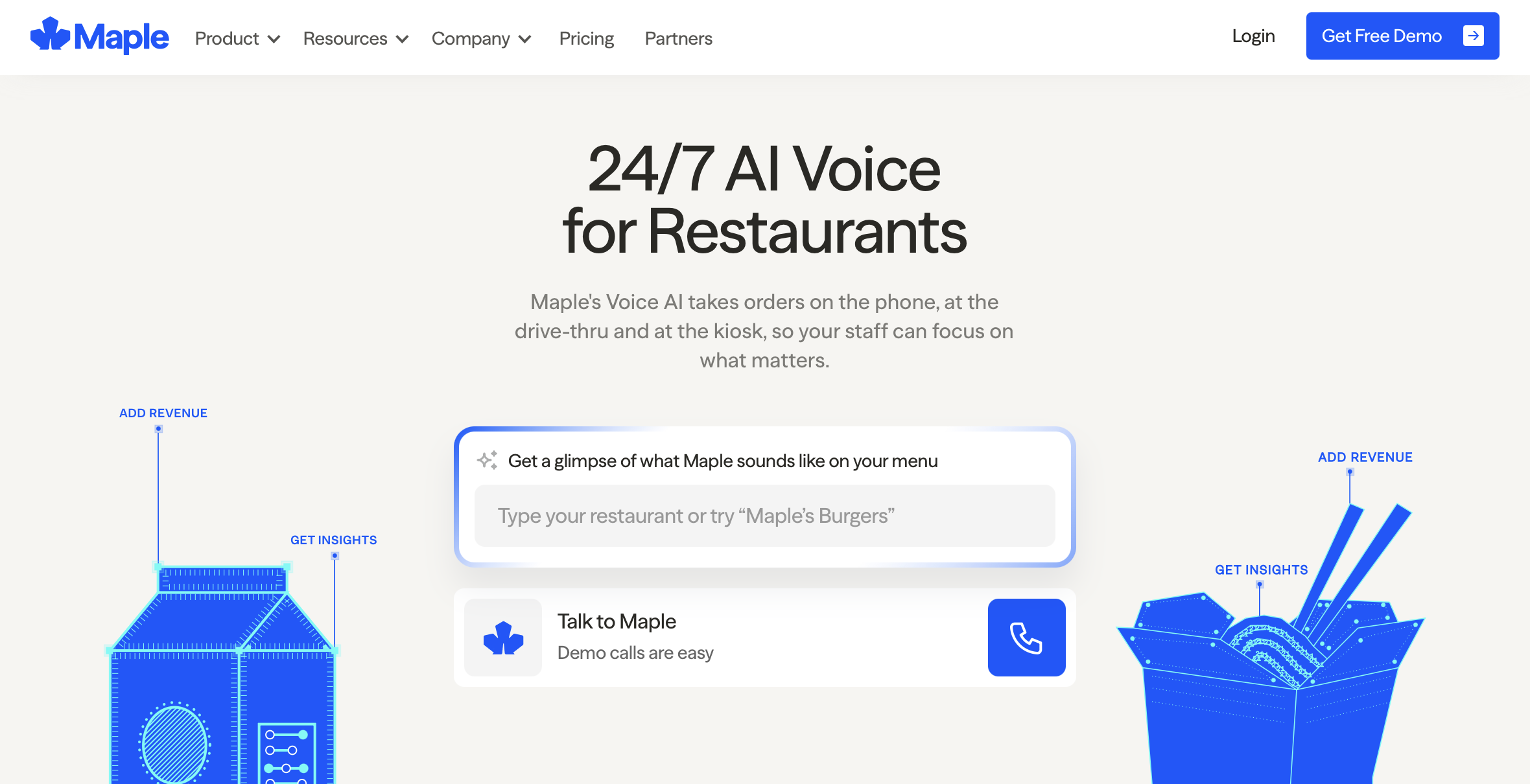
Maple is the budget-friendly entry point in this category for independent restaurants and small chains with moderate call volumes and straightforward menus, launched in December 2023 and having handled 1.2 million calls across 1,000+ merchant locations through November 2025, according to Maple's own call report.
Maple's Voice plan covers answering and FAQs only. Ordering, reservations, upselling, and phone payments come with the higher-priced Pro plan, so restaurants should price the tier they need. Multi-location management sits in a custom-priced Enterprise plan.
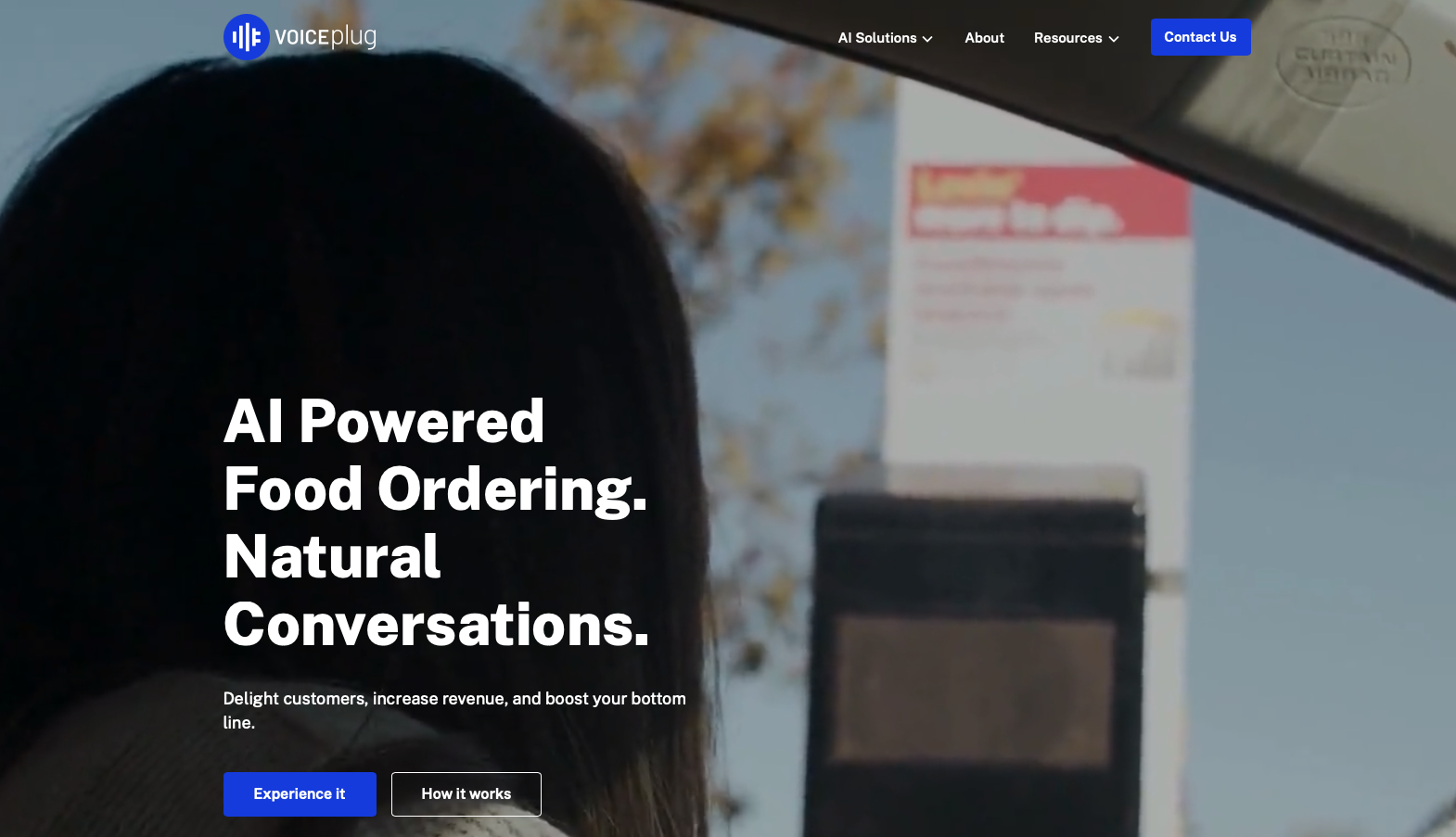
VOICEplug AI is built for the restaurant industry, focusing on voice ordering across phone, drive-thru, and kiosk channels. It also offers a separate ReserveVOICE product for reservations, and it handles complex menu customizations including build-your-own and half-and-half items. For more on VOICEplug AI pricing and alternatives, including how it stacks up against other options, see the full review.
| System | Order-Taking | Payment Processing | POS Integration | Reservation Management | Setup Time |
|---|---|---|---|---|---|
| Loman | Full menu orders, upsells built in | Takes cards over the phone, syncs to POS | 9 native integrations (Toast, Square, Clover, SkyTab, Aloha by NCR, SpotOn, Olo, Stream, OpenTable) | Books, modifies, cancels with real-time sync to OpenTable, Resy, and SevenRooms | Under 24 hours |
| Revmo | Phone orders, reservations, and FAQ handling | Phone payment described in Revmo materials; confirm POS sync | Toast, Olo, Square | Syncs with OpenTable, SevenRooms, and Resy | Quick; no public timeline |
| Sadie | Reservations and inquiries; takeaway orders on a separate plan | Card collection by text message; confirm in-call capability | Direct POS integration on the Orders plan | Reservations, confirmations, reminders via OpenTable (announced Sept. 2025) | Under 24 hours (Sadie-reported) |
| Maple | Takeout orders and catering inquiries (Pro plan) | Secure phone payment (Pro plan) | Toast, Square, Clover, Shift4 (Pro plan) | Real-time OpenTable sync; multi-location management on Enterprise plan | White-glove onboarding; timeline not publicly listed |
| VOICEplug AI | Phone, drive-thru, kiosk with complex modifiers | Not publicly advertised | POS integrations claimed; partners not publicly named | ReserveVOICE with real-time OpenTable sync | Days, not months (VOICEplug-reported) |
The comparison table shows where each system differs. Revmo and Sadie cover reservations and orders, with details that vary by plan and integration. Maple, the budget-friendly option, adds orders and phone payments on its Pro plan. VOICEplug AI covers phone, drive-thru, kiosk, and reservation channels, and describes onboarding as days, not months.
Loman handles the full phone transaction, from the first ring to a paid order sitting in your POS, backed by 9 native restaurant integrations and live in under 24 hours. No manual re-entry, no gaps, no calls that slip through uncaptured.
The numbers speak clearly: operators using Loman report up to 22% higher phone revenue and up to a 17% drop in labor costs, and Crust Pizza's owner says Loman paid for itself in 10 days. Your phone line should be an asset. Loman makes it one.
The National Restaurant Association's State of the Restaurant Industry 2026 report found that 26% of operators are now using AI related tools, yet only 6% are using AI for customer orders. That gap tells you where most restaurants still are: aware of the technology, not yet extracting revenue from it.
Pricing has also come down to a range independent restaurants can budget for (Loman starts at $199 a month with no per-minute charges). Restaurants still routing calls to a busy staff member are competing against locations that answer every call instantly and complete the order without human involvement. The real question is which system closes the full loop from call to paid order.
Before the Q4 rush hits, run three checks on any system you're considering: how many calls it can take at once, whether it takes a card payment on the call itself, and whether the order lands in your POS and KDS without someone re-typing it. Place a test call using your own menu. The strongest systems go live in under 24 hours, so there's time to test before your next rush.
Loman closes the full call, from greeting to paid order, with native POS integration (Toast, Square, Clover, SkyTab, Aloha by NCR, SpotOn, Olo, Stream) and setup in under 24 hours. Maple (the budget-friendly option), Revmo, and Sadie also take orders or reservations, but payment options, POS sync, and plan tiers vary, so compare them against your own menu. Loman starts at $199 a month with no per-minute charges.
Loman integrates natively with Olo, so phone orders flow into your Olo-powered POS and KDS and use Olo's menu data for availability, modifiers, and pricing. VOICEplug AI also supports single locations and enterprise chains, but it does not publicly name its POS partners, so confirm Olo compatibility.
Multi-location chains need consistent call handling and menu rules across every unit. Loman offers native integrations with Olo, Toast, Square, Clover, SkyTab, Aloha by NCR, and SpotOn, with most restaurants live in under 24 hours and no coding or IT required. VOICEplug AI supports location-based routing and shared menus for chains, but it does not publicly name its POS partners, so confirm compatibility. The budget-friendly Maple fits independent groups with moderate takeout volume.
Speech recognition turns the caller's words into text, then a language model matches items and modifiers against your live POS menu. The agent confirms the order, takes card payment on the call, and sends the ticket to your POS and KDS. Requests outside its scope route to staff.
Most of the best AI phone answering systems cover part of the job and leave the rest to your staff. Loman is a voice AI phone agent that closes full orders on the call, takes payment, and sends clean tickets to your POS. Most restaurants go live in under 24 hours with no coding or IT, and with Loman, your phones stay calm while your team stays on the floor during every rush. See it in action with your menu.
Enter your information in the form to receive a call from Loman and place an order like a customer would!

