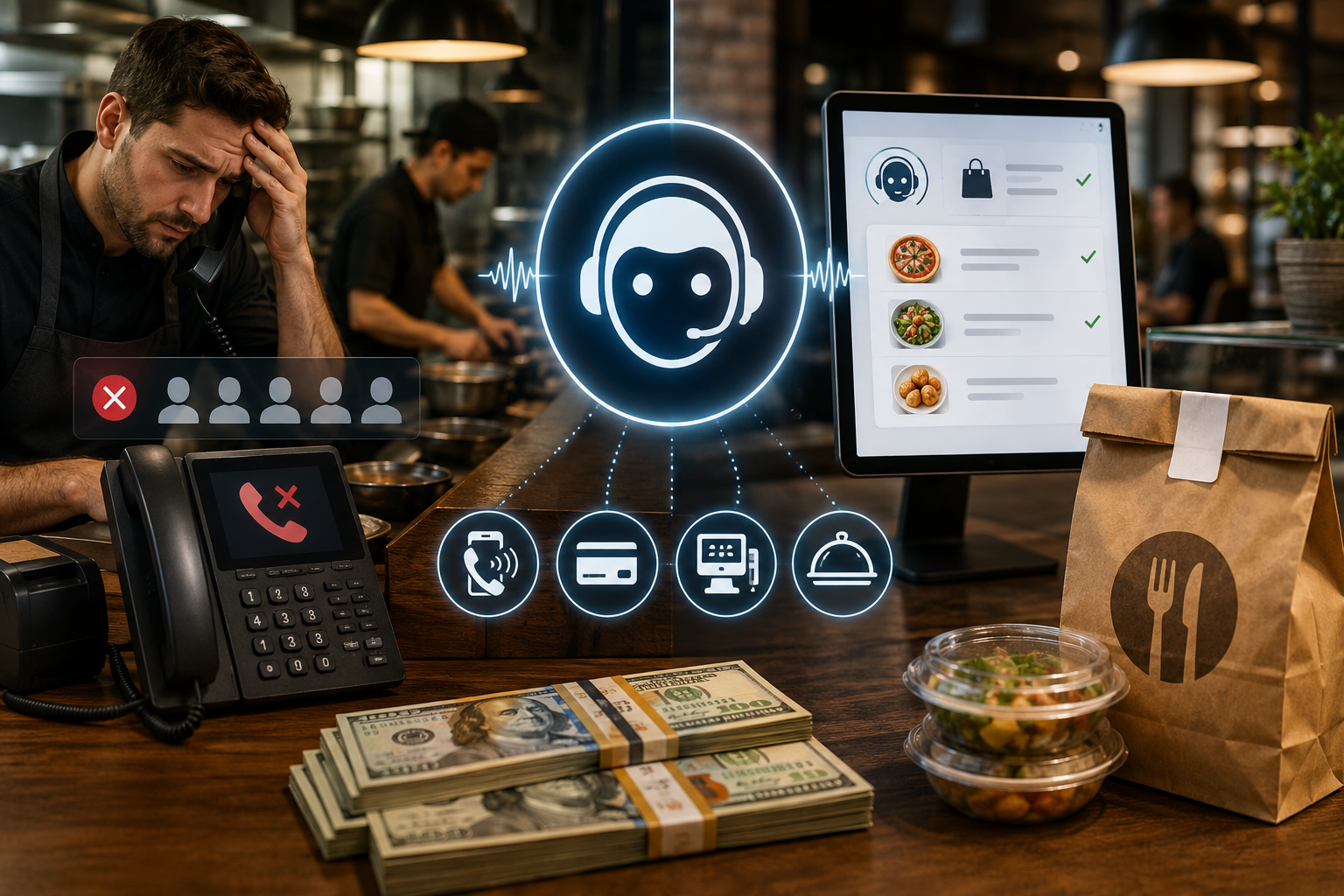
The lunch and dinner rushes are when your phone rings most and when your team has the least capacity to answer. Each missed call represents between $35 and $85 in lost revenue, and many callers will not try again. When you add up the missed calls restaurant revenue from the 150 to 400 calls a typical location drops every month, that's $5,250 to $34,000 walking out the door. A QSR Magazine analysis estimates the U.S. restaurant industry could be losing roughly $20 billion annually from unanswered phone calls. Your Friday-night voicemail queue is one small piece of a documented national drain.
TLDR:
Do the math and it gets uncomfortable fast. Every unanswered ring carries a price, landing somewhere between $35 and $85 per missed call once you account for order value and how often callers were ready to buy.
Here's how the number builds. Roughly 60% of missed restaurant calls come from people trying to place an order or book a table, not wrong numbers or vendors. Assuming a realistic 70% conversion rate and an average takeout order of $38, the math quickly shows where the leak starts. One missed call is a customer who wanted to spend money and couldn't.
Stretch that across a month and the damage compounds. A restaurant missing 150 to 400 calls could be walking away from $5,250 to $34,000 in revenue. That's not a rounding error on a P&L. That's a line cook's salary, gone to voicemail.
The phone rings hardest at the exact moment nobody can grab it. Calls cluster around lunch and dinner, with the windows between 11 AM and 1 PM and again from 5 PM to 7 PM pulling most reservation, order, and inquiry calls, according to restaurant VoIP data.

Those same hours are when your counter is buried. A staffer ringing up a walk-in cannot also take a five-topping order over the phone, so something gets dropped. Usually it's the call.
This compression matters because peak hours carry the revenue. Restaurants can pull two to three times more per hour during a rush than in slow stretches, with peak hours driving a disproportionate share of annual revenue. The phone goes unanswered precisely when each call is worth the most.
Zoom out from your own four walls and the pattern holds nationwide. A QSR Magazine analysis estimates restaurants collectively could be losing roughly $20 billion annually because of unanswered calls. The problem you feel on a Friday night plays out across hundreds of thousands of dining rooms.
The average restaurant misses around 150 calls a month. Run the same intent and conversion assumptions from earlier across a full year, and that works out to about 756 lost orders per location annually. Not abstract leakage. Actual tickets that never reached your kitchen.
So when your counter staff watches a call ring out during the dinner rush, that moment is one data point in a documented national drain. The math scales whether you want it to or not.
The hang-up is where the real damage starts. A caller who gets voicemail or a busy signal rarely waits, and most never try again. Research frequently attributed to BIA/Kelsey suggests roughly 85% of callers whose calls go unanswered do not call back. They scroll to the next name in their search results and order there instead.

That next restaurant gets more than one ticket. If the food lands and the experience is good, you have handed a competitor a regular. The Friday-night order you lost was the cheap part. The standing Friday habit that could have followed is the expensive part.
Voicemail does not save you here. Hungry people calling at 6:30 want an answer, not a callback queue. When no one picks up, the decision is already made by the time they hang up.
Not every order weighs the same on your bottom line. A phone order and a third-party delivery order can carry identical menu items and still land in different spots on your P&L.
Phone orders tend to run larger. Industry figures put the average phone ticket around $48 versus roughly $41 for online orders, a premium that adds up fast across a week of volume. Callers ask questions, hear an upsell, and add the garlic knots.
Then there's the fee gap. Third-party commissions typically run 15% to 30%, but real costs often reach 30% to 40% per order once service charges and promotions fold in, according to 2026 delivery fee data.
| Channel | Average ticket | Typical fees taken |
|---|---|---|
| Phone | ~$48 | No third-party commission |
| Online direct | ~$41 | Low processing only |
| Third-party delivery | Varies | 30% to 40% all-in |
So a missed call rarely vanishes. It reappears on DoorDash, stripped of margin and handed to an app that now owns that customer.
The obvious fix is to throw a body at the phone. The math kills that idea before the shift starts.
Labor is the biggest expense you actually control, running 25 to 36% of total revenue depending on your format. Among full-service operators surveyed nationwide, salaries and wages including benefits hit a median of 36.5% of sales in 2024.
Add a part-timer just to cover peak-hour calls and you push that percentage into territory where the dinner rush stops being profitable. A phone-only hire works two-hour windows twice a day, sits idle in between, and still draws a wage plus payroll tax. For many restaurants, hiring additional staff just to answer phones during peak service can put even more pressure on already tight labor margins.
The constraint is real. You cannot hire your way out of missed calls without eating the margin those calls were supposed to protect.
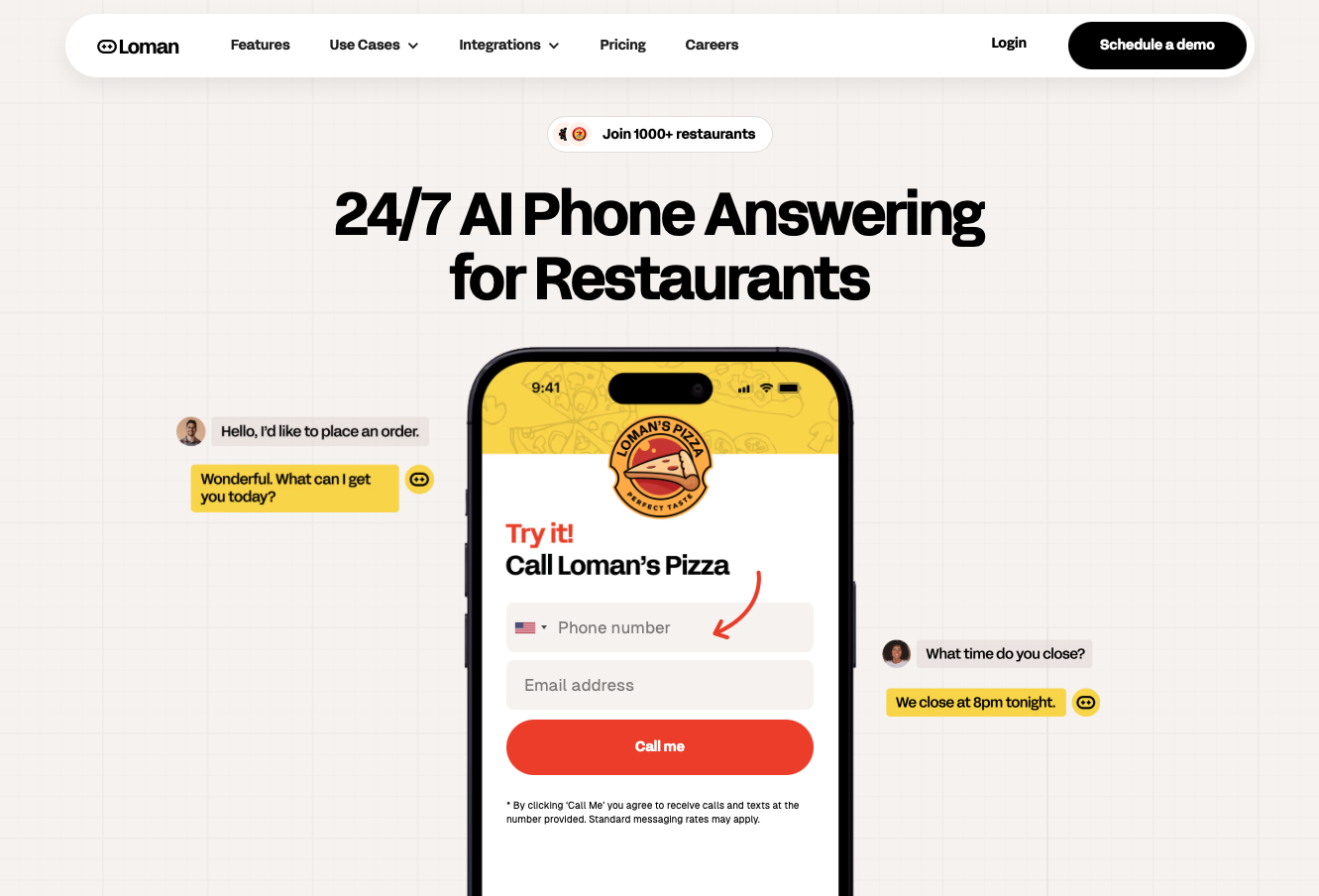
Here is where the constraint breaks. Loman answers every call instantly, takes complete pickup and delivery orders, processes payment during the call, and pushes tickets straight into your POS and kitchen display. Every modifier, every special request, and every upsell prompt lands clean in the same ticket your kitchen sees. No re-keying, no missed items. When five calls come in at once during the dinner rush, Loman handles all five while your staff works the floor.
The setup math works differently than adding a hire. A phone-only staffer costs a wage, payroll tax, and two productive windows per shift. Loman goes live in under 24 hours and starts at $199/month, a fixed number that holds whether your phone rings twenty times tonight or two hundred. It reads your live menu so it never quotes an item you've 86'd, upsells on its own, and answers at 11:58 PM on a Saturday the same way it does at noon on a Tuesday.
The results stack up across locations. Operators using Loman report up to 22% higher phone revenue and up to 17% lower labor costs. Tony Boloney's captures 75 to 100 extra orders per month per location, a number that compounds fast for multi-unit operators. Midland Pizza Co. would lose $200,000 yearly without it. Little Italy cut labor costs by over 24%, and Decheco's runs with one fewer person in front while increasing revenue and cutting costs at the same time.
Restaurants missing 150 to 400 calls per month could be walking away from $5,250 to $34,000 in lost revenue, with each unanswered call carrying a price between $35 and $85 once you account for order value and caller intent. Roughly 60% of missed calls come from people trying to place orders or book tables, and roughly 1 in 7 callers call back after an unanswered call.
Yes. Voice AI answers every call instantly, takes complete orders, processes payment during the call, and pushes tickets straight to your POS, starting at $199/month instead of a variable hourly wage. Restaurants using Loman report up to 22% higher phone revenue and up to 17% lower labor costs, with some adding 75 to 100 orders per location monthly.
Industry research suggests roughly 85% of callers whose calls go unanswered do not call back. They scroll to the next restaurant in their search results and order there instead. You lose more than one ticket when that happens; if the food lands and the experience is good, you've handed a competitor a regular customer and the standing order habit that could have followed.
Phone orders average $48 versus $41 for online orders, and third-party delivery app costs can reach 30% to 40% once commissions, processing fees, promotions, and other costs are included. A missed call rarely vanishes. It reappears on DoorDash, stripped of margin and handed to an app that now owns that customer.
Labor already runs 25 to 36% of total revenue for most restaurants, with full-service operators hitting a median of 36.5% when benefits fold in. A phone-only hire works two-hour windows twice a day, sits idle in between, and still draws a wage plus payroll tax, pushing you past the ceiling where dinner rush stops being profitable.
You already know the phone rings hardest when your team is buried. The cost is not theoretical once you count how many of those calls were customers ready to order, and that gap between missed calls restaurant revenue and captured tickets is exactly what Loman closes. Loman answers every call, takes payment during the call, pushes the order straight to your POS, and costs less than adding dedicated peak-hour phone coverage. Phones stay calm, tickets get bigger, and the revenue that used to walk out the door stays in your kitchen. See it live and watch how fast it pays for itself.
Enter your information in the form to receive a call from Loman and place an order like a customer would!

