
Dinner rush exposes the same weak spot in most restaurants: the phone. While your team handles guests and keeps service moving, calls stack up, get missed, or sit on hold long enough for customers to hang up and order elsewhere. AI phone answering removes that pressure by picking up every call instantly, capturing orders accurately, and processing payments without pulling staff away from the floor. It keeps service focused, prevents lost revenue, and gives operators a more controlled way to handle peak demand.
TLDR:
Restaurants handle a constant flow of incoming calls, with volume surging during lunch and dinner service. When phones ring during peak hours, staff must choose between answering calls or serving guests in the dining room.
43% of restaurant calls go unanswered. For many callers, an unanswered phone means they're already calling the next restaurant.
The issue intensifies during busy shifts. A server taking a phone order can't greet the family waiting to be seated. A host managing the door can't walk a caller through the catering menu. Each call pulls attention from the dining room, creating delays that frustrate both phone and in-person guests.
Multi-line systems help, but only to a point. When three or four calls arrive simultaneously, someone still waits on hold. Human staff can only handle one conversation at a time.

Every missed call is lost revenue. Restaurants lose 23% of potential phone orders to busy signals, long hold times, and staff who can't reach the phone.
A restaurant missing 20 to 30 calls weekly loses between $300 and $450 per week. That's $15,600 to $23,400 annually in lost phone orders.
These figures assume a $15 to $20 average ticket. For restaurants with higher check averages or more missed calls during peak hours, losses multiply. A single busy Friday night can mean five or six unreturned orders now going to competitors.
Callers who reach voicemail rarely call back. AI phone answering captures every inbound call without pulling staff from their work.
Customer patience for phone hold times has collapsed. 91% of customers expect to be on hold for 3 minutes or less, but 59% hang up after a minute or less.
Diners accustomed to one-click ordering won't spend three minutes listening to hold music. They'll hang up and open DoorDash.
AI phone answering provides instant pickup, accurate menu knowledge, and order completion without hold time. The system handles each caller immediately while maintaining conversational flow. Staff still handle complex requests and relationship building, while AI captures every order when customers are ready to place it.
| Metric | AI Phone Answering | Traditional Phone Handling (Staff) |
|---|---|---|
| Call Answer Rate | 100% of inbound calls answered on the first ring, regardless of volume or time of day | 43% of calls go unanswered during peak hours when staff are occupied with in-person guests |
| Hours of Operation | 24/7 availability including late nights, holidays, and after close - captures bookings and orders around the clock | Limited to staffed hours; phones go unanswered or reach voicemail outside of business hours |
| Simultaneous Call Capacity | Handles unlimited concurrent calls with no hold times or busy signals | One conversation at a time per staff member; multi-line systems still require a human to pick up |
| Order Accuracy | Captures every modifier, substitution, and special request in full - syncs clean tickets directly to POS and KDS | Subject to mishearing, rushed note-taking, and manual re-entry errors, especially during busy shifts |
| POS Integration | Native integrations with Toast, Square, Clover, SpotOn, Aloha, Olo, and Stream push orders to kitchen displays automatically | Staff must manually enter phone orders into the POS, adding time and introducing potential for input errors |
| Staff Impact | Removes phone duties entirely from floor staff, letting servers, hosts, and line cooks stay focused on in-person service | Every phone call pulls a staff member away from the dining room, disrupting service flow and table attention |
| Revenue Impact | Restaurants report recovering $15K-$23K annually in previously missed call revenue, with 22% average revenue gains | Missed calls, hold abandonment, and after-hours gaps cost the average restaurant hundreds of dollars per week |
Over half of restaurants now use AI in their operations or plan to within the next year, with adoption climbing 7 percentage points year over year. Phone answering has become the primary entry point because the use case is simple: answer every call, take orders, book reservations.
Results show up immediately in recaptured revenue and reduced staff interruptions. When your restaurant picks up on the first ring while competitors put callers on hold, you capture orders that would have gone elsewhere. When you answer at 10 PM while the pizza shop down the street closed their phone line at 9, you win that late-night order.
Diners increasingly encounter voice AI when calling restaurants, and acceptance is high when the system works smoothly. The question for operators is no longer whether to adopt, but how quickly they can implement before competitors answer every call first.
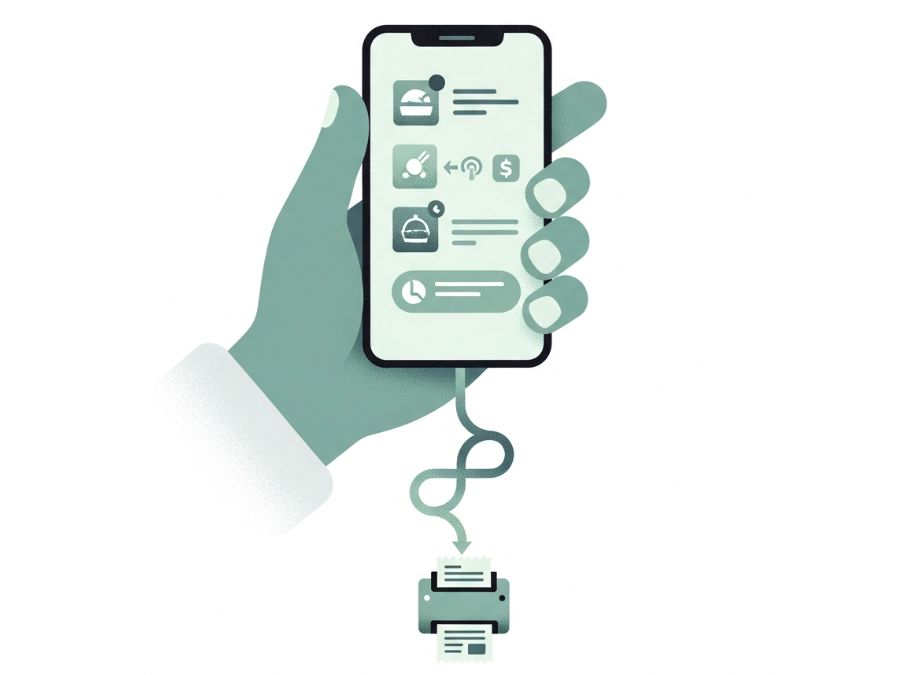
AI phone answering handles the entire order lifecycle from first ring to kitchen ticket. The system captures orders with menu customizations, processes payments, and syncs tickets directly to kitchen displays without requiring staff to touch a notepad or POS terminal.
When a caller orders a pizza with no onions, extra cheese, and requests it well done, the AI records each modifier and routes the complete order to the kitchen. The system recognizes menu items by multiple names, asks clarifying questions for ambiguous requests, and manages substitutions that vary by location.
During natural conversation pauses, the AI suggests relevant add-ons based on order patterns. A prompt for garlic knots appears when the current order matches high-performing combinations, increasing average ticket size through contextual recommendations instead of scripted pressure.
Restaurants close at night, but customer calls don't stop. Many reservation calls come in after staff leave, and each missed call sends potential revenue to competitors answering around the clock.
AI phone answering captures bookings during closed hours. A caller at 11 PM books Saturday dinner, a corporate coordinator places a catering order at 6 AM, and weekend brunch reservations get confirmed on Tuesday night when your team is off.
After-hours calls often mean higher revenue. Catering inquiries bring larger tickets than individual orders, and advance reservations fill prime-time slots that drive better table turns and revenue per seat.
Phone interruptions fragment staff attention throughout service. Every time a server stops mid-task to answer a call, they lose momentum in preparing food well, greeting guests promptly, and maintaining table service.
Restaurant answering services save a lot of time monthly by eliminating phone duties from staff workflows. Hosts can focus on seating and managing wait times instead of juggling the phone. Line cooks stay in rhythm. Servers give undivided attention to the dining room.
The gains compound during peak hours. When your team isn't scrambling to grab the phone between tickets, orders move faster and guests receive better service. Kitchen flow improves when cooks aren't deciphering voicemail transcriptions or asking servers to clarify rushed phone orders.
Multi-unit restaurant groups need brand consistency across locations without losing local flexibility. AI phone answering centralizes menu management while allowing per-location customization.
Franchise operators manage core menu items across all properties through a single dashboard, then customize location-specific hours, seasonal specials, and regional pricing. Each store keeps its local phone number while routing calls through the same AI system trained on brand standards.
When a Chicago location runs a deep-dish promotion unavailable in Phoenix, the AI recognizes which number the caller dialed and presents the correct offer. Holiday closures, temporary shortages, and local delivery zones update independently without affecting other properties.
AI phone answering connects to your POS without replacing current workflows. Native integrations with Toast, Square, Clover, SpotOn, Aloha, Olo, and Stream send completed orders directly to kitchen displays as if staff entered them manually.
Setup takes under 24 hours. Authorize the connection through your POS dashboard, import your menu, and map modifiers to match your system's item structure.
Reservation sync works through direct OpenTable integration. Phone bookings appear immediately in your reservation book alongside walk-ins and online reservations.
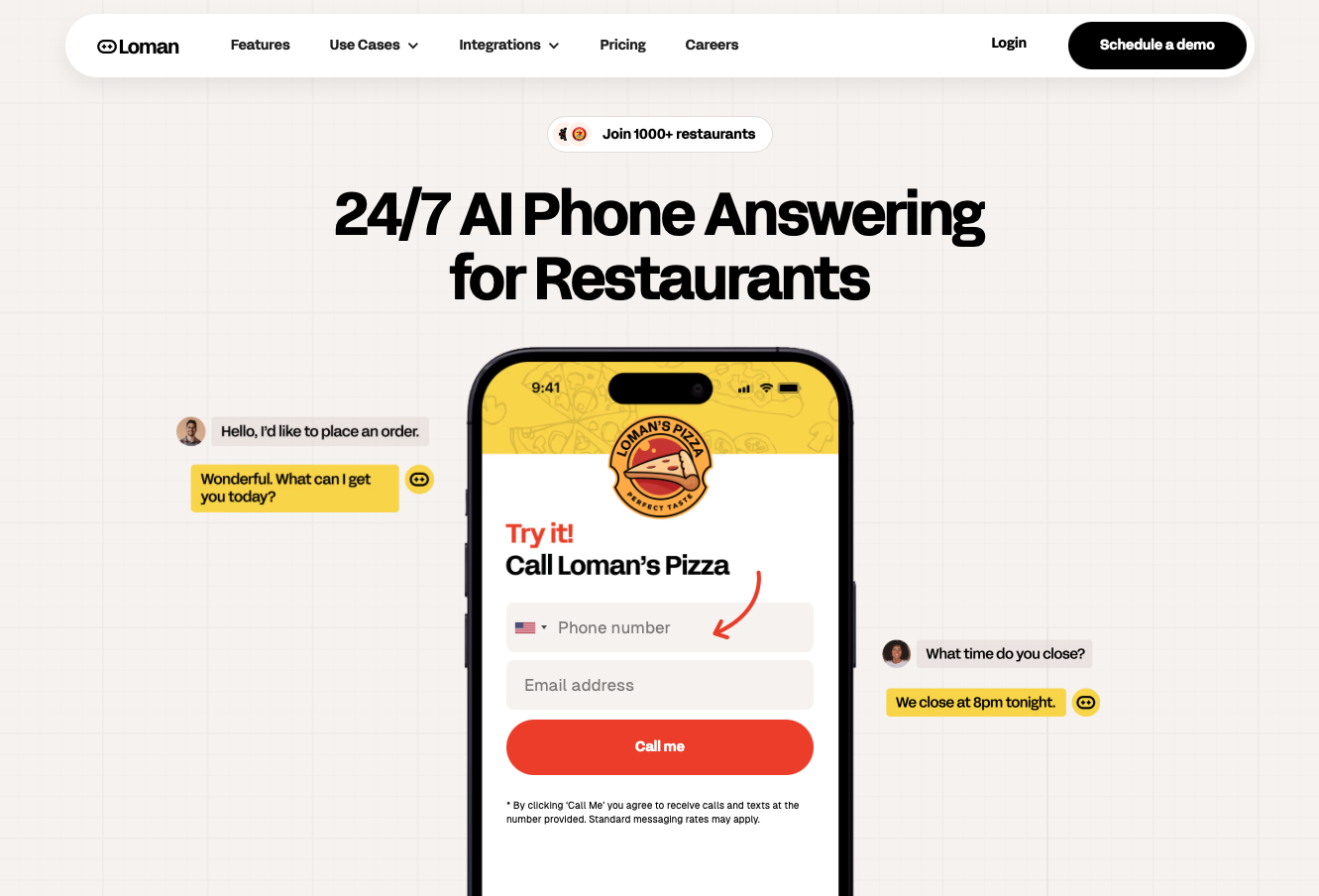
If you want these results without a long implementation cycle, Loman AI is the most direct route. It’s a 24/7 voice-AI phone agent built for restaurants, designed to answer every call instantly, take full pickup and delivery orders, process secure payments, and sync clean tickets directly into POS systems like Toast, Square, Clover, SpotOn, Aloha, Olo, and Stream.
It handles unlimited simultaneous calls, books and manages reservations, answers menu and allergen questions, quotes wait times, supports multiple languages, and recognizes repeat customers, all while keeping staff focused on in-person guests.
Most restaurants go live in under 24 hours, with white-glove onboarding that handles menu imports, greetings, and configuration for each location. Multi-unit groups can manage shared menus with store-specific overrides, track performance trends, and maintain consistent guest experience across locations.
If your restaurant relies on phone orders, reservations, or high call volume, this is the simplest way to eliminate missed calls and replace unpredictable phone labor with a fully consistent, always-on system.
Yes, AI phone answering captures complete orders including customizations like "no onions, extra cheese, well done." The system recognizes menu items by multiple names, asks clarifying questions, and syncs detailed tickets directly to your kitchen display.
Multi-location groups manage core menus through one dashboard while customizing hours, specials, and pricing per store. Each location keeps its local number, and analytics roll up across properties so you can benchmark performance and replicate what works.
Yes, native integrations with Toast, Square, Clover, SpotOn, Aloha, Olo, Stream, and OpenTable send orders and reservations directly into your current workflows. Orders appear in your kitchen queue exactly as if staff entered them manually.
Busy services no longer have to come with missed calls and lost orders. AI phone answering keeps every call covered, captures orders with accuracy, and lets your team stay focused on guests instead of juggling the phone. Loman AI brings this into one place with always-on call handling, built-in payments, and direct POS sync, giving restaurants a reliable way to keep revenue flowing even when the line is out the door.
Enter your information in the form to receive a call from Loman and place an order like a customer would!

