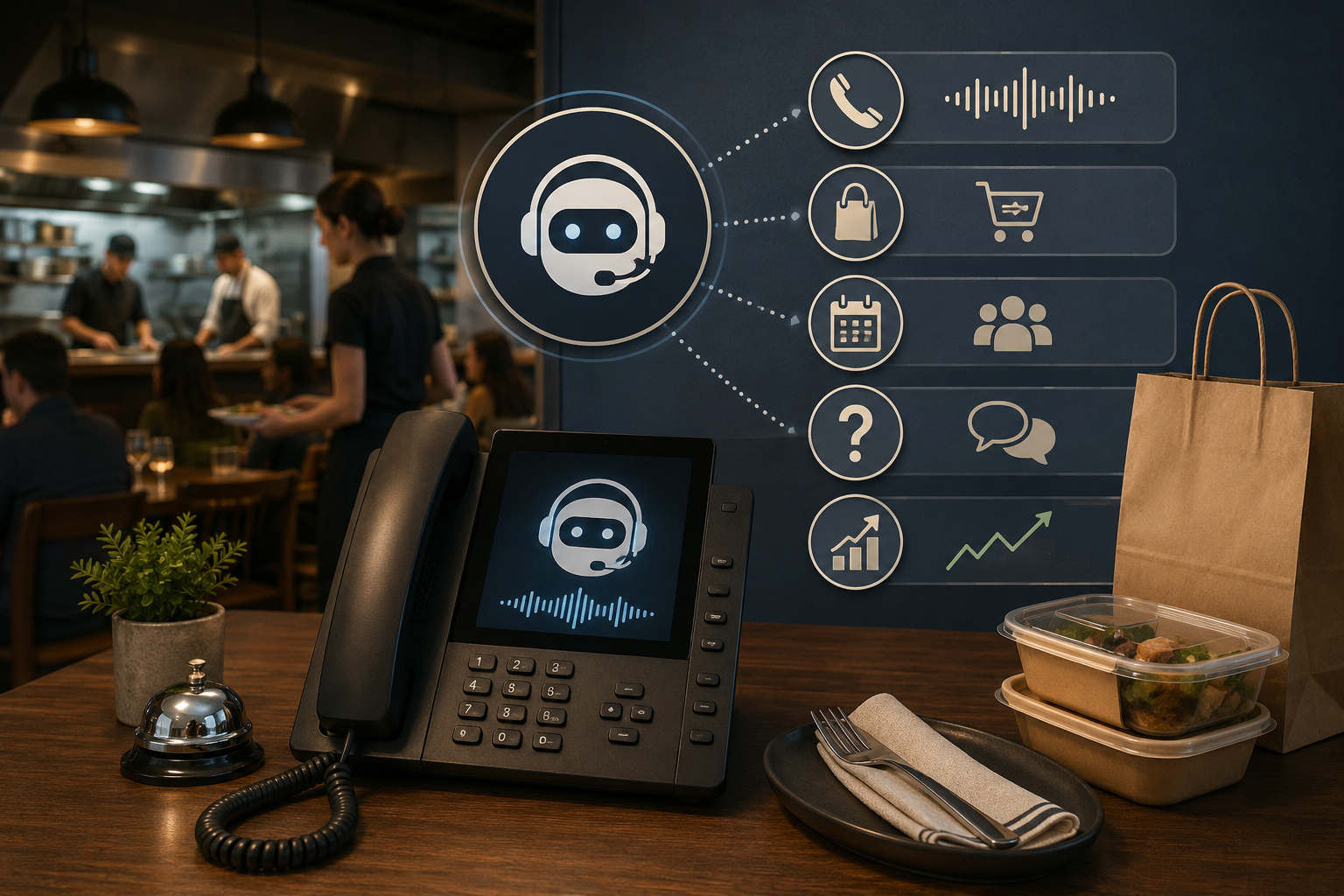
I'll be frank, restaurant labor cost reduction in 2026 is harder than it looks on paper. Wages are up, the labor pool is thin, and turnover keeps resetting your training costs. Schedules help, cross-training helps, but the phone keeps pulling your floor staff away from the work you're actually paying them to do. That's the piece a lot of operators are finally fixing, and it's showing up in the numbers.
TLDR:
Labor cost is more than the hourly wage on a paycheck. Most operators undercount it, which is why the P&L number rarely matches what leaves the bank account. Before you can trim it, know every piece that rolls in:
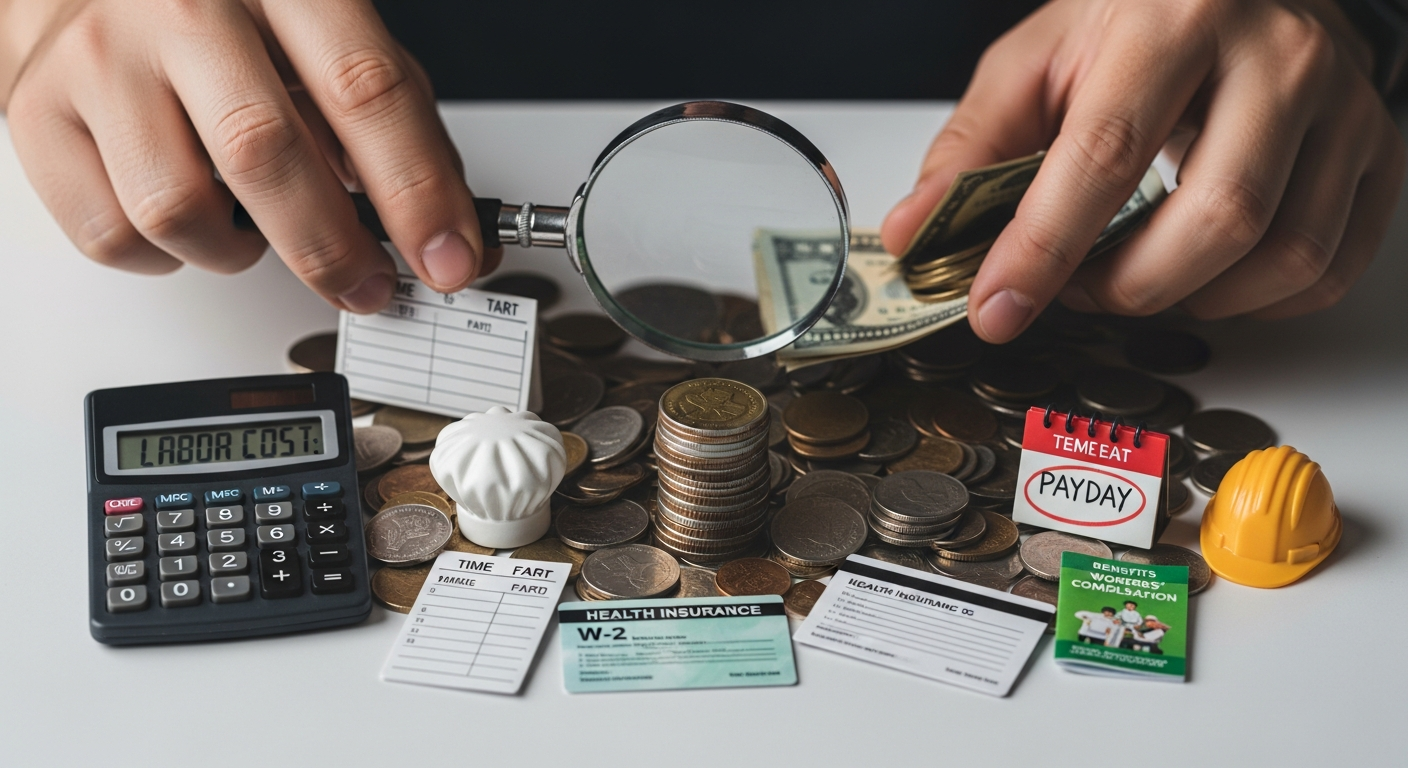
The wage line is what everyone watches. The rest is where the number quietly balloons. A cook earning $18 an hour can cost well north of $22 once the additions stack up. Count all of it, or your labor percentage will lie to you. And missed calls draining restaurant revenue compound the problem from the other side.
Start with the formula. You can run it on today's numbers:
Labor cost percentage = (total labor cost / total revenue) x 100
Say you paid $9,000 in wages, taxes, and benefits last week against $30,000 in sales. That works out to 30%. Run it weekly, since one slow week can push the ratio somewhere your monthly average hides.
What counts as healthy depends on your format. Across full-service respondents to the National Restaurant Association's survey, salaries and wages including benefits hit a median of 36.5% of sales in 2024.
| Restaurant segment | Typical labor cost percentage |
|---|---|
| Quick-service | ~25% |
| Casual dining | 25 to 30% |
| Fine dining | 30 to 35% |
Those segment ranges give you a benchmark. If your number sits above the band for your format, that gap is where the savings live.
Your rising P&L number is not one bad quarter. Three forces push it, and none ease off in 2026.
Wage inflation stuck around after the pandemic. Full-service labor costs continued to rise between 2020 and 2025, driven by wage growth and ongoing labor shortages.
Minimum wage law adds a floor that keeps rising, with rates going up across many states this year. When the legal minimum moves, everyone above it expects a bump too.
Then there is the staffing shortage. Fewer applicants means more overtime for the people you have, and overtime carries the steepest premium on the schedule.
These higher labor costs are structural, baked into the market you hire in.
Every server who quits costs you long after the last shift. The wage stops, but the replacement bill starts, and it lands in categories the P&L rarely labels clearly.
Churn in this business runs high. In 2025, the average restaurant employee turnover rate topped 75%, so most operators rehire for the same roles more than once a year.
Each exit carries a price. Turnover runs $5,864 per employee, with roughly $821 going to training alone. The rest hides in recruiting, onboarding, and a new hire working slower than the person who left.
That last piece is the sneaky one. A cook still learning your ticket rhythm plates fewer covers per hour and makes more mistakes, so you pay full wage for partial output until the learning curve flattens.
Treat turnover as a line item you can measure, and it stops looking unavoidable. Cutting restaurant costs with AI phone agents is one lever that pays back quickly once the full labor picture is clear.
Most schedules get copied from last week and tweaked by feel. That habit overstaffs slow Tuesdays and leaves Friday dinner scrambling. Your POS already holds the fix.

Pull sales by day and day-part over the last several weeks, then match labor to the revenue curve instead of a flat headcount. A few concrete moves before the next pay period:
Schedule to the forecast, and you stop paying full coverage for empty hours.
One person who can run the register, bus tables, and take a phone order covers three gaps a single-role hire cannot. That flexibility keeps a callout from turning into overtime for everyone else.
Cross-training lets you schedule to demand instead of role, and AI restaurant staff productivity tools extend that flexibility further. A few places to start:
Fewer bodies, wider coverage, less scramble when someone doesn't show.
Overtime rarely gets planned. It gets approved mid-shift, when someone stays late to cover a rush nobody scheduled for, and the premium hits the books before you notice. One approved hour at time-and-a-half looks harmless. Repeated weekly, it quietly lifts your labor percentage past the band for your format.
The habit to build is a weekly overtime review:
Overtime is a symptom. Read it as a scheduling signal, and it stops compounding, a point worth revisiting in any restaurant automation vs. human labor cost-benefit analysis.
Repetitive tasks eat hours that never touch a guest. The right tools claw those hours back. Most operators already run some of them:
Phone answering sits at the frontier. Only 9% of restaurants use AI answering systems today, though 44% are planning or considering adoption. That gap is where the next labor savings hide, and the phone is where it starts.
Peak service is exactly when inbound calls are most likely to interrupt your staff. During the rush, someone stops what they are doing to answer, and a table waits or an order gets missed. Let it ring out and the revenue walks. See how AI phone agents prevent missed calls for the full breakdown.
An AI phone agent takes that call off your staff. It picks up every ring, takes pickup and delivery orders, books reservations, and answers the routine questions that eat floor time:
Judgment calls still route to a human. A furious caller or a large catering negotiation transfers live or gets captured with full context.
The realistic outcome is a front of house that stops absorbing phone interruptions, so the same headcount covers more tables. That reclaimed time is where the labor savings start. The mechanics behind AI automation boosting restaurant staff productivity show how the hours add up.
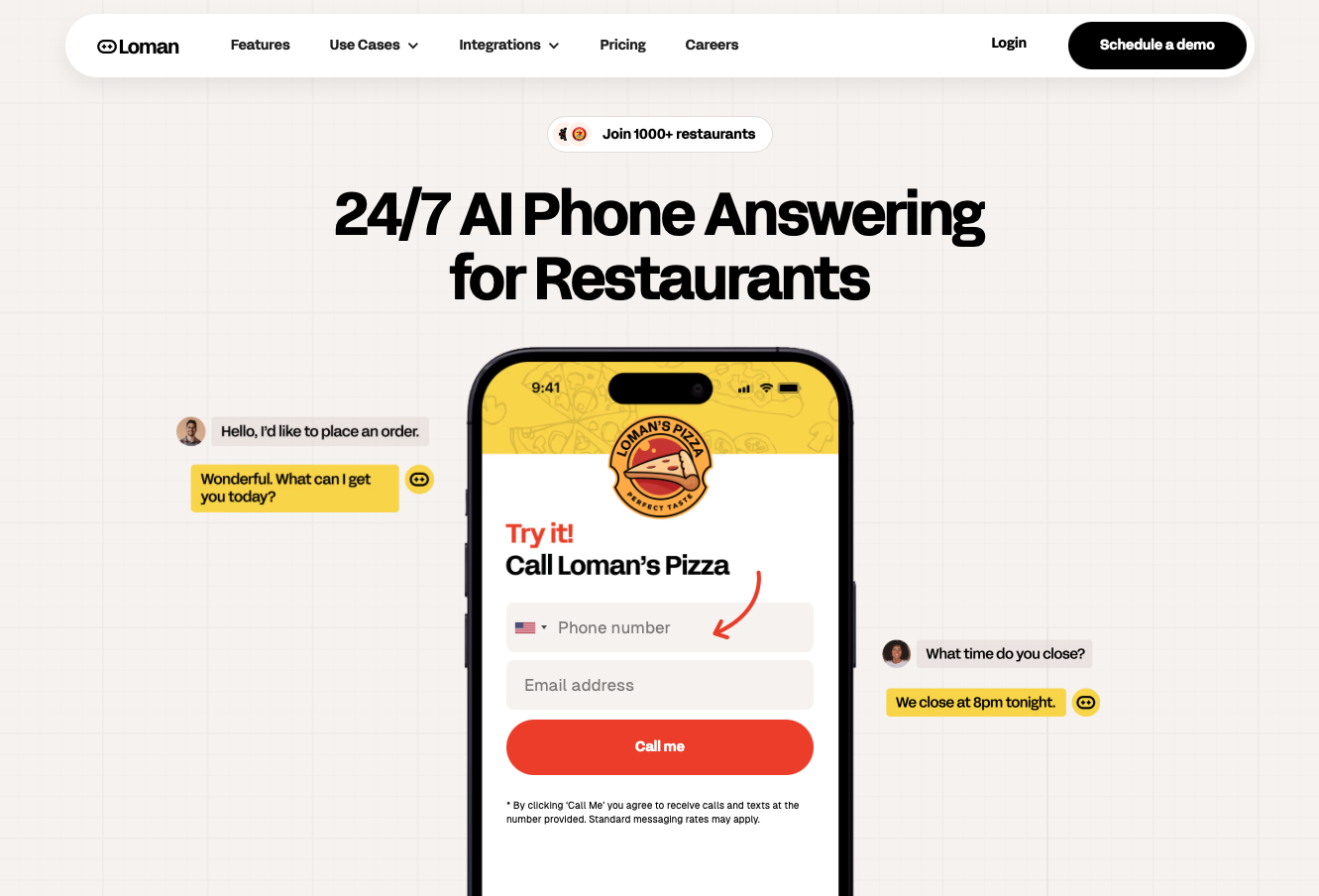
Loman AI answers every inbound call around the clock, takes full pickup and delivery orders, books reservations, and handles the routine questions that pull staff off the floor: hours, menu items, allergens, and wait times. Every ticket pushes straight into the POS. Toast, Square, Clover, SpotOn, and five other named partners connect directly, so nobody re-keys an order and the kitchen sees a clean ticket every time.
That turns phone coverage from a variable wage line into one fixed expense at $199 a month, with no per-minute charge. The hundredth call on a Friday costs the same as the first. Your staff stays on the floor, phones stay answered, and the labor cost number becomes predictable for the first time. The AI phone agent ROI for restaurants breaks down exactly how fast that pays for itself.
Restaurants using Loman AI have reported up to 17% lower labor costs. Little Italy cut labor costs by more than 24% after adding it. Tony Boloney's adds 75 to 100 extra orders per month per location. DeCheco's Pizzeria runs with one fewer front-of-house staff member while revenue keeps growing.
AI phone agents remove phone answering from your front-of-house workload entirely, so the same headcount covers more tables without interruption. Restaurants using Loman AI have reported up to 17% lower labor costs, with Little Italy cutting labor costs by more than 24% after adding it. The mechanism is straightforward: a fixed monthly expense replaces variable phone-labor hours that spike exactly when your floor is most slammed.
Divide your total labor cost (wages, taxes, benefits, and workers' compensation) by total revenue, then multiply by 100. Quick-service restaurants typically run around 25%, casual dining 25 to 30%, and fine dining 30 to 35%. If your number sits above the band for your format, run it weekly instead of monthly so one slow week doesn't hide inside a healthy average.
Schedule to your POS sales forecast by day-part instead of copying last week's headcount, and route inbound phone calls to an AI agent so your floor staff aren't pulled away mid-rush. These two moves attack the same problem from different angles: the schedule stops paying for coverage you don't need, and the phone stops stealing time from the coverage you do have.
Restaurant labor cost reduction comes down to a few repeatable habits: counting the full cost beyond wages, scheduling to your POS forecast, holding onto staff long enough to recover training costs, and routing low-value tasks away from your floor team. The phone is where most operators still have room to move. Only 9% of restaurants use AI phone answering today, yet the majority are still pulling floor staff off the floor mid-rush to take calls. Loman AI handles that workload around the clock, pushes every order straight to the POS, and converts a variable wage expense into one flat monthly cost. Restaurants using Loman AI have reported up to 17% lower labor costs. That gap is worth closing before the next dinner rush hits.
Enter your information in the form to receive a call from Loman and place an order like a customer would!

