
The average restaurant misses 150 calls per month, and most of those happen during your busiest hours when you can least afford to lose the revenue. Restaurant AI phone answering solves this by answering every call in one ring, handling the full transaction, and pushing orders directly into your POS while your team focuses on the floor. We'll walk you through how these systems work, what separates restaurant-specific AI from generic call tools, and how to measure the actual impact on your bottom line.
TLDR:
Restaurant AI phone answering is a voice AI system that answers every incoming call, holds a natural conversation with the caller, and completes the full transaction without staff involvement. When someone calls, the AI picks up instantly, understands their request through speech recognition and intent detection, takes the order or books the reservation, then pushes it directly into your POS.

Every call gets handled the same way a staff member would, just faster, without busy signals, and without pulling anyone away from the floor.
Restaurants get slammed with calls right when the kitchen is in the weeds. Friday night, lunch rush, Mother's Day: those are exactly when phones ring most and your team has the least bandwidth to pick up. Calls go unanswered, orders never get placed, and that revenue disappears.
The numbers tell a clear story. Restaurants miss 150 calls per month, and across the industry, that adds up to roughly $20 billion in lost revenue annually. At a modest average ticket, those missed calls translate to tens of thousands of dollars per location every year.
No host can seat a table and answer the phone simultaneously during a dinner rush. Restaurant AI phone answering removes that constraint by handling every call regardless of how busy the floor gets.
Restaurant-ready AI requires specific capabilities that generic call automation simply lacks.
Here's what separates purpose-built restaurant AI from everything else:
| Capability | How It Works | Business Impact |
|---|---|---|
| Live POS Menu Sync | Pulls current pricing, availability, and 86'd items directly from your POS in real time so the AI never takes orders for unavailable items | Eliminates order errors and kitchen confusion while preventing customer disappointment from unavailable items |
| Unlimited Concurrent Calls | Handles every incoming call at the same time with no hold queue or busy signals, even during peak hours | Captures every order during Friday dinner rush and prevents customers from calling competitors when your line is busy |
| Secure Phone Payments | Processes credit card payments through PCI-compliant POS integration and syncs transaction data automatically | Reduces no-shows by collecting payment at order time and speeds up pickup by removing checkout friction |
| Complex Customization Handling | Takes multi-step modifications, substitutions, and special requests through natural conversation without breaking down | Matches staff-level order accuracy while freeing your team to focus on in-person service quality |
| Multilingual Support | Conducts full conversations in multiple languages without requiring bilingual staff on duty | Expands your customer base and captures orders from callers who previously faced language barriers |
| 24/7 Availability | Answers calls during closed hours, holidays, and late nights when staff is unavailable | Converts after-hours calls into actual orders instead of sending customers to voicemail or competitors |
Restaurant labor costs average around 30% of total operating expenses. Swapping hourly phone coverage for a flat software fee makes an immediate dent in that number, and the math compounds fast across locations.
Restaurants using AI phone answering have cut labor costs by as much as 17%, with some reporting reductions above 22%. No overtime, no training cycles from turnover, no one pulled off the floor mid-service to answer a call. Staff who stay focused on in-person guests tend to deliver better service, and the tips reflect it.
Before committing to any restaurant AI phone answering system, check what it can actually plug into.
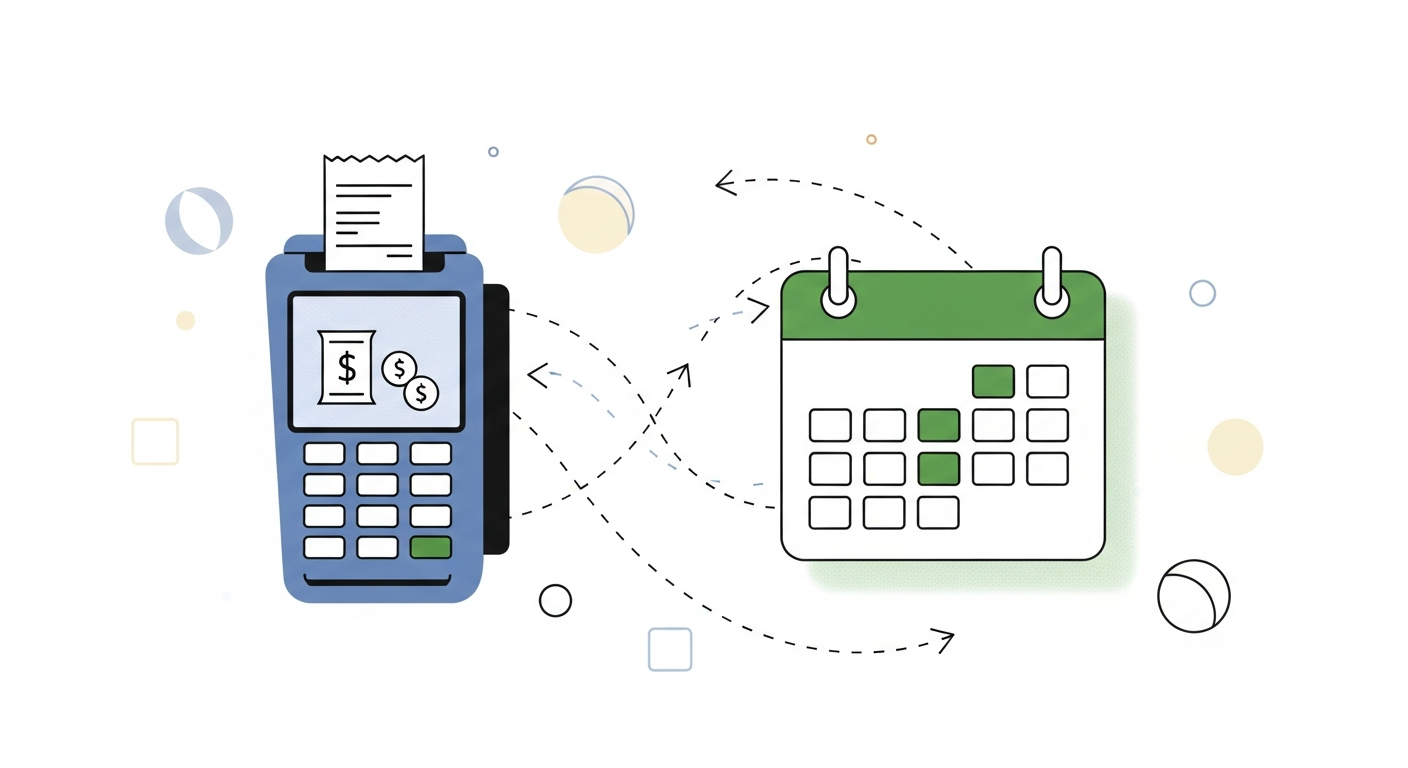
Most leading AI phone systems connect with Square, Toast, and OpenTable out of the box. Some support Resy, SevenRooms, and Yelp Guest Manager. Before signing anything, confirm the integration is two-way, meaning the AI reads live table availability and pushes confirmed reservations back into your system automatically.
Ask vendors these questions upfront:
When choosing AI phone answering solutions for your restaurant, a few factors matter more than others.
Ask vendors for a live demo with your actual menu before committing.
Most restaurants go live in under 24 hours once the onboarding process begins.
The math is straightforward: if your restaurant misses 30% of incoming calls and each order averages $25 to $50, even a modest call volume of 20 missed calls per week adds up to thousands in lost revenue monthly.
Beyond recovered revenue, redirecting staff from phones to tables improves table turnover and tip income during peak hours.
Track these metrics to gauge real impact:
The objections worth taking seriously are about vendor selection, not the category itself. Vet the integration depth, ask for a live demo on your actual menu, and confirm what happens when calls need to escalate to a human.
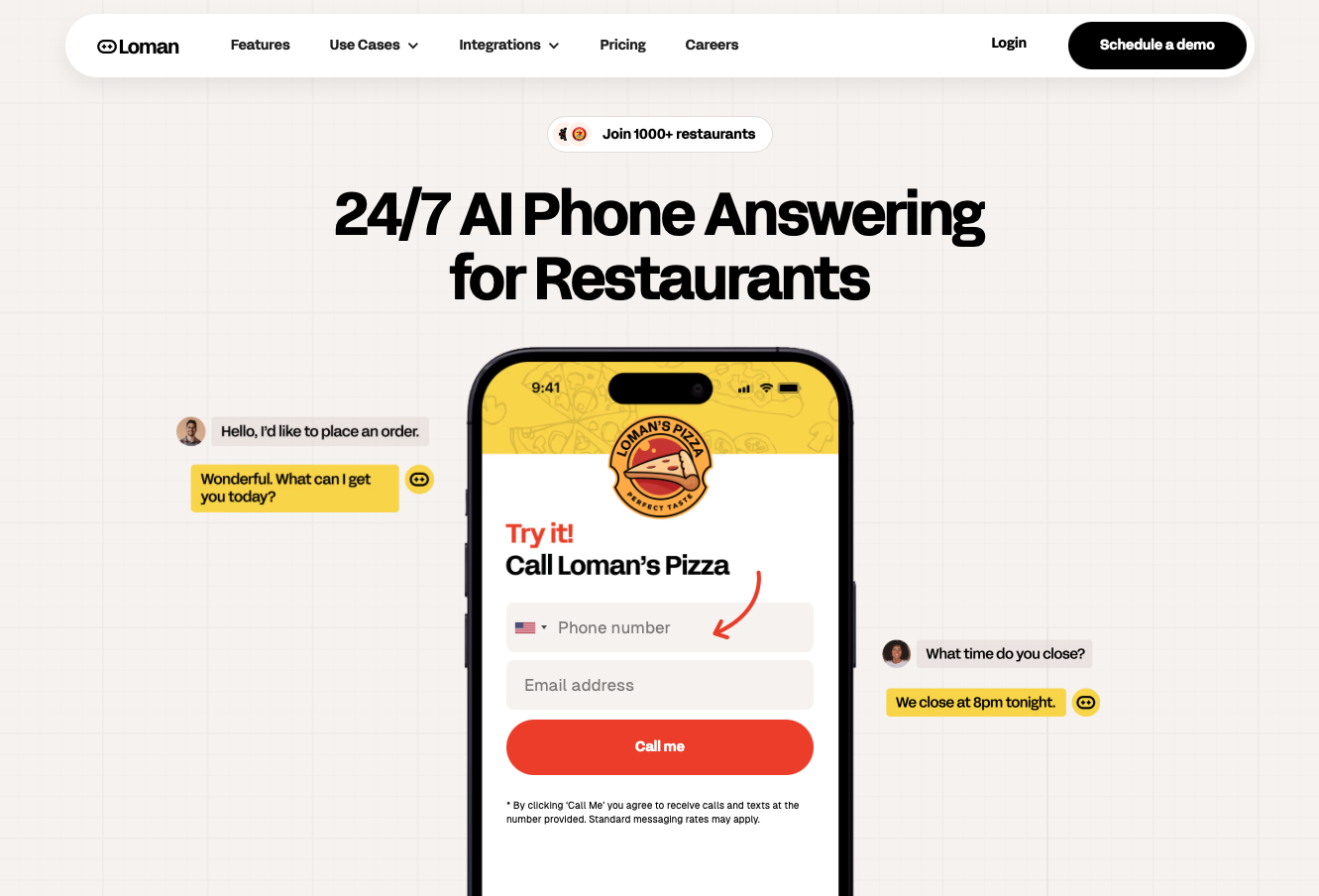
Loman is built for restaurants, not retrofitted from a generic call center tool. It handles orders, reservations, and customer questions automatically without pulling a single staff member away from the floor.
The setup takes under 24 hours. You connect Loman to your existing phone number, menu, and POS system, and it starts working immediately. No hardware. No lengthy onboarding.
Restaurants using Loman report a 23% increase in revenue from phone orders, with the AI consistently prompting add-ons and upsells that staff often skip during a busy rush.
Yes. Restaurant AI phone systems connect to your existing POS through direct integrations with Square, Toast, Clover, SpotOn, and other major systems. Setup takes under 24 hours with no hardware changes or system replacement required.
AI phone answering costs a flat monthly fee and handles unlimited simultaneous calls 24/7, while a host earns hourly wages, works limited hours, and can only take one call at a time. Most restaurants see the AI pay for itself within the first month through recaptured missed calls alone.
The AI takes credit card payments through your existing POS integration, syncing payment data directly into your system as if a staff member entered it. The payment processing is PCI-compliant and follows the same security standards your POS already meets.
The system detects when a caller needs human help and either transfers the call to your live line, captures a voicemail with full transcript, or logs the caller's information with context for staff follow-up. You control the escalation rules through the dashboard.
Most restaurants go live in under 24 hours once they connect their phone number, menu, and POS system. White-glove setup is available if you need hands-on help with configuration and testing.
Missed calls stop being inevitable once restaurant AI phone answering picks up the slack. With a tool like Loman, you get every order, every reservation, and every question answered without pulling anyone off the floor. The math works out faster than you'd expect: recovered revenue plus saved labor costs tend to make the ROI obvious within weeks. Book a quick demo to see how it handles your specific menu and call flow.
Enter your information in the form to receive a call from Loman and place an order like a customer would!

