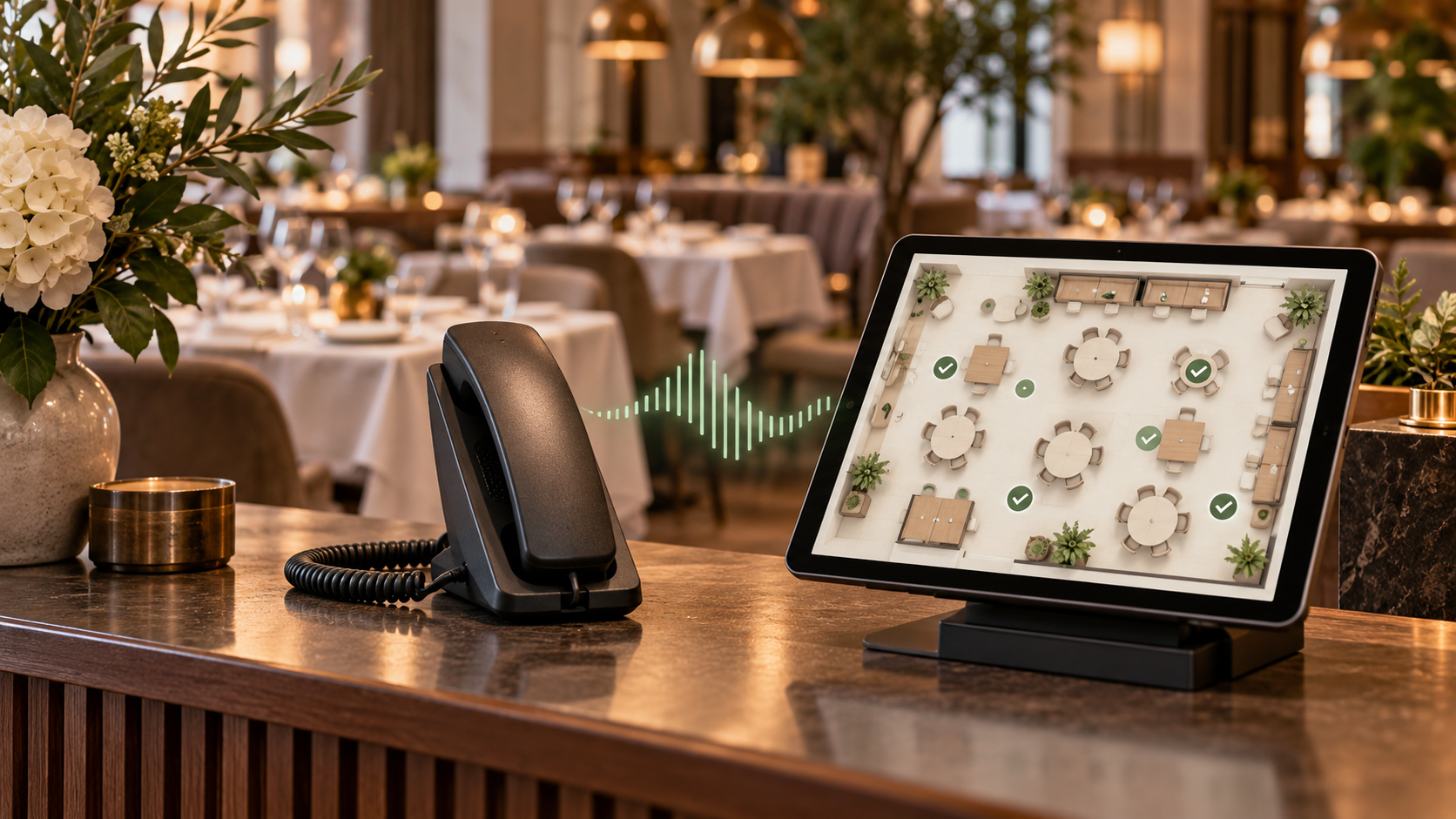
When was the last time your host had a free second to grab a ringing phone during a full dinner service? For most reservation-heavy rooms, the answer is basically never, and industry research suggests around 30% of calls go unanswered at peak. OpenTable does its job on the book, but it can't pick up that line while your team works the floor. Finding the best AI answering service for restaurants using OpenTable is how you close that gap and keep those bookings from filling somewhere else.
TLDR:
It's 7:40 on a Saturday. The host stand is three parties deep with walk-ins waiting on tables, two seated guests are flagging down someone for water, and the phone keeps ringing with people trying to book for later that week. OpenTable is holding the book together. What it cannot do is pick up that phone while your host is buried in the floor.
That gap costs real bookings. Industry research suggests roughly 30% of restaurant calls go unanswered during peak service, and industry research suggests roughly 85% of callers do not call back after an unanswered call. They move to the next restaurant in their search results. A four-top for Friday night does not wait in a queue for you to call back. It gets booked somewhere else.
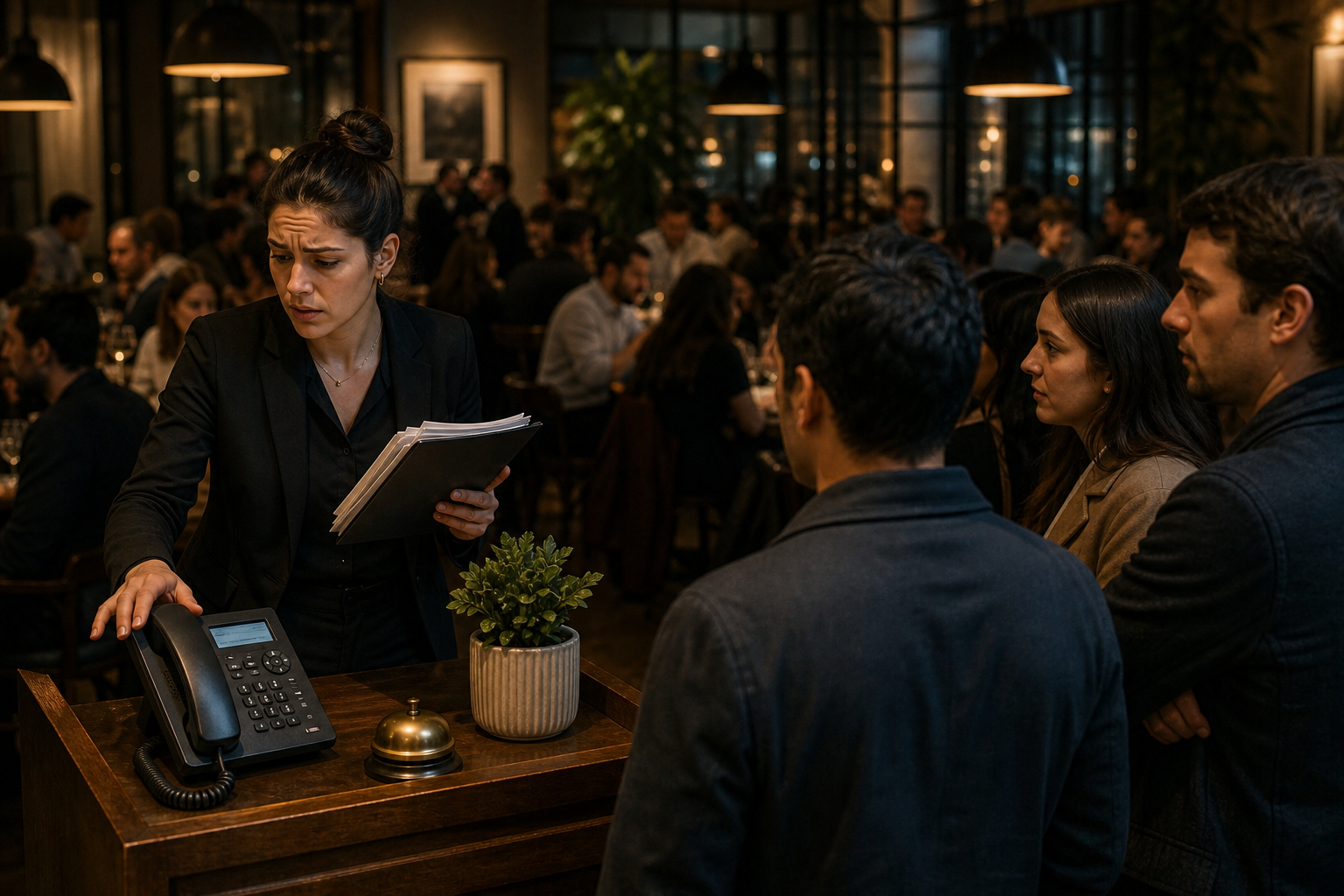
Here's the part that stings for reservation-heavy rooms. The calls pile up exactly when your dining room is fullest, the same window your staff has zero seconds to spare. So the phone rings out, the voicemail fills, and by the time anyone checks it, the guest has already committed a card down the block.
OpenTable is doing its job. It syncs the book, tracks covers, and keeps your floor plan accurate. The missing piece sits upstream of all that: someone, or something, has to answer the call before a reservation ever reaches the book. Without that, a well-run reservation system is still quietly leaking guests every busy night. Loman fills that upstream gap: it answers the phone on the first ring and writes the booking straight into OpenTable before the caller ever considers another restaurant.
A restaurant AI phone agent sits between the ringing line and your OpenTable book, working in both directions. It reads live availability during the call, then writes confirmed bookings, changes, and cancellations straight back into the OpenTable dashboard with no one re-keying anything. Because OpenTable manages reservations and not order tickets, this is about the booking lifecycle: getting the guest into the book, keeping their details clean, and holding the seat until they arrive.
Every call gets answered on the first ring. The agent pulls current OpenTable availability, confirms party size and time with the caller, and writes the reservation into the book on the spot.
Say a guest calls for a Friday 7pm table for six while your host is mid-seat with another party. Instead of hitting voicemail, the caller talks through the booking, hears real openings, and gets confirmed. The table lands in OpenTable already, so there's no double-booking risk and no note to transcribe later.
Guests rarely book once and stop. They call to bump a party from four to six, push a 7pm to 7:30, or cancel outright. The agent handles each of these by phone and updates OpenTable in real time, so nothing depends on a scribbled note that gets lost during the rush.
That around-the-clock confirming and adjusting keeps seats from sitting empty. OpenTable's own research found 28% of diners missed a reservation in the past year, and industry analysis puts no-show revenue losses per location above $39,000 annually in conservative estimates. Automated confirmation and reminder handling helps keep those seats from going dark.
Follow a single call through the system. The line rings and the agent picks up. The guest asks for a table, and the agent confirms the details that matter: name, party size, date, and time, a fully automated restaurant reservation booking process. Once those are locked, the booking is written directly into the OpenTable dashboard. If that same guest calls back two days later to move the time or add a seat, the change syncs back the same way, in real time, with no double-booking risk.
The point worth sitting with is fidelity. The booking lands in OpenTable looking exactly like one a host typed in by hand. No separate ledger, no export step, no matching up two versions of the night's covers. That's a key reason AI reservation systems in fine dining are gaining ground. At BA Tavern, owner Jamie Oweis reported that Loman captured 6 bookings on day one that would have been missed, an operator-reported result and not an audited figure.
Your host opens the same OpenTable book they always work from. Confirmed reservations, edits, and cancellations are already sitting there. Nothing to re-key, no second inbox to watch, no voicemail to transcribe between seatings.
There's a quieter benefit too. When a regular calls, the agent recognizes them and greets them by name, pulling their usual details forward. It's one example of how voice AI is reshaping restaurant reservations. That adds a loyalty-like touch to the booking without points tracking, punch cards, or an app download standing between the guest and their table.
For a reservation-driven room, the math is simple. Every call your host misses is a table that fills somewhere else, and every table that fills there is a peak-night cover you never turn. That's one reason the best AI reservation management systems focus on call capture first. Recapture that call and the same seat gets confirmed, seated, and turned inside the same window your floor was slammed.
That compounds. One recovered four-top on a Friday is a few hundred dollars, but repeated across every busy service, week after week, it becomes the difference between a book that runs full and one that runs with quiet gaps. Fewer no-shows tighten the seating schedule further, since automated confirming and adjusting keeps seats from going dark late. Industry estimates indicate 62% of unanswered callers contact a competitor instead, which is exactly the guest a captured call keeps.
| Metric | Unanswered reservation call | Captured with voice AI |
|---|---|---|
| Booking outcome | Guest calls the next restaurant | Table confirmed in OpenTable |
| Table utilization | Empty cover on a peak night | Seat filled and turned |
| Staff impact | Host pulled off the floor | Host stays with in-person guests |
| Follow-up effort | Manual callback, lost notes | Auto-synced, no re-entry |
Operators using Loman have reported up to 22% higher phone revenue and up to 17% lower labor costs, both operator-reported and not audited figures, consistent with broader trends in AI phone answering for restaurant service.
The result is a book that stays full and a host who works the floor instead of the phone. Before your next dinner service, that's the leak worth closing.
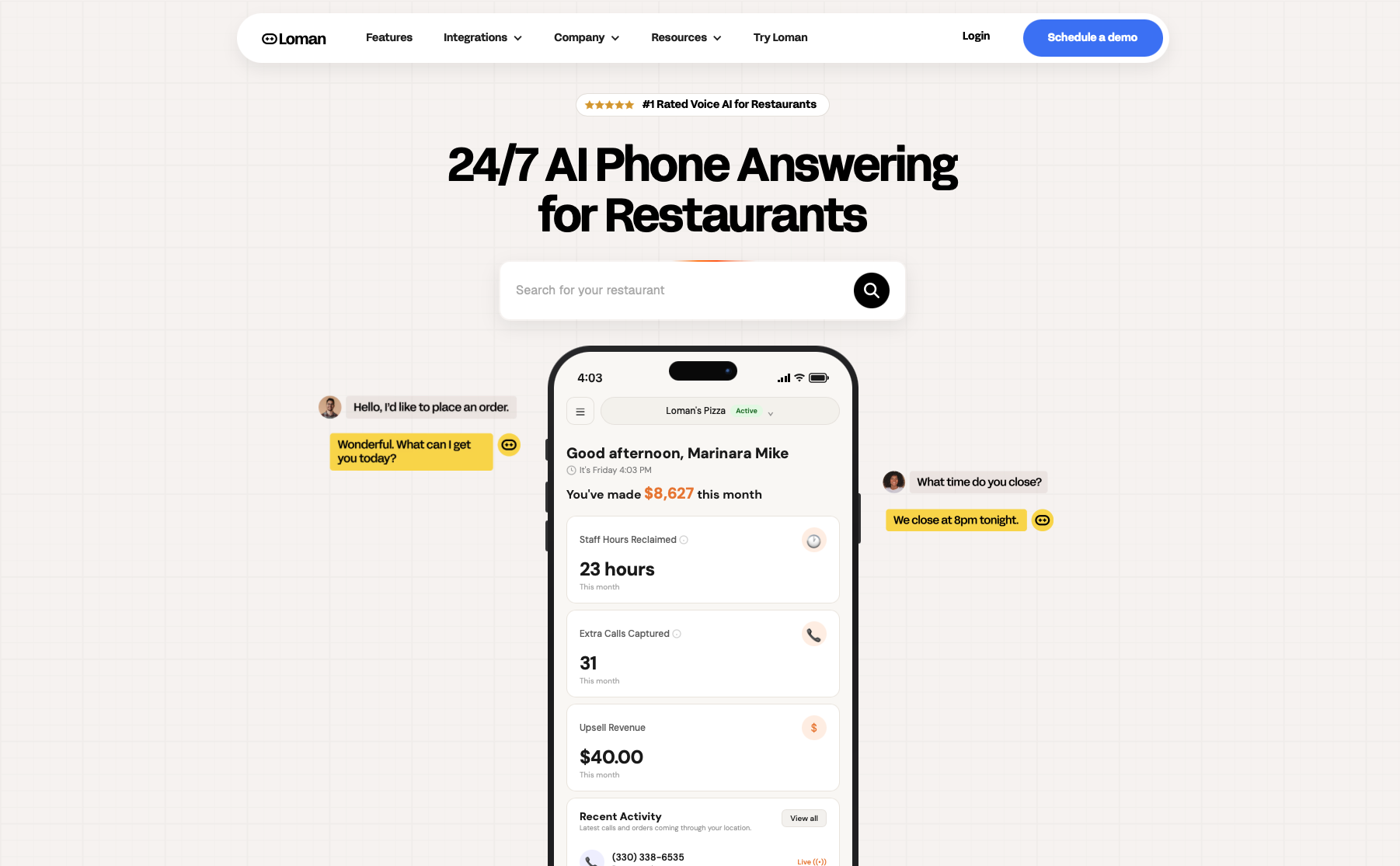
Loman is a voice AI phone agent built for restaurants. It answers every incoming call on the first ring, confirms party size and time with the caller, and writes the booking straight into your OpenTable dashboard, so your host never has to step away from the floor to catch a ringing line.
That call capture turns into real covers seated and turned, and the automated confirming and rebooking work cuts down on empty seats from no-shows, all while your host stays with the guests already in the room. At BA Tavern, owner Jamie Oweis reported that Loman captured 6 bookings on day one that would have been missed, an operator-reported result and not an audited figure.
If missed calls are costing your dining room covers, book a free demo and see how Loman fits your OpenTable setup.
Yes. A voice AI phone agent like Loman reads live OpenTable availability during the call and writes confirmed bookings, changes, and cancellations straight into the OpenTable dashboard, with no re-keying and no second system for your host to watch.
The most direct fix is a voice AI phone agent that answers every call on the first ring and syncs bookings back to OpenTable in real time. Industry research suggests roughly 30% of restaurant calls go unanswered during peak service, and research frequently attributed to BIA/Kelsey suggests roughly 85% of callers do not call back, so answering the call before it hits voicemail is where the recaptured covers come from.
Loman's OpenTable integration covers the reservation lifecycle only, since OpenTable manages bookings and not order tickets. Booking creation, modifications, cancellations, and no-show reduction run through OpenTable, while full phone-order taking runs through Loman's POS integrations instead.
Loman checks current OpenTable availability during the call, then writes the confirmed booking directly into the same dashboard your host works from. Because every reservation and edit syncs in real time, the table lands in the book looking exactly like one a host typed by hand, with no separate ledger to square up.
Every recaptured call is a peak-night cover that gets seated and turned instead of filling at the restaurant down the block, since industry estimates indicate 62% of unanswered callers contact a competitor. Operators using Loman have reported up to 22% higher phone revenue and up to 17% lower labor costs, both operator-reported figures and not audited results.
OpenTable keeps your book accurate, but it can't pick up the phone when your floor is slammed. For reservation-driven rooms, the best AI answering service for restaurants using OpenTable is one that captures every ring and writes confirmed bookings straight into your dashboard before the caller considers anyone else. Loman does exactly that. Operators have reported up to 22% higher phone revenue and up to 17% lower labor costs, both operator-reported figures. See how it works for your restaurant with a free Loman demo.
Enter your information in the form to receive a call from Loman and place an order like a customer would!

