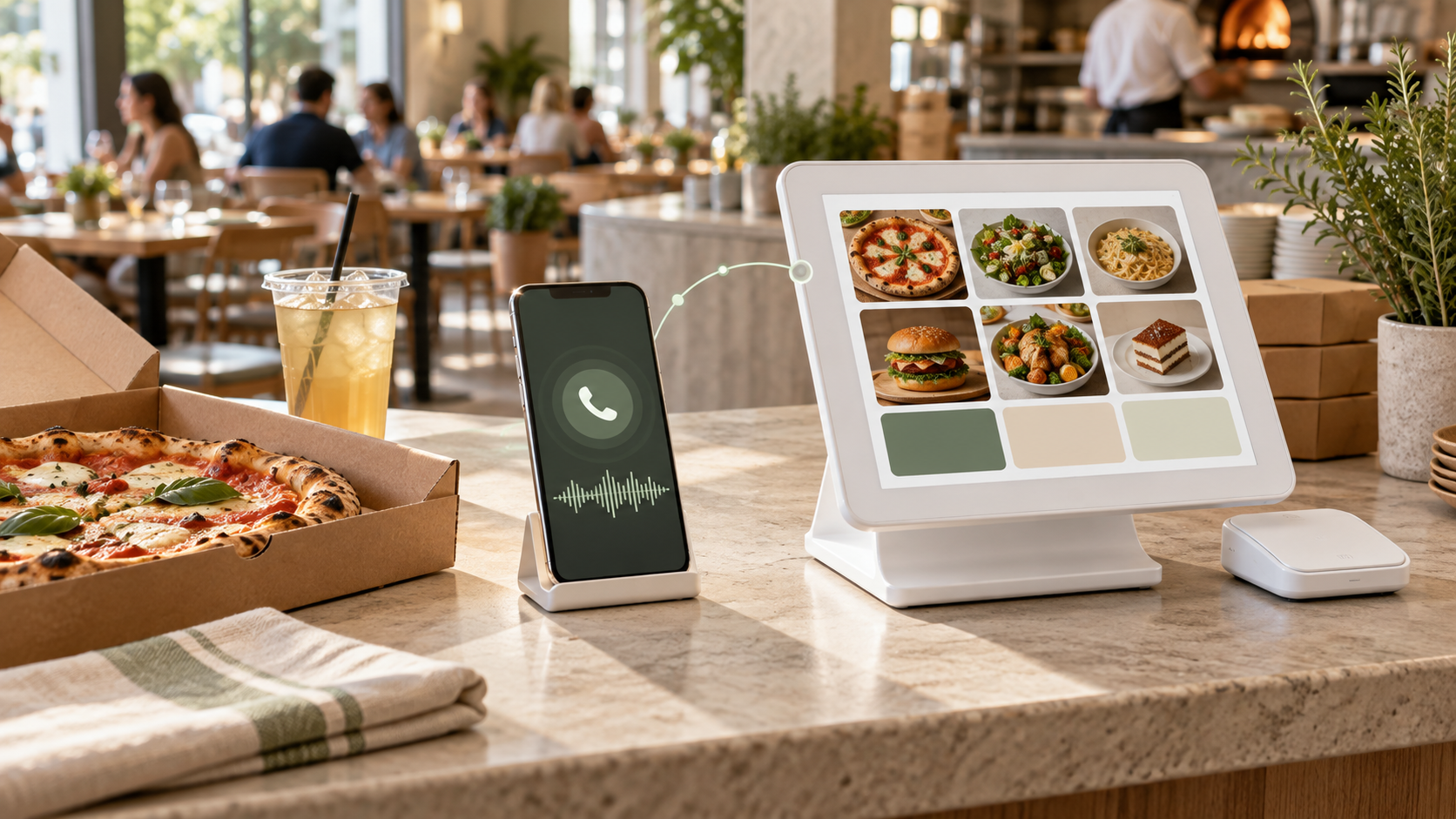
Square is great at closing the sale once someone's standing at your register. What it can't do is answer the phone during the dinner rush when every hand is busy. That gap is real money, roughly $35 to $85 per missed call once you count average order value and repeat customer value. The best AI answering service for restaurants using Square fills it by taking the call, confirming the order off your live menu, and pushing a clean ticket right into your POS, with no staff intervention and no missed order.
TLDR:
It's 6:50 on a Friday. Your two counter staff are ringing up a line of walk-ins on Square, the kitchen is backed up, and the phone starts ringing. Nobody near the register can grab it. By the time someone frees up, the caller is gone.
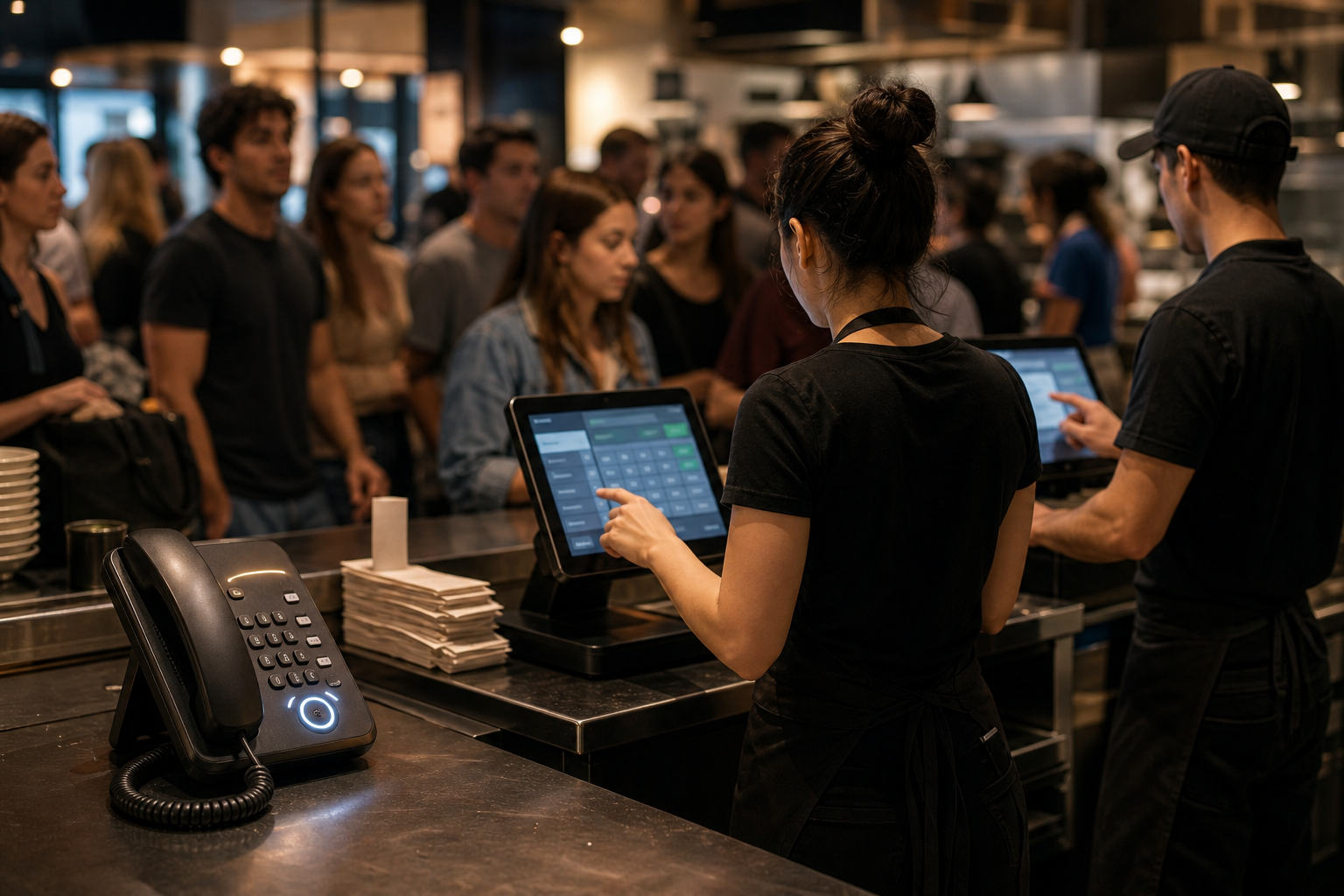
That gap costs real money. During peak hours, the average restaurant misses roughly 30 percent of incoming calls, exactly when call volume and revenue per order are highest, and each missed call represents an estimated $35 to $85 in missed call restaurant revenue loss once you factor in average order value and repeat customer value, according to QSR Magazine missed-call report. Those calls stack up in the same window your tickets are biggest.
Square is built to close the transaction at the register. It reads the card, prints the ticket, and moves the line. What it cannot do is answer the phone when your counter staff are already slammed during the lunch or dinner rush. That's a structural gap in what a point-of-sale system is designed to do, not a knock on Square, which is an integration partner.
Picture a regular calling to place a $48 pickup order. The phone rings four times while your team rings out in-person guests, then goes quiet. Roughly 85% of callers do not call back after an unanswered call, per research frequently attributed to BIA/Kelsey, and across the industry those hang-ups add up to an estimated $20 billion lost to missed calls every year (industry research estimate), which is why AI restaurant phone agents prevent missed calls by answering on the first ring.
A voice AI phone agent earns its keep with Square by working in both directions. It reads your live Square menu during the call and pushes the confirmed order back into Square automatically, so no one on your team re-keys a ticket. That two-way connection, the foundation of restaurant AI phone POS integration, is what separates closing a sale from taking a message.
Say a caller wants a large pizza, half mushroom, extra cheese, plus a side salad swapped for fries. Loman reads those modifiers off the live Square menu, confirms them out loud, and drops a clean ticket into your Square POS and KDS with every substitution intact. The kitchen sees the same order it would from the counter.
Menu accuracy holds mid-call too. If a special sells out and gets 86'd in Square, or a price changes, the agent reflects it in real time, a key reason operators researching AI phone agents for Square restaurants put live menu sync first, so a caller never orders something the kitchen can't make. Payment closes on the same call: the card is captured during the conversation and cleared through Square, no callback, no manual entry at pickup.
| Capability | What it does in Square |
|---|---|
| Order taking | Confirmed pickup and delivery orders push directly into Square POS and KDS |
| Real-time menu sync | 86'd items and price changes read live from Square mid-call |
| In-call payment | Card payment captured during the call and cleared through Square |
| Upsell prompts | Add-on suggestions pulled from live Square menu data lift average ticket |
Every add-on the agent suggests comes from your current Square menu, so a garlic-knot upsell only fires when garlic knots are actually available.
A call comes in and the agent picks up on the first ring. The caller talks through their order, the agent captures each item and modifier against the live Square menu, confirms the total, and takes payment on the same call. The ticket writes into Square as if a staffer keyed it at the register. Nothing sits in a separate queue waiting for a hand to transfer it.
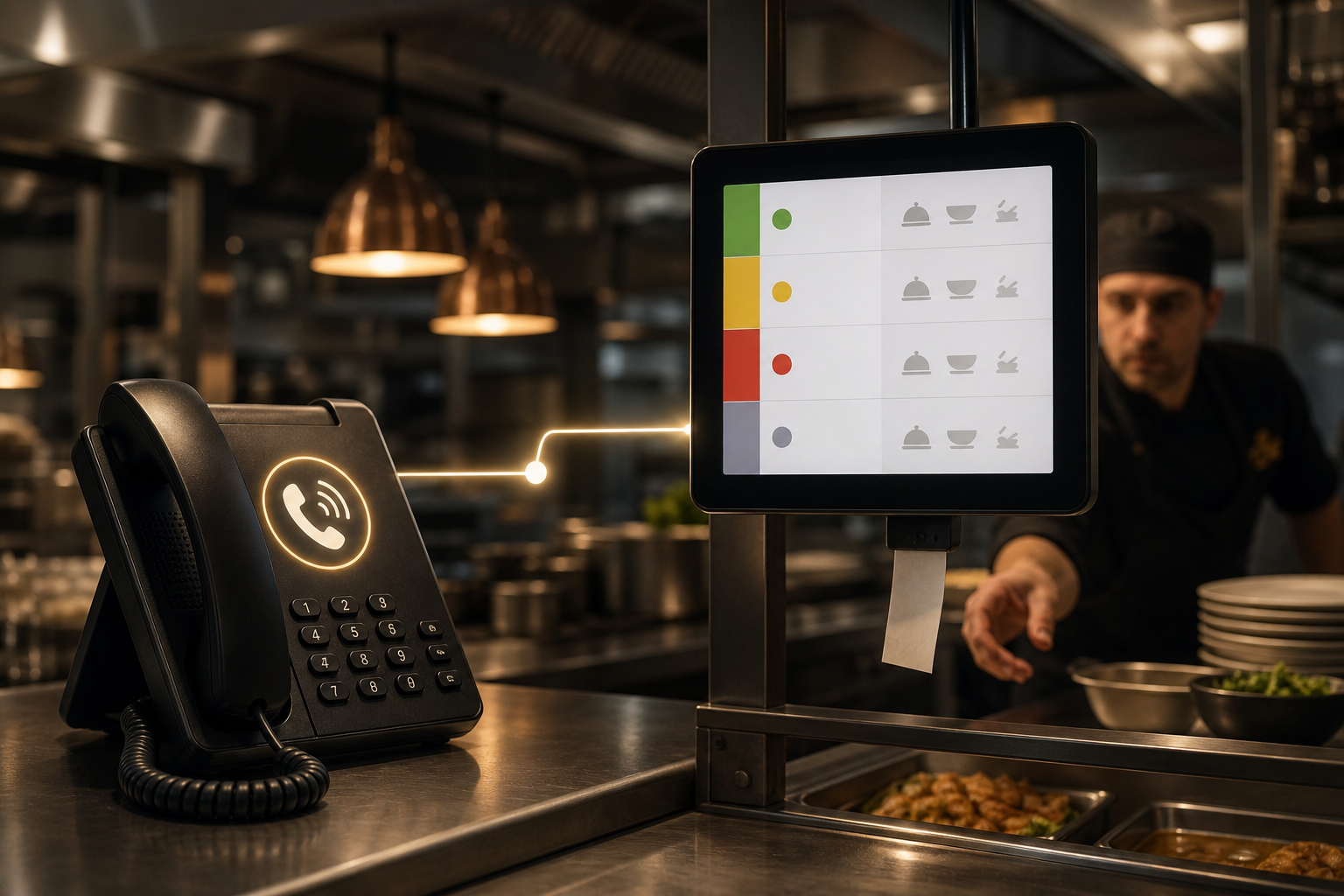
The kitchen never sees a difference. Every modifier, special request, and cleared payment lands in the same workflow the line already works from, a result of solid POS integration with restaurant AI, so a phone order and a counter order look identical on the display. No re-keying, no second screen, no gap where a detail gets dropped between the phone and the pass. Crust Pizza owner Nick Haselidis reported that Loman paid for itself in 10 days, with calmer phones and bigger tickets.
Real orders are messy. Callers stack modifiers, swap sides mid-sentence, and trail off before finishing a thought. The agent holds those details together, confirms the substitutions out loud, and writes the finished ticket into Square exactly as the kitchen expects to read it. Because it handles unlimited simultaneous calls, a rush of orders never produces a busy signal or a garbled ticket. DeCheco's Pizzeria handles 100+ phone orders without pulling a single employee off the line, and Vittorio's Pizza owner reported more volume, better accuracy on phone calls, and higher tips for the staff.
Every direct phone order you recapture is an order that never pays a delivery commission. When a caller can't reach you and orders through a third-party app instead, base commissions run 15% to 30%, with all-in costs (including service charges and promotions) reaching 30% to 40% per order, one reason POS integrations for restaurant automation are increasingly central to direct-order strategies, according to third-party delivery fee research. A phone order carries no such cut, and it lands at a higher ticket.
| Metric | Figure | Source / Context |
|---|---|---|
| Average phone order value | $48 vs. $41 online | Industry estimate |
| Base third-party delivery commission | 15% to 30% | Industry estimate |
| All-in delivery cost per order | 30% to 40% | Industry estimate |
| Higher phone revenue reported | Up to 22% | Operators using Loman |
| Lower labor costs reported | Up to 17% | Operators using Loman |
Operators using Loman have reported up to 22% higher phone revenue and up to 17% restaurant labor cost benchmarks. Little Italy reported cutting labor costs by more than 24%.
Pricing starts at $199 a month for unlimited calls, with no per-minute charges. For a full breakdown of AI phone agent ROI for restaurants and how fast it pays for itself, the math is straightforward. DeCheco's Pizzeria reported running with one fewer front-of-house staffer while revenue kept growing. Phones stay calm heading into the next dinner rush.
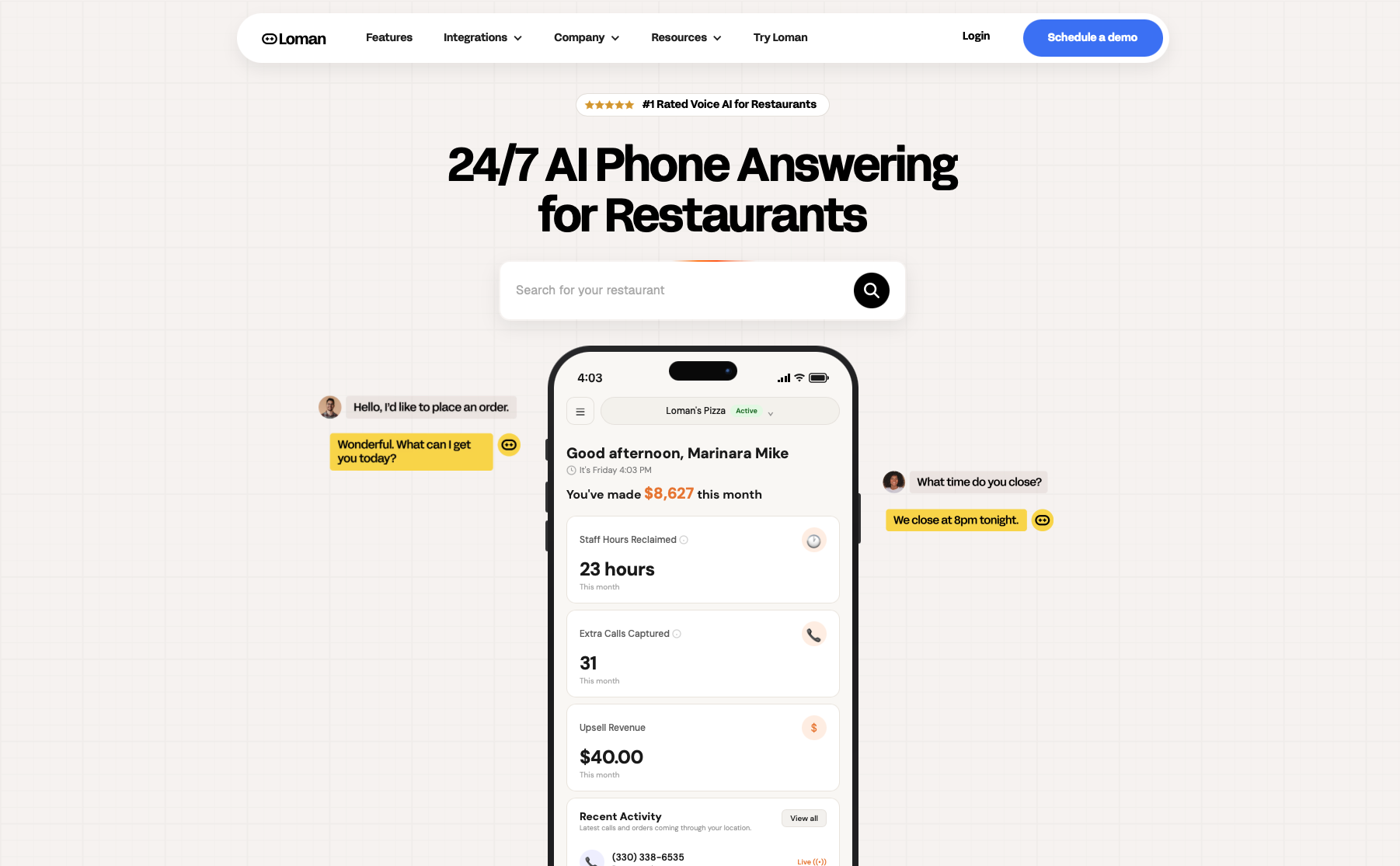
Loman is a voice AI phone agent built from the ground up for restaurants. Where generic answering services take a message and stop, Loman closes the full order: it reads your live Square menu during the call, captures every modifier and substitution, takes payment on the same call, and drops a clean ticket into your Square POS and KDS with no re-keying. The kitchen sees a phone order that looks identical to a counter order.
The Square connection is two-way. When an item gets 86'd or a price changes mid-service, Loman reflects it in real time so callers never order something the kitchen can't make. Upsell prompts fire only when the items are actually available, and payment clears through Square before the call ends. Nick Haselidis of Crust Pizza reported Loman paid for itself in 10 days, with calmer phones and bigger tickets.
Loman starts at $199 a month for unlimited calls, with no per-minute charges. Most restaurants go live in under 24 hours, no coding required. DeCheco's Pizzeria now handles over 100 phone orders without pulling a single employee off the line. If your Square setup is solid at the register but the phone goes unanswered during the rush, that is the gap Loman was designed to close.
The best fit is a restaurant-specific voice AI agent that connects two-way with Square, reading your live menu during the call and pushing confirmed orders and payments back into Square automatically. Loman does this end-to-end, so tickets land in your Square POS and KDS without anyone re-keying an order.
Yes. Loman captures the card during the conversation and clears it through Square on the same call, with no callback or manual entry at pickup. That closes the sale in one step instead of leaving an order sitting in a separate queue.
The agent captures each item and modifier against your live Square menu, confirms the total, and writes the ticket directly into Square as if a staffer keyed it at the register. The kitchen sees the same order on the display it would from the counter, with every substitution intact.
No. Square handles transactions at the register, and a voice AI agent supplements it by answering the phone during the lunch or dinner rush when counter staff are slammed. Loman fills the structural gap Square leaves open without touching how you ring out in-person guests.
Loman starts at $199 a month, covering unlimited calls with no per-minute charges. The cost holds whether the phone rings 20 times or 200 in a night. Setup takes under 24 hours with no coding required, so you can have the phone answered before your next dinner rush. Crust Pizza owner Nick Haselidis reported that Loman paid for itself in 10 days, with calmer phones and bigger tickets.
Square handles the register beautifully, but it was never built to grab the phone when your line is slammed. If you're looking for the best AI answering service for restaurants using Square, the deciding factor is whether it closes the full order, payment and all, without anyone on your team touching the phone. Loman fills that gap by answering every call, reading your live Square menu, taking payment in-call, and dropping a clean ticket into your POS before you've rung out the next guest at the counter. Nick Haselidis of Crust Pizza reported Loman paid for itself in 10 days. You can try it on your next shift and see how quiet the phones get before dinner.
Enter your information in the form to receive a call from Loman and place an order like a customer would!

