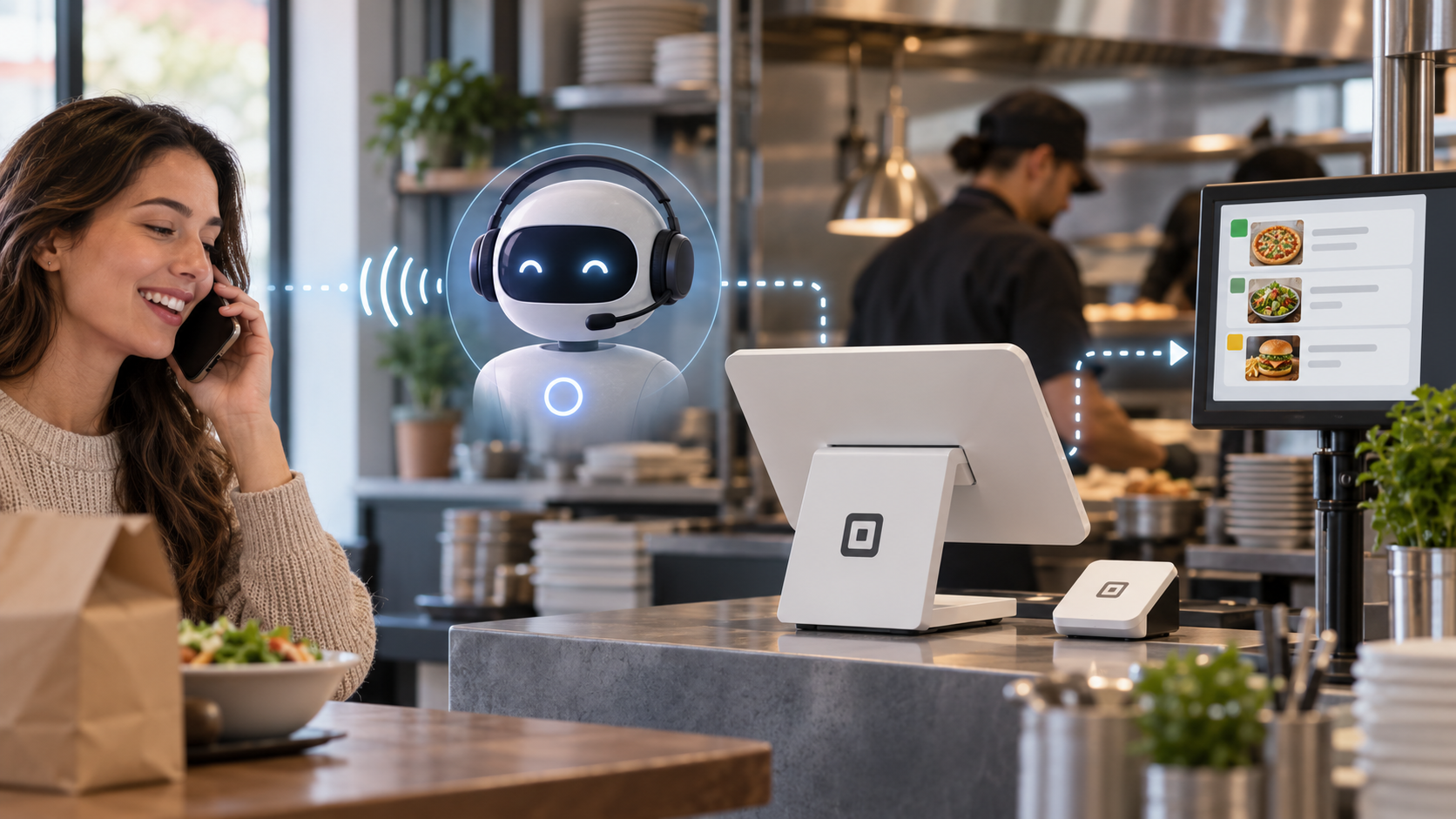
Square handles the transaction side well. It rings up orders, splits checks, and closes payments without a hitch. What it can't do is answer the phone when your counter is three deep and every terminal is busy. So the phone rings out, and that $48 pickup order walks to whoever picks up first. The best AI phone agent for restaurants using Square fills that one gap, taking the order against your live menu and pushing a clean ticket straight to the kitchen.
TLDR:
It is 7:40 on a Friday. The counter is three deep, every Square terminal is busy ringing up walk-ins, and the phone keeps ringing with nobody free to grab it. So it rings out. That caller wanted a pickup order, and the ticket that should have hit your POS never gets taken.
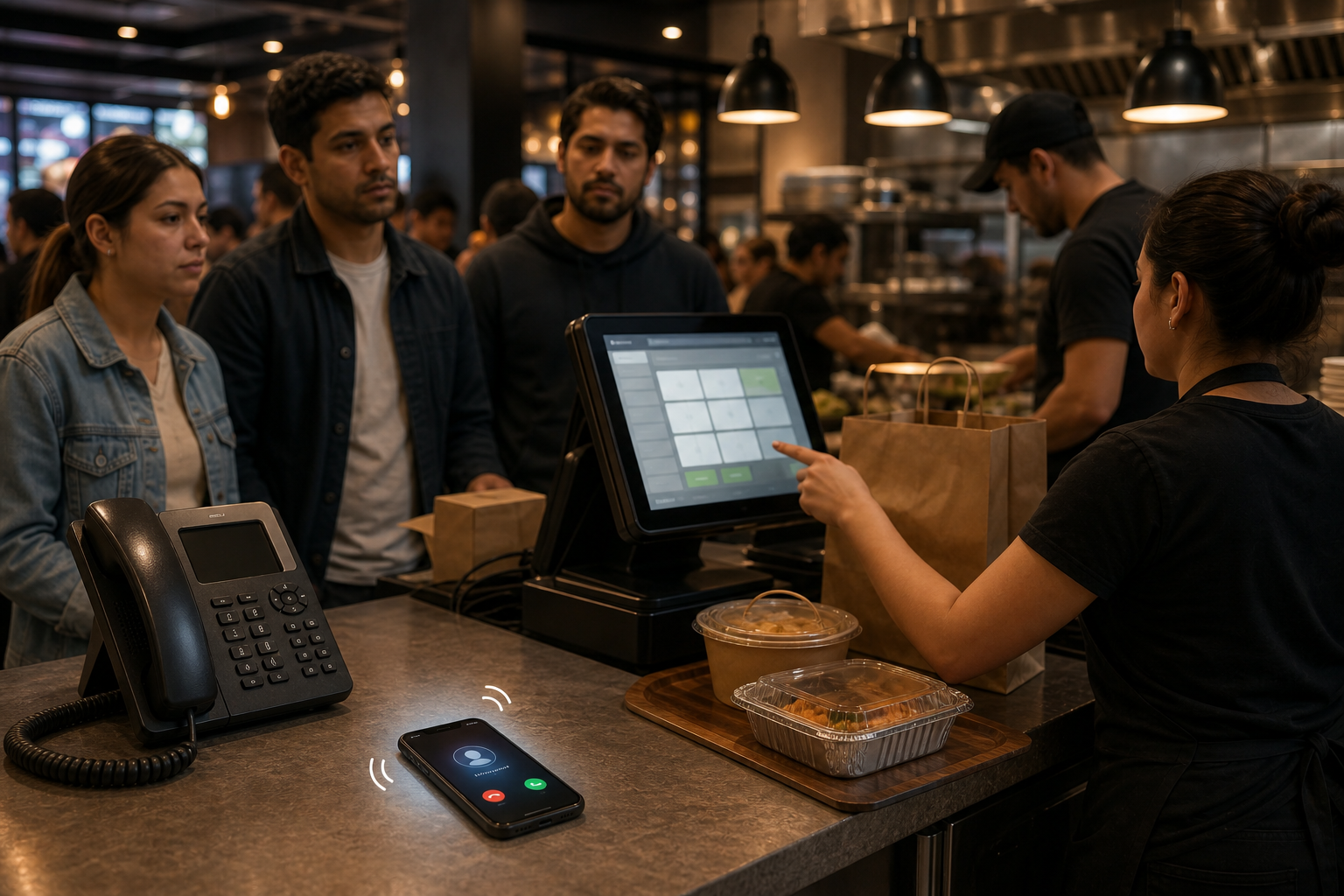
Square handles the transaction side well. It rings up tickets, splits checks, and pushes payments cleanly. What it cannot do is pick up the phone when your staff is slammed. Roughly 30% of restaurant calls go unanswered during peak service, and those peaks land exactly when your team has the least capacity to answer. Every one of those rings is an order or a reservation walking to whoever picks up first, and missed calls drain restaurant revenue fast.
The damage compounds because callers rarely try twice. In a 2025 survey of 1,000 US consumers, 82% said they would call a competitor instead of calling back after an unanswered call. One missed ring is not a delayed order. It is a lost one, and often a lost regular who now orders from the shop down the street.
This is a gap in phone coverage, not a staffing failure. You can only staff so many hands, and the phone rings hardest at the same moment the floor demands all of them. No amount of hustle closes that gap during the rush. The phone channel needs coverage that does not compete with the counter for attention, and there are proven ways to reduce missed calls with AI.
A restaurant AI phone POS integration sits alongside Square through a two-way connection. During the call, it reads your live Square menu, then pushes the confirmed order and payment straight back into Square once the caller is done. Nobody at the counter re-enters anything.
Because Square is an order-taking POS, the work happens on the order side, not the reservation side. The agent pulls current menu data mid-call, so pricing, specials, and 86'd items stay accurate to the second. When a caller asks for a special that just sold out, Square already shows it 86'd, and the agent steers them to something available. This is how the Square and Loman AI integration works in practice.
Order detail carries the same weight. A caller stacking modifiers, extra sauce on the side, swap fries for a salad, half one topping, lands on the Square ticket exactly as spoken, so the kitchen display shows what a counter order would. Payment closes in the same call through Square, with no callback loop. Repeat callers get recognized, and the agent can handle the conversation in more than one language for diverse neighborhoods. These are key features of an AI restaurant phone system.
| Capability | What it does in Square | Operator outcome |
|---|---|---|
| Real-time menu sync | Reads live Square menu, prices, and 86'd items mid-call | Callers never hear outdated or sold-out items |
| Order taking | Pushes complete tickets into Square POS and KDS | Staff never re-key phone orders |
| In-call payment | Captures card payment during the call via Square | No callbacks or manual payment capture |
| Modifier fidelity | Records substitutions and special requests on the ticket | Kitchen sees the same detail as a counter order |
| Built-in upselling | Prompts add-ons and combos before checkout | Higher average ticket per call |
This supplements Square instead of replacing it. The POS keeps doing what it does well, and the phone finally gets covered.
Follow one call the whole way through. The phone rings, the agent picks up on the first ring, greets the caller, and starts taking the order against your live Square menu. Each item and modifier gets read back and confirmed as it lands. Payment clears in the same call through Square, so there is no callback and no card details left hanging.
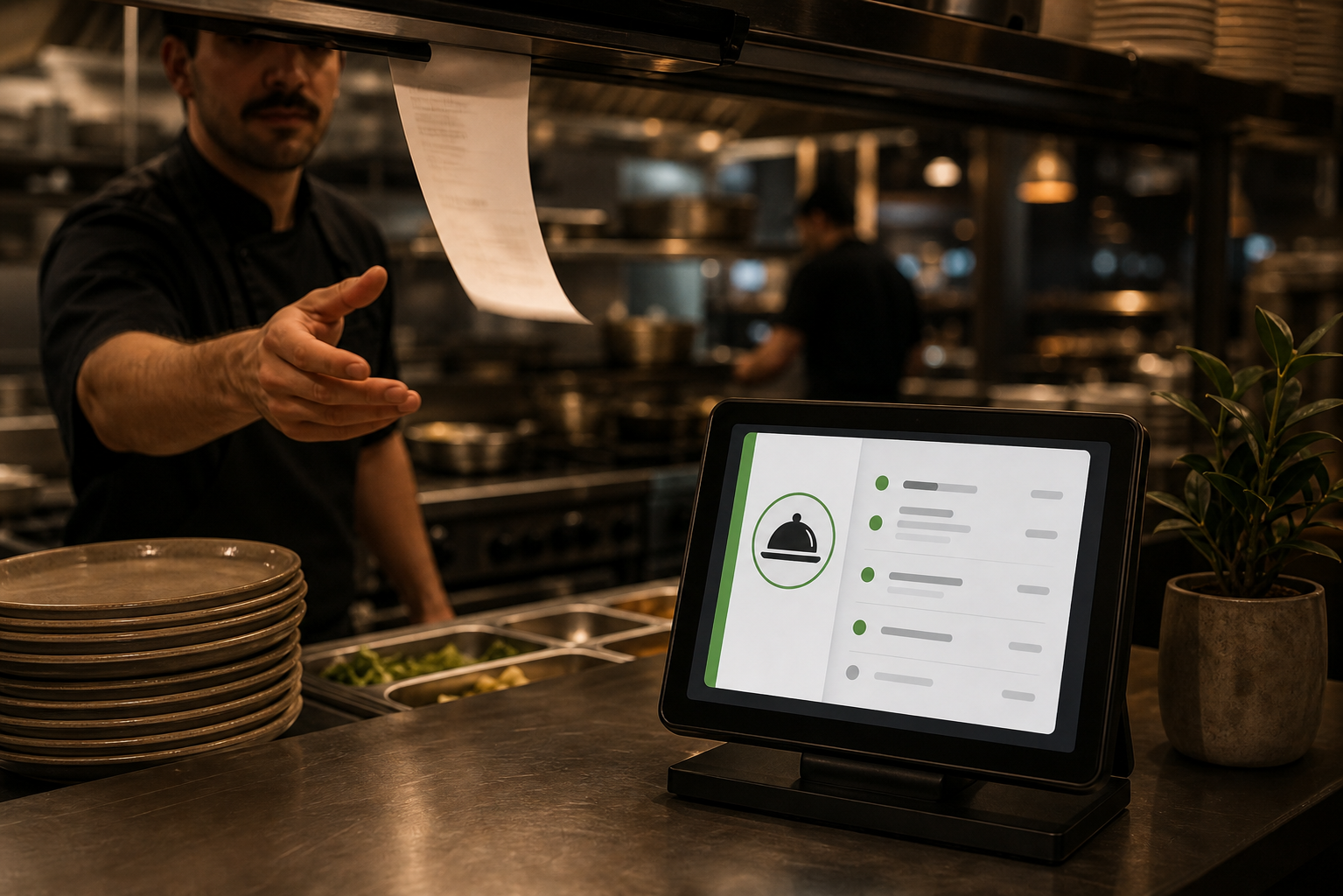
Once the caller confirms, the ticket writes directly into Square and routes to your kitchen display like a counter order. No one re-keys it. The line cook sees the same ticket format, the same modifier notes, the same special requests. Extra sauce on the side, a swapped side, a suggested combo the caller added at the prompt, all of it lands clean in the ticket the kitchen already works from.
That shared workflow is the point. Understanding how POS integration impacts restaurant workflow explains why phone orders move through the same path as counter and kiosk tickets, so your staff notice no difference between an order taken at the register and one taken over the phone. There is no separate queue to check and no second screen to match up. That is the core promise of POS integration for restaurant AI.
Crust Pizza owner Nick Haselidis reports that Loman paid for itself in 10 days, with calmer phones and bigger tickets. As he puts it:
"This paid for itself in 10 days. Phones are calm, tickets are bigger, and my team refuses to go back."
That is a customer testimonial, not an independently audited result, but it points at what the order flow does once it runs against a live Square menu shift after shift.
Every phone order that lands in Square dodges the delivery-fee drag. Base third-party commissions run 15% to 30% of order value, with total costs climbing higher once promotions and fees stack on. A direct phone order keeps that margin.
Flat $199/month pricing replaces variable phone-labor cost, holding steady whether the phone rings 20 times or 200. See the full breakdown of AI phone agent ROI for restaurants to run the numbers. Labor already eats a big chunk of revenue, with restaurant labor cost percentages typically running between 28% and 35% of revenue, which is why cutting hours spent on phone answering moves the needle on margin.
| Metric | Figure | Source / Context |
|---|---|---|
| Average phone order value | $48 | Estimated industry average |
| Average online order value | $41 | Estimated industry average |
| Third-party delivery cost per order | 30% to 40% all-in | Industry estimate (base commission 15% to 30%) |
| Reported higher phone revenue | Up to 22% | Operators using Loman have reported |
| Reported lower labor costs | Up to 17% | Operators using Loman have reported |
Little Italy owner Petra Demko reports cutting labor costs by more than 24%. Tony Boloney's reports 75 to 100 extra orders per month per location. Both are operator-reported figures, not audited results, but they show where the recaptured revenue lands once the phone channel is covered. Reviewing the top POS integrations for restaurant automation can help identify where else to close the gap. The phones stay calm, and the tickets keep landing in Square.
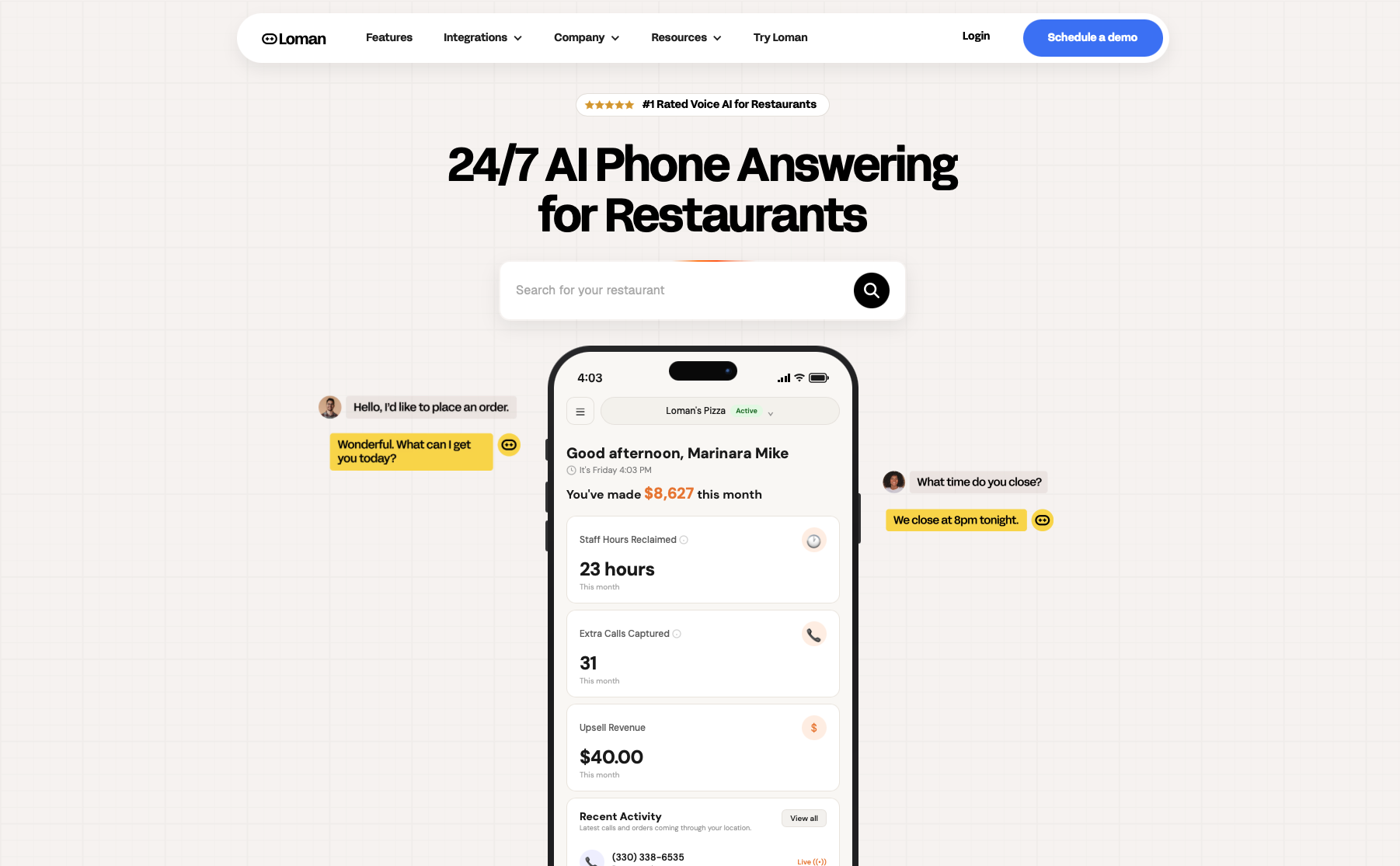
Loman is the voice AI phone agent behind the workflow this article describes. It connects to Square through a two-way sync, so every call gets answered against your live menu without pulling staff off the counter.
The setup runs on the same order flow already covered here: Loman reads current pricing and 86'd items, confirms modifiers on the call, and writes the finished ticket straight into Square and your kitchen display. Payment closes in the same call, so nothing gets left for a callback.
Pricing starts at $199 a month as a flat fee, and most restaurants go live within a day of connecting their Square menu. Operators running Loman on Square report calmer phones during the rush and tickets that land clean on the first try. The service also recognizes repeat callers, supports multiple languages for diverse neighborhoods, and prompts add-on suggestions during the call, so average ticket size climbs without extra staff effort or added training time.
Yes. Loman connects to Square as a turnkey service configured through a dashboard, so there is no coding or developer API required, and most restaurants go live in under 24 hours after uploading their menu and setting call rules.
A voice AI phone agent that connects to Square two-way is the most direct option, since it answers every call, reads your live Square menu, and pushes the confirmed order and payment straight back into the POS. Square rings up counter transactions well but cannot pick up the phone when staff is slammed, which is where a voice agent covers the gap.
Loman supplements Square instead of replacing it. Square keeps handling transactions, checks, and payments, while Loman covers the phone channel and routes orders into the same kitchen workflow as counter and kiosk tickets.
Payment clears during the same call through Square, so there is no callback loop or manual card capture. Once the caller confirms, the ticket and payment write directly into Square and route to the kitchen display like any counter order.
Loman starts at $199 per month as a flat fee covering unlimited calls, so the cost holds steady whether the phone rings 20 times or 200 times a night. That replaces variable phone-labor spend with a single predictable line item.
Missed calls are lost orders, and no amount of hustle fixes that during peak service. Pairing Square with a voice AI phone agent means every ring gets answered, every ticket lands clean, and your team stays on the floor. For restaurants weighing options, the best AI phone agent for restaurants using Square is one that reads live menu data, confirms every order detail, and pushes a clean ticket straight to Square without pulling staff off the counter. Loman is built for that exact job, reading your live Square menu mid-call and routing the finished ticket straight to the kitchen. That combination keeps the phone channel covered while your crew stays focused on the guests standing right in front of them. See how it runs on your own menu with a quick demo.
Enter your information in the form to receive a call from Loman and place an order like a customer would!

