
When was the last time your phone rang out during a Friday rush? Square handles the register beautifully, yet the phone channel is the one piece it was never built to cover, and industry research suggests roughly 85% of callers never call back after an unanswered ring. That's real money walking. AI phone answering for Square restaurants is how operators catch those calls and route them straight into your Square POS and kitchen display.
TLDR:
It's 7:40 on a Friday and the Square terminal never stops. Your counter staff is ringing up a line of walk-ins while the phone rings behind them, unanswered, because everyone near it already has their hands full.
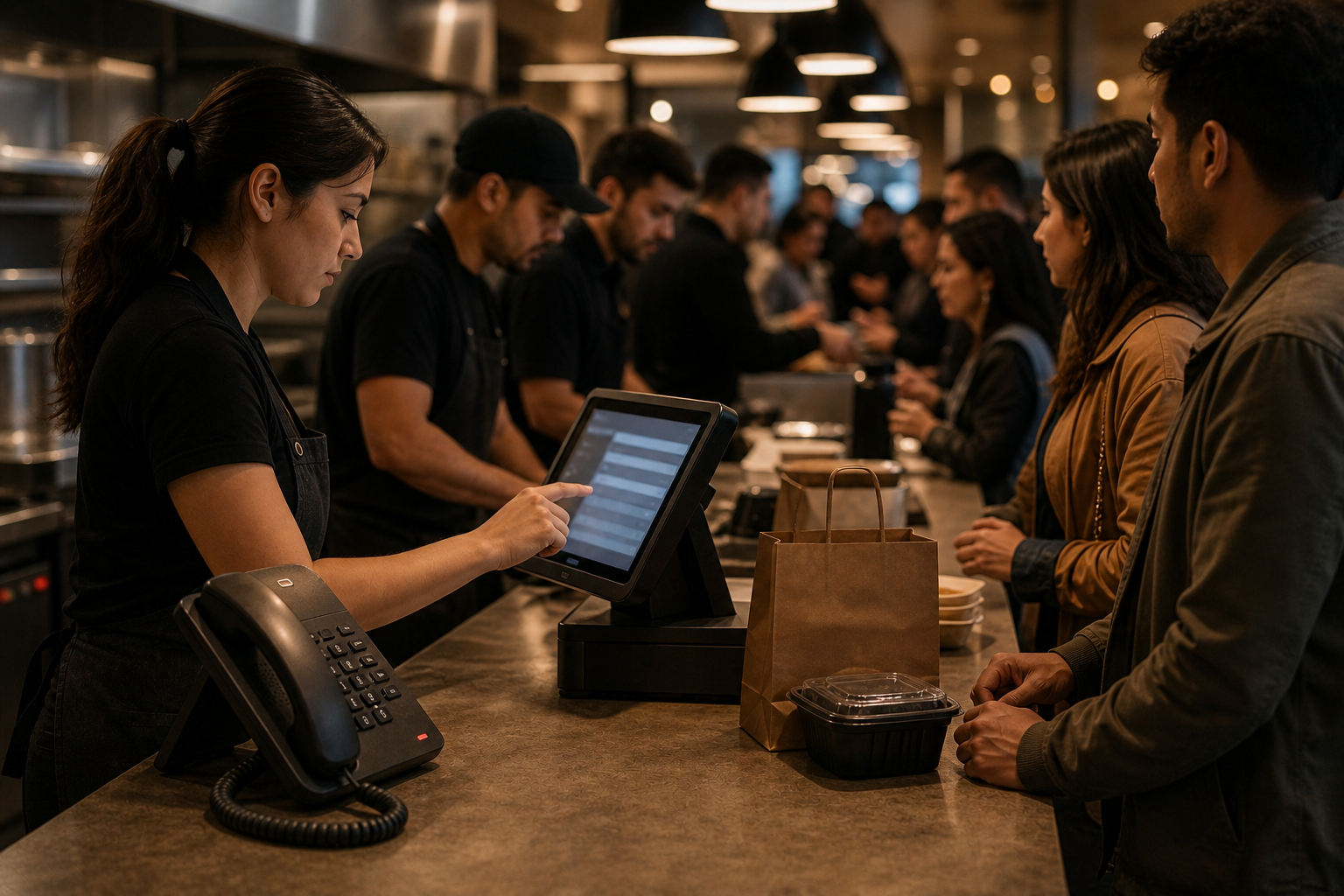
Square is doing its job at the register. It takes the payment, prints the ticket, sends it to the kitchen. What it cannot do is pick up that ringing line when your team is buried in the rush. So the call goes to voicemail, or it rings out and the caller hangs up.
That gap costs real money. missed calls draining restaurant margins account for roughly 30% of restaurant calls going unanswered during peak service, and the industry loses an estimated $20 billion a year from missed calls draining restaurant revenue. The caller you lose at 7:40 rarely tries again. Per missed call cost research frequently attributed to BIA/Kelsey, roughly 85% of callers do not call back after an unanswered call. One ring-out is usually one order gone for good.
The busiest hours are exactly when the phone rings most. Dinner rush drives walk-in volume and call volume at the same time, and restaurant AI phone POS integration is how operators close that gap. Pull someone to the phone and the counter line stalls. Leave the phone alone and the order walks to whoever answered first.
Square closes the loop on the sale in front of you. The phone channel is the piece it was never built to cover, and during peak volume that unanswered line is where the revenue quietly leaks out.
Loman AI's Square integration connects in both directions. During a call, it reads your live Square menu, then pushes the confirmed order straight back into Square POS and the kitchen display. No one re-keys a ticket.
Because Square is an order-taking POS, the real value shows up in the order-to-kitchen flow. A caller asks for the loaded fries after the last basket sold out, and since Square marks the item 86'd, it disappears from what Loman can offer mid-call, a key detail covered in the Square and Loman AI integration guide. The caller hears an accurate menu, not a promise you can't fill.
Payment closes on the same call. Loman captures the card through Square while the order is still live, so there's no callback and no manual capture after the fact. Stacked modifiers land clean too: extra sauce on the side, half-and-half toppings, the substitution a rushed line cook would otherwise miss.
Phone orders route into the same kitchen ticket flow as your counter and kiosk orders, consistent with how integrating AI phone systems with POS is designed to work, so staff see no difference.
| Capability | What it does in Square | Operator benefit |
|---|---|---|
| Order taking | Pushes confirmed order into Square POS and KDS | No ticket re-entry by staff |
| Real-time menu read | Reflects 86'd items, price changes, specials mid-call | Callers never hear outdated info |
| In-call payment | Captures card during the call via Square | No callbacks or manual capture |
| Modifier handling | Records stacked modifiers and special requests | Clean tickets reach the kitchen |
The kitchen works one ticket queue. Whether an order came from the register or the phone, it looks the same on the line.
A call comes in and Loman answers on the first ring. It works through the order with the caller, confirms the modifiers, and takes the card, all in one conversation. The moment that call ends, the finished ticket is already written into Square POS and sitting on the kitchen display.
Nothing gets retyped. The order Loman captured is the order the kitchen sees, a result of rapid POS integration in mid-size restaurants. Every modifier, special request, and upsell prompt lands in the same Square ticket your line already reads, so a phone order looks identical to one rung up at the counter. The card clears through Square inside that same flow, which means no callback and no payment left hanging after the guest hangs up.
Order fidelity is the whole point here. A half-and-half pizza with light cheese on one side, a drink added at the end, a note about the peanut allergy: each detail rides through to the kitchen queue, the kind of POS integration with AI for smoother transactions that removes retyping entirely, without a staffer touching a screen. Front-of-house and the line work the ticket they always have.
That reliability is where the recaptured revenue shows up. Crust Pizza, an operator-reported result, says Loman paid for itself in 10 days, with calmer phones and bigger tickets. Those bigger tickets are phone orders that used to ring out or get scribbled wrong, now landing clean in Square every time.
When the phone order and the counter order look the same on the line, the kitchen stops guessing and the revenue stops leaking.
Every direct phone order a Square operator recaptures carries two advantages at once, a pattern visible across the top POS integrations for restaurant automation. Industry estimates put phone orders at around $48 versus $41 for online orders, and each direct call skips the delivery apps entirely, where base commissions run 15% to 30% and all-in costs reach 30% to 40% per order once fees and promotions are counted, per third-party delivery app fees.
Operators using Loman have reported up to 22% higher phone revenue and up to 17% lower labor costs.
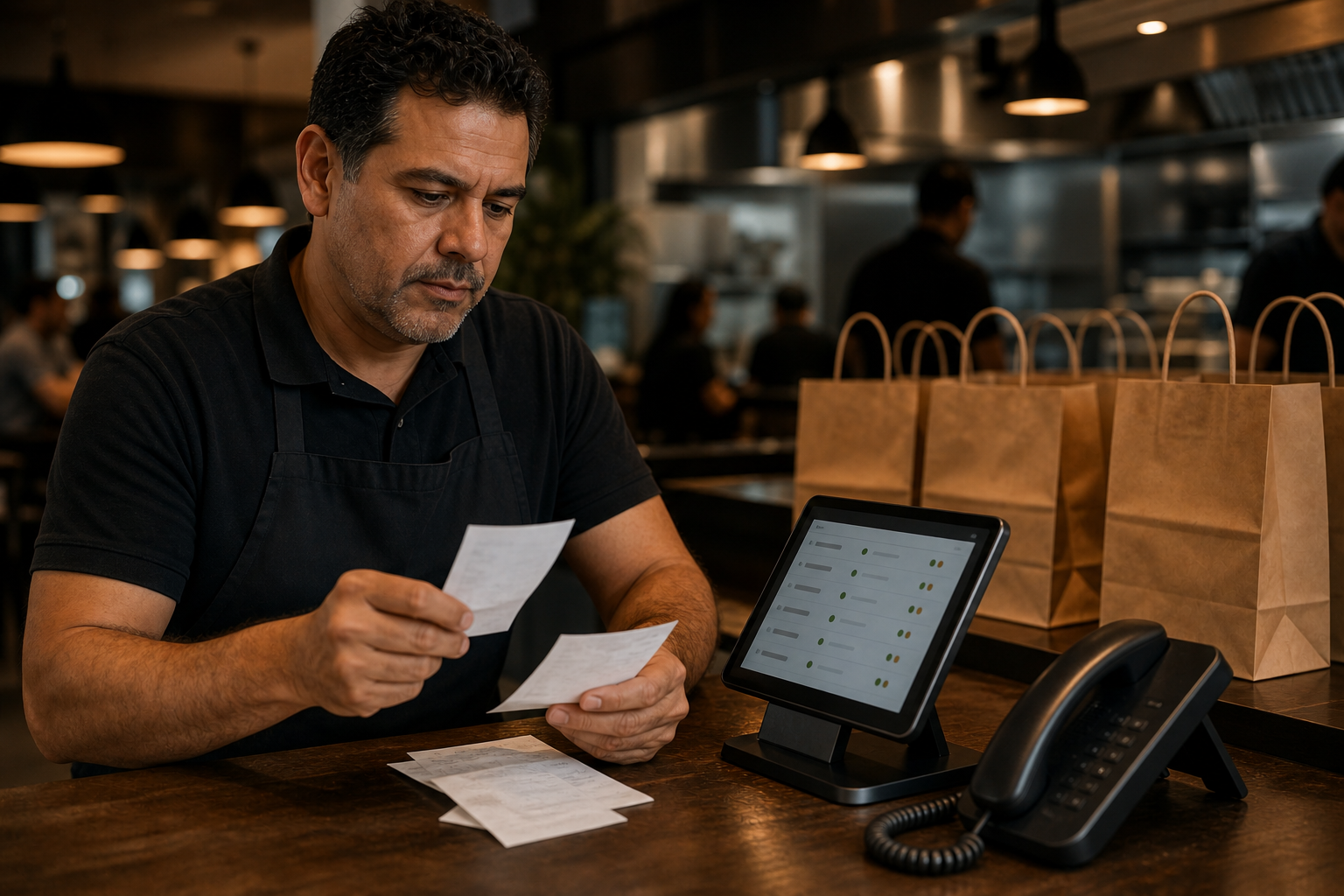
The premium and the avoided commission stack on the same order, and across a week of volume the gap widens fast. See the full breakdown of AI phone agent ROI for restaurants for the detailed math.
| Metric | Figure | Source / Context |
|---|---|---|
| Avg phone order | $48 | Industry estimate |
| Avg online order | $41 | Industry estimate |
| Base delivery commission | 15% to 30% | Industry estimate |
| All-in delivery cost | 30% to 40% | Industry estimate |
| Extra orders per store per month | 75 to 100 | Tony Boloney's, operator-reported |
Tony Boloney's, an operator-reported result, captures 75 to 100 extra orders per month per store. For a Square operator, those are higher-ticket direct orders that keep the full margin instead of handing a third of it to a delivery app.
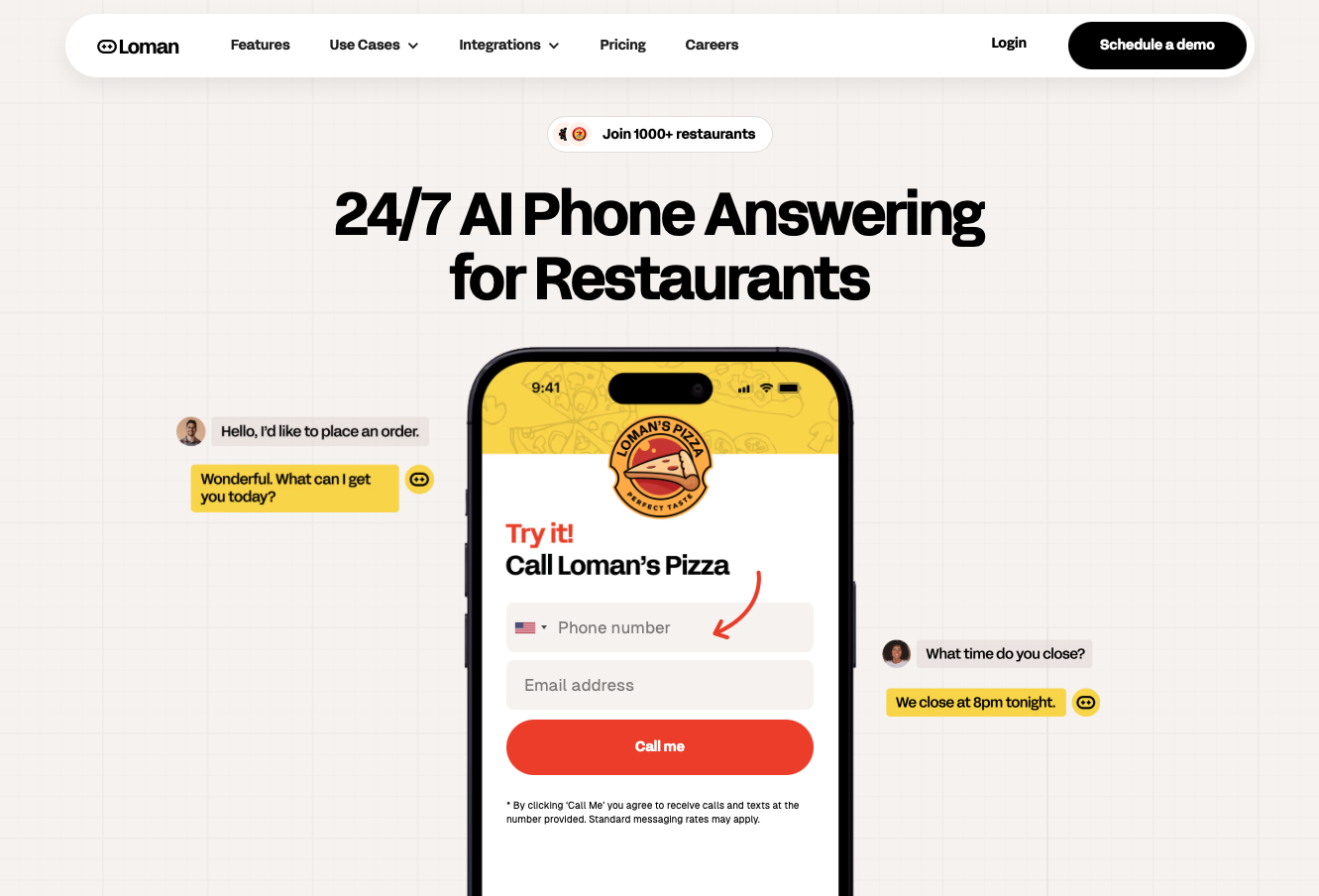
Loman AI was built specifically for restaurants, which means it does something Square never promised to do: answer the phone during a Friday rush, work through a full order with the caller, and write a clean ticket straight into Square POS without a staffer touching a screen. It reads your live Square menu in real time, so 86'd items disappear mid-call and price changes reflect immediately. Payment closes on the same call through Square, which means no callbacks and no orders left hanging. The result is a phone channel that looks identical to your counter channel on the kitchen line.
The numbers operators report tell the story clearly. Crust Pizza said Loman paid for itself in 10 days, with calmer phones and bigger tickets. Tony Boloney's picks up 75 to 100 extra direct orders per month per store, orders that keep the full margin instead of handing a cut to a delivery app. Operators using Loman have reported up to 22% higher phone revenue and up to 17% lower labor costs, a meaningful return in an industry where restaurant labor costs above 36% of sales are now the norm. If those numbers are worth seeing on your own menu, a live demo takes about 15 minutes and runs on your actual Square setup. Book a demo to hear Loman handle a real call.
Yes. Loman reads your live Square menu during the call, then pushes the confirmed order straight into Square POS and the kitchen display, so no one re-keys a ticket. A phone order lands on the line looking identical to one rung up at the counter.
Square handles the register but was never built to answer the phone when your counter staff is slammed, which is why roughly 30% of restaurant calls go unanswered during peak service. A voice AI phone agent like Loman answers every call on the first ring and takes the full order into Square, closing the gap where the revenue leaks out.
Payment closes on the same call. Loman captures the card through Square while the order is still live, so there's no callback and no manual capture after the guest hangs up.
Loman reads your Square menu in real time, so when an item is marked 86'd in the POS, it disappears from what Loman can offer mid-call. Callers hear an accurate menu instead of a promise the kitchen can't fill.
Direct phone orders carry two advantages at once: they average $48 against $41 for online orders, and they skip delivery apps where base commissions run 15% to 30% and all-in costs reach 30% to 40% per order. Tony Boloney's, an operator-reported result, captures 75 to 100 extra direct orders per month per store that keep the full margin.
AI phone answering for Square restaurants closes the one gap Square was never built to fill: the ringing line during a dinner rush. Missed calls are orders that rarely come back, and your Square setup can't grab the phone for you. A voice AI agent answers on the first ring, takes the card, and writes the ticket straight into Square POS and the kitchen display. Your phones stay calm and the full margin stays yours. Operators who've closed that gap report real results. Tony Boloney's picks up 75 to 100 extra orders per month per store, and Crust Pizza said Loman paid for itself in 10 days. The math compounds fast when every phone order lands clean in Square instead of ringing out. Grab a quick demo and run it on your own menu.
Enter your information in the form to receive a call from Loman and place an order like a customer would!

