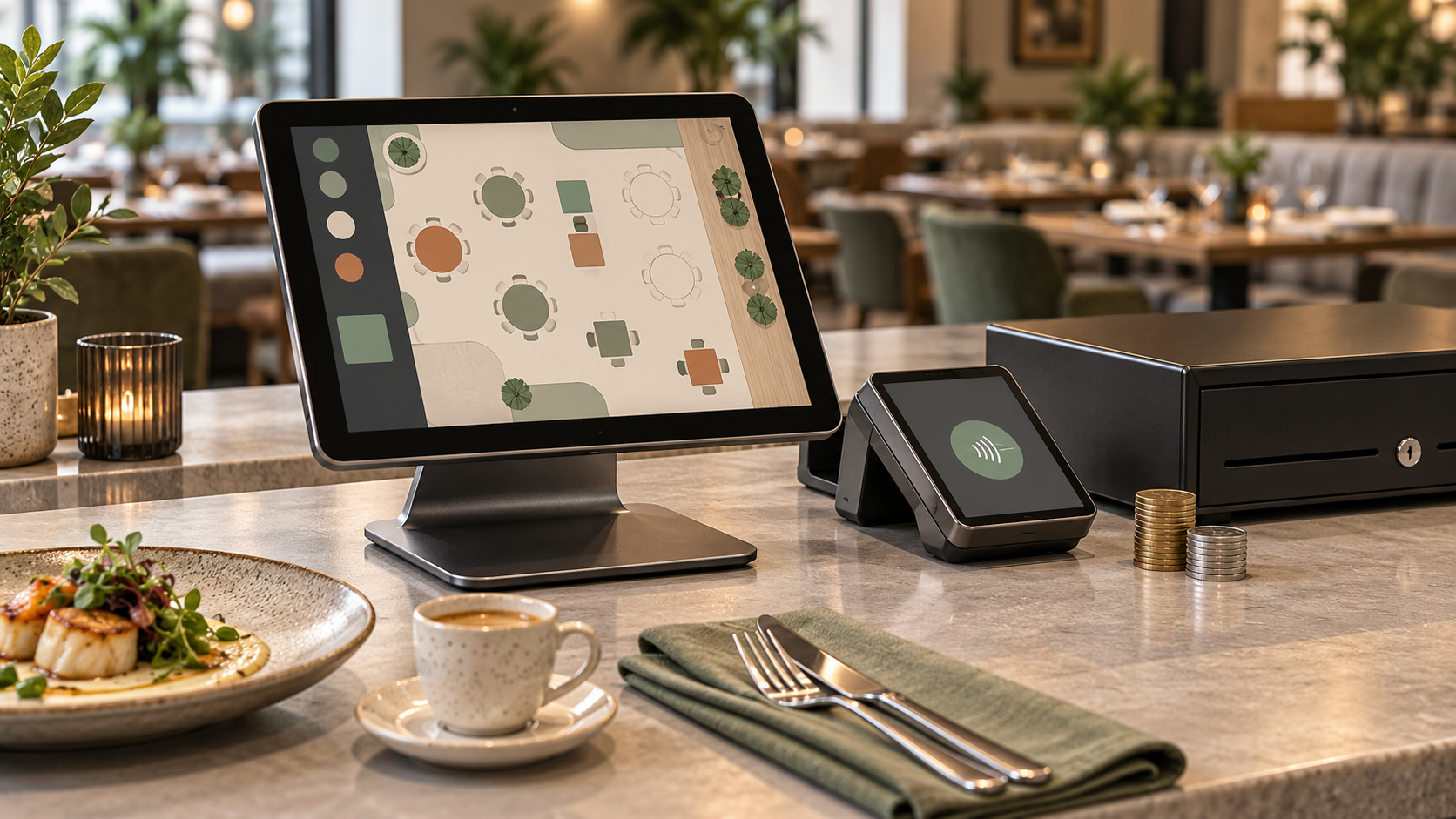
Every table turned, every to-go order placed over the phone adds up. When your point-of-sale system is not the right fit, the cost shows up in your labor budget, your missed calls, and your end-of-month margins. Breadcrumb POS, now rebranded as Lightspeed Restaurant (U-Series), is one of the better-known systems serving full-service restaurants, bars, and cafes. Before you commit to a subscription, hardware bundle, or long-term contract, here is a full breakdown of what Breadcrumb POS costs in 2026, what you actually get, and where the hidden fees show up.
TLDR:
Breadcrumb POS has gone through several ownership changes since its original launch. The system started as Swipely in 2009, pivoted to become Upserve, and then acquired the Breadcrumb POS brand in 2016. In 2020, Lightspeed acquired Upserve and folded the Breadcrumb functionality into their restaurant product line as Lightspeed Restaurant (U-Series). If you are an existing Breadcrumb user, your interface and daily workflows are largely unchanged, but in early 2026, Lightspeed divested the U-Series (Upserve/Breadcrumb) line, and the product now operates independently of Lightspeed. Contact the U-Series team directly for current support and contract details rather than assuming Lightspeed still owns the relationship. For a detailed comparison of how the two systems stack up on features and cost, see our Toast POS vs Breadcrumb POS breakdown.
The system runs exclusively on Apple iOS devices (iPad 2 or newer) and is built for full-service restaurants, bars, and cafes, and multi-location groups. It covers order processing, table management, inventory tracking, kitchen display integration, and basic customer management.
The system connects with accounting tools like QuickBooks, scheduling apps like 7shifts, and delivery channels including DoorDash and Uber Eats. For a broader look at how these connections fit into a restaurant tech stack, see our guide to top POS integrations for restaurants.
Lightspeed Restaurant (U-Series) uses a tiered subscription model. As of mid-2026, Lightspeed no longer publishes pricing on its site, so current quotes require contacting its sales team directly. The Essential plan was last published at approximately $189 per month and covers single-location operations with core order management, payment processing, basic reporting, and standard support. The Premium plan was last published at approximately $399 per month and adds multi-location management, advanced analytics, customer loyalty support, and expanded integration options. High-volume or multi-location groups can request custom Enterprise pricing that includes dedicated support and tailored configurations.
Keep in mind that these subscription fees are the floor, not the ceiling. Hardware, payment processing, add-ons, and setup services all layer on top. If you are weighing this against other systems, our Toast POS vs competitors breakdown covers how the major platforms compare on total cost.
| Plan | Monthly Cost | Locations | What's Included | Notable Gaps |
|---|---|---|---|---|
| Essentials | ~$69/mo (last published) | Single location | Core order management, payment processing, basic reporting, standard support | No multi-location tools, limited analytics, no loyalty; current pricing requires a direct quote |
| Plus | ~$189/mo (last published) | Single location | Core order management, payment processing, basic reporting, standard support | No multi-location tools, limited analytics, no loyalty; current pricing requires a direct quote |
| Pro | ~$399/mo (last published) | Multi-location | Advanced analytics, loyalty support, expanded integrations, multi-location management | Add-on modules still billed separately; current pricing requires a direct quote |
| Enterprise | Custom pricing | Groups | Dedicated support, tailored configurations, high-volume SLAs | Requires direct sales engagement; no self-serve signup |
| Phone channel (Loman) | From $199/mo | Any size | 24/7 AI phone answering, order-to-POS sync, reservations, unlimited calls, flat monthly fee | Supplements your POS; does not replace it |
The U-Series built-in payment processing charges a flat rate of approximately 2.6% plus $0.10 per card-present transaction. This rate applies to all card types, including American Express. If you choose a third-party processor instead, expect to pay an additional monthly fee of up to $400 on top of your subscription. For most restaurants, the integrated processor is the more predictable option, especially once your average ticket runs above $30. Since Lightspeed's 2026 divestiture of the U-Series line, restaurants should confirm current processor terms directly with the U-Series team.
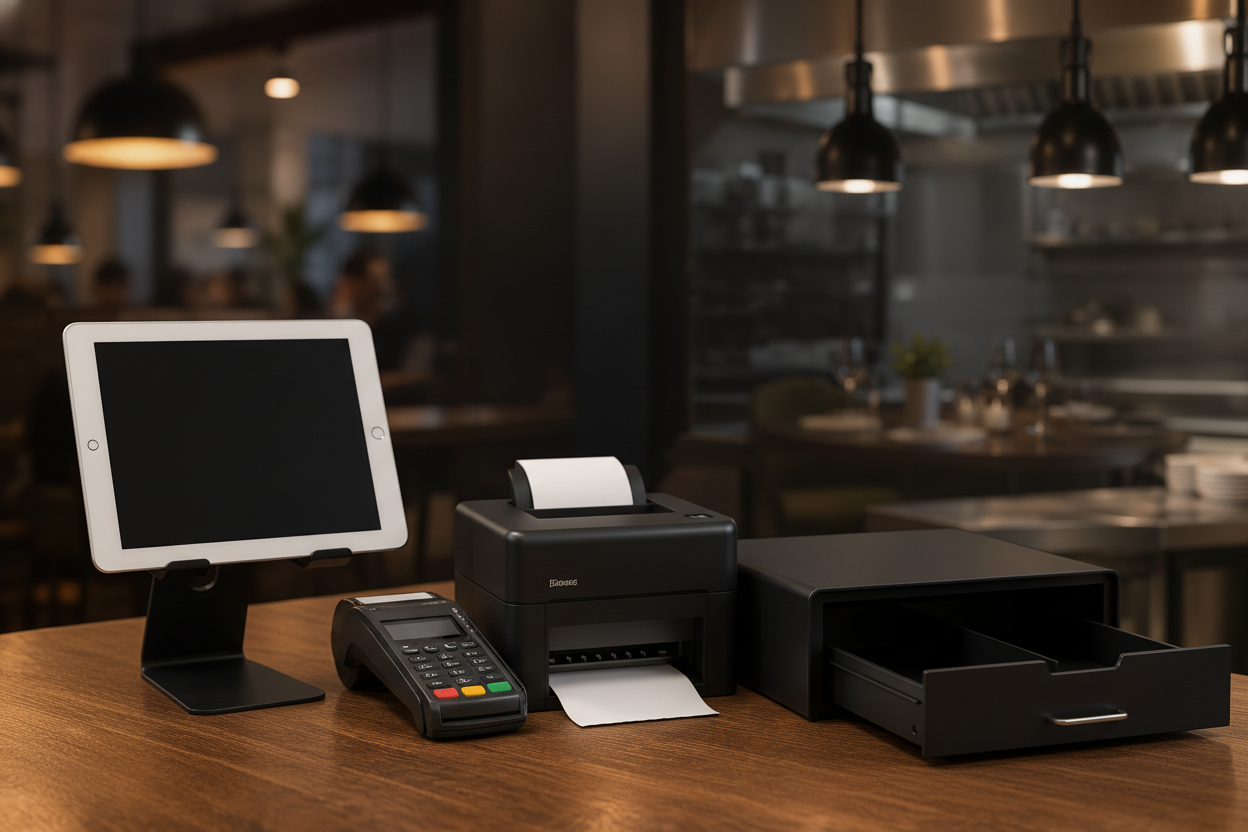
The U-Series runs on iPads, which means your hardware budget starts with Apple devices before you add restaurant-grade peripherals. A basic terminal bundle that includes an iPad, protective case and stand, credit card reader, receipt printer, and cash drawer starts at roughly $1,000. Each additional terminal carries a similar upfront cost.
Common hardware line items to budget for:
Remote setup support runs about $75 per hour. On-site installation, where a technician physically configures your hardware and software, costs around $125 per hour. A full menu build inside the system, covering all items, modifiers, pricing tiers, and categories, costs approximately $400 as a one-time service fee. Budget for training as well: the Essential tier includes basic training, while more involved onboarding may require an additional investment. If you're still deciding between platforms, our Toast POS vs Breadcrumb POS comparison covers setup and onboarding differences in more detail.
Beyond the base subscription, Lightspeed charges separately for several features that restaurants commonly need. Loyalty program management, advanced inventory control, online ordering integrations, and expanded analytics modules each carry their own monthly fees. The Premium tier bundles more of these features, which can make the higher subscription price worthwhile if you need three or more add-ons.
Popular integration categories and rough cost context (see our top POS integrations for restaurants guide for a full breakdown):
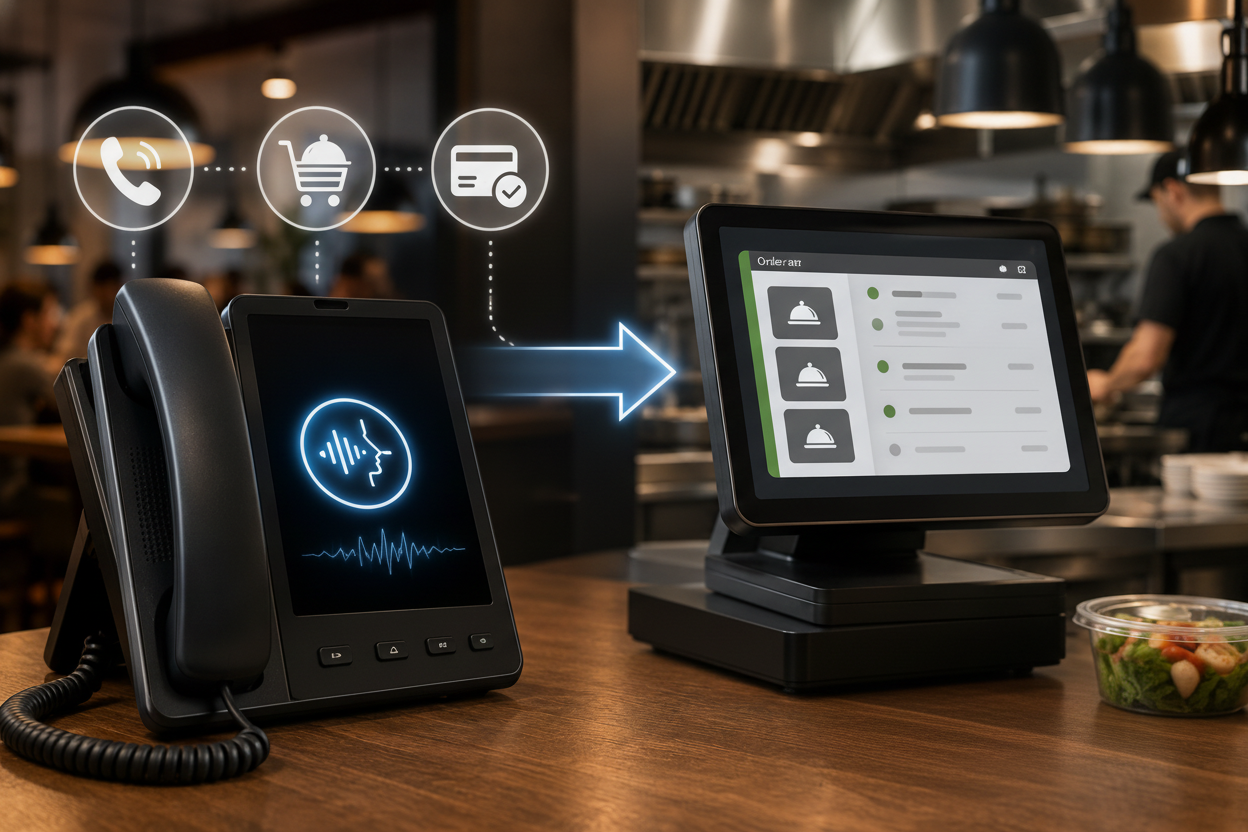
Two notable shifts are reshaping how restaurants evaluate POS costs right now. First, labor costs in food service have continued to climb, with wages pressing margins in most U.S. markets. That pressure has made the cost of phone staff, host staff, and front-of-house coverage a bigger line item than it was two years ago. Second, AI-powered phone agents have matured to handle full restaurant phone workflows, from taking orders and booking reservations to answering menu questions and managing callbacks. Restaurants that used to treat phone coverage as a staffing problem are treating it as a technology decision. A voice AI phone agent for restaurants now sits alongside any POS system, including Lightspeed U-Series, and handles inbound calls without adding headcount.
For restaurants using Breadcrumb/Lightspeed, the POS handles your in-restaurant and delivery transactions. Your phone channel, which still drives a meaningful share of to-go and catering revenue, is a separate gap that the POS alone does not fill.
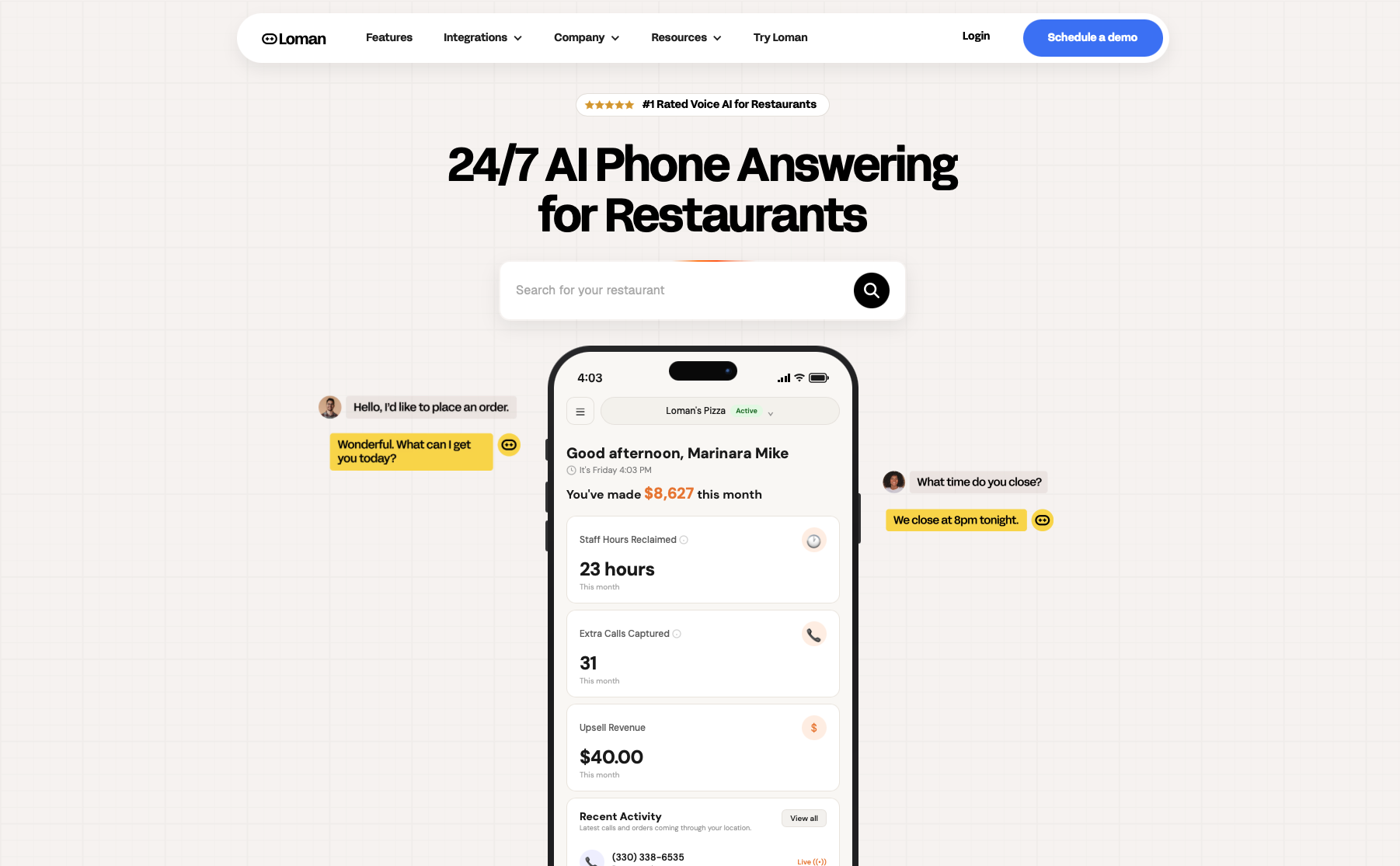
Loman is a voice AI phone agent built specifically for restaurants. It connects directly with leading POS systems including Toast, Square, Clover, SpotOn, and SkyTab, as well as Aloha by NCR, Olo, and Stream, using a two-way integration. When a caller places an order, it pushes straight to your POS and kitchen display system with no manual re-keying by staff. The system also reads your live menu in real time, so 86'd items, price changes, and modifier updates are reflected automatically during the call.
Loman handles reservations, too. It books, confirms, modifies, and cancels reservations 24/7, syncing directly with OpenTable, Resy, and SevenRooms. It checks real-time availability and pushes confirmed bookings back into your reservation system automatically, eliminating double-booking risk and capturing guests who would otherwise go to voicemail.
Pricing starts at $199 per month, a flat subscription with no per-minute or per-interaction fees. Your cost stays the same whether the phone rings 20 or 200 times on a Saturday night, replacing the unpredictable expense of hourly phone staff with a single fixed line item. Most restaurants go live in under 24 hours. Setup involves connecting your POS, importing your menu, selecting a greeting, and setting your business rules, with no coding or dedicated IT required.
Operators using Loman have reported up to 22% higher phone revenue and up to 17% lower labor costs. Tony Boloney\u2019s adds 75 to 100 extra orders per month per location as an operator-reported result. Crust Pizza reported that Loman paid for itself in 10 days.
The subscription starts at $189 per month for a single location, but hardware alone starts at $1,000 per terminal, and payment processing adds 2.6% plus $0.10 per card transaction. Factor in setup fees, add-on modules, and optional KDS software at $35 per month per screen to get your real number before comparing options.
Loman connects to your existing POS using a two-way integration, pushing phone orders directly into your kitchen display system with no manual re-keying by staff. The POS handles your in-restaurant and delivery transactions; Loman covers the phone channel your POS cannot answer during a Friday dinner rush, so both systems do their specific job without overlap.
Yes. Loman answers every inbound call, takes full pickup and delivery orders, and books or modifies reservations through OpenTable, Resy, and SevenRooms, all at a flat $199 per month with no per-call fees. Operators using Loman have reported up to 22% higher phone revenue and up to 17% lower labor costs, and Crust Pizza reported the system paid for itself in 10 days.
Slang AI is built around reservation management and guest communication; it does not focus on automated phone ordering or pushing orders natively into a POS. Loman handles both the full order-taking and reservation lifecycle in a single system, syncing confirmed orders and bookings back into your POS and reservation software without a manual step in between.
Most restaurants go live in under 24 hours. Setup involves connecting your POS, importing your menu, selecting a greeting, and setting your business rules, with no coding or dedicated IT required.
Breadcrumb POS, now Lightspeed Restaurant (U-Series), works well for full-service restaurants that need solid table management and multi-location reporting. Just know the real cost runs well above the $189 or $399 base rate once you add hardware, payment processing, KDS fees, and setup. A single location outfitting two or three terminals can clear $10,000 in year one. Map every line item before you sign. The bigger gap is your phone channel. Lightspeed handles every table turn and delivery ticket, but it cannot answer the calls stacking up during a Friday rush. Loman fills that gap at a flat $199 per month, pushing phone orders straight to your kitchen and booking reservations 24/7. If you want to see what that looks like on your call volume, book a free demo and go live before your next dinner rush.
Enter your information in the form to receive a call from Loman and place an order like a customer would!

