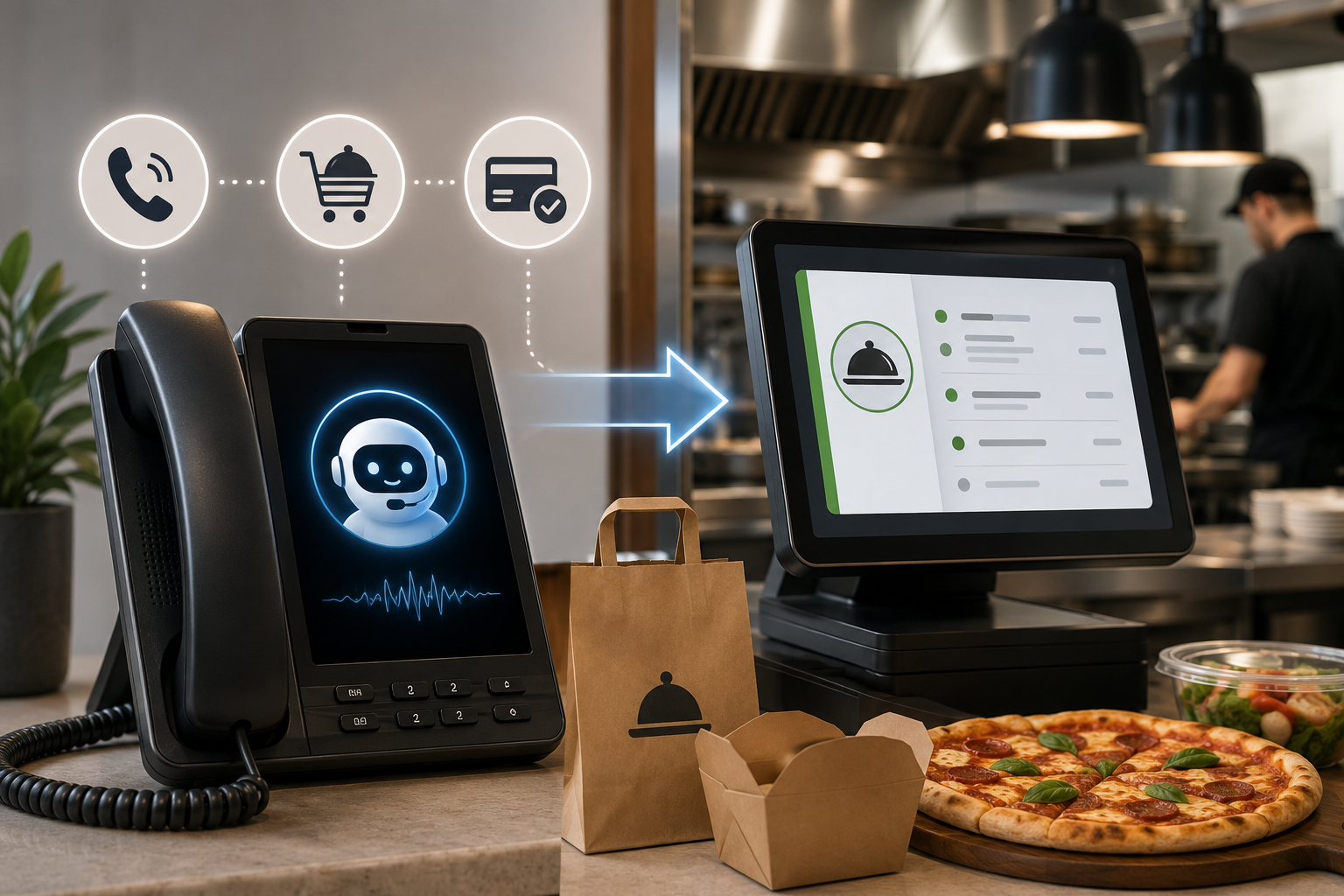
Most AI phone systems will tell you they integrate with your POS. Fewer actually inject the order directly into Toast or Square and close the transaction on the call, and every call that ends in a checkout link instead of a closed ticket is a $48 order at risk of going uncaptured. If you're searching for the best phone system for restaurants with Toast Square integration, this breakdown covers all six worth considering, including which ones genuinely close the order on the call and which ones quietly reroute callers to a checkout link instead.
TLDR:
An AI phone system for restaurants is a voice agent that answers every incoming call, takes complete pickup and delivery orders, fields menu questions, and pushes the finished ticket straight into your POS. Nobody on the floor re-keys a phone order by hand.
That is what sets these restaurant AI tools apart from an old phone tree. A voice agent talks like a person, handles several callers at once, and works while your line cooks stay on the line and your counter stays clear. Orders land in Toast or Square exactly as spoken, so tickets read clean and the kitchen fires them without a second look.
Every system here was measured against the same public criteria, drawn from product pages, documentation, and third-party reviews. No vendor paid for or sponsored a spot in the ranking.
Here is what we weighed:
Where a vendor does not publicly document a capability, we say so instead of assuming it exists.
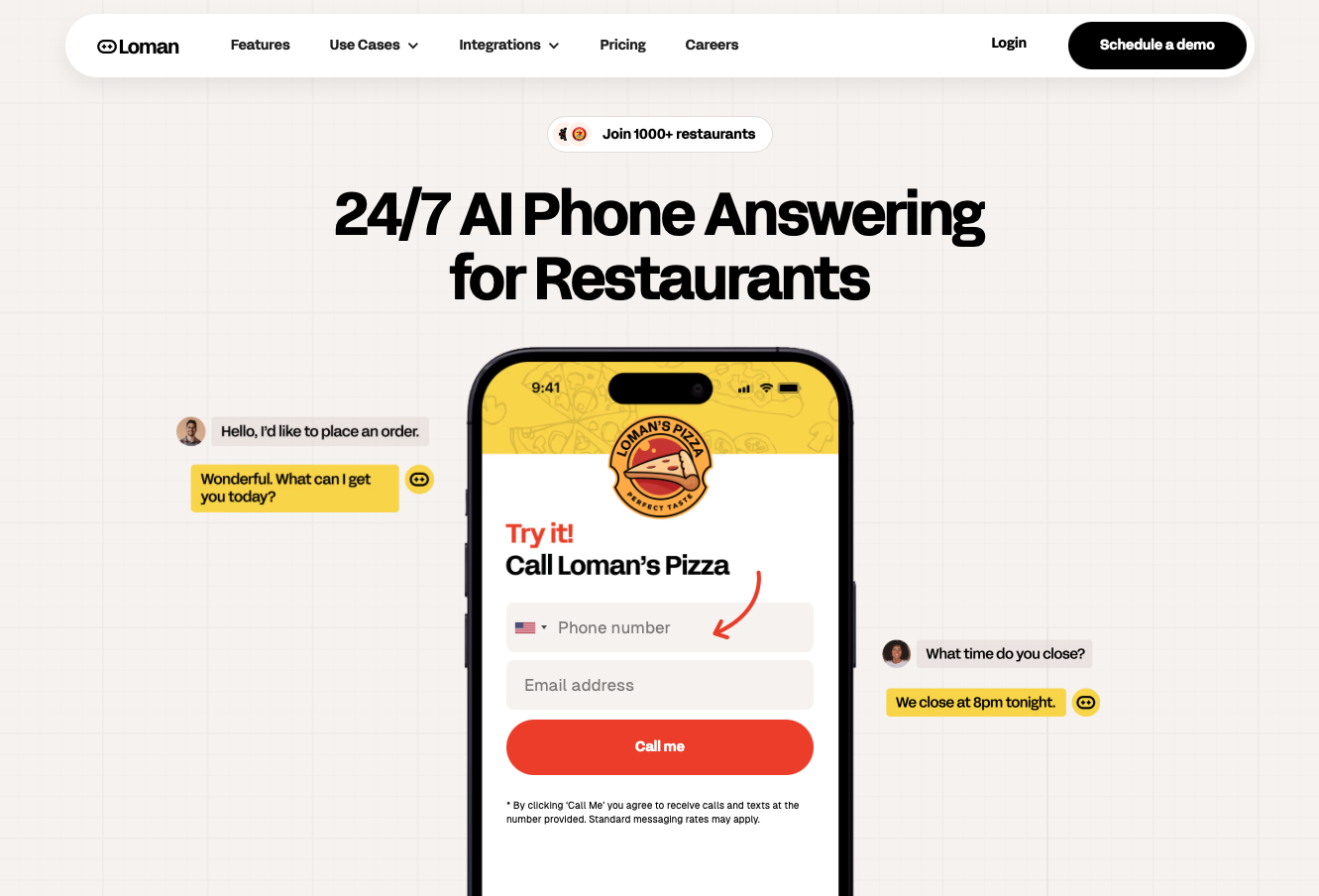
Loman answers every call around the clock, takes full pickup, delivery, and reservation orders, and pushes each ticket straight into Toast or Square with the payment attached. No one on the floor re-keys anything. Crust Pizza reports the system paid for itself in 10 days.
Because the live menu reads directly from the POS, an 86'd item never reaches a caller and specials stay current without a manual update.
Bottom line: Loman pairs native Toast and Square integration with full in-call order and payment closure, unlimited concurrency, and sub-24-hour deployment at a price that works for a single storefront or a growing chain.
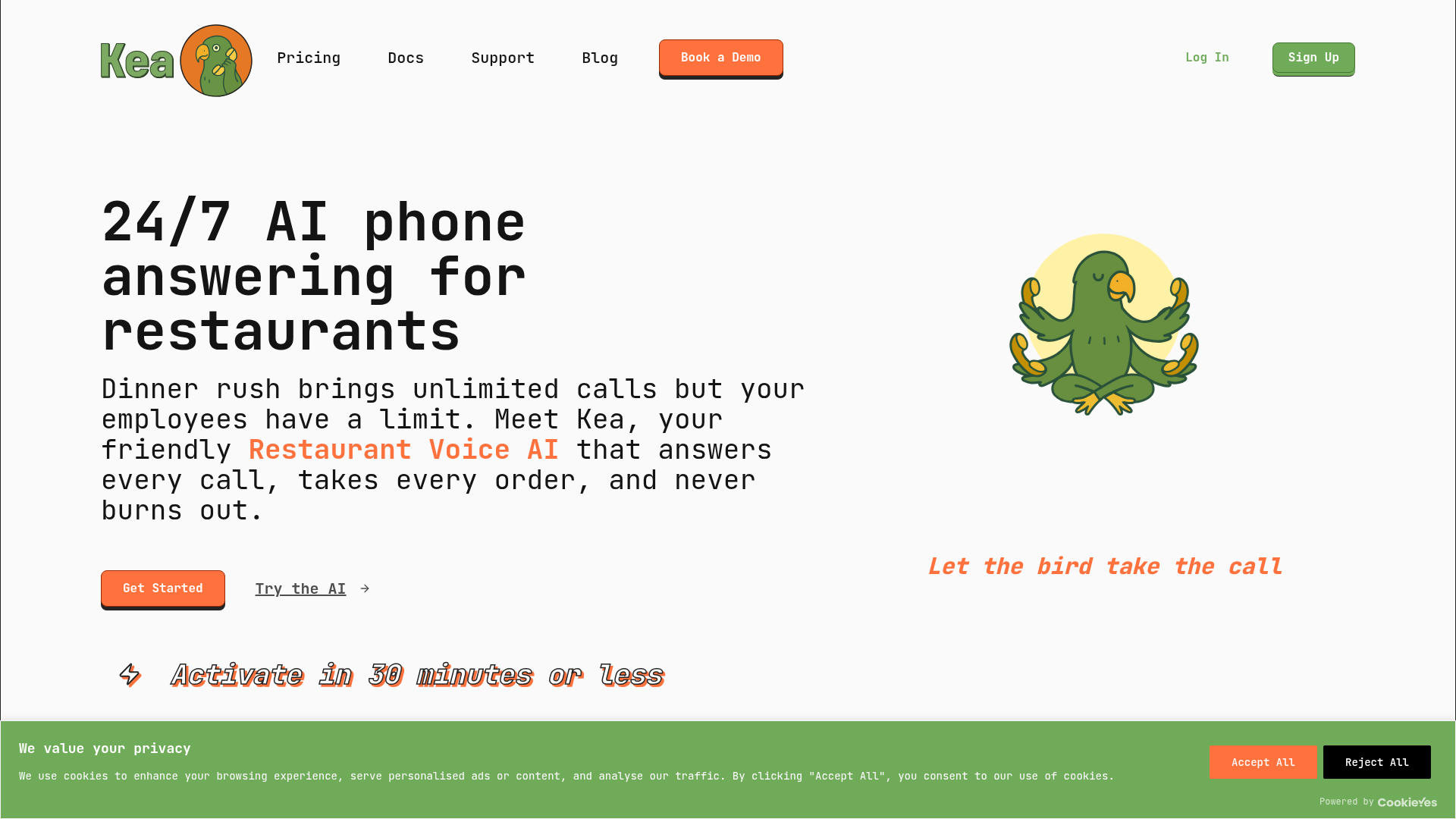
Kea automates incoming restaurant calls, answers questions, takes orders with customization, runs upsells, and sends completed tickets to the kitchen POS.
Good for: Regional chains that want to digitize phone operations and prefer human oversight plus flexible text payment, though how AI phone systems benefit restaurants varies widely by format and volume.
Limitation: The design leans on live reps when confusion arises, and POS integration typically takes four weeks, adding setup time and cost.
Bottom line: Kea suits growing chains comfortable with a longer rollout and human backup. Restaurants wanting autonomous handling, live deployment in under 24 hours, and a lower entry price will find Loman the faster fit.
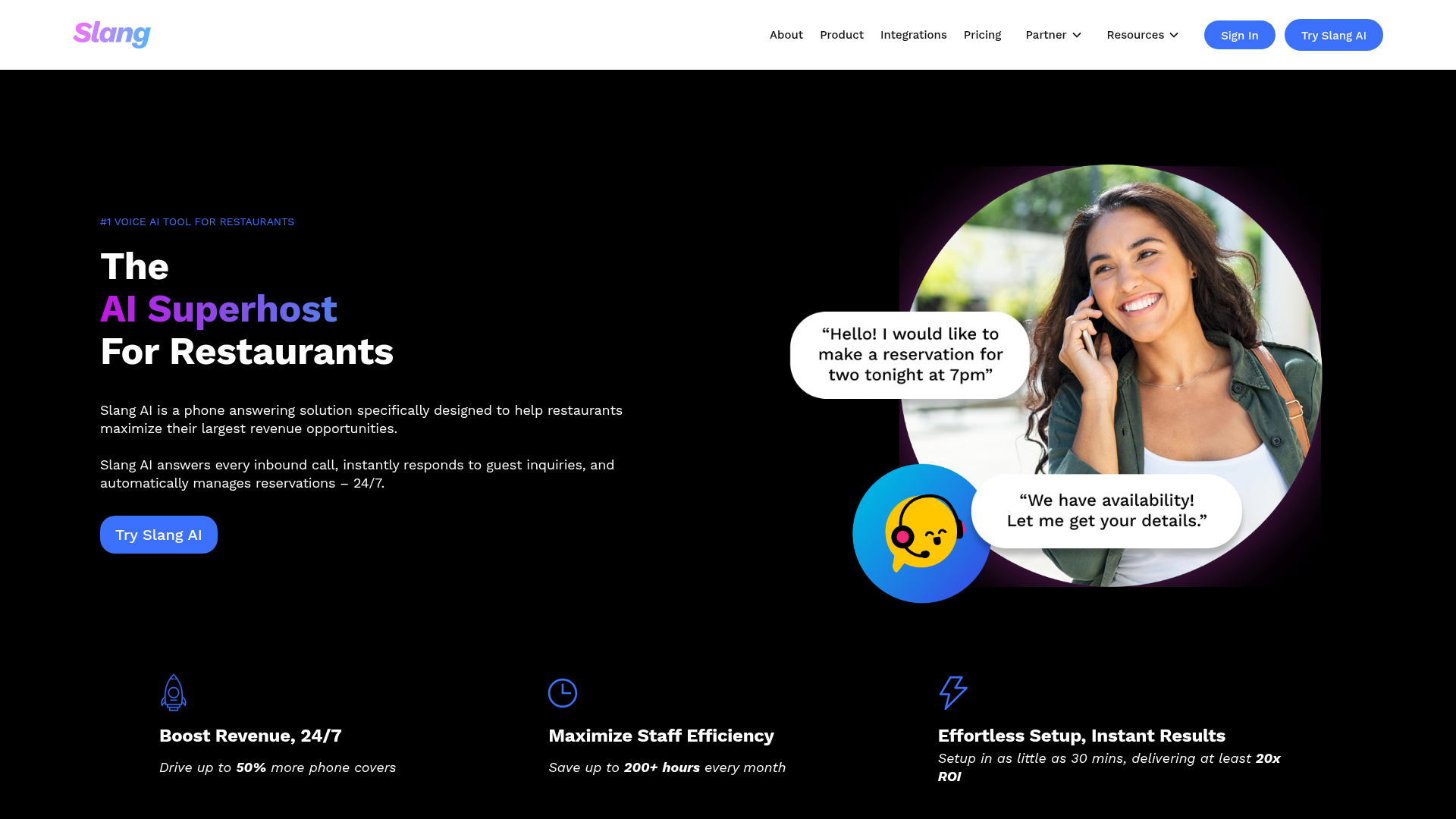
Slang AI vs VOICEplug is a comparison worth reading before choosing a reservation-focused system; Slang.ai handles AI phone answering for full-service restaurants, focusing on reservations and guest inquiries, and connects with OpenTable and SevenRooms to book tables and answer menu questions.
Good for: Full-service and fine dining rooms where reservations drive most phone volume and takeout stays minimal.
Limitation: Slang.ai does not publicly list direct order injection into Toast, Square, Clover, or most mid-market POS systems. Orders route to an online ordering flow instead of getting taken on the call, so real-time POS sync for phone orders does not exist in the traditional sense.
Bottom line: Slang.ai fits restaurants where the phone mostly rings for bookings and information. Operators who treat phone orders as a revenue channel need a system that closes the full transaction on the call, which is where Loman separates.
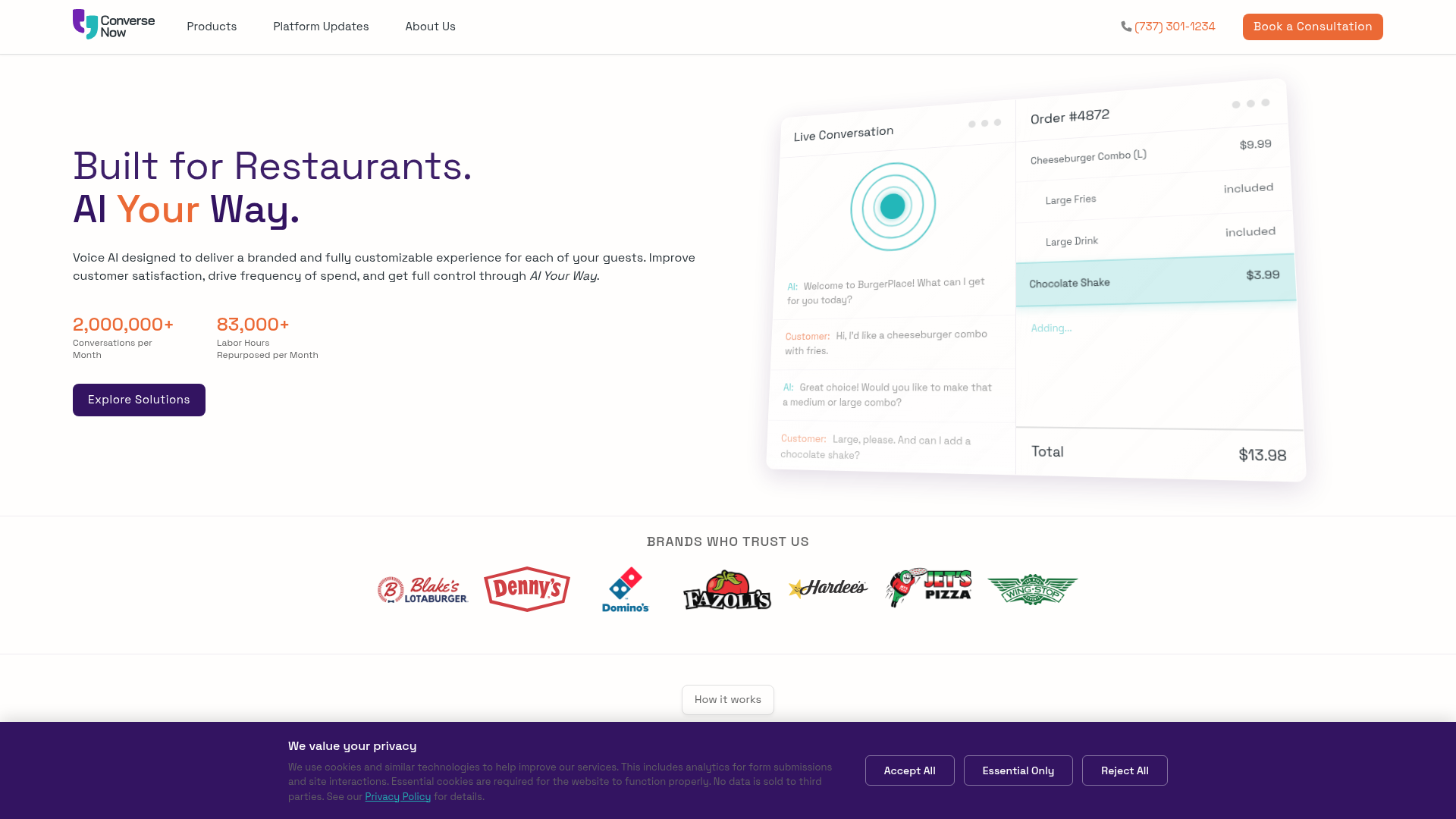
ConverseNow is a voice AI system built for drive-thru automation and phone ordering at quick-service chains, handling order-taking across both channels and connecting with major POS systems. For a full breakdown, see our guide on integrating AI phone systems with POS platforms.
Good for: Enterprise chains with drive-thru lanes that can carry an extended implementation.
Limitation: ConverseNow targets enterprise QSR brands with multi-week rollouts and does not publicly list native direct integrations with Toast or Square independent of middleware. Confirm POS connectivity with your stack before committing.
Bottom line: ConverseNow fits large QSR chains running high-volume drive-thru operations. Independents and mid-market restaurants needing fast deployment, direct Toast or Square integration, and phone-first order taking will find Loman a more practical fit.
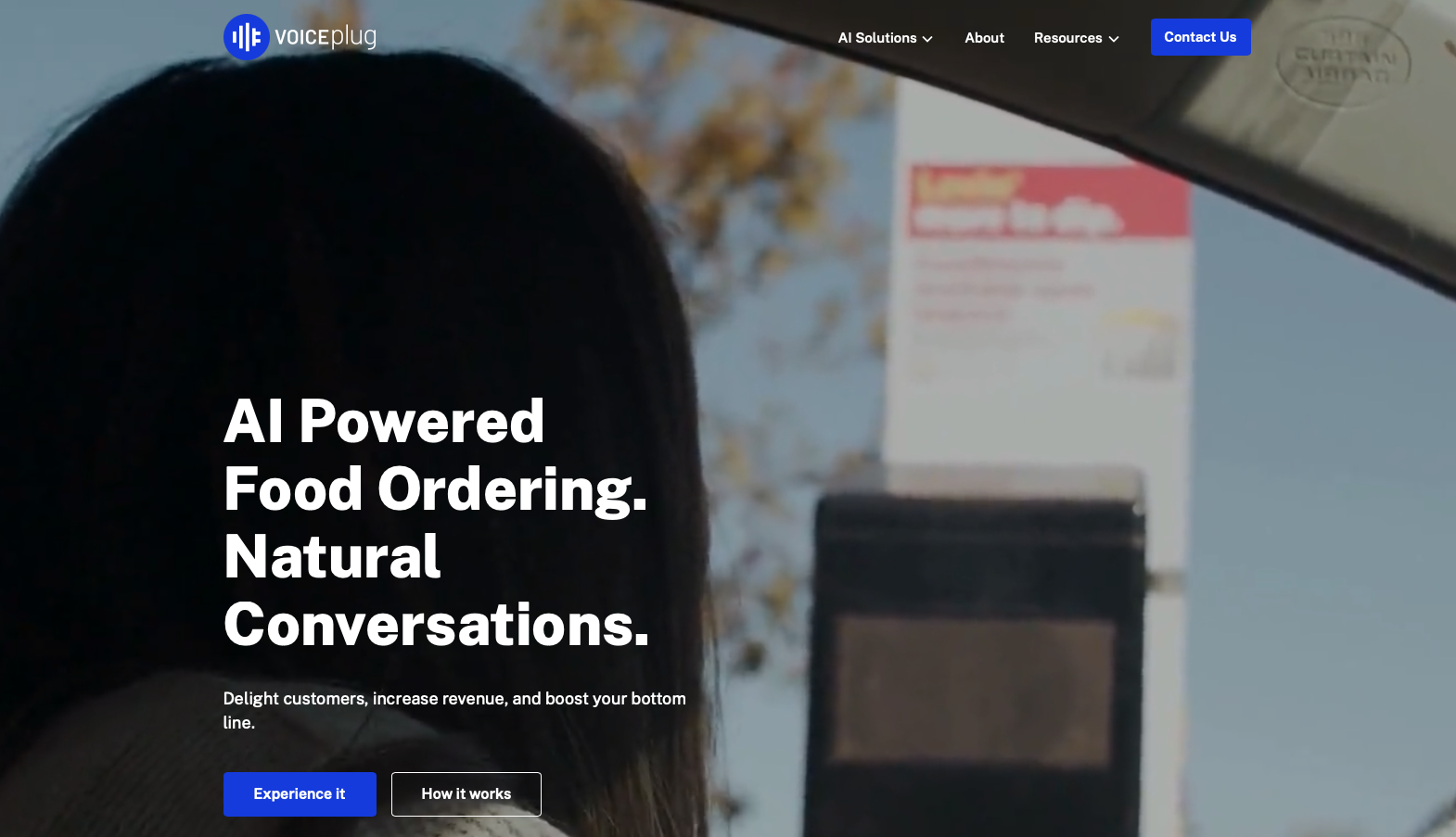
VOICEplug AI automates ordering across phone, drive-thru, kiosk, and reservation channels, pitching itself as one vendor for single locations and enterprise chains alike.
Good for: Enterprise QSR chains and franchise operators wanting one vendor for phone, drive-thru, and kiosk ordering.
Limitation: VOICEplug does not publicly name its POS integration partners, so confirming native Toast or Square compatibility means entering a sales process first. See our Loman vs. VOICEplug comparison for a full breakdown.
Bottom line: VOICEplug fits operators running multi-channel strategies who need drive-thru and kiosk AI alongside phone. Phone-first restaurants on Toast or Square wanting verified, documented native integrations and sub-24-hour deployment will find Loman the clearer choice.

SoundHound AI is an enterprise voice AI offering conversational ordering across phone, drive-thru, and kiosk channels, deployed by large national brands. That is a stark contrast to the direct restaurant AI phone POS integration that independent operators need.
Good for: Large national QSR chains with dedicated IT budgets, existing enterprise vendor relationships, and multi-channel needs across hundreds of locations.
Limitation: SoundHound targets large brands needing custom integrations and support contracts, with deployments running 8 to 12 weeks. That makes it impractical for independents wanting to go live quickly on Toast or Square.
Bottom line: SoundHound suits national chains with the budget and runway for a long rollout. Independent and mid-market Toast and Square operators who need phone revenue recaptured now will find the timeline and cost a poor match, where Loman goes live in under 24 hours.
Here's a side-by-side look at how the leading options stack up on the features that matter most when your POS is Toast or Square.
| System | POS integration | Takes full phone orders | Concurrent calls | Setup time | Starting price |
|---|---|---|---|---|---|
| Loman | Toast, Square, Clover, SpotOn, more | Yes, pushed straight to POS | Unlimited | Under 24 hours | $199/mo |
| Slang AI | Reservation-focused | Reservations only | Limited | Varies | $399/mo |
| ConverseNow | Select POS | Yes | Varies | Varies | Varies |
| Kea | Select POS | Yes | Varies | Varies | Varies |
| VOICEplug AI | Not publicly named | Yes | Varies | Varies | Varies |
| SoundHound AI | Enterprise POS (custom) | Yes | Varies | 8 to 12 weeks | Varies |
Loman routes orders straight into Toast or Square with no re-keying. That's the difference you can verify before signing.
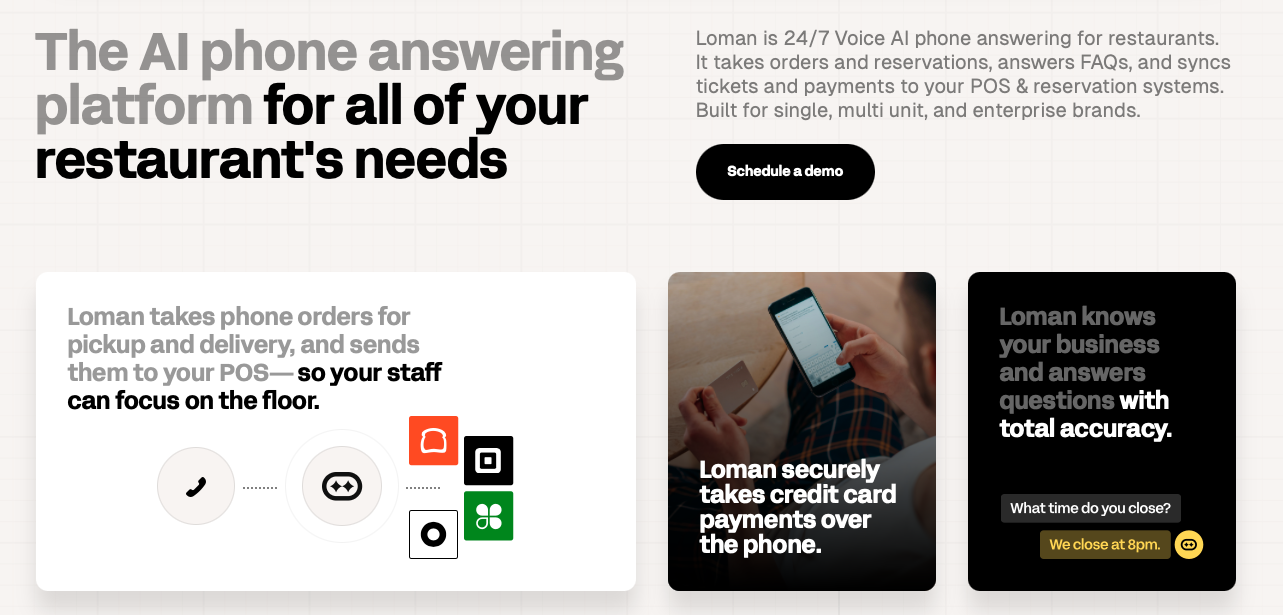
For Toast and Square operators, the separation comes down to what happens on the call. Loman reads your live menu straight from the POS, so an 86'd item never gets quoted to a caller, and every finished order pushes directly into Toast or Square and onto the KDS with no one re-keying a ticket. The full picture of how Toast POS and voice AI work together shows why this matters.
Every dinner rush is either a covered phone channel or a missed ticket. Loman is the only option on this list that closes the full order, takes payment in-call, and goes live on Toast or Square in under 24 hours.
Start with integration depth: confirm whether the system pushes orders directly into your POS or routes callers to an SMS checkout link instead. From there, check whether it closes the full transaction on the call, how fast it deploys, and what it costs per month. Those four filters will narrow the list to one or two options quickly.
SoundHound and ConverseNow are built for large enterprise chains with the budget and timeline for 8-to-12-week custom rollouts. They are not designed for a single-location or small-chain operator who needs to go live on Toast or Square in days. Loman deploys in under 24 hours at $199 a month with no per-minute charges, which makes the economics work for independent restaurants in a way enterprise-focused systems typically do not.
Slang.ai fits well when reservations drive the majority of your phone volume and takeout is minimal. It connects with OpenTable and SevenRooms and handles bookings reliably. If your phone rings for pickup and delivery orders as often as it rings for tables, you need a system that closes the full order and pushes it to your POS on the call, which Slang.ai does not publicly offer.
Phone orders are still real revenue, and the best phone system for restaurants with Toast Square integration is the one that closes the full order on the call and pushes it straight to your POS. Each option here fits a different operator, so the best move is to confirm what any system actually does with the order before you commit. Try a live demo with Loman and see the full order flow for your setup.
Enter your information in the form to receive a call from Loman and place an order like a customer would!

