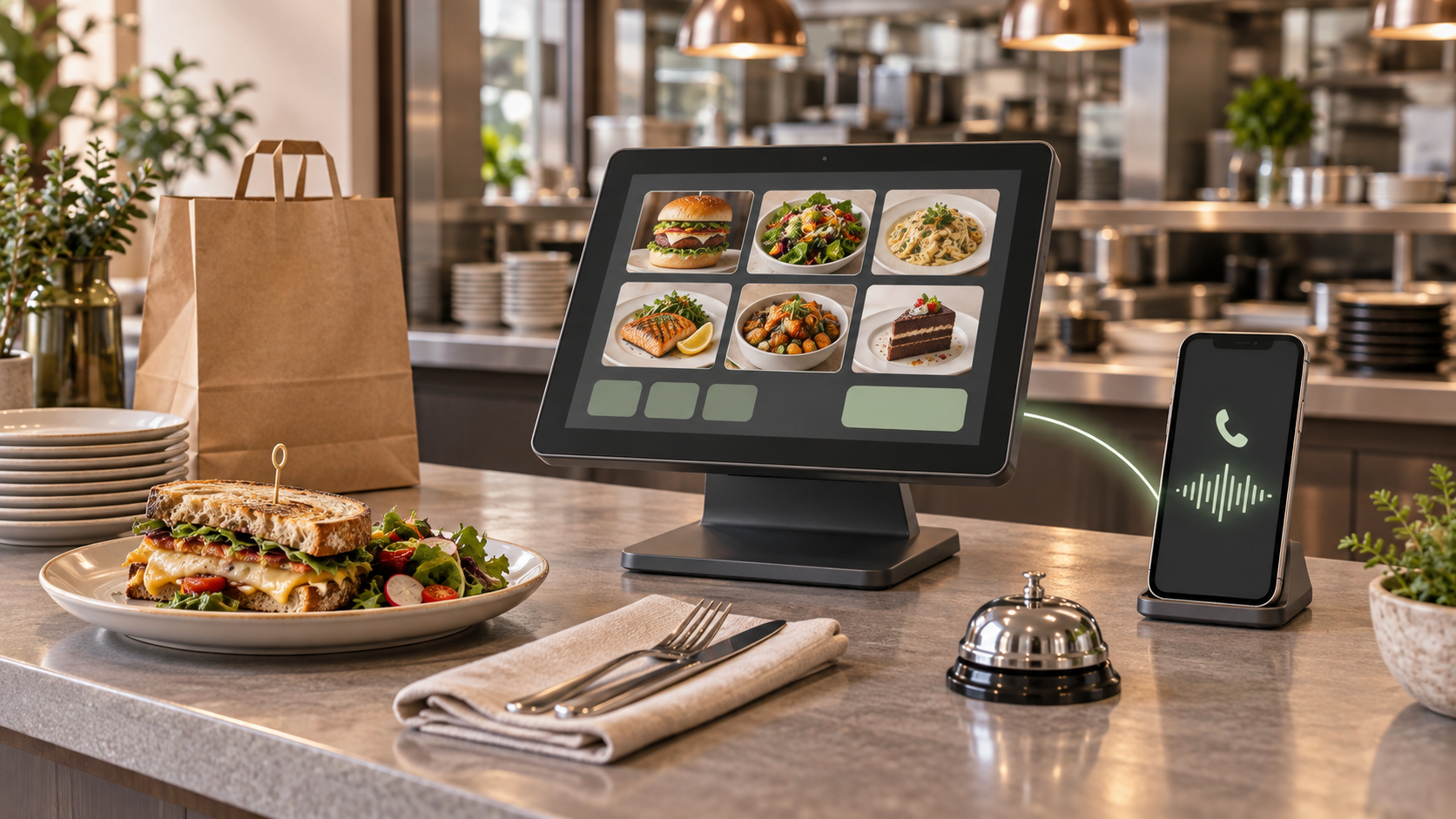
Phone orders still drive a meaningful share of restaurant revenue, and for most operators, they are also the channel most likely to break down during a rush. A busy Friday night exposes every gap in the system: calls that go unanswered, orders that get scribbled wrong, reservations that never make it into the book. Each one is a transaction that walked. Integrated AI systems have changed that equation: they answer every call, route orders directly to the kitchen, and keep your team focused on the floor, all without adding headcount. The operators putting these tools to work are seeing the difference on their P&L.
TLDR:
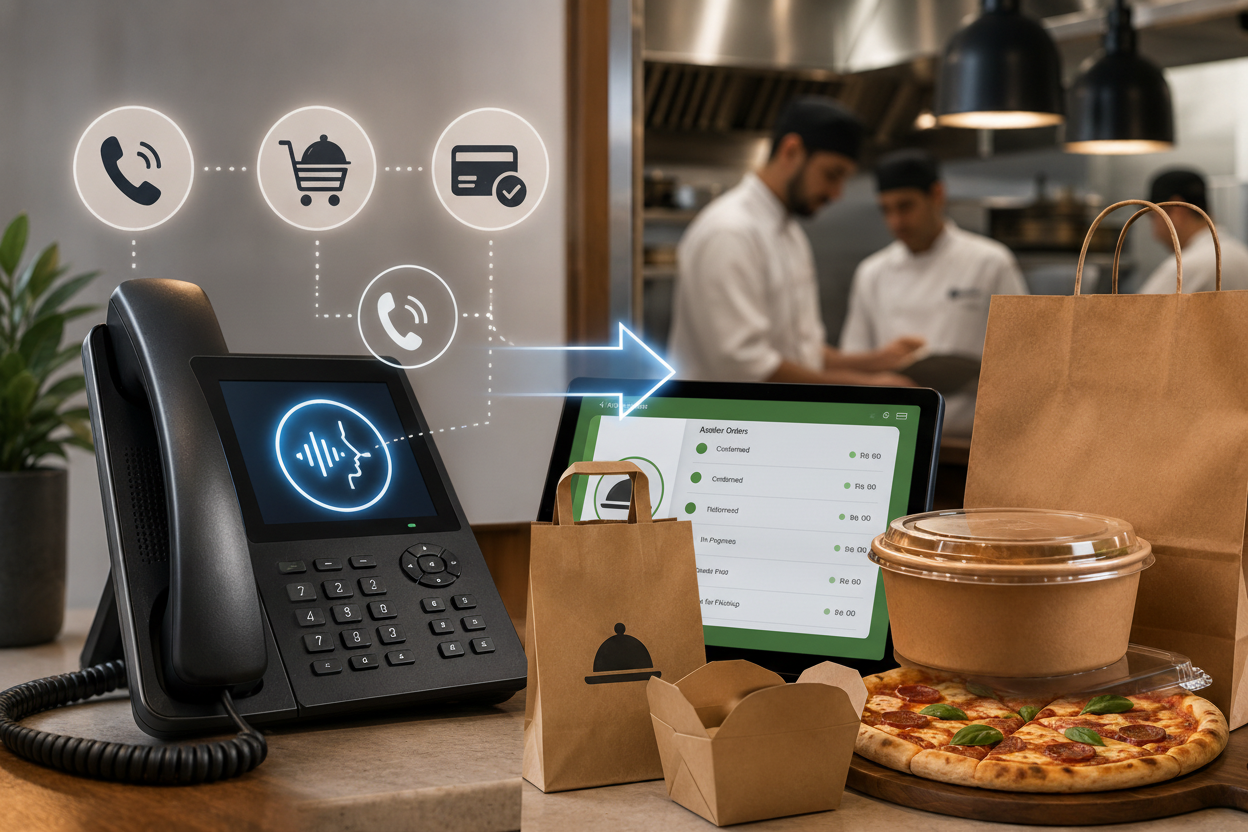
Taking orders over the phone creates real problems for busy restaurants. Between loud background noise and customers who change their minds mid-order, mix-ups happen. That's where AI-powered order taking comes in handy.
With an AI phone agent like Loman, order accuracy goes way up. The system understands even thick accents and picks up on all those little details that are easy for humans to miss.
Here's how AI-powered order processing typically works:
No more scribbled notes or shouting orders across a noisy kitchen. Everything is captured digitally and synced up right away.
The AI can also keep track of inventory in real-time. So if you run out of a popular dish, the system automatically updates to let callers know it's unavailable. No more disappointing customers who order something you can't actually make.
We've all been there - calling a restaurant only to be put on hold for ages or told they're too busy to take reservations right now. With AI handling calls 24/7, that frustration becomes a thing of the past.
Customers can book a table or place an order any time, day or night. The AI remembers their preferences too, so it can make personalized suggestions based on past orders.
Here are some ways AI improves the dining experience:
Let's say a regular customer always orders extra sauce on the side. The AI will remember that preference and ask if they want to add it again next time. It's those little touches that keep people coming back.
This video breaks down some key benefits of using a modern POS system in restaurants. As you can see, integrating AI with your POS takes those advantages even further.
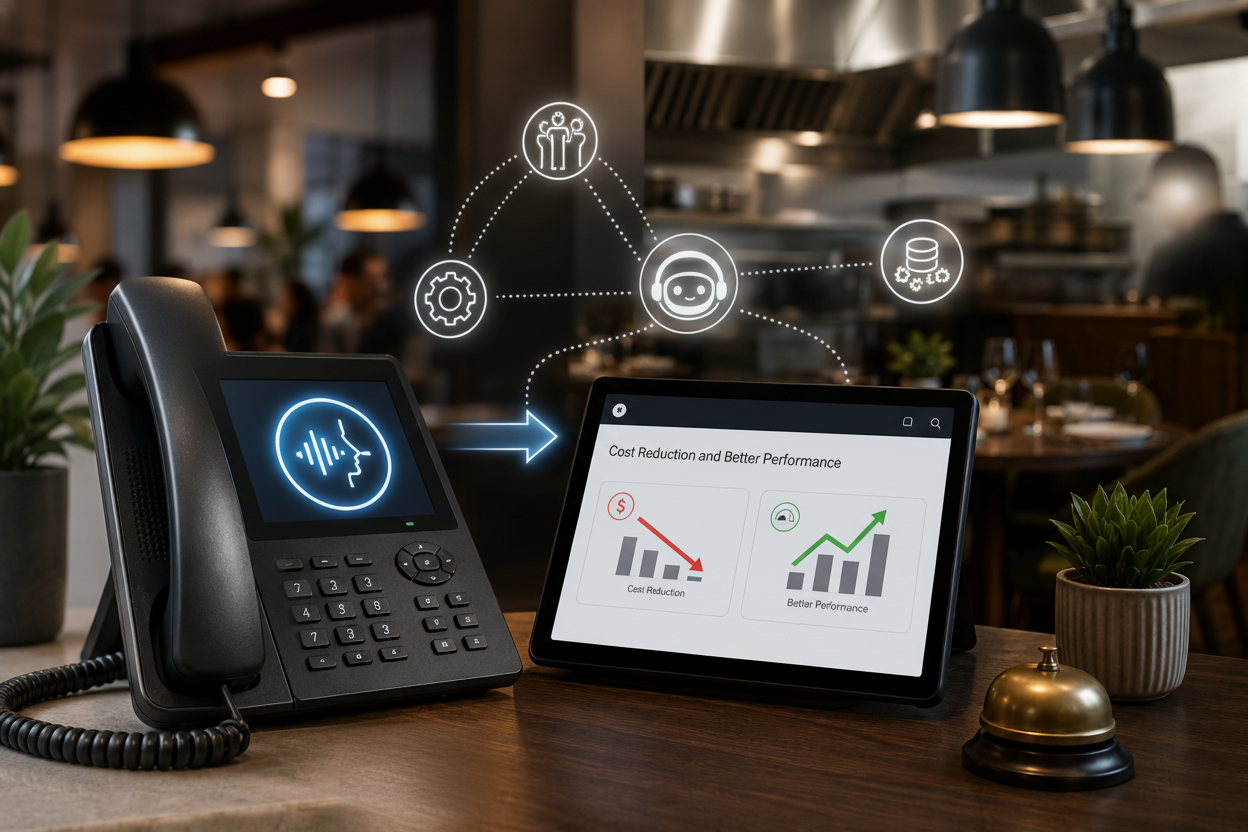
Running a restaurant isn't cheap. According to National Restaurant Association 2024 data, labor costs represent a median of 30.0% of sales for profitable limited-service operators and 34.2% for full-service operators who reported a pre-tax profit. That's where AI can make a big difference to your bottom line.
By automating phone orders and reservations, you can reduce labor costs and operate with a leaner staff. Your team can focus on providing great service to dine-in customers instead of being tied up on the phone.
Here are some key areas where AI reduces costs:
| Area | Traditional Phone Ordering | AI-Powered Phone Ordering |
|---|---|---|
| Staff needed to answer calls | 1 staff member tied up per call | No additional staff required |
| Order accuracy | Prone to mishearing and mix-ups | Consistent, digitally captured tickets |
| Hours of coverage | Limited to staffed hours | 24/7 availability |
| Average call handle time | 3 to 5 minutes | Under 2 minutes |
| Missed calls during peak hours | Common, especially during rush | Minimal, every call answered |
| Onboarding time | None | 1 to 2 weeks |
The initial investment in AI technology pays off quickly for most restaurants. Within a few months, you're likely to see a noticeable bump in both productivity and profits.
Of course, the goal isn't to replace human staff entirely. It's about empowering your team to work smarter, not harder. When routine tasks are handled by AI, your staff can dedicate more energy to creating those memorable dining experiences that keep customers coming back.
At the end of the day, happier customers and a healthier bottom line is what every restaurant owner wants. AI integration with your POS system is a powerful way to achieve both those goals.
AI-powered POS integration is quickly becoming a must-have for restaurants looking to stay competitive. As we look ahead, several key trends are forming that will define how these systems evolve:
These advancements promise to tighten operations even further, but they also bring new challenges. Data privacy concerns and the need for staff training on new technologies top the list of potential hurdles.
AI integration has already gone mainstream across the restaurant sector. According to CloudKitchens' 2026 AI in Restaurants report, citing GetQuantic analysis, 69% of restaurants have adopted some form of AI, though the National Restaurant Association's State of the Restaurant Industry 2026 report puts operator-reported AI tool usage at 26%, reflecting different survey methodologies. Either way, the technology has moved from novelty to expectation.
While the benefits are clear, it's important for restaurant owners to choose systems that offer tight restaurant POS integration. Solutions like Loman.ai are designed to work with existing setups, making the transition smooth. As AI continues to advance, we can expect even more sophisticated features that will redefine restaurant management.
The key to success in this shifting environment will be finding the right balance between automation and the human touch that makes dining out special. Restaurants that can tap into AI while maintaining their unique charm will be best positioned to thrive in the years ahead.
The restaurant industry crossed a clear threshold this year. The National Restaurant Association's State of the Restaurant Industry 2026 report projects industry sales at $1.55 trillion, and operators running AI tools are pulling ahead of those that aren't. A Restaurant365 study found that operators using AI reported reduced food costs and measurably better profitability margins compared to non-adopters.
On the labor side, costs remain high. Full-service restaurants are seeing labor run at a median of 36.5% of sales, well above pre-pandemic norms, according to the NRA's 2025 Operations Data Abstract. That pressure is pushing more operators to look at phone automation, not to cut staff, but to redirect existing staff toward higher-value work on the floor instead of fielding calls during the rush.
Voice AI phone agents have also matured in specificity. Where earlier systems struggled with complex modifier stacks and mid-call substitutions, current restaurant-trained models handle those reliably. The practical question for operators in September 2026 isn't whether to integrate AI with your POS. It's which capabilities to tackle first.
AI-powered POS integration is changing how restaurants operate. By automating tasks like order taking and reservations, restaurants can focus on what matters most - great food and service. The benefits are clear: fewer missed calls, more accurate orders, and happier customers.
Getting started with AI doesn't have to be complicated. Many restaurants find success by starting small, maybe with just phone order automation, and then expanding from there. The key is finding a solution that fits your specific needs.
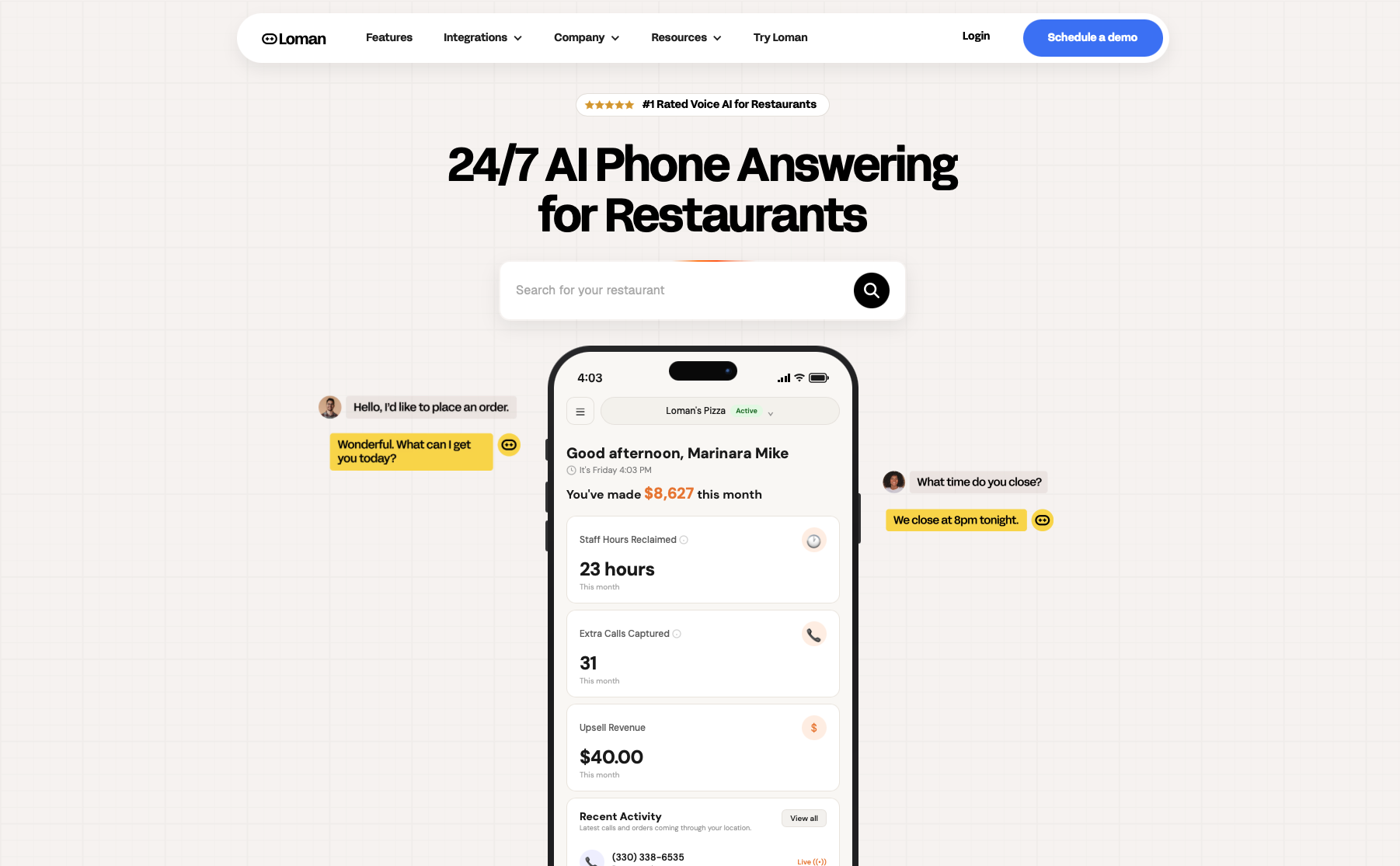
Loman.ai offers an AI phone agent that connects directly with popular POS systems. It handles calls 24/7, taking orders and bookings without missing a beat. Curious about how it works? You can schedule a demo to see it in action.
there's an AI solution that can help sharpen your operations.
Ready to learn more? Check out our blog for tips on improving productivity and customer service in your restaurant. The future of dining is here - and it's smarter than ever.
Most modern POS platforms support AI phone agent integration. Loman.ai connects directly with Toast, Square, Clover, SpotOn, SkyTab (Shift4), Aloha by NCR, Olo, and Stream, pushing orders straight to the POS and kitchen display without staff re-entering a ticket. If your POS is on that list, setup typically takes under 24 hours.
Implementation time varies, but typically takes 1-2 weeks. This includes setup, testing, and staff training. Loman.ai's team works closely with restaurants to support a smooth transition with minimal disruption to daily operations.
Most modern POS systems are compatible with AI integration. Loman.ai connects directly with Square, Toast, Clover, SpotOn, SkyTab (Shift4), Aloha by NCR, Olo, and Stream. If you're unsure about compatibility, our team can quickly assess your setup and provide guidance. [Updated: "Revel" removed, not a verified Loman integration partner. Replaced with the full confirmed list per the knowledge base.]
Data security is a top priority. AI-POS integrations use encryption and secure protocols to protect sensitive information. Loman.ai complies with industry standards for data protection and regularly updates its security measures to guard against potential threats.
Yes, AI systems like Loman.ai are trained to manage complicated orders, including special requests and modifications. The AI learns from each interaction, continuously improving its ability to handle diverse and complex orders accurately.
In rare cases where the AI encounters difficulty, it's programmed to smoothly transfer the call to a human staff member. In practice, customer needs are always met, combining the speed of AI with the careful judgment of human employees when necessary.
AI-POS integration typically enhances staff productivity by handling routine tasks like order taking and reservations. This allows employees to focus on in-person customer service and other high-value activities, often leading to improved overall service quality and job satisfaction.
Labor costs are running well above pre-pandemic norms, call volumes spike every weekend, and a missed order at a $48 ticket is money that does not come back. The operators pulling ahead are the ones who have put integrated AI systems to work on the phone channel, treating it as a revenue line instead of a cost line. Loman is a voice AI phone agent that connects directly with your existing POS, takes orders and reservations around the clock, and goes live in under 24 hours. Midland Pizza Co. estimates they would lose over $200,000 a year without it. If your phones are still the weak link during the rush, start there. Book a demo before the next dinner rush hits
Enter your information in the form to receive a call from Loman and place an order like a customer would!

