Running a restaurant on thin margins means every dropped call and every re-keyed order adds up faster than you'd think. The labor cost alone, typically 30 to 35% of revenue, leaves almost no room for the kind of phone inefficiencies most operators have just learned to live with. AI phone systems are changing that math in some concrete ways, and it's worth understanding exactly how before the gap between early adopters and everyone else gets any wider.
TLDR:
Did you know that restaurants typically spend 30-35% of their revenue on labor costs alone? This hefty expense is just one piece of the financial puzzle that restaurant owners face daily. Let's break down where the money goes in a typical restaurant:
With profit margins running between 3% and 9% for most restaurants, and far lower for many independents, per 2026 industry benchmarks, every dollar saved on operations goes straight to the bottom line. Phone management is one area where operators routinely leave money on the table.
Traditional phone systems in restaurants come with their own set of challenges:

These inefficiencies can lead to lost revenue and frustrated customers. missed calls draining restaurant revenue is a well-documented problem; restaurants lose an estimated $20 billion annually in unanswered calls, yet there are ways to handle calls more effectively without increasing labor costs.
| Area | Traditional phone handling | AI phone system |
|---|---|---|
| Call coverage | Staff-dependent; calls dropped during rush | Every call answered, 24/7, with no busy signal |
| Hours of operation | Limited to staffed hours | Takes orders and reservations around the clock |
| Order accuracy | Prone to mishearing, re-keying errors | Captures every modifier, pushed clean to the POS |
| Concurrent calls | One call at a time per staff member | Handles unlimited simultaneous calls |
| Labor cost | Variable: wages, overtime, turnover | Fixed monthly fee; operators using Loman report up to 17% lower labor costs |
| Upselling | Inconsistent; depends on staff initiative | Built-in prompts suggest add-ons on every call |
| POS integration | Manual entry required after each call | Orders sync directly to POS and KDS with no re-keying |
| Data & reporting | Little to no visibility into call volume or outcomes | Dashboard tracks revenue, call trends, and peak times |
This video shows how AI is changing the game for restaurant operations. One key area where AI shines is in automating phone systems, which can greatly reduce labor costs and improve how smoothly things run.
As restaurants look for ways to trim expenses without sacrificing service quality, automated phone systems are gaining traction. These systems can handle multiple calls simultaneously, take orders accurately, and book reservations 24/7, all without adding to the labor budget.
With the right technology, restaurants can cut phone-related costs and improve customer service. Loman.ai is built to do exactly that, but more on that later.
Let's face it, managing phone calls at a busy restaurant can be a real headache. That's where AI phone systems come in handy. They act like a super-efficient virtual host, taking care of orders and bookings around the clock.
Here's how the automated order process typically works:
Pretty slick, right? And for reservations, AI systems offer some key perks:
The best part? These AI assistants are usually more accurate than humans at capturing order details. Loman.ai, for example, boasts higher order accuracy than most staff. The result is fewer mistakes and happier customers.
Now let's talk money. Implementing an AI phone system can seriously cut down on restaurant labor costs with AI agents. Here are the main areas where you'll see savings:
With the phone lines handled, your team can focus on other important tasks:
Nick Haselidis, owner of Crust Pizza, put it simply: "This paid for itself in 10 days. Phones are calm, tickets are bigger, and my team refuses to go back." For a closer look at the numbers, see how operators calculate AI phone agent ROI for restaurants.
Happy customers are repeat customers. AI phone systems can seriously up your game with customer satisfaction, especially during peak hours when handling high-volume restaurant calls is hardest. Here's how:
But keeping folks happy is only part of the story; it's about boosting your bottom line too. AI systems can drive sales in several ways:
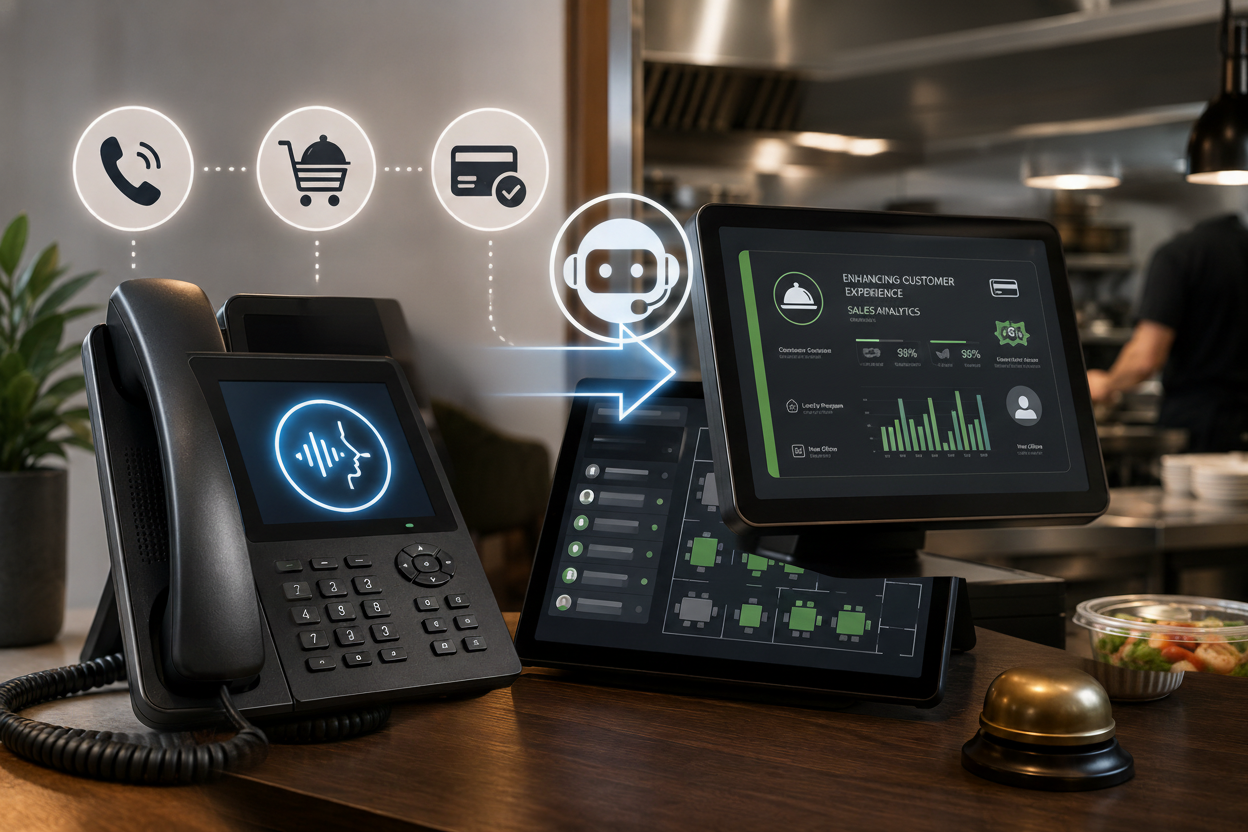
Tony Boloney's, for example, reports 75 to 100 extra orders per month per location after adding Loman.ai, a real, measurable lift.
The key takeaway? AI phone systems are more than a cool tech toy. They're a practical tool that can seriously boost how well your restaurant runs, cut costs, and keep customers coming back for more. If you're curious about how it might work for your place, it's worth checking out a demo to see it in action.
The shift is already underway. According to the NRA's 2026 industry report, over 25% of restaurant operators now use AI in their business as of 2026, a figure that has climbed sharply in just two years. High-volume takeout and pizza concepts led the way and are now 12 to 18 months ahead of the curve, with some industry segments reporting revenue uplifts above 25%, per QSR Web's 2026 industry analysis. [Updated: '26% or more in phone revenue gains' was not an approved Loman performance metric. Reframed as an industry-level figure attributed to the QSR Web source, not to Loman operators.] Voice AI for phone ordering is moving from "interesting option" to expected infrastructure, the same way online ordering did a decade ago.
For restaurants that haven't yet made the move, the gap is widening. Here's what the latest data tells us about where things stand:
The integration of AI with other restaurant tech is opening up exciting possibilities:
As diners get used to instant, 24/7 service, their expectations are evolving. Restaurants that can't keep up risk falling behind. We're likely to see a growing divide between tech-savvy establishments and those stuck in the past.
But what about restaurants hesitant to adopt AI solutions? It's a valid concern. Here are some key considerations:
The data speaks for itself; restaurants using AI phone systems are seeing real results. Smoother operations, reduced costs, and happier customers are hard benefits to ignore. While the initial investment might seem daunting, the long-term payoff is clear.
As AI technology improves, we'll likely see even more advanced features:
The future of restaurant operations is undeniably intertwined with AI. By adopting these tools now, restaurants can position themselves for success in an increasingly digital world. Loman.ai offers an easy entry point for restaurants ready to take the leap into AI-powered smoother operations.
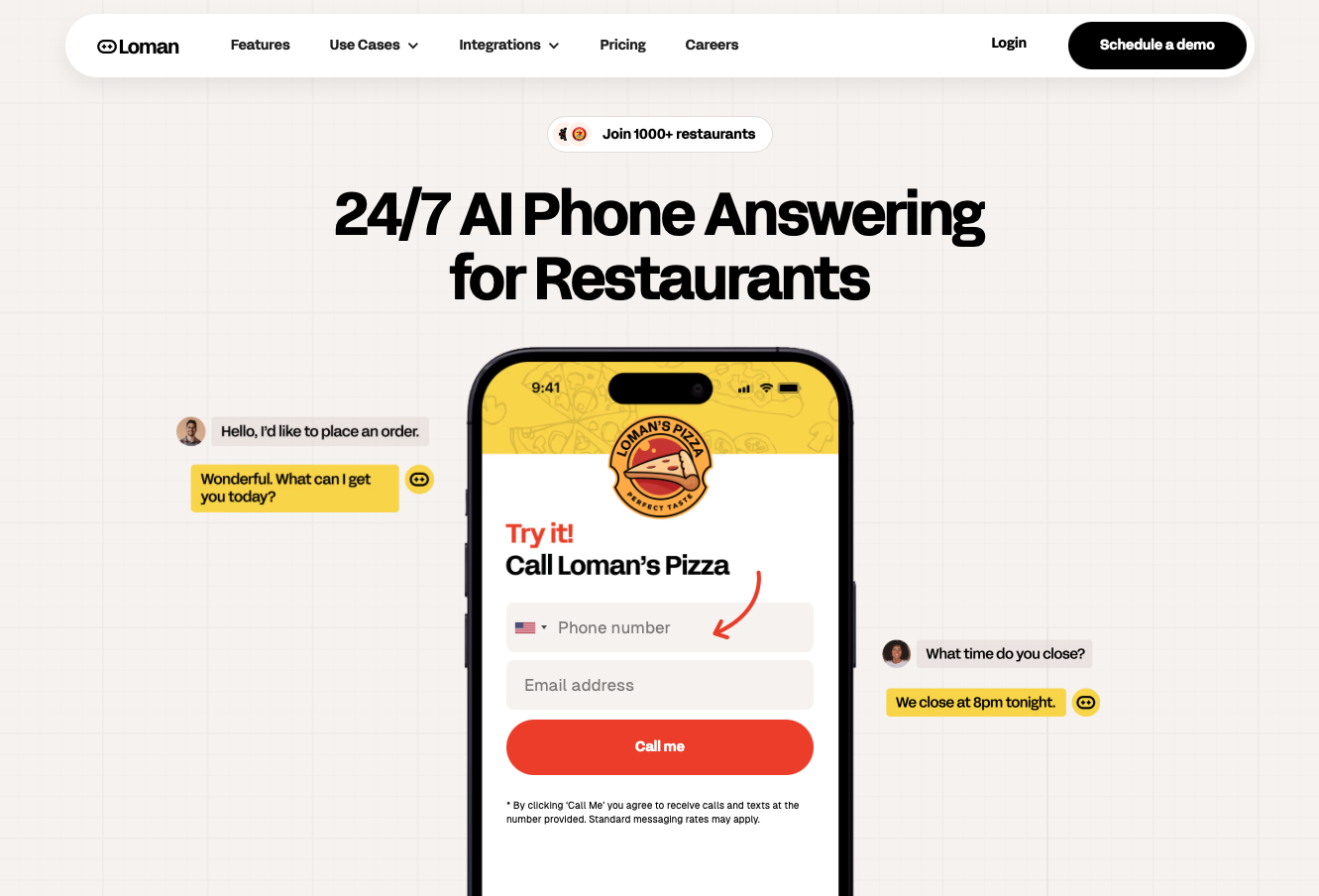
Loman is a voice AI phone agent built specifically for restaurants. It answers every call around the clock, takes full pickup and delivery orders, manages reservations, and pushes clean tickets directly into your POS, whether you're running Toast, Square, Clover, SpotOn, or any of the other supported systems. There's no manual re-keying, no missed modifier, and no call going to voicemail during the dinner rush. Most restaurants go live in under 24 hours with no coding or IT work required.
The results operators report speak for themselves. Nick Haselidis of Crust Pizza put it plainly: "This paid for itself in 10 days. Phones are calm, tickets are bigger, and my team refuses to go back." Tony Boloney's reports 75 to 100 extra orders per month per location, while operators using Loman have reported up to 17% lower labor costs and up to 22% higher phone revenue. If cutting missed calls and keeping staff focused on the floor sounds like the right move, book a free demo to see it live.
AI phone systems like Loman.ai integrate directly with popular POS systems such as Square, Toast, and Clover. The AI agent can access your menu, pricing, and order information in real-time. This allows for smooth order taking and updating without any manual data entry needed on your end.
Modern AI systems are trained to handle a wide range of customer interactions. They can answer detailed menu questions, accommodate special dietary requests, and even upsell items. For very complex situations, the AI can smoothly transfer the call to a human staff member.
Reputable AI phone systems use bank-level encryption to protect customer data. They comply with industry standards like PCI DSS for payment info. Your restaurant's data is kept private and is never shared or sold. It's often more secure than traditional phone systems.
The goal of AI phone systems is to provide a natural, helpful interaction. Many customers won't even realize they're speaking with AI. The system can be customized to match your restaurant's tone and style. If transparency is important to you, you can choose to have the AI identify itself at the start of calls.
The math on restaurant phone management has changed. Every call that goes unanswered is a ticket that never gets rung, and every order re-keyed by a staff member is time pulled away from the floor. AI phone systems close both gaps at once, capturing revenue that would otherwise walk out the door and freeing your team to focus on the guests already in front of them. Loman was built specifically for this: a voice AI agent that answers every call, closes full orders, pushes clean tickets to your POS, and gets out of the way. If your phones are still costing you more than they're making you, that's the place to star
Enter your information in the form to receive a call from Loman and place an order like a customer would!

