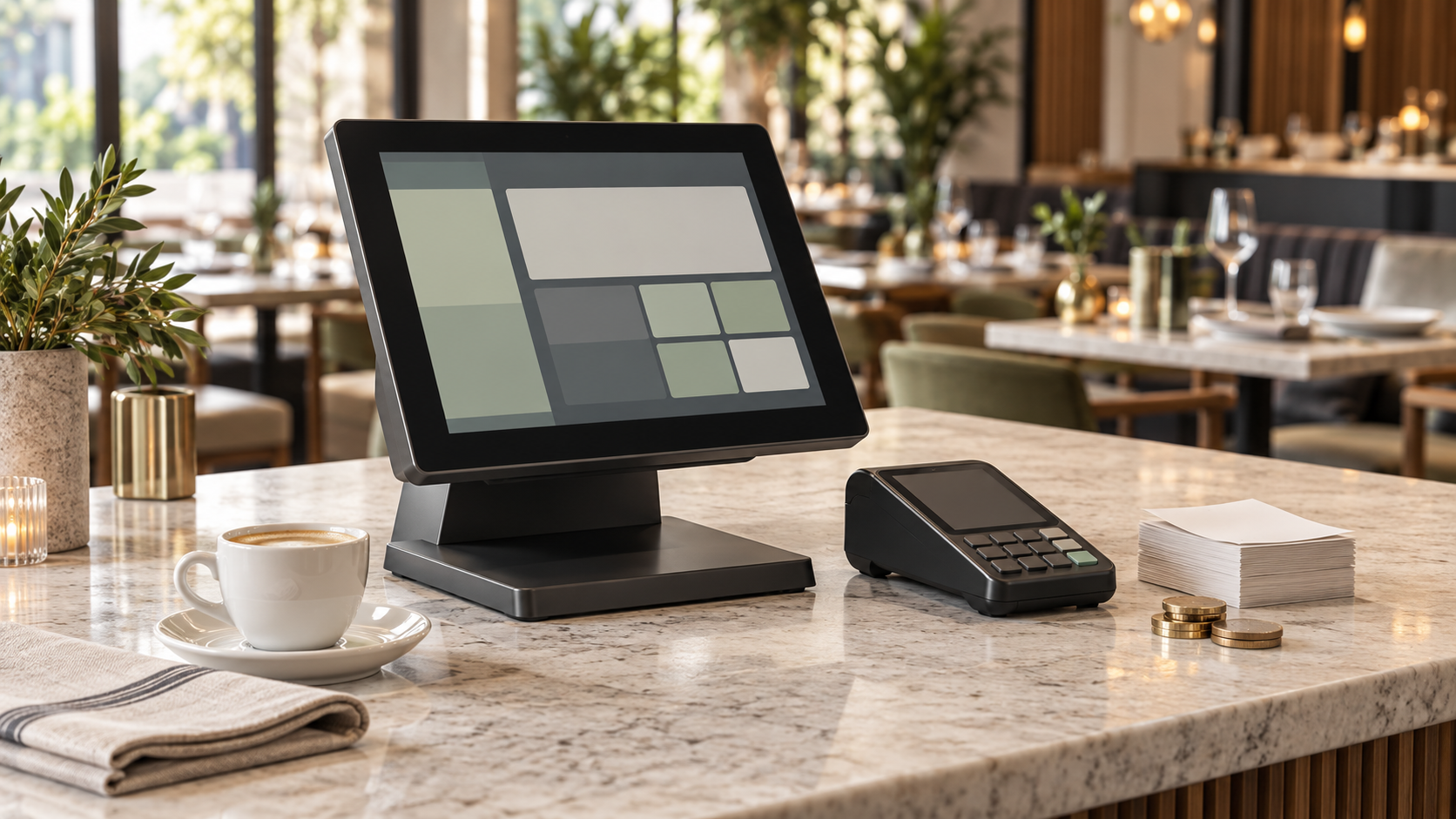
Lightspeed pricing for restaurants starts at $69 a month across four plans, but your real monthly number depends on which add-ons your kitchen needs and how much volume you run through Lightspeed Payments. Three kitchen screens and $50K in card sales at the 2.6% Retail card-present rate can push a Starter plan past $1,450 a month before you've added anything else. Let's walk through what each tier actually includes and what it costs once you build it out for a real restaurant.
TLDR:
Lightspeed's Restaurant pricing page lists four tiers in USD: Starter at $69 per month, Essential at $189, Premium at $399, and custom-quoted Enterprise. Each step up adds back-office depth, not more seats or screens.
Starter covers a customizable POS, menu manager, floor plans, Advanced Insights, Lightspeed AI, takeout and delivery, and online ordering, with integrated payments at default rates, according to Lightspeed's restaurant pricing page. It fits cafes, bakeries, and quick-service counters with a single kitchen. Third-party delivery integrations need an add-on.
The $189 plan adds Lightspeed Tasks and custom payment processing rates. Inventory management is sold as an add-on on every plan, so it is not a reason to step up on its own; confirm what is bundled before you step up. Custom rates start to matter once your card volume is high enough to negotiate.
Lightspeed lists multiple revenue center support for hotels, though its page does not mark which tier includes it. Lightspeed's Pro Services, which include raw API access, are available on the Essential and Premium plans. Enterprise pricing is custom and bundles a personalized hardware and software package, launch services, and a dedicated support team. A single-location restaurant rarely needs either one.
Retail operators see three tiers on the Lightspeed Retail pricing page: Basic at $89 per month, Core at $149, and Plus at $289 with annual billing. Business.com lists the monthly-billing equivalents at $109, $179, and $339. Core adds loyalty programs and advanced reports, while Plus adds forecasting, custom reporting, and API access.
The Retail section in this article is useful for feature direction, but if you are using it to compare current costs, treat the published number as a starting reference rather than a final checkout price. Lightspeed's Netherlands retail pricing page shows three tiers at 99 EUR, 149 EUR, and 229 EUR per month, each including 1 register, but all three require requesting a quote for exact monthly pricing with extra locations and extra registers.
Lightspeed also states that prices can vary and that additional service fees may apply depending on the type of business and industry sector. That means the practical buying lesson is the same on both Retail and Restaurant: get a custom quote that reflects your store count, register count, hardware, and any add-ons before you decide that Lightspeed is cheaper or more expensive than another POS.
For hardware, Lightspeed says Retail customers should contact a Sales Account Manager and identifies two starter kit paths: a Desktop Hardware Kit with a USB receipt printer, cash drawer, and USB scanner, and an iPad Hardware Kit with a LAN receipt printer, cash drawer, Bluetooth scanner, iPad stand, and receipt paper. If you are budgeting first-year cost, ask for hardware and software on the same quote so you do not compare a software-only Lightspeed number to an all-in competitor quote.
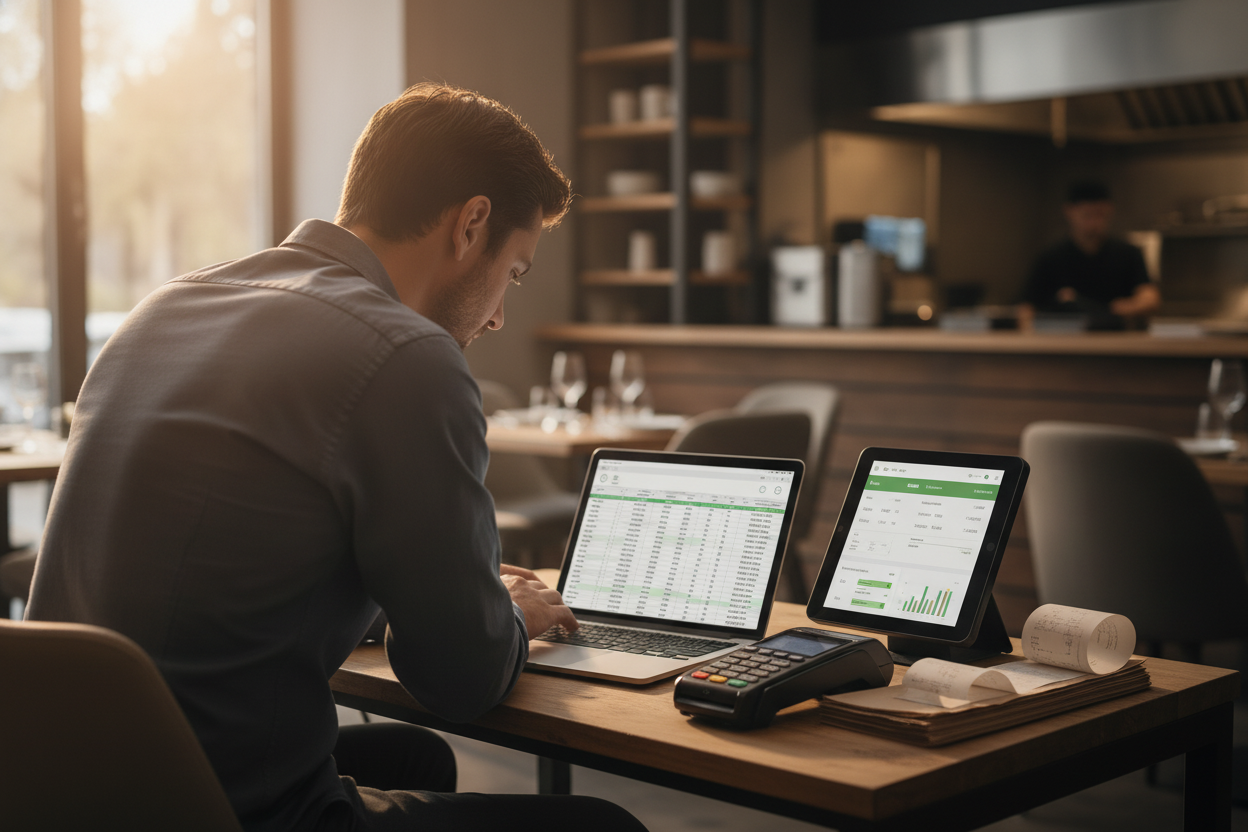
UpMenu reports a card-present rate of 2.6% plus 10 cents per transaction, the same rate listed on Lightspeed's Retail pricing page. The Restaurant pricing page only lists default or custom rates without a published number, so confirm your actual rate with a Lightspeed rep. If your rate matches, $50,000 in monthly card sales puts the 2.6% portion alone at $1,300 a month, before any plan fee. Add-ons stack on top of that:
A Starter restaurant running three kitchen screens pays $159 a month before processing, not $69. That is the number to budget against, and it comes straight from the line items on Lightspeed's restaurant pricing page.
| Cost item | Monthly cost | Source / Context |
|---|---|---|
| Lightspeed Restaurant Starter plan | $69 | Lightspeed Restaurant pricing page |
| Three Kitchen Display System screens | $90 | $30 per screen per month add-on |
| Starter plan with three screens, before processing | $159 | Plan price plus KDS add-on |
| Estimated card processing fee on $50,000 in card sales | $1,300 | 2.6% portion only, example volume |
| Loman AI phone agent (starting price) | $199 | Flat monthly price, no per-minute charges |
If you are shopping Lightspeed against Toast, Square, Clover, or SpotOn, do not compare only the headline plan price. The article already shows why: a Starter restaurant can move from $69 to $159 a month before processing with three kitchen screens, and payment costs can outweigh the software fee once card volume grows.
Ask each vendor for the same quote format so you can compare apples to apples: base software plan, number of screens or registers, kitchen display screens, online ordering, delivery integrations, reservations, task management, payment processing terms, hardware, and any onboarding or service fees. That matters because Lightspeed itself says prices can vary and additional service fees may apply depending on the business type and industry.
| What to compare | What this article confirms about Lightspeed | Why it changes your real cost |
|---|---|---|
| Base plan | Restaurant tiers listed at $69, $189, $399, plus custom Enterprise | This is only the starting point |
| Kitchen screens | KDS is $30 per screen per month | Three screens add $90 monthly |
| Processing | Restaurant page lists default or custom rates, but not a published number in this article | At meaningful volume, processing can be your biggest POS line item |
| Add-ons | Reservations, delivery integrations, and some task features are separate from the base plan | The cheapest plan may not stay cheapest after your required add-ons |
| Hardware | Lightspeed sells hardware packages through sales, not instant checkout | Hardware can materially change year one cost |
Recommendation: if you are comparing vendors, ask Lightspeed for a written all-in quote based on your real setup, then request the same line items from two alternatives. For a single-location operator, that is more useful than comparing plan names alone.
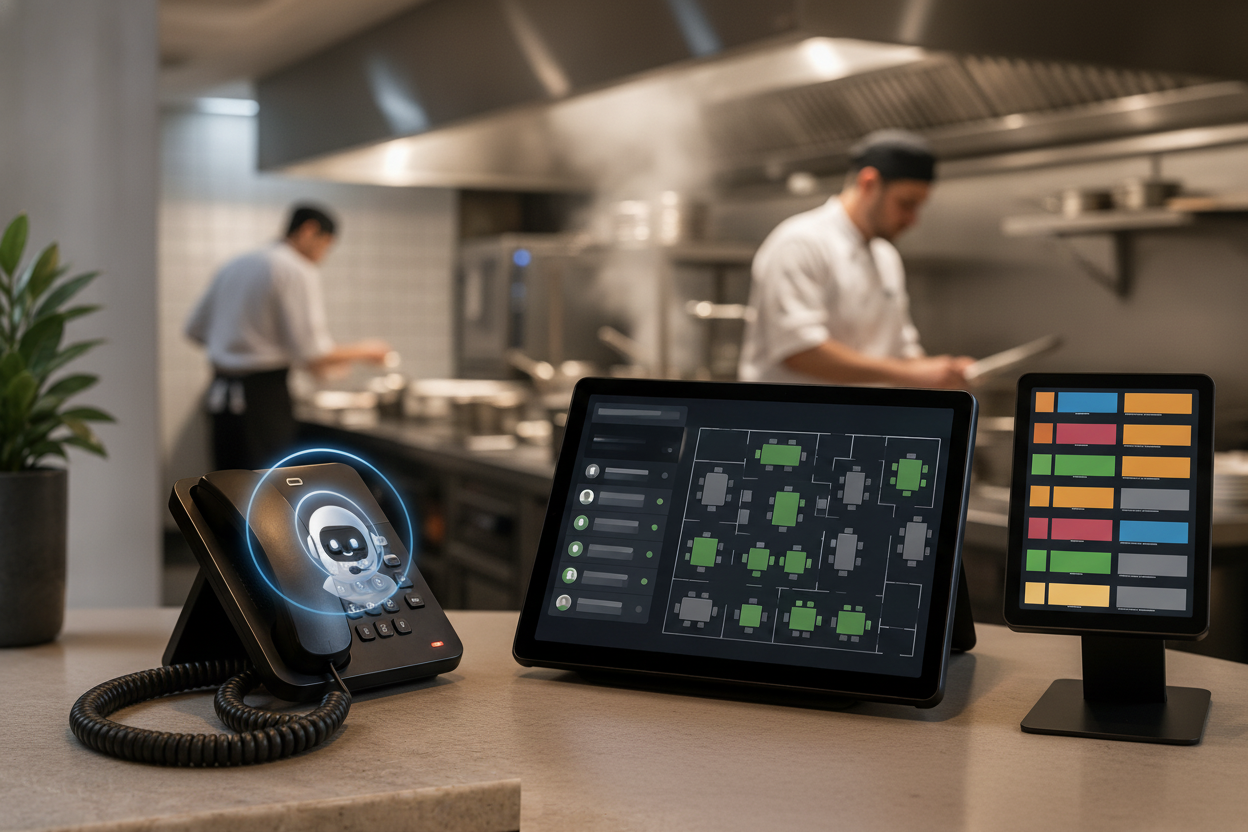
Lightspeed's feature lists cover in-house, online, and delivery ordering. They don't list a phone agent that answers calls, takes the order, and pushes it to your ticket queue, even though missed calls draining restaurant revenue is a well-documented problem during rush hours. Operators who want that coverage price a separate voice AI phone agent built for restaurants.
Loman AI is one example. It starts at $199 per month, flat, with no per-minute charges, and it takes full pickup and delivery orders and payments on the call. Crust Pizza owner Nick Haselidis says Loman AI paid for itself in 10 days, an operator-reported result, not an audited figure. Loman's named POS integration partners are Toast, SpotOn, Clover, Square, SkyTab, Aloha by NCR, Olo, and Stream, and its reservation partners are OpenTable, Resy, and SevenRooms. Lightspeed is not on that list, so book a demo and confirm how it would connect to your setup before you commit.
Lightspeed shipped several changes this year that affect what you get for the same monthly price. On January 9, 2026, it launched Lightspeed AI, a conversational assistant inside Lightspeed Restaurant that lets operators ask questions about performance trends and service bottlenecks. The restaurant pricing page now lists Lightspeed AI and Lightspeed Tempo, a service pacing tool, among its plan features.
In July 2026, Lightspeed announced a Locations Manager for multi-site operators, automated reconciliation in Lightspeed Payments, and an upgraded reservation booking widget that takes bookings on a restaurant's own website, per the July 2026 product release. The plan prices above reflect Lightspeed's pages as of October 2026. The new tools matter most if you run more than one location or take reservations.
The AI Lightspeed describes works on reporting and insights, and its launch materials don't mention answering calls. Whether AI inside the POS or AI on the phone line earns its fee depends on where your restaurant is losing money.
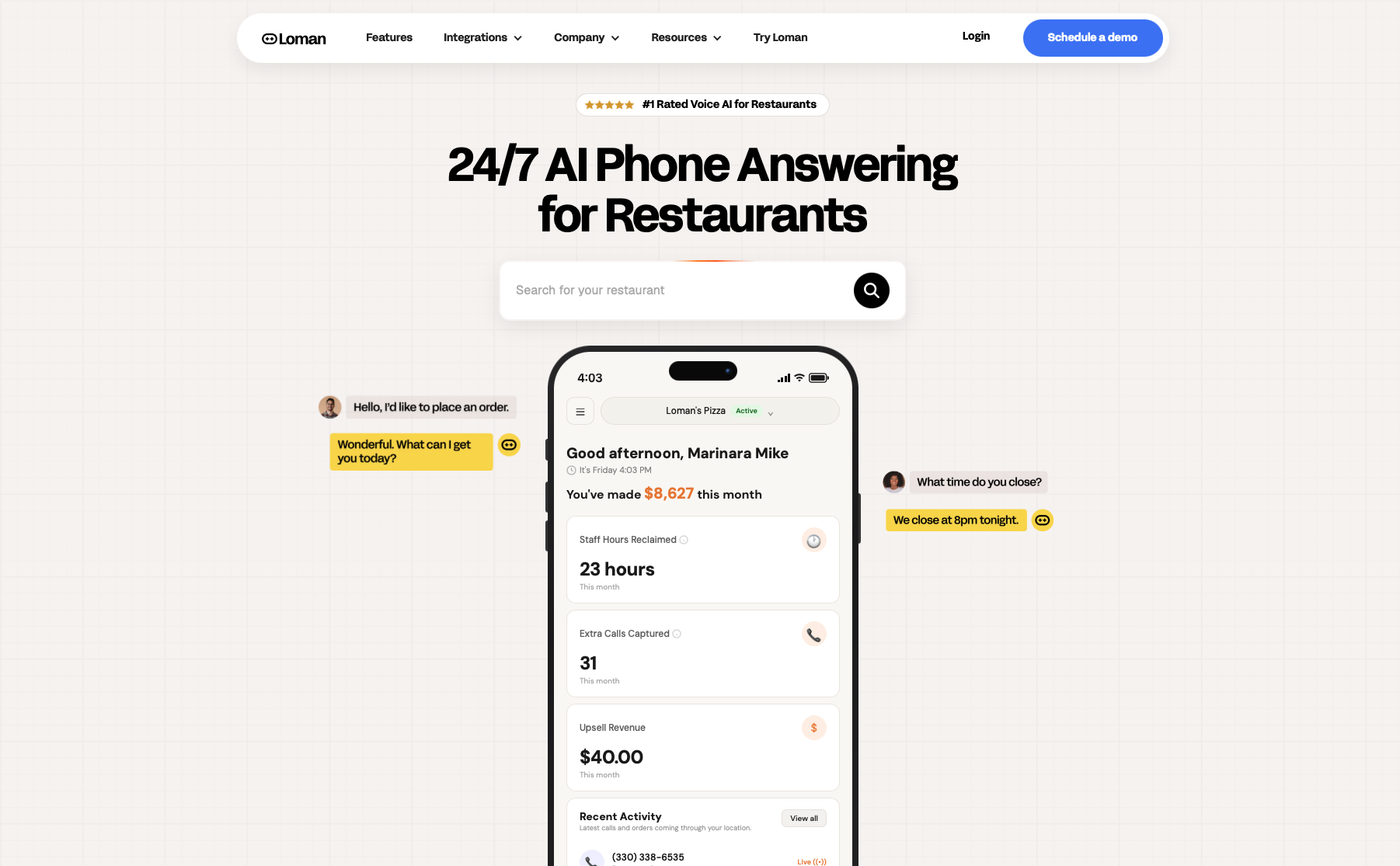
Lightspeed's plans cover in-house, online, and delivery ordering. The phone sits outside them, and Loman is built for that gap. It's a voice AI phone agent for restaurants that answers every call 24/7, takes full pickup and delivery orders, and collects payment on the call. Loman's own figures put phone orders at $48 on average versus $41 online, so a call that rolls to voicemail during the rush costs you more than a typical online ticket.
Loman supplements your POS and doesn't replace it. Orders push to the POS and kitchen display with no one re-keying a ticket, and menu changes like 86'd items are read live mid-call. Its named POS partners are Toast, SpotOn, Clover, Square, SkyTab, Aloha by NCR, Olo, and Stream, with OpenTable, Resy, and SevenRooms for reservations. Lightspeed isn't on that list, so ask for a demo and confirm how the connection would work with your setup. Setup takes menu, hours, and call-flow configuration with no coding, and restaurants go live in under 24 hours.
The cost is flat. Loman starts at $199 per month with no per-minute charges and unlimited concurrent calls, so the hundredth call in a Friday rush costs the same as the first. Crust Pizza owner Nick Haselidis says it paid for itself in 10 days, and operators at Tony Boloney's report 75 to 100 extra orders per month per location. Both are operator-reported results, not audited figures. To check the math against your own call volume, run your numbers in the Loman ROI calculator.
The sticker price starts at $69 per month for Starter, but kitchen display screens run $30 per screen per month as an add-on, and reservations are a separate add-on on every plan. A Starter restaurant running three kitchen screens pays $159 per month before payment processing. That's the number to budget against, not $69.
No. Lightspeed AI, launched in January 2026, works inside the POS as a conversational reporting and insights tool; its launch materials don't mention answering inbound calls or taking orders by phone. If your restaurant loses orders during peak hours because no one picks up, that gap sits outside what Lightspeed covers and requires a separate voice AI phone agent.
A dedicated voice AI phone agent built for restaurants is the most direct fix. Loman AI, for example, starts at $199 per month flat with no per-minute charges, takes full pickup and delivery orders during the call, and pushes tickets to the POS systems it integrates with. It works alongside your POS, not in place of it. Crust Pizza owner Nick Haselidis reported it paid for itself in 10 days, an operator-reported result; confirm how it connects to your specific POS setup before committing.
No. Lightspeed's restaurant plans cover in-house, online, and delivery ordering but do not include a phone agent that answers calls, takes orders, and pushes tickets to your queue. Phone coverage is priced and configured separately from your POS plan.
The $189 plan adds Lightspeed Tasks and custom payment processing rates. Inventory management is also sold as an add-on on every plan, so it is not a reason to step up on its own. It may make sense to step up if your monthly card volume is high enough that a negotiated processing rate saves more than the $120 monthly plan difference.
Lightspeed pricing is a starting point, not the bill. A Starter restaurant with three kitchen screens pays $159 a month before processing, and at $50,000 in monthly card sales the 2.6% portion alone adds $1,300, so budget against the full statement and not the $69 headline. The phone is the one revenue channel none of those plans cover. Loman covers it at $199 a month flat with no per-minute charges, and Crust Pizza owner Nick Haselidis reports it paid for itself in 10 days. The deciding factor is what you can verify before you commit: confirm Lightspeed's current rates with a rep, and ask for a Loman demo to see how it would connect to your setup. Book a Loman demo and get the phones calm before your next dinner rush.
Enter your information in the form to receive a call from Loman and place an order like a customer would!

