AI virtual receptionists cover phones 24/7 without the overhead costs of traditional staffing. Script quality determines whether that coverage qualifies leads and books appointments or simply answers and drops calls.
TLDR:
Modern AI receptionists qualify leads, gather caller details, generate transcripts, and filter spam across 24/7 call management, while keeping your brand's professional image intact. The best systems are customizable with voice options, business-specific knowledge, and conversation flows tailored to your industry.
Effective scripts open with a warm greeting, then use logical question flows that move from general to specific without making callers feel interrogated. Conditional logic adapts the script to each response, so urgent situations get handled differently from routine ones.
Natural, conversational phrasing outperforms formal jargon every time. Use plain language, build in clear pathways for different scenarios, and reference the caller's name once provided. Pairing the right script with the best AI voice options keeps callers engaged.
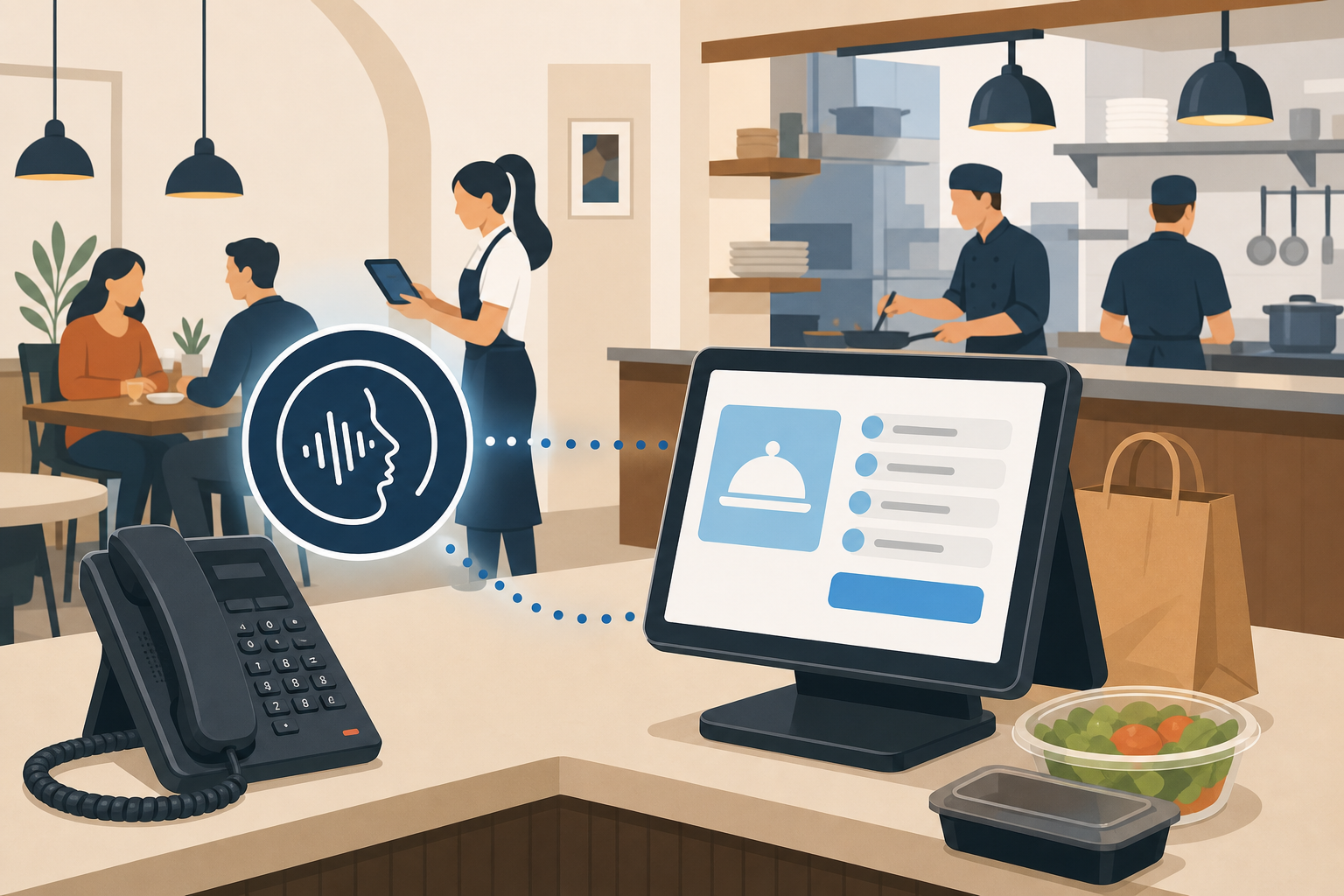
While various AI reception platforms serve general businesses effectively, restaurants face unique operational challenges that require specialized solutions. A restaurant-specific voice AI agent addresses these needs through its AI for restaurants voice AI platform, offering a dedicated 24/7 phone agent specifically trained on restaurant menus, policies, and customer preferences for maximum accuracy. That specialization brings native POS integration with systems like Square, Toast, Clover, SpotOn, SkyTab (Shift4), Aloha by NCR, Olo, and Stream, creating unified operations that reduce missed calls, shorten wait times, and directly improve sales through intelligent order management. [Updated: removed blacklisted word "comprehensive"; expanded POS list from Square/Toast/Clover to all eight verified partners per KB]
With fast setup capabilities that get restaurants live in under a day, the system scales efficiently whether you operate a single location or manage multiple restaurant chains, providing the specialized functionality that general AI platforms cannot match. For a deeper look at evaluating your options, see choosing an AI phone system.
Real estate professionals qualify buyers on budget and timeline before they reach your desk. Legal practices sort matters by area and urgency while keeping tone discreet. Healthcare providers separate urgent concerns from routine scheduling and follow HIPAA-compliant language throughout. Service businesses like contractors filter by project scope and readiness, so your time goes to the highest-value leads.
| Capability | M1 | Restaurant Voice AI |
|---|---|---|
| Primary focus | Real estate & professional services | Restaurant operations |
| POS integration | Not specified | Toast, Square, Clover, SpotOn, SkyTab (Shift4), Aloha by NCR, Olo, and Stream (native) |
| Voice & personality options | Wide range of voice options and personality settings | Customizable for restaurant brand |
| CRM / workflow integration | Zapier automation with popular CRM systems | Built-in analytics and real-time insights |
| Multi-location support | Multiple properties or departments via different scripts | Single locations to multi-unit chains |
| Setup speed | Not specified | Live in under a day |
| Availability | 24/7 | 24/7 |
| Menu / order handling | General inquiry & qualification | Trained on menus, policies, and customer preferences |
M1 offers a wide range of voice and personality settings with Zapier-based CRM connections that automatically log call details, appointments, and follow-up tasks across multiple properties or service areas. For real estate and professional services businesses, that combination of 24/7 reliability and customizable conversation trees makes it a strong option.
Start with a warm greeting, then move into qualifying questions that feel like a natural conversation. Lead with timeline and preferences before investment considerations, and weave value propositions into responses rather than delivering them as obvious sales pitches.
Every script needs a clear call to action: scheduling an appointment, arranging a consultation, or delivering specific information. Offer two or three concrete options and your AI receptionist becomes a real first step in your sales process.
Phrases like "I understand" or "That's a great question" create authentic interactions without a human on the line. Offering choices ("Would you prefer to schedule now, or hear more about our services first?") gives callers a sense of control. Being upfront about AI assistance builds trust: most callers appreciate a simple acknowledgment like "I'm the AI assistant for [Company Name], here to help with scheduling and common questions."
Calendar integration lets the AI check real availability and book appointments directly, cutting double-booking. CRM connections create or update contact records from conversation details, so lead information lands in your database without re-keying. For restaurant operators, restaurant phone automation goes further: order data pushes directly into Square, Toast, and Clover. The Zendesk CX Trends 2026 report found 74% of consumers expect round-the-clock service, making these integrations a baseline expectation.
The most effective setups create closed-loop workflows where a successful booking sends a calendar invite, updates the CRM, and queues follow-up communications automatically.
Track conversion rates, call resolution rates, and average handling times. For returns detail, see AI phone agent ROI for restaurants. Analytics dashboards flag where hang-ups cluster; drop-offs at the same script point usually signal confusing wording or a sequence that runs too long. A/B test greetings and question sequences to find what converts better, and review call recordings to catch tone or flow issues that numbers alone won't surface.
Implementing effective AI receptionist scripts requires systematic approaches that guarantee consistent performance and continuous improvement over time. These proven strategies help maximize your investment while maintaining high-quality caller experiences:
Modern AI receptionist platforms offer several advanced features that meaningfully improve script performance and caller satisfaction. These capabilities work together to create more sophisticated and responsive customer interactions:
Conversational AI is moving beyond script-following toward real-time adaptation to caller needs and emotions, making AI receptionists more effective at building rapport and converting inquiries into booked appointments. Voice biometrics will identify returning callers automatically, letting the system greet repeat clients by name without extra verification steps. Predictive analytics will anticipate why a caller is reaching out based on past interactions, so the system can offer the right option before the caller even asks. These voice-first advances pair with multimodal delivery, where a call can close with a follow-up text linking to a scheduling tool or menu.
AI reception has crossed from "early adopter" territory into standard business infrastructure. According to market research, the share of customer service organizations actively using AI jumped from 39% in 2025 to 66% in 2026 - and 70% of those organizations reported measurable value within 60 days of deployment. Meanwhile, Gartner projects agentic AI will autonomously resolve 80% of common customer service issues without human intervention by 2029. Businesses still routing calls through voicemail or manually scheduling appointments are now measurably behind the curve. For restaurant operators in particular, missed calls draining restaurant revenue is a documented and quantifiable problem. The question for most operators has shifted from "should we automate?" to "how do we implement this well?", which is exactly what script quality and platform selection determine.
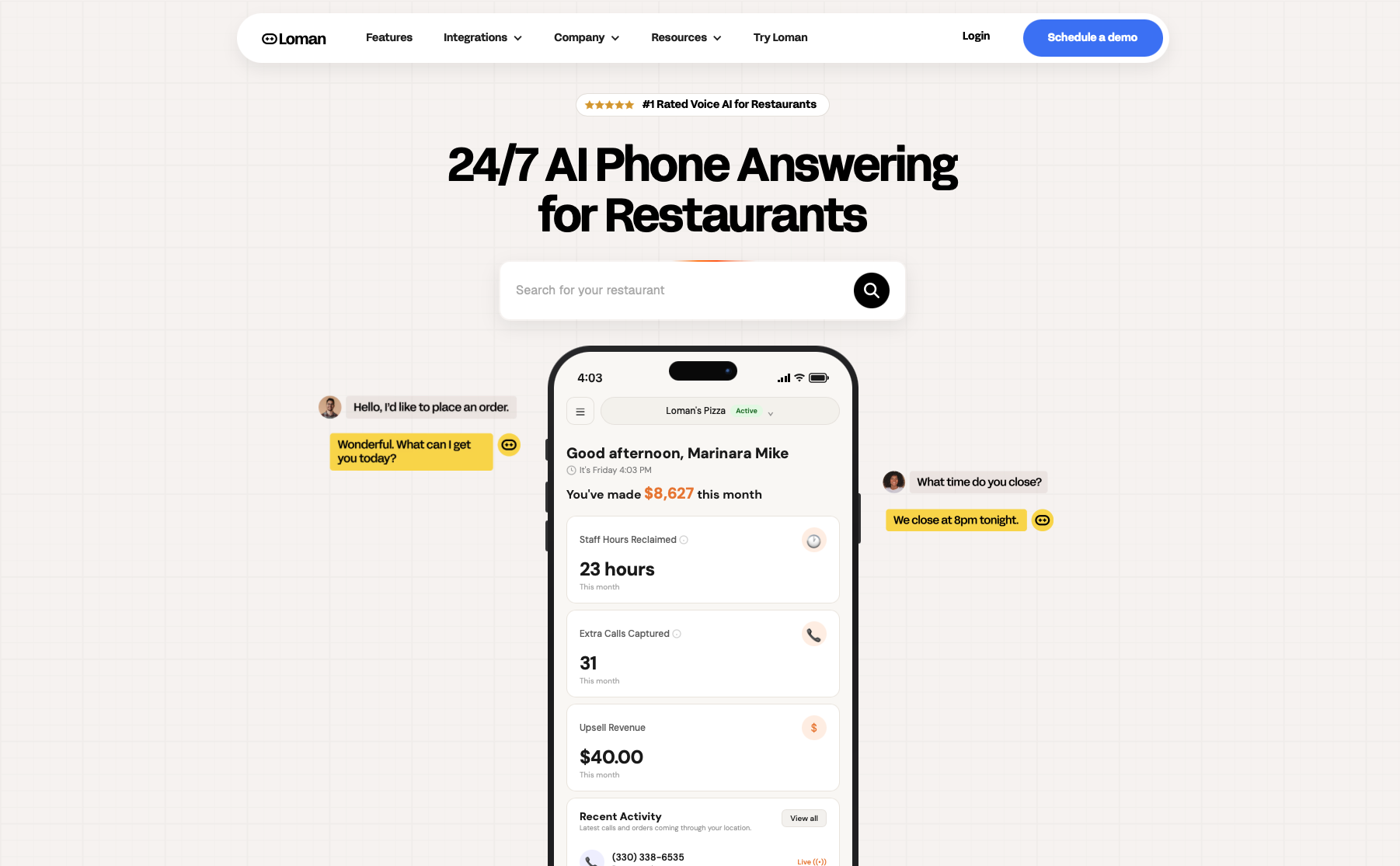
Most AI reception platforms handle scheduling, routing, and basic FAQ. Restaurants need more: real-time menu changes, 86'd items, complex modifiers, in-call payment, and a clean POS ticket every time. Loman was built for exactly that.
When a caller orders a half-and-half pizza with extra sauce, Loman reads the live menu, handles the modifiers, processes payment in-call, and pushes a clean ticket directly into the POS with no staff re-keying. Operators using Loman have reported up to 22% higher phone revenue and up to 17% lower labor costs. Crust Pizza owner Nick Haselidis reported the system paid for itself in 10 days.
Loman integrates natively with Toast, Square, Clover, SpotOn, SkyTab (Shift4), Aloha by NCR, Olo, and Stream. Most restaurants go live in under 24 hours without coding or IT support. The phone channel is a revenue channel, and Loman is the system built to protect it.
Scripts that use the caller's name, plain conversational phrasing, and conditional logic, which route urgent calls differently from routine ones, hold attention better than formal, one-size-fits-all flows. The key mechanic is moving from general to specific questions gradually, so callers feel guided instead of interrogated. A/B testing greetings and reviewing where drop-offs cluster lets you tighten the weakest points over time.
Loman goes live in under 24 hours. You connect your POS, import your menu, set your call rules, and the system starts answering calls without coding or IT support. Orders push directly into Toast, Square, or Clover the same way a staff member would enter them, so kitchen workflow stays unchanged from day one. Crust Pizza owner Nick Haselidis reported the system paid for itself in 10 days, with phones calm and tickets bigger from the start.
Loman closes the full order in-call by taking the complete menu order, processing payment, and pushing a clean ticket into your POS with no manual re-entry. Slang.ai is built around reservation management and guest communication; it does not focus on automated phone ordering or native POS order injection. For a restaurant where phone orders drive revenue, that architectural difference shows up in every shift.
A well-built AI receptionist script protects revenue and improves caller experience without adding headcount. Treat it as a living asset: test before launch, review monthly, and measure against real outcomes. For restaurant operators, Loman handles this end-to-end, a voice AI agent trained on your menu, with native POS integrations into Toast, Square, Clover, SpotOn, SkyTab (Shift4), Aloha by NCR, Olo, and Stream, going live in under a day. Book a free demo to see it in action.
Enter your information in the form to receive a call from Loman and place an order like a customer would!

