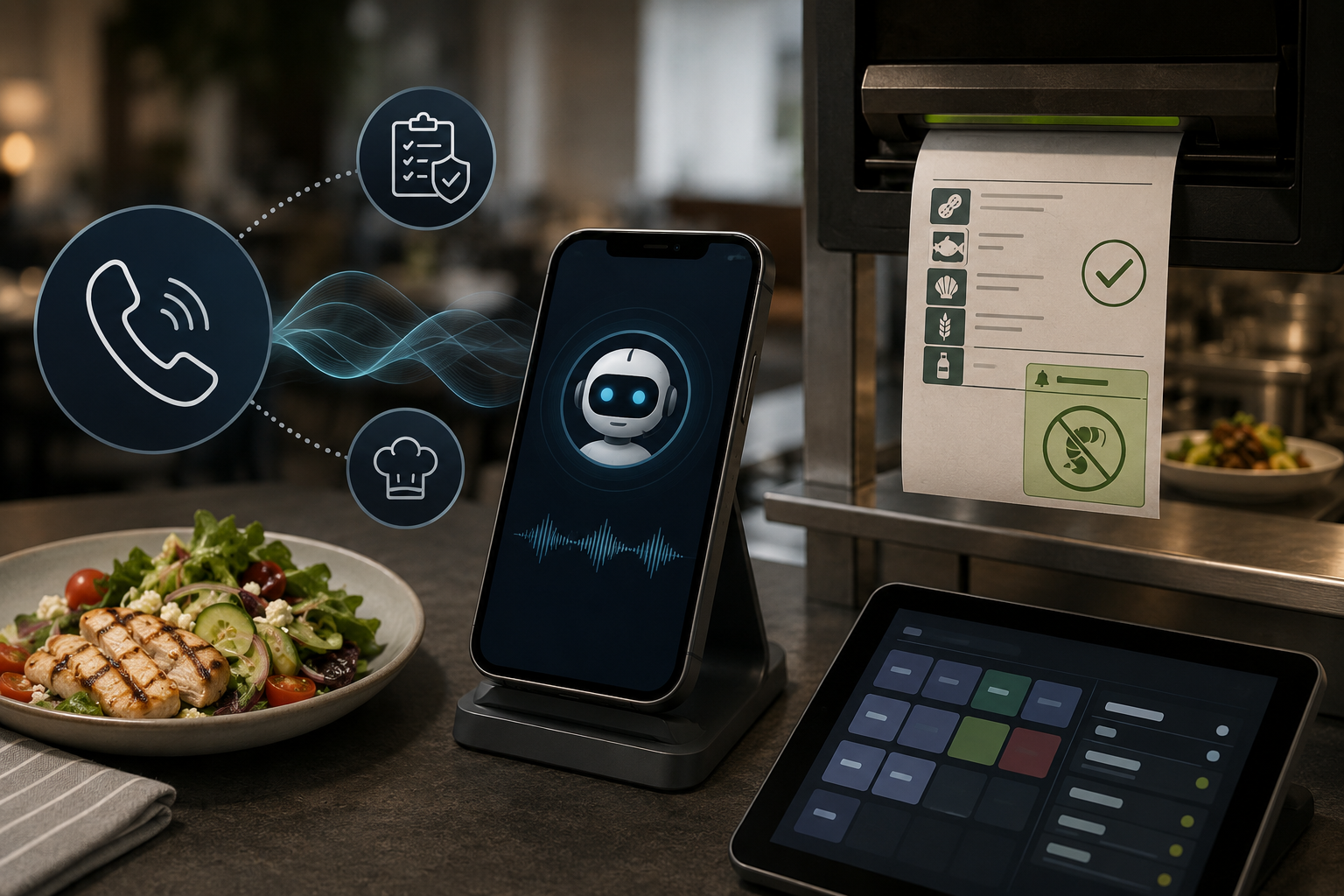
Your staff is good at a lot of things, but being asked to recall exact ingredients and cross-contact risks mid-rush, over the phone, while the counter is full? That's a setup for mistakes. Allergen questions aren't edge cases anymore; they're a routine part of every service. Restaurant allergen phone order automation handles that part of the call so your team doesn't have to choose between accuracy and keeping up with the floor.
TLDR:
It's 6:50 on a Friday, three tickets deep at the counter, and the phone rings with a caller asking whether the pesto has tree nuts. That answer can't be rushed or guessed. About 33 million Americans live with food allergies, so the caller might be ordering for a kid whose reaction lands them in the ER.
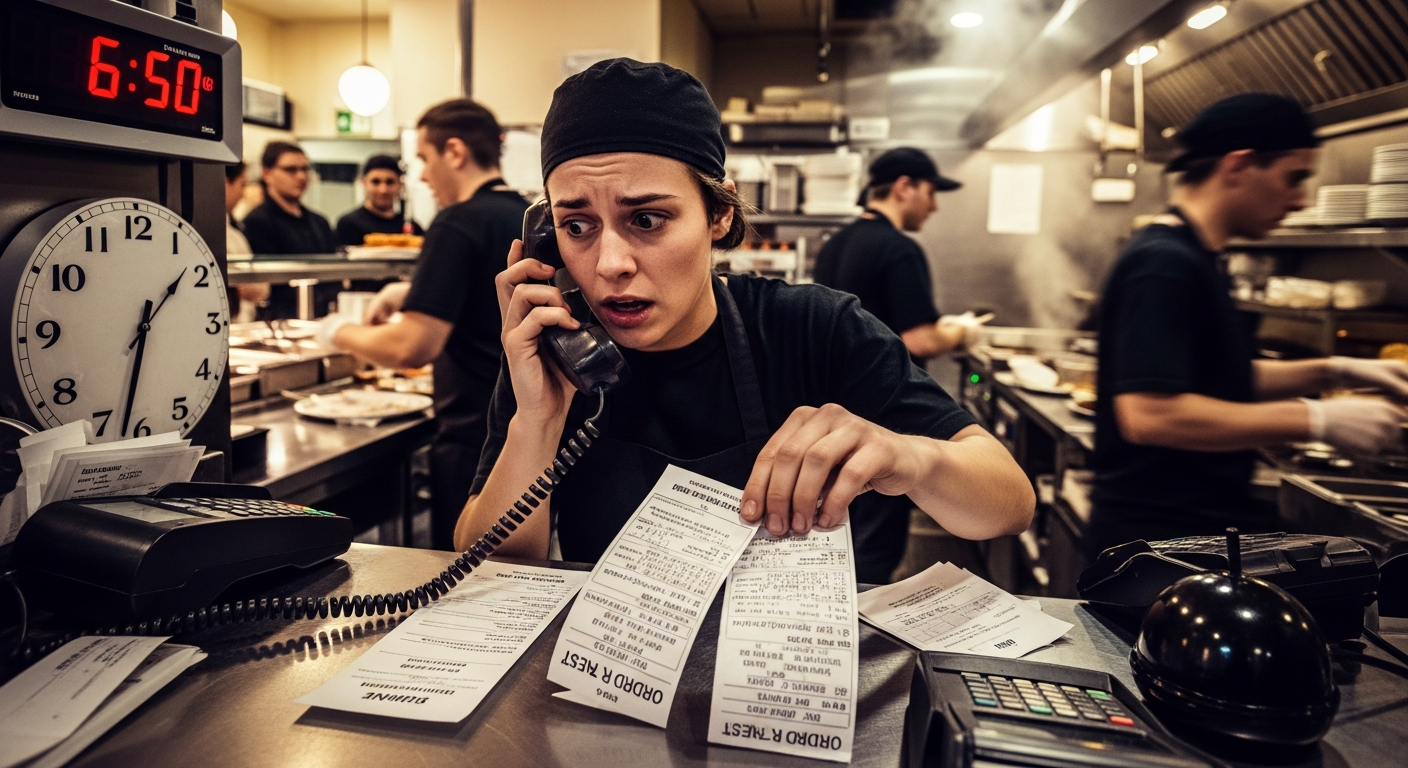
Here's the bind. An allergen question demands your staff's most precise response, and it tends to arrive when they have the least room to give it.
Pull someone off the floor to walk through ingredients and cross-contact risk, and the counter backs up. Rush the answer and you risk a wrong one. Either you slow the floor to answer safely, or you protect the pace and gamble on accuracy. Both cost you.
One wrong answer doesn't stay contained to one order. A single food safety incident can drop customer loyalty by 30%, so an inaccurate allergen answer on a phone order follows you long after the caller hangs up.
With roughly 33 million Americans living with food allergies, the caller asking about cross-contact or hidden ingredients isn't unusual. They're a share of your regular customer base. For many of them, a restaurant that can answer the question clearly on the first call earns repeat business; one that fumbles it, guesses, or routes them to voicemail doesn't get a second chance.
That raises the stakes on a choice your staff makes dozens of times a week. Send the caller to voicemail and you likely lose a guest who won't call back, because missed calls drain restaurant revenue far beyond a single order. Pull a server off the floor and the tables in their section feel it. There are ways to reduce missed restaurant calls, and allergen questions are exactly where that gap shows up.
A missed call costs you a guest. A confident wrong answer costs you far more, and it sounds just as sure as a right one.
A staffer picks up mid-rush, a caller asks if the fried rice has egg, and the answer comes straight from memory over kitchen noise. No prompt to check the allergen record, no cross-reference against last week's recipe change. Ask the same question on a different shift and the answer might come out differently. That inconsistency compounds every time the phone rings, and restaurant order accuracy with AI technology targets exactly this drift.
The gap shows up in the data. Just 58% of operators using technology to track allergens feel very confident managing them, leaving the remaining 42% potentially exposed to this kind of inconsistency.
When a caller asks whether the pad thai has peanuts, the agent checks the menu knowledge base and answers in real time. No hold music, no guessing. The response comes from data the restaurant loaded, not a person's memory of last month's recipe. That's how AI improves the restaurant phone-ordering experience.
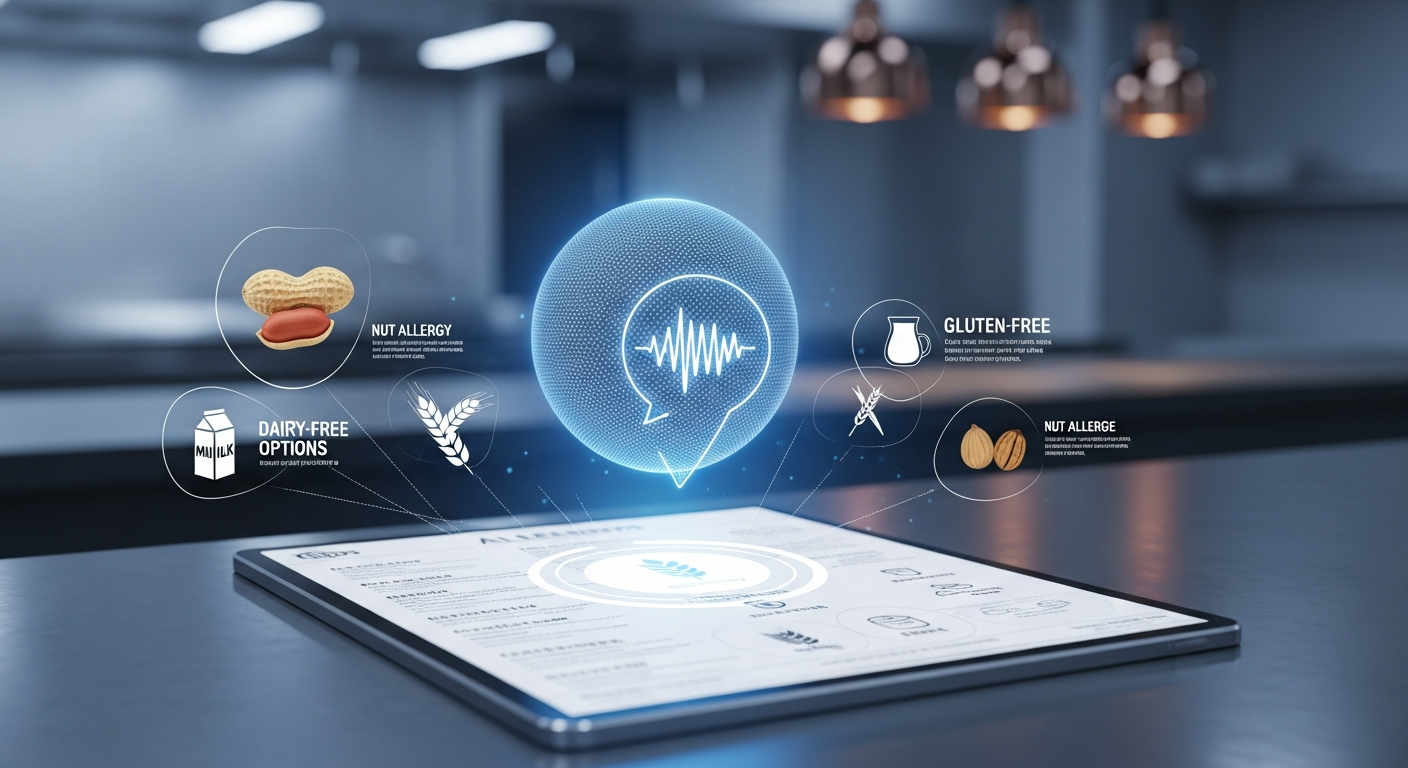
Accuracy hinges on menu data quality. AI menu assistance for dietary restrictions depends on a structured menu that lists allergens per item to answer cleanly. A vague menu gets a confident wrong answer. Tag each dish before deployment.
When the restaurant swaps a butter-based sauce into a special or an item gets 86'd mid-service, the static version keeps quoting yesterday's menu. The connected version already knows.
A menu you upload once and forget becomes a quiet liability. Seasonal produce rotates, a supplier substitutes a different oil, a weekend special uses shellfish stock, and each change alters the allergen profile of a dish. An agent reading that frozen file will answer with full confidence and be wrong.
Restaurant AI phone POS integration closes that gap. Update the menu in the POS and the agent's knowledge updates with it, so a pasta reformulated with a new cream sauce shows the dairy flag on the next call. Nobody re-enters anything.
The direction of that connection matters more than most operators expect.
| Integration type | What it does | Allergen risk |
|---|---|---|
| Read-only | Agent reads the live menu but cannot write back | Order notes stay stuck on the call, not the ticket |
| Full bidirectional | Agent reads the menu and pushes confirmed notes into the POS | "No sesame" travels to the kitchen display |
A read-only feed can provide correct allergen information and still lose the caller's request between the phone call and the kitchen line. Tightening order processing in restaurants with AI requires bidirectional sync that carries the note into the ticket the kitchen actually reads.
A verbal allergen note only matters if it reaches the line. When staff re-key a phone order into the POS, notes get abbreviated, skipped, or lost, and a dropped "no shellfish" becomes a safety problem.
Direct POS and KDS integration removes that step. The allergen information captured during the conversation is written into the ticket as a structured modifier field, the same way a counter staffer would enter it. AI-driven order accuracy and upselling both depend on this kind of structured handoff.
A clean handoff means the ticket lands in the kitchen with the allergen flag in a consistent, readable format that the line can recognize at a glance, with no interpretation required.
Some allergen questions belong with a person. A caller asking about cross-contact from a shared deep fryer, a caller describing a prior reaction and pressing for preparation assurances, or anyone asking a question the menu data can't answer should be transferred to a live team member.
A well-built agent reads those signals and routes the call to your line with the full context attached, not a cold hold queue. The routine questions clear instantly. The ones that need human judgment reach it faster.
Three questions separate a system that handles allergen calls reliably from one that guesses. Ask them before you sign anything.
A system pulling from a live, connected menu answers from the current state of the kitchen. One running on manual entry drifts the moment a recipe changes. Ask whether allergen data reads from your POS in real time or sits in a document maintained by hand. A broader look at AI for restaurant ordering can help frame what to expect from each approach.
A caller pressing for prep assurances needs a person. Check whether the system routes with conversation context attached or drops the call into a cold transfer that makes the caller start over.
Confirm the system writes into your POS. A "no peanuts" flag that lands as a structured modifier field gets read on the line. The same note buried in free text may never get seen during a rush.
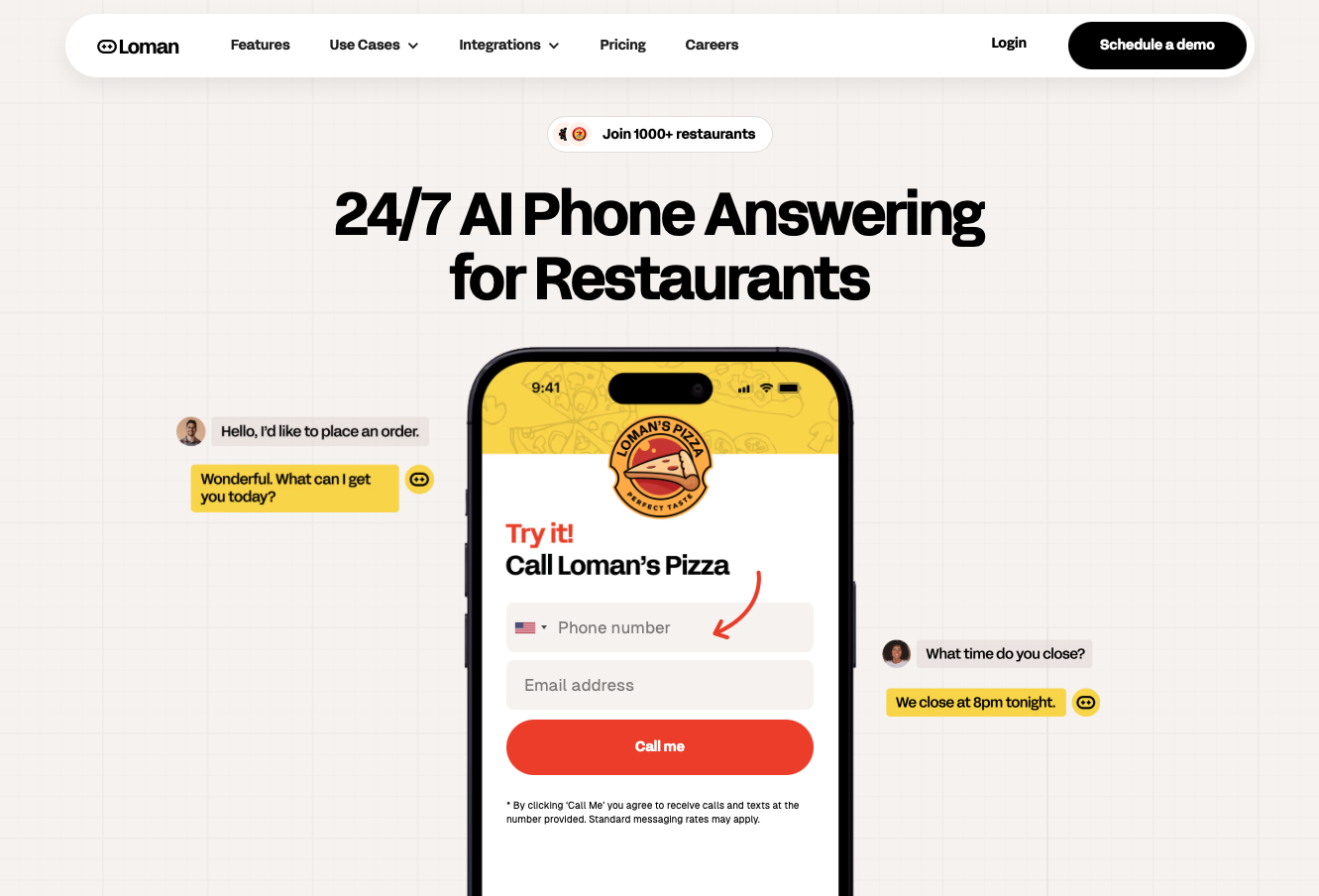
Everything described in the earlier sections is exactly how Loman AI operates. Loman AI is a 24/7 AI phone assistant for restaurants that answers allergen and menu questions by reading the live POS menu as the call happens. When an item gets 86'd or a recipe changes, that update shows up on the next call with no manual re-upload.
Allergen notes and modifier requests push straight into the POS and KDS as structured ticket data. The line reads a "no shellfish" flag the same way it would if a staffer had keyed it in. Nobody re-enters anything mid-rush.
When a caller asks something the menu data can't settle, Loman AI routes to a live line with the conversation context preserved. Setup runs under 24 hours with no coding, and Loman AI connects with Toast, Square, Clover, SpotOn, SkyTab, Aloha by NCR, Olo, and Stream. Operators using Loman AI have reported up to 22% higher phone revenue and up to 17% lower labor costs, and the $199 per month starting price covers unlimited concurrent calls.
Loman AI reads your live POS menu during every call and answers allergen questions directly from that data: no hold music, no staff pulled from the floor. When a caller asks whether a dish contains peanuts or shellfish, the agent checks the current menu record and responds in real time, then writes any allergen modifier notes into the POS ticket as structured data that the kitchen reads the same way it would read a counter entry.
A read-only connection lets the agent quote allergens correctly from the live menu, but order notes stay on the call and never reach the kitchen ticket. Full bidirectional sync pushes the confirmed "no sesame" or "no shellfish" flag directly into the POS and KDS as a structured modifier field, so the line sees it at a glance without anyone re-keying it mid-rush.
Transfer to a human when the caller is asking about shared-fryer cross-contact, describing a prior reaction, or pressing for prep assurances that go beyond what menu data can settle. A well-configured agent reads those signals and routes the call to your line with the conversation context already attached, so the caller does not have to start over.
Phone allergen calls are a routine part of every service, and staff recall during a rush is not a reliable system for accuracy at scale. Restaurant allergen phone order automation changes that: live menu data, structured ticket notes, and a clean handoff to the kitchen mean your team stays on the floor instead of fielding ingredient questions. Loman AI is built for exactly this work. It reads your live POS menu to answer allergen questions in real time and writes modifier notes directly into the kitchen ticket as structured data, so each answer reflects the available menu data and each note reaches the line.
Enter your information in the form to receive a call from Loman and place an order like a customer would!

