Loman AI reviews show restaurants asking the same question: is it worth swapping out a host's hourly wage for a software fee that claims to handle unlimited calls? The real test isn't the subscription cost. It's whether the system captures orders accurately during a rush and actually reduces your labor costs instead of just adding another monthly bill. We're going through the current pricing structure, core features, and real feedback from restaurants that switched to AI phone answering so you can see the numbers that matter.
TLDR:
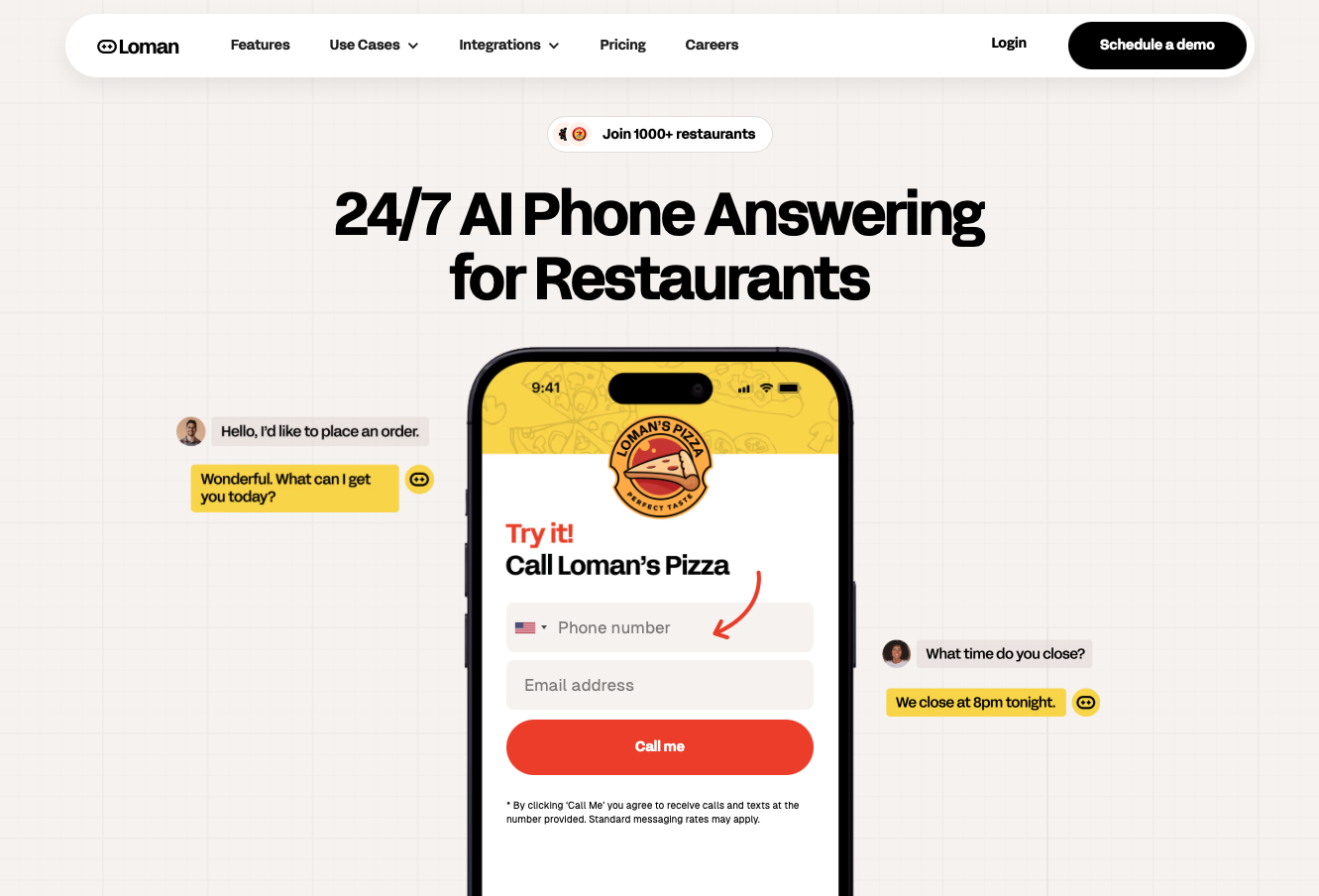
Loman AI is a voice AI phone agent that answers your restaurant’s calls around the clock. It takes pickup and delivery orders, books reservations, answers menu questions, handles common requests, and can collect payment details over the phone. It’s built especially for restaurants, so it understands how your menu works, including modifiers, allergens, and special requests, and keeps up during busy rushes. Whether you run a single location or multiple stores, Loman handles incoming calls, shares wait times, and passes more complex situations to your team when needed.
During a dinner rush, the phone keeps ringing, but no one has time to pick up. Your team is focused on the guests in front of them while calls stack up on hold or go unanswered. The numbers make the impact clear. Restaurants miss about 34% of incoming calls, and 71% of those calls could have turned into revenue. There’s also a staffing tradeoff. When you pull a host or server off the floor to answer phones, service slows down and mistakes become more likely.

Midland Pizza Co.
"If we didn’t have Loman answering the phones, we’d be losing out on over $200k a year."
Cory O’Connor, Decheco’s
"Now that we’re able to run with one less person in front, Loman is both increasing our revenue and saving us money at the same time."
Sonya Istocka, EuroGyro
"It’s hard to find good help these days, and Loman has filled that void. It gives me peace of mind knowing no customer ever gets put on hold."
Vittorio Mangieri, Vittorio’s Pizza
"Loman has brought us more volume, better accuracy on phone calls, and higher tips for the staff. It’s like the ultimate employee."
Brian Nittayo, Rose City Pizza
"Loman has made my life so much easier as a restaurant owner. It’s an absolute no-brainer for any serious restaurant operator."
Costa Alexandrou, Nick’s Place
"This was the first year I took my kids trick-or-treating on Halloween. I actually got to leave early because Loman was answering the phones."
Julie Nguyen, Mamba Hospitality Group
"Taking the call with Loman AI was one of the best decisions I’ve ever made for my restaurants."
Loman handles incoming calls, takes orders, books reservations, and manages PCI compliant payments details without pulling staff away from service. When a customer calls, the AI picks up right away and can take full menu orders for pickup and delivery, including modifiers, substitutions, and special requests.
Customers can provide card details over the phone through direct POS integration, so orders are confirmed before they reach the kitchen. The system connects with Square, Toast, SpotOn, Clover, Aloha, Olo, and Stream, while reservations sync with OpenTable in real time. Loman can handle a high volume of simultaneous calls and suggests add-ons during the order process to help increase ticket size.
Loman connects natively with Square, Toast, SpotOn, Clover, Aloha, Olo, NCR, OpenTable, Otter, Stream, and 30 other POS systems. When the AI takes an order, it shows up in your POS with the full order details in place, similar to a staff-entered ticket. Reservations sync straight into OpenTable, so there’s no need for exports, re-entry, or relying on tools that can break when systems update.
Loman runs on a monthly subscription with a predictable cost starting at $199 per month. It can reduce the need for hourly staff dedicated to answering phones or replace per-minute call center fees that climb during busy periods. Instead of paying $15 per hour for someone to manage calls or dealing with usage-based pricing, you pay a flat fee that covers high call volume.
That turns a variable labor cost into a consistent monthly expense. You don’t have to worry about overtime, last-minute callouts, or costs increasing when call volume spikes on weekends or during promotions.
Most restaurants can get up and running in under 24 hours. You connect your POS and reservation systems, upload your menu, set how you want calls answered, and you’re ready to go. Other solutions can take weeks or even months to get working properly.
If you’d rather not deal with setup, white-glove onboarding is available. The team handles everything for you, from connecting systems to testing, so you can stay focused on running your restaurant.
If you run multiple locations, Loman lets you manage everything without the usual headaches. You can keep a shared menu across all stores while still adjusting prices, items, or modifiers for each location. Every store gets its own phone line with the right hours, holiday schedules, and call routing, so customers always reach the correct location. Whether you’re running a handful of locations or scaling to a larger group, the system grows with you without needing to switch providers or rebuild your setup.
Many restaurant AI phone systems fall short on basic use cases. They may answer calls, but struggle to take full menu orders, which can push guests to hang up and order online or through third-party apps that take around 15-30% in fees. Others claim POS integrations but still send orders through email or require staff to re-enter tickets, bringing back the same delays and errors.
Call volume is another common issue. Some platforms limit how many calls they can handle at once, so during peak times, callers end up waiting on hold or hearing a busy signal.
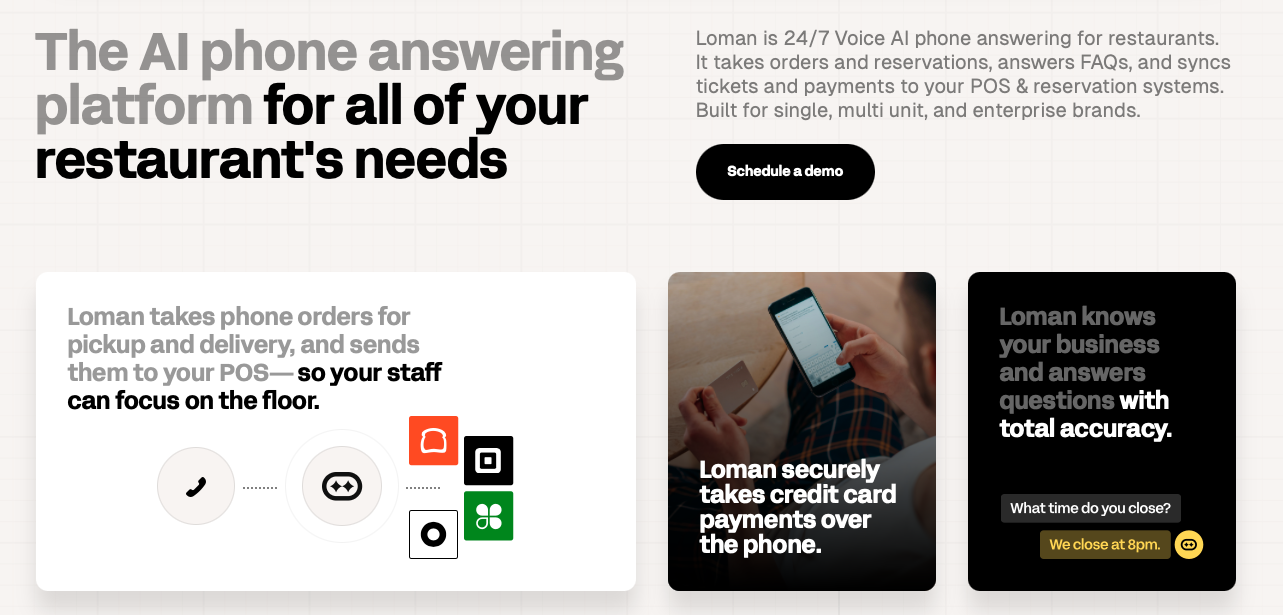
Loman is built to handle the way restaurants actually operate. It takes full menu orders with substitutions, modifiers, and special requests, then sends them directly into Toast, Square, Clover, and other major POS systems without extra steps. It can manage a high number of calls at the same time, so guests are far less likely to run into busy signals.
While some solutions take weeks of setup, custom work, or ongoing adjustments, Loman can be up and running in under 24 hours with integrations that work from the start.
AI phone answering reflects a wider shift in how restaurants operate. 26% of operators report using AI tools at their restaurants.
Labor shortages, rising wages, and revenue lost from unanswered calls are pushing restaurants toward automation that delivers measurable returns. Voice AI for phone handling tackles both front-of-house labor pressure and the revenue leak from missed calls. The benefits of implementing voice AI extend across multiple areas of restaurant operations.
Labor typically accounts for 20-30% of a restaurant’s revenue. About 40% of operators keep that number between 20-25%, while another 26% fall between 26-30%. At the same time, wages continue to rise and hiring remains difficult.
Covering phones alone can cost $15 per hour or more. Across evenings, weekends, and holidays, that adds up to tens of thousands each year just to answer calls. AI phone assistants help shift part of that cost into a fixed monthly expense, so it doesn’t increase when you’re short-staffed or when call volume spikes during busy periods or promotions.
AI doesn’t need to handle everything. It just needs to recognize when to pass things along. Loman picks up on caller intent in real time and routes requests it can’t handle to your team. If someone calls with a complaint, wants to change an existing order, or asks something outside the usual flow, the system recognizes it and transfers the call to a live line.
If no one is available, it captures a voicemail along with a full transcript and shares it with your team so you have the context to follow up.
Restaurants using Loman report up to 22% higher revenue from recaptured calls and built-in upsells. Each answered call creates a chance to convert a guest who might have otherwise hung up or called somewhere else. The upsell prompts suggest add-ons and combinations during the order, helping increase ticket size without relying on staff to remember scripts during a rush.
Labor costs can drop by as much as 17%. When the AI handles calls, reservations, and common questions around the clock, fewer hours are needed for phone coverage. That opens up payroll for roles that directly impact guest experience or allows teams to run leaner during slower periods while still keeping up with incoming calls.
We built Loman exclusively for restaurants because general-purpose AI answering services don't understand how food service works. A horizontal call assistant can't take complex orders with modifiers, suggest pairings that lift ticket size, or sync directly with restaurant POS systems that require menu hierarchies, prep instructions, and payment tokenization. Generic voice assistants fail when a guest asks to swap fries for a side salad, add extra sauce on the side, or split a pizza half pepperoni and half mushroom.
Restaurant-specific training lets Loman recognize allergens, handle substitutions, quote accurate wait times, and route catering inquiries without breaking flow. AI and the future of restaurants depend on this type of specialized training. The AI speaks the language of covers, mods, and ticket times because it was trained on large volumes of restaurant call data. It knows the difference between no onions and extra onions, understands when a guest asks for a table for four at seven versus an order for delivery at seven, and can handle regional menu variations across multi-location brands.
Because we integrate natively with Toast, Square, Clover, and other restaurant systems, setup takes hours instead of weeks.
Most restaurants go live in under 24 hours after connecting their POS and reservation systems, importing their menu, and setting greeting preferences and business hours.
The system detects complex situations, like complaints or custom modifications, and transfers the call to your staff with full context, or captures a voicemail with transcript if no one is available.
Yes, the AI takes full pickup and delivery orders including substitutions, modifiers, and special requests, then sends clean tickets directly into your POS without manual entry.
Every missed call is money walking out the door, and Loman AI reviews from restaurants show the same pattern: operators trading unpredictable labor expenses for a fixed monthly fee that covers unlimited call volume. The Loman AI cost replaces hourly wages and per-minute charges with a predictable software subscription. Your team gets their time back, your guests get instant answers, and your kitchen receives clean tickets without manual entry errors. If you're tired of choosing between answering phones and serving tables, automation handles the tradeoff for you. The real question isn't whether AI phone answering works for restaurants; it's whether you can afford to keep missing calls while competitors capture every order.
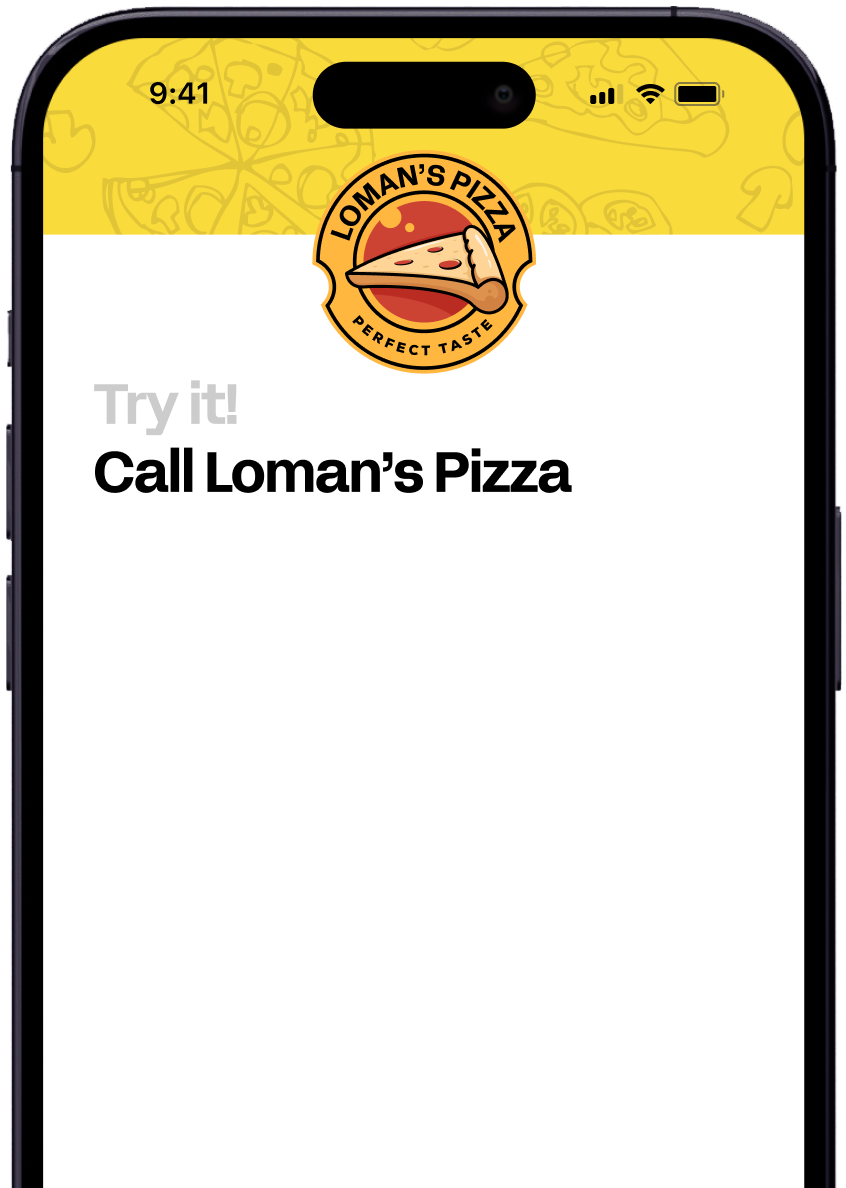
Enter your information in the form to receive a call from Loman and place an order like a customer would!

