
The top restaurant tech companies and food tech startups building restaurant technology in 2026 aren't solving new problems. They're solving old ones faster: getting orders into the POS without re-keying them, consolidating reporting so you see one set of numbers instead of four, and freeing up your team to work the floor instead of troubleshooting systems. Cloud-based POS adoption hit 56% because remote access and centralized data change what managing multiple locations actually looks like. Voice AI went mainstream because missed calls cost real money. Contactless payments became non-negotiable because guests expect speed. What ties all of it together is integration. The restaurants using technology to run smarter in 2026 are the ones making sure their tools cooperate.
TLDR:
Cloud POS adoption has hit 56% across the industry, and operators who've made the switch rarely go back. Remote access, automatic updates, and centralized reporting change what managing a restaurant actually looks like day to day.
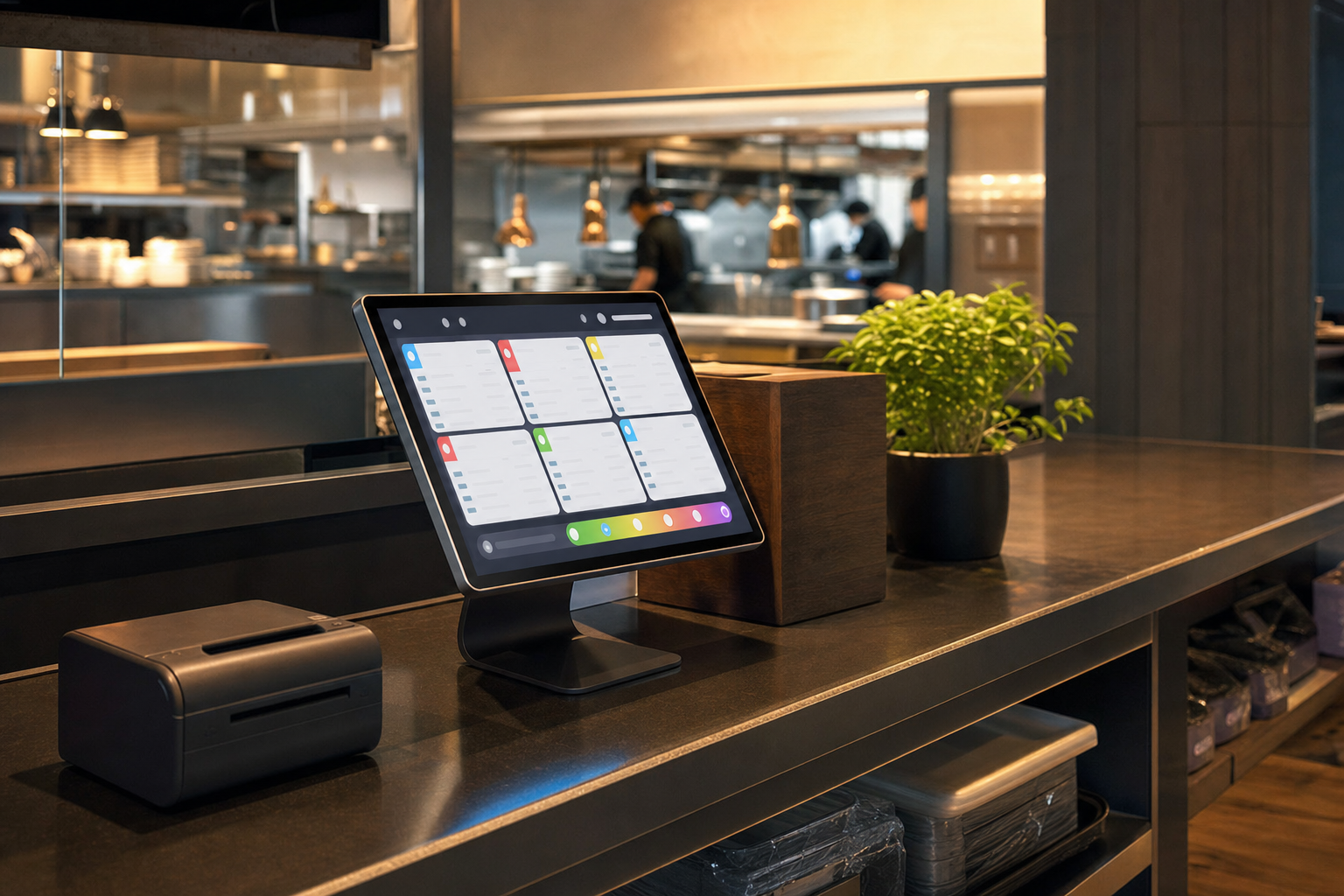
What's equally telling is where operators want to go next. Improving integrations is the top POS priority for restaurants heading into 2027. The ask isn't better software in isolation; it's software that actually talks to everything else running in the building, from online ordering to voice AI phone agents that push orders directly into the POS without anyone re-keying a ticket.
AI is no longer a future-facing experiment in restaurants. It's already answering phones, predicting inventory shortfalls, and adjusting menus based on real-time demand. According to the National Restaurant Association, 76% of operators say technology gives them a competitive advantage. Operators continue investing in tools that improve effectiveness, reduce manual work, and simplify guest service.
The clearest sign of acceleration is where AI shows up on the floor. Voice AI agents now handle inbound calls during peak hours, routing orders and answering questions without pulling anyone off the line. Predictive ordering tools cross-reference weather, local events, and historical sales to cut food waste. Time-of-day pricing adjusts ticket averages based on real-time demand.
These aren't pilots. They're Tuesday.
Tap-to-pay, QR codes, and digital wallets have moved from novelty to expectation. According to the National Restaurant Association, nearly 40% of diners now prefer contactless payment options, and restaurants that haven't updated their checkout experience are losing those customers to competitors who have. The shift happened fast: what felt optional in 2021 is a baseline requirement by 2026.
The practical side is straightforward. Contactless systems cut transaction times, reduce cash-handling errors, and give your front-of-house staff fewer friction points during a busy turn. Square, Toast, and Clover all support tap-to-pay natively, and most modern terminals handle Apple Pay, Google Pay, and physical contactless cards without any additional setup.
For full-service operators, pay-at-table devices are where the real time savings show up. Tables turn faster when guests aren't waiting for a check to come back.
| Technology Category | Primary Function | Key Benefit for Operators |
|---|---|---|
| Cloud POS Systems | Centralized order and payment processing with remote access and automatic updates | 56% adoption rate with operators now focusing on improving integrations as top priority |
| Contactless Payment Systems | Tap-to-pay, QR codes, and digital wallets at checkout | Nearly 40% of diners prefer contactless options and tables turn faster with pay-at-table devices |
| Kitchen Display Systems | Digital screens route orders by station and eliminate printed tickets | Fewer re-fires, faster ticket times, and less paper waste during peak hours |
| Voice AI Phone Agents | Take complete phone orders and push tickets directly to POS without staff intervention | Up to 23% revenue increase per order through consistent upselling and zero missed calls |
| Direct Online Ordering | First-party ordering channels that bypass third-party apps | Keeps 15-30% commission per order in-house and retains customer data for repeat business |

Kitchen display systems (KDS) have quietly become one of the more impactful upgrades a kitchen can make. Orders fire directly from the POS to screens at each station, cutting out printed tickets and the miscommunication that comes with them. The result: fewer re-fires, faster ticket times, and less paper waste, a workflow change that's particularly critical for high volume restaurant operations where every second counts during peak service.
Automation is pushing further into prep and cooking. Some larger operations are testing robotic fry stations and automated drink dispensers that run without a dedicated employee. These restaurant automation systems reduce labor dependency at high-volume stations during peak hours.
Third-party delivery apps give restaurants reach they couldn't build on their own, but that visibility runs 15 to 30% per order in commissions. On a $40 ticket, that's up to $12 out the door before labor, food cost, or rent touches the equation.
The data problem compounds the margin hit. Orders through these apps don't include customer contact info or purchase history. The guest relationship belongs to the app, not your restaurant.
Operators running both channels with intention use third-party for discovery and new guest acquisition, then push repeat business toward direct ordering, where margins and customer data stay in-house.
POS systems have always collected data, but most restaurants never had the tools to act on it. That's shifting. Analytics layers built on top of POS data now give operators a real-time read on which menu items drive margin, when labor costs spike relative to covers, and where ticket times start slipping.
Operators running multi-unit concepts increasingly rely on these dashboards to spot location-level variances before they compound. A single underperforming daypart, caught early, is a scheduling fix. Caught late, it's a quarter of lost revenue.
Key metrics operators are tracking today:
Loyalty in restaurants used to mean a punch card in someone's wallet. With 48% of restaurant customers now enrolled in a loyalty program, the category has split into two different bets: points-based programs that reward frequency, and data-driven programs that reward behavior.
The shift matters because frequency and behavior are not the same thing. A customer who visits once a week but always orders the same $12 bowl generates less revenue than one who visits twice a month but responds to an upsell every time.
The constraint most operators hit is data quality. Loyalty programs only get smarter if the order data feeding them is clean and consistent, which is why the POS integrations discussed earlier in this post matter so much here too.
The restaurant back-of-house has never run on a single tool, and 2026 is no different. What has changed is how tightly those tools need to talk to each other. A great phone ordering system that doesn't push tickets to your POS creates more work, not less. A loyalty program that can't read your sales data is guessing at your best customers.
Operators are increasingly choosing tech by how well it fits into what they already run, and by what it does in isolation. That means your POS, your online ordering, your voice AI, and your reservation system all need to share data cleanly.
The stacks that perform best tend to share a few traits:
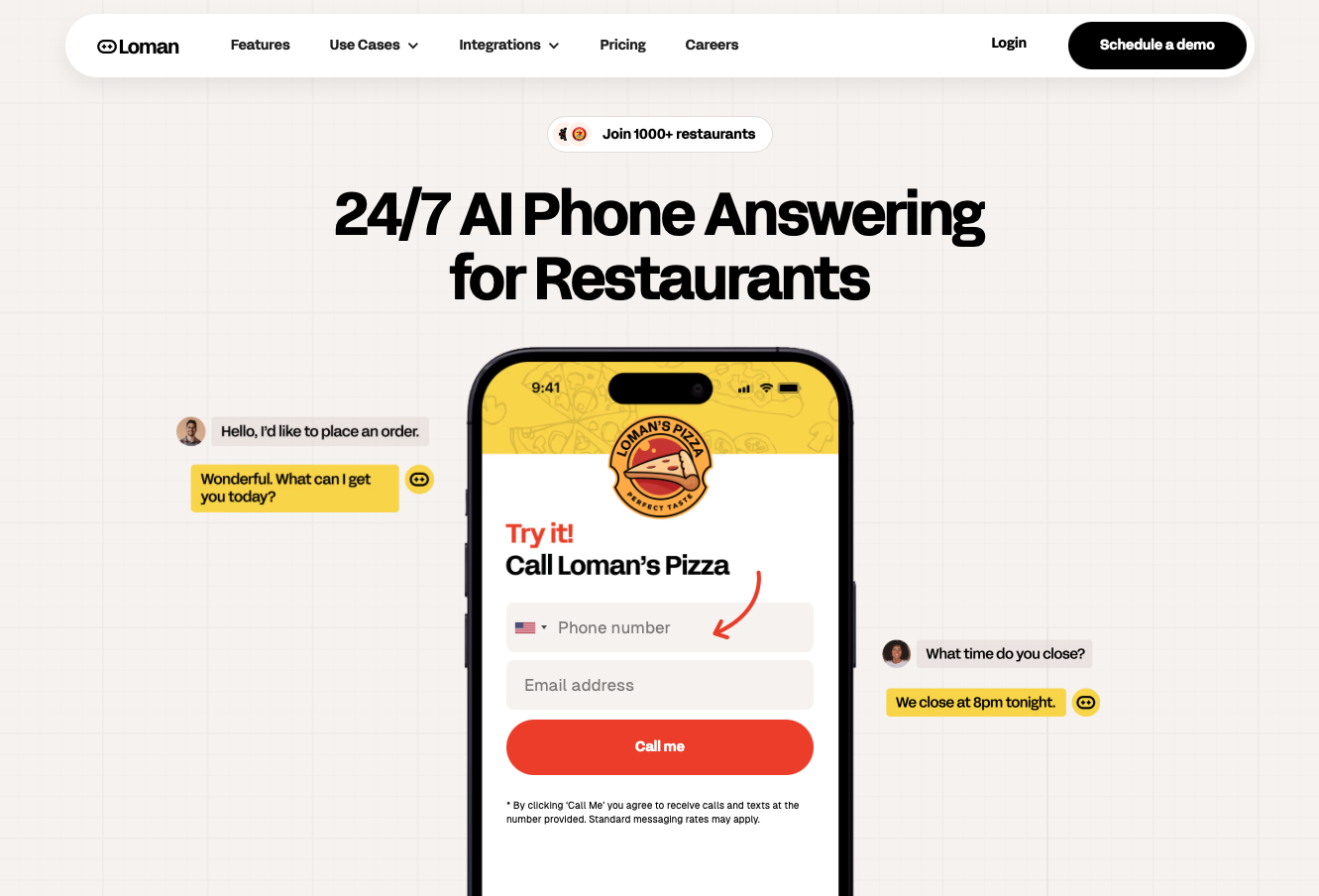
Every missed call is an order that never came in. Voice AI phone agents handle incoming calls around the clock, taking orders, answering menu questions, and quoting wait times without pulling a single staff member away from the floor.
Loman, for example, goes live in under 24 hours and has helped restaurants see up to a 23% increase in revenue per order through consistent upselling on every call. No hold music, no voicemail, no lost ticket.
The tools operators are watching closely here:
Cloud-based POS systems with strong integration ecosystems deliver the highest returns, particularly when paired with voice AI phone agents that push orders directly to your POS and contactless payment systems. Operators consistently report that integrations matter more than individual tool features.
Cloud-based systems give you remote access, automatic updates, and centralized reporting across locations without manual software management. Traditional legacy systems require on-site servers and manual updates, making multi-location management harder and more expensive.
Yes. Voice AI agents like Loman take complete orders, process payment during the call, and push tickets directly to your POS without anyone re-keying information. Restaurants using this technology report up to 23% higher revenue from recaptured calls and built-in upselling.
The restaurant tech companies worth betting on don't lead with pitch-deck flash. They build tools that cut ticket times, save labor hours, and stop revenue from walking out the door because nobody picked up the phone. Voice AI, cloud POS, and kitchen automation all pass that test. They show up in your P&L, not buried in your operations manual. Book a demo with Loman if you want to see what voice AI looks like when it's built for restaurants, not ported over from a call center. Judge it the way you judge a new menu item: does it work, does it integrate, and can you see the return?
Enter your information in the form to receive a call from Loman and place an order like a customer would!

