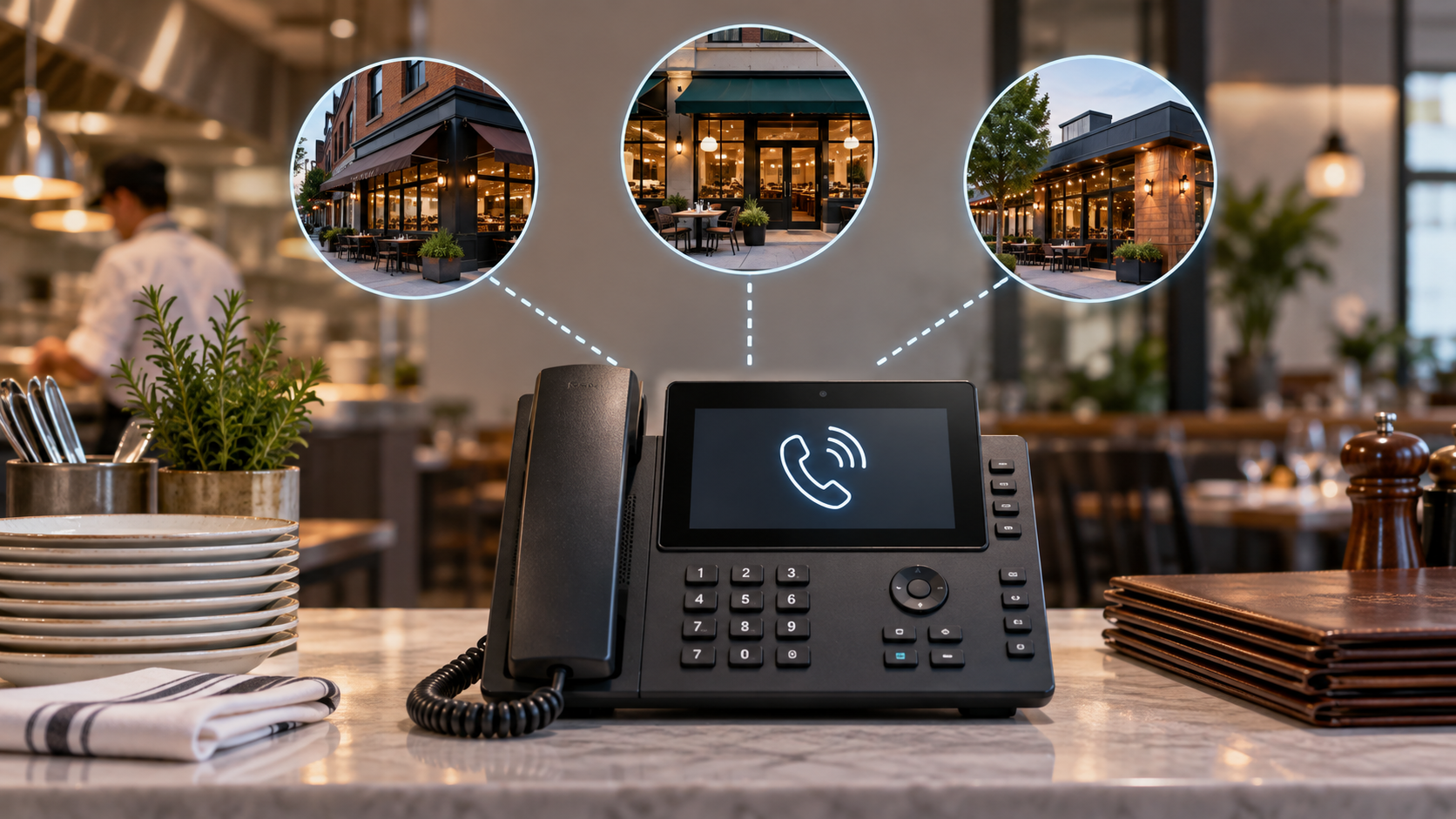
Choosing the right phone system for small restaurants running multiple locations is a different challenge than running a single-site operation. When a customer calls your downtown location to book a table but actually wants your uptown spot, you need a system that can route that call without making them hang up and dial again. Vendor calls pile up across sites, brand consistency on the phone varies by whoever picks up that day, and a missed call at one busy location can quietly cost you dozens of orders a week.
TLDR:
Restaurant phone systems fall into a few main categories, each with different cost and flexibility trade-offs. Traditional landlines are reliable but carry higher monthly costs and fewer features than newer options.
Key Service Unit (KSU) phones provide multi-line functionality for businesses with fewer than 50 employees, with core features like hold lines, intercom, and internal paging. Upfront costs run $800 to $1,000 per line and require professional installation, making them expensive to replicate across multiple locations.
Pros:
Cons:
Non-KSU systems work like residential landlines and require no specialist to install, making them a low-cost entry point for very small restaurants with fewer than five lines.

Pros:
Cons:
Private Branch Exchange (PBX) systems handle more than 40 phone lines and offer centralized management across all your venues from a single admin view. The standout feature for multi-location operators is the unified dial plan: each site gets its own extension block (downtown on the 100-series, uptown on the 200-series), so transferring a caller between locations is a single keypress rather than a full external redial. A guest who calls the wrong location reaches the right one in seconds, with no hold music and no hang-up.
Pros:
Cons:
Voice over Internet Protocol (VoIP) technology represents the most significant advancement in business communications for small restaurants. These systems operate through internet connections rather than traditional phone lines, offering flexibility and cost savings that traditional lines cannot match. According to Grand View Research, the global VoIP market surpassed $30 billion and continues growing rapidly as more businesses move away from legacy phone infrastructure.
On-premises VoIP puts hardware at your location for direct control, but requires ongoing technical maintenance. Cloud-based VoIP runs on remote servers managed by your provider, cutting on-site hardware to nearly zero.
Monthly service fees typically run 30-50% lower than traditional landline costs, with no hardware required per new location. Call analytics, mobile integration, and auto-attendants are included without the price tags that come with traditional business phone systems.
VoIP handles high call volumes more efficiently than traditional phones, reducing missed orders and reservation requests during busy periods. A missed call cost analysis for restaurants shows even 10-15 unanswered calls a week can translate to hundreds in lost weekly revenue. For a closer look at how missed calls drain restaurant revenue, see our detailed breakdown. Advanced call routing gets incoming calls to available staff quickly, cutting wait times for guests. Mobile integration lets you take business calls, check voicemails, and monitor system performance from anywhere, which matters most when you split time across multiple responsibilities or locations.
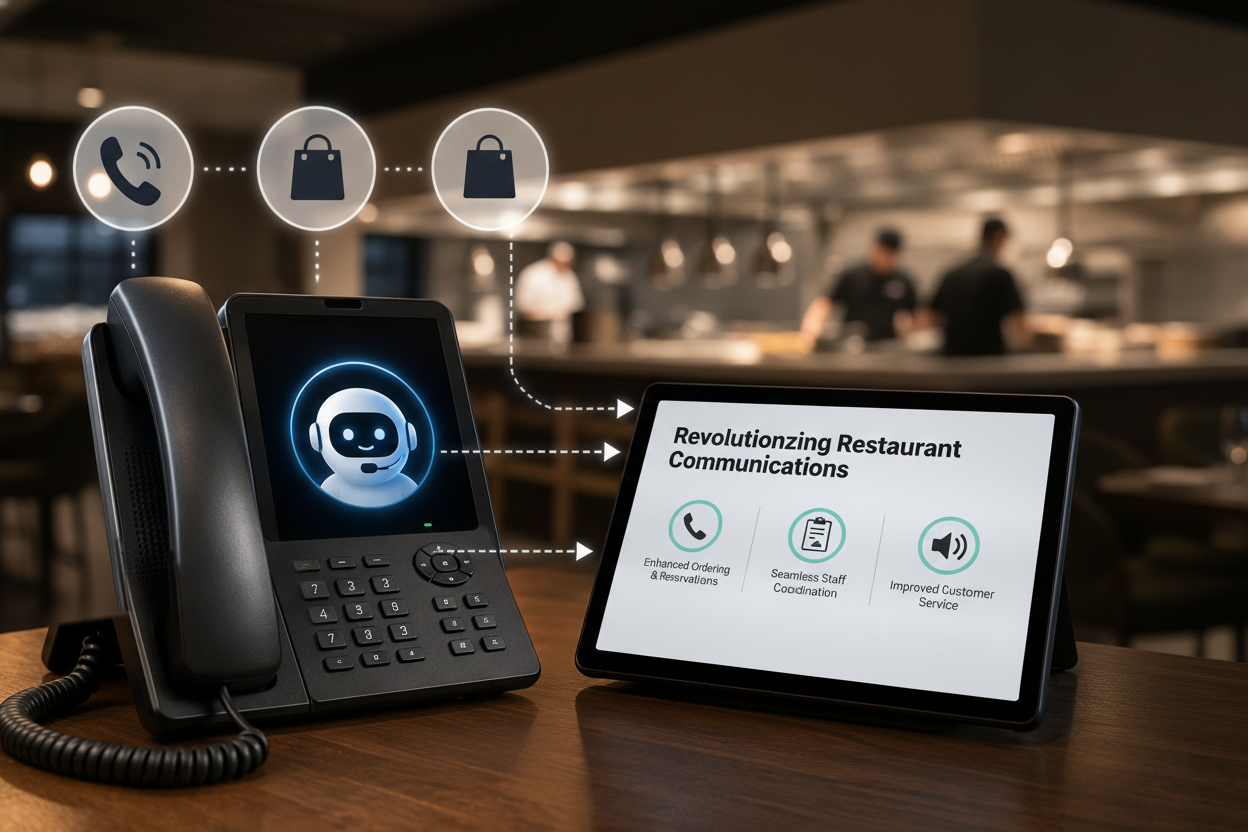
For multi-location operators, a single VoIP account spans every site while giving each location its own dedicated phone number, so your downtown and uptown spots each carry a local identity. When your midtown location closes for the night, incoming calls route automatically to whichever location is still open, meaning a customer trying to order after close at one spot reaches a live team member at another. A single dashboard shows you call volumes across every location in real time, so you can spot a surge at one site and redeploy staff before service suffers. When a customer calls the wrong location, your host transfers them to the right one with a single keypress, no hang-ups required. Consistent hold music and scripted greetings play the same way at every site, so callers hear one unified brand voice whether they dial your flagship or your newest location.
VoIP systems also provide valuable data analytics and reporting capabilities that help restaurants optimize their operations:
Pros:
Cons:
Prices and features vary widely across providers, so the right fit depends on your call volume, number of locations, and budget. The table below shows how leading options compare at a glance.
| Provider | Starting Price | Key Features | Best For | Uptime Guarantee |
|---|---|---|---|---|
| CallHippo | ~$16/user/month | IVR, smart call queuing, real-time analytics | Multi-location restaurants | 99.9% |
| Nextiva | $18.95/user/month | Voice, video, CRM integration, unlimited calling | Growing restaurant chains | 99.999% |
| Ooma Office | $19.95/user/month | Virtual receptionist, ring groups, voicemail-to-email | Small budget-conscious restaurants | 99.9% |
| Grasshopper | Starts ~$14/month | Call forwarding, voicemail transcription, virtual numbers | New or very small restaurants | Not published |
CallHippo stands out for multi-location restaurants with cloud-based VoIP, IVR call routing, and smart call queuing that keeps busy signals off the table during peak hours. Real-time analytics help managers spot call-pattern trends across locations, and the interface needs no specialist training to run.
Nextiva bundles voice, video, messaging, and CRM integration into one platform, with a 99.999% uptime guarantee that keeps phones running during the hours when a dropped call costs real money. CRM integration lets your team pull up customer order history mid-call, and the analytics dashboard shows call performance across your locations. Starts at $18.95 per user per month with annual billing.
Cloud VoIP across three locations typically takes one to two weeks; PBX can take four to eight weeks per site. Before you start, confirm internet speeds at each location (100 Mbps dedicated to voice is the standard), inventory every existing phone number, and document your call-routing rules so the new system mirrors them on day one. For five or more locations, pilot one site first before rolling out to the rest. Watch for number porting delays of up to fourteen business days, never cut old lines before the port completes, and hold a short staff walk-through at each site before go-live. A step-by-step VoIP implementation guide for restaurants covers bandwidth planning, number porting, and staff training in detail.
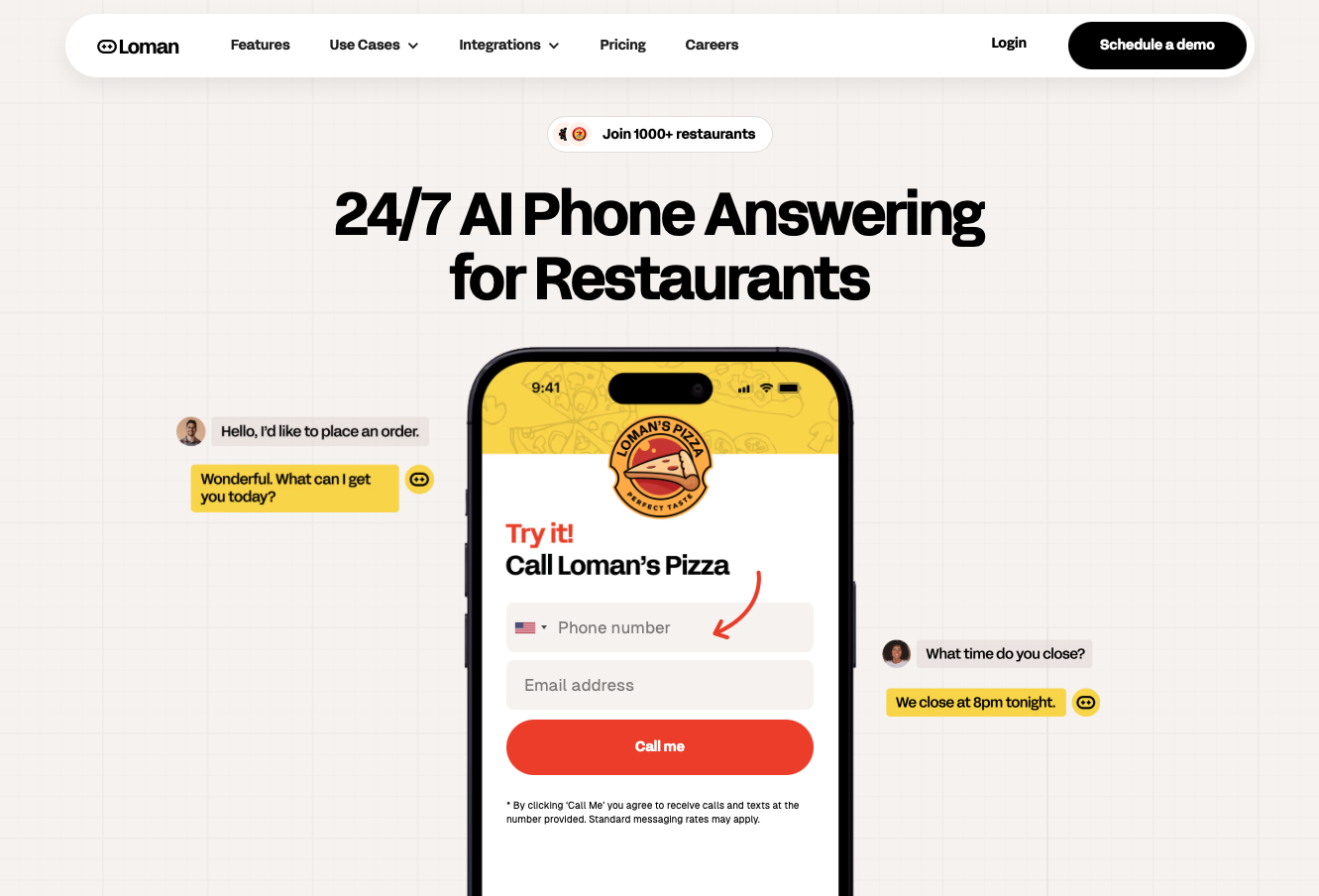
Most phone systems covered in this guide do the infrastructure work well: routing calls, managing lines across locations, keeping costs below landline rates. What they cannot do is pick up the phone when your counter staff is slammed during the lunch rush and close a full order end-to-end. That gap is where a restaurant-specific voice AI phone agent fits. Rather than adding another staffer to cover phones, some operators have moved to an AI phone agent that answers every call 24/7, takes complete pickup and delivery orders, books reservations, and pushes tickets directly into the POS, with no manual re-entry and no hold times.
Loman is a voice AI phone agent built for restaurants. It goes live in under a day, handles unlimited concurrent calls, and works whether you run one location or a growing chain. Crust Pizza owner Nick Haselidis put it plainly: "This paid for itself in 10 days. Phones are calm, tickets are bigger, and my team refuses to go back." Operators using Loman report up to 22% higher phone revenue and up to 17% lower labor costs. If you want to see how it fits your setup, you can book a demo at loman.ai/demo.
Cloud VoIP is the faster, lower-cost path for most multi-location operators. There is no hardware per new site, one to two weeks to roll out across three locations, and a single dashboard showing call analytics across every location. PBX makes more sense if your locations need a unified dial plan with direct extension transfers between sites and you can absorb four to eight weeks of installation time per location plus higher upfront hardware costs.
Start by inventorying every phone number across all locations and confirming each site has at least 100 Mbps of dedicated internet bandwidth before you touch anything. Never cut old lines before number porting completes, because that process alone can take ten to fourteen business days. Run a pilot at one location first, get it stable, then carry those lessons into the wider rollout.
Yes. A voice AI phone agent like Loman answers every inbound call, takes full pickup and delivery orders, and pushes tickets directly into your POS so no staffer has to leave the floor to cover the phone during peak service. Crust Pizza owner Nick Haselidis reported Loman paid for itself in ten days: phones calm, tickets bigger, team stays on the floor.
The right phone system for small restaurants comes down to call volume, number of locations, and budget. Request a demo from your top two or three contenders before committing. If you want a solution that goes live in under a day and answers 100% of calls without adding staff, Loman is a voice AI phone agent built for restaurants that closes full orders and processes payment in-call, whether you run one location or a growing chain.
Enter your information in the form to receive a call from Loman and place an order like a customer would!

