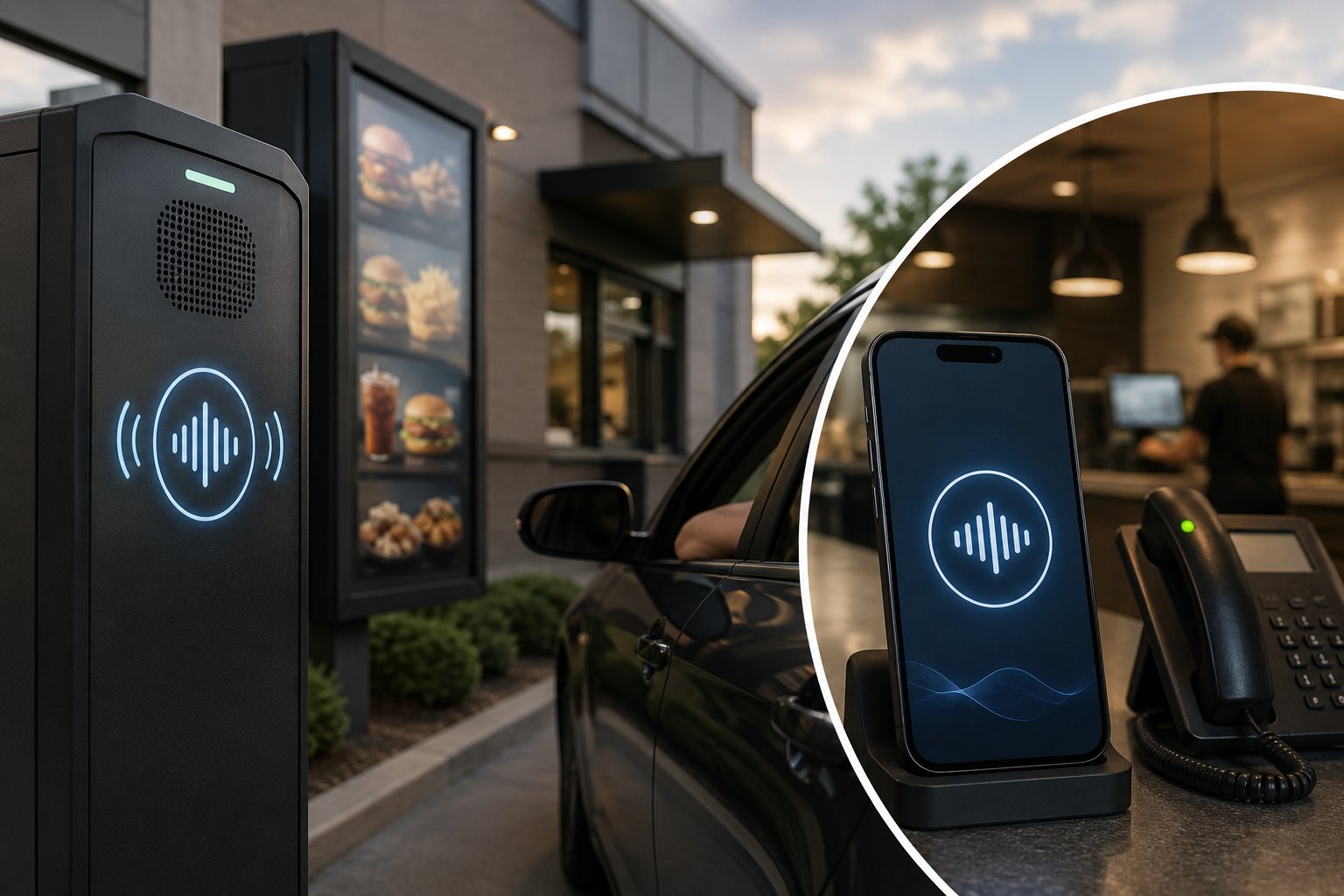
Your staff doesn't need to see another Taco Bell AI drive thru meme to know the tech isn't perfect yet. McDonald's walked away from their AI partnership in 2024, Wendy's Fresh AI sparked Reddit debates about whether it actually saves time, and about 21% of artificial intelligence drive-thru orders still need employee support. Voice AI at the drive-thru is real, it's live at hundreds of locations, and the gap between hype and performance is smaller than the viral clips make it seem.
TLDR:
Several major QSR chains have rolled out AI ordering at the drive-thru, with mixed results that have sparked plenty of online debate.
Each chain is at a different stage, and customer reactions range from impressed to frustrated, depending heavily on the specific location and how well the system was configured.
| Restaurant Chain | AI Partner/System | Deployment Status | Key Performance Notes |
|---|---|---|---|
| Taco Bell | Voice AI ordering system | Live at hundreds of locations | Viral social media attention for mishearing orders and adding unexpected items like Mountain Dew to tickets. Customer reportedly ordered 18,000 cups of water to force human handoff. |
| Wendy's | Fresh AI with Google Cloud | Active at pilot locations | Handles majority of drive-thru orders without human intervention. Reddit debates about whether it saves time. Fewer public failures than competitors. |
| McDonald's | IBM AI partnership (ended 2024) | Ended after 3-year pilot at 100+ locations | Ended after complaints about order accuracy; reporting also cited difficulty interpreting accents and dialects, though McDonald’s declined to disclose official accuracy figures. |
| Loman | Voice AI for phone orders | Available for restaurants nationwide | Answers 24/7, syncs to POS systems, up to 22% higher phone revenue, 17% labor cost reduction. No drive-thru acoustic interference or hardware constraints. |
A customer pulls up to the speaker, places an order, and drives away in under 90 seconds. No miscommunication, no missed upsell. Behind that interaction is a voice AI system that listens, interprets, and responds in real time.
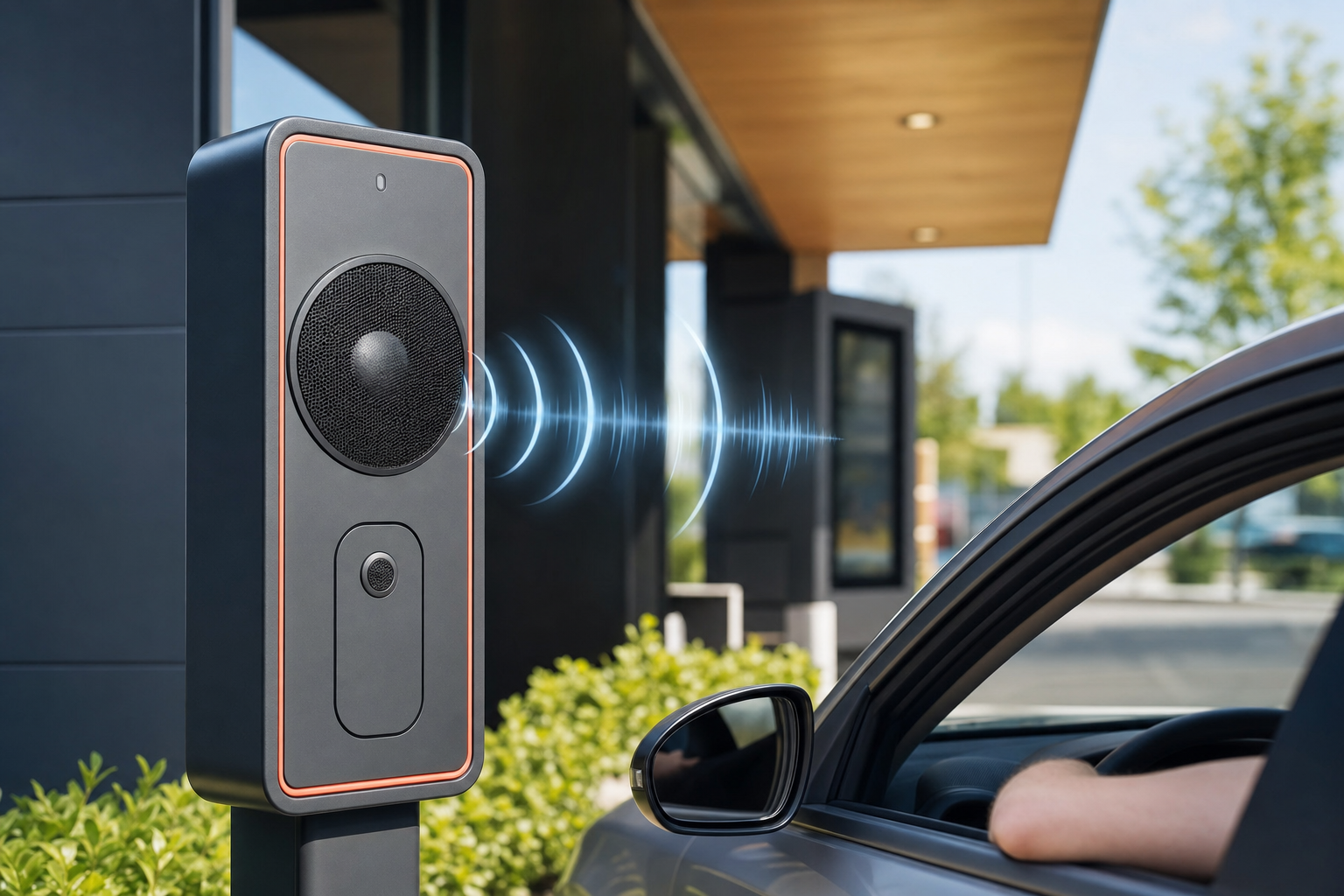
The mechanics are straightforward. A microphone at the drive-thru speaker captures the customer's voice. The AI processes that audio, matches it against the menu, and sends a clean ticket directly to the kitchen display. No human intermediary required.
Here's where it gets interesting for operators:
Despite the hype, AI drive-thru rollouts have faced real, public stumbles. The McDonald's pilot became a cautionary case study in what can go wrong. The system misheard items, blended orders from adjacent lanes, and often ignored mid-order corrections. When clips hit social media, they spread fast.
Taco Bell had its own viral moment: a customer reportedly ordered 18,000 cups of water just to force a handoff to a human agent.
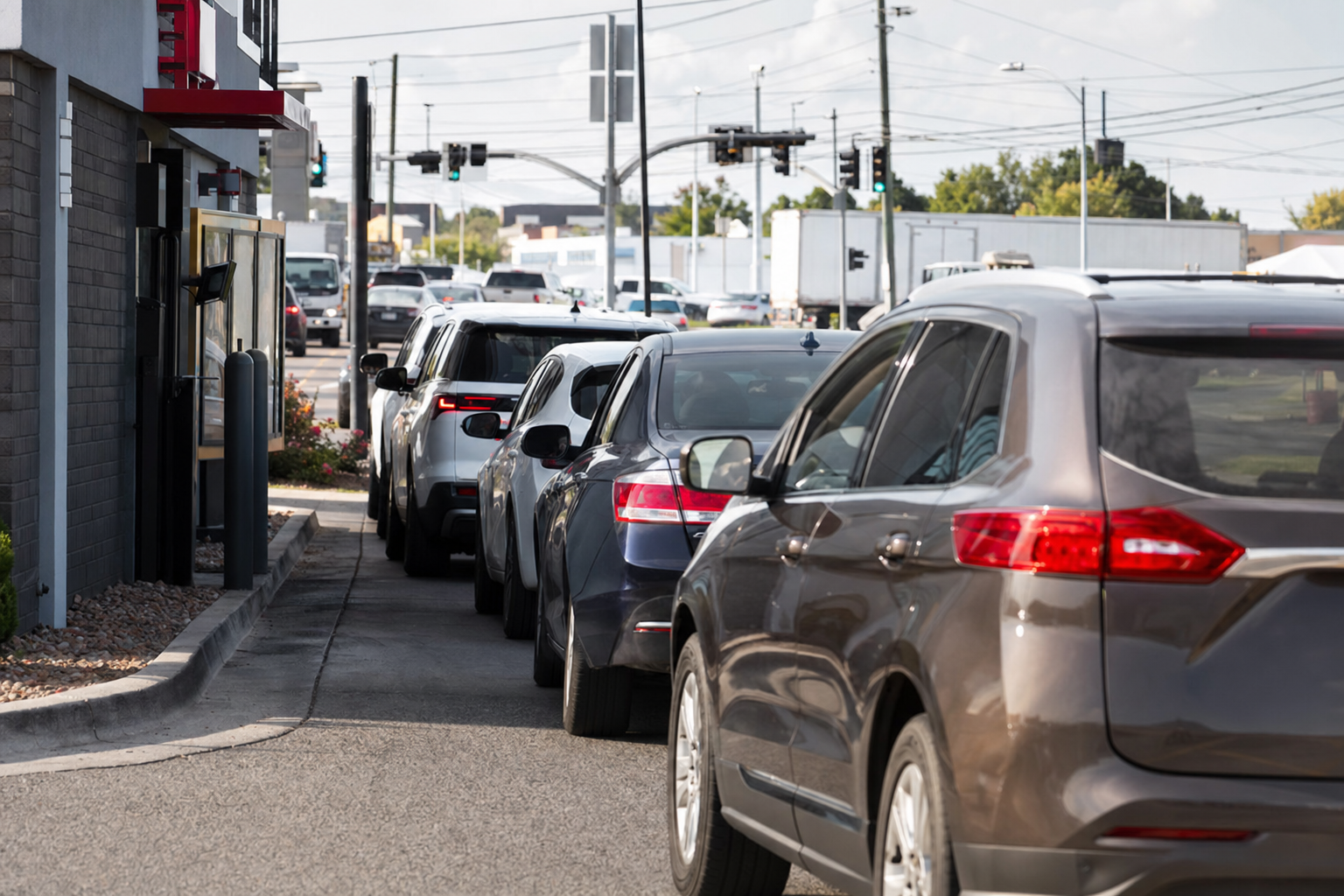
Most early AI drive-thru failures trace back to a handful of consistent issues:
These are solvable engineering problems, and newer deployments are meaningfully better at handling them.
AI drive-thru systems tend to perform best in predictable, high-volume environments where speed and consistency matter most.
Wendy's FreshAI, for example, reportedly handles the majority of drive-thru orders at its pilot locations without human intervention. Taco Bell's Voice AI rollout across more than 500 reported U.S. locations similarly showed that structured ordering environments produce far fewer errors than chaotic ones.
Raw accuracy numbers tell an incomplete story. Order accuracy at AI drive-thrus dropped from 87% to around 83%, which sounds like a step backward. Intouch Insight reported that friendly drive-thru service drove 97% satisfaction, while AI-powered ordering trailed standard drive-thru ordering on accuracy at 83% versus 87%.
Speed explains much of that gap. A fast, slightly imperfect order often beats a slow, correct one when hungry customers are idling in line. If the AI gets the burger right and skips the fries, most people shrug it off faster than they would a five-minute wait.
That said, about 21% of AI-assisted drive-thru orders required employee intervention at some point, whether to clarify a customization or recover a fumbled exchange. That's not a failure, exactly, but it does mean full autonomy remains a work in progress for most deployments.
The McDonald's-IBM partnership ran three years across more than 100 locations before McDonald's ended it in 2024. Two sources familiar with the tech said the core issue was accent and dialect interpretation, which quietly eroded accuracy at scale in ways lab testing never caught. Demo conditions looked clean. Production lanes, with real acoustic pressure and regional speech patterns, told a different story.
Even a modest error rate can become a brand problem fast when viral clips spread online.
McDonald's still expressed confidence that voice ordering will be part of their restaurants' future, stating they would pursue long-term, scalable solutions before year's end. The message: the concept holds, this particular execution didn't.
AI drive-thru gets most of the headlines, but the phone line is where many QSRs quietly bleed orders. Studies show roughly 30% of restaurant calls go unanswered during peak hours, and each missed call is a lost ticket.
Voice AI built for phone orders works the same way as drive-thru AI: it listens, understands context, confirms customizations, and routes payments. The difference is the channel. Customers call in, and the AI can answer every call simultaneously when properly configured.
For operators who want to capture more revenue without expanding staff, phone-based voice AI is a practical next step after the drive-thru window.
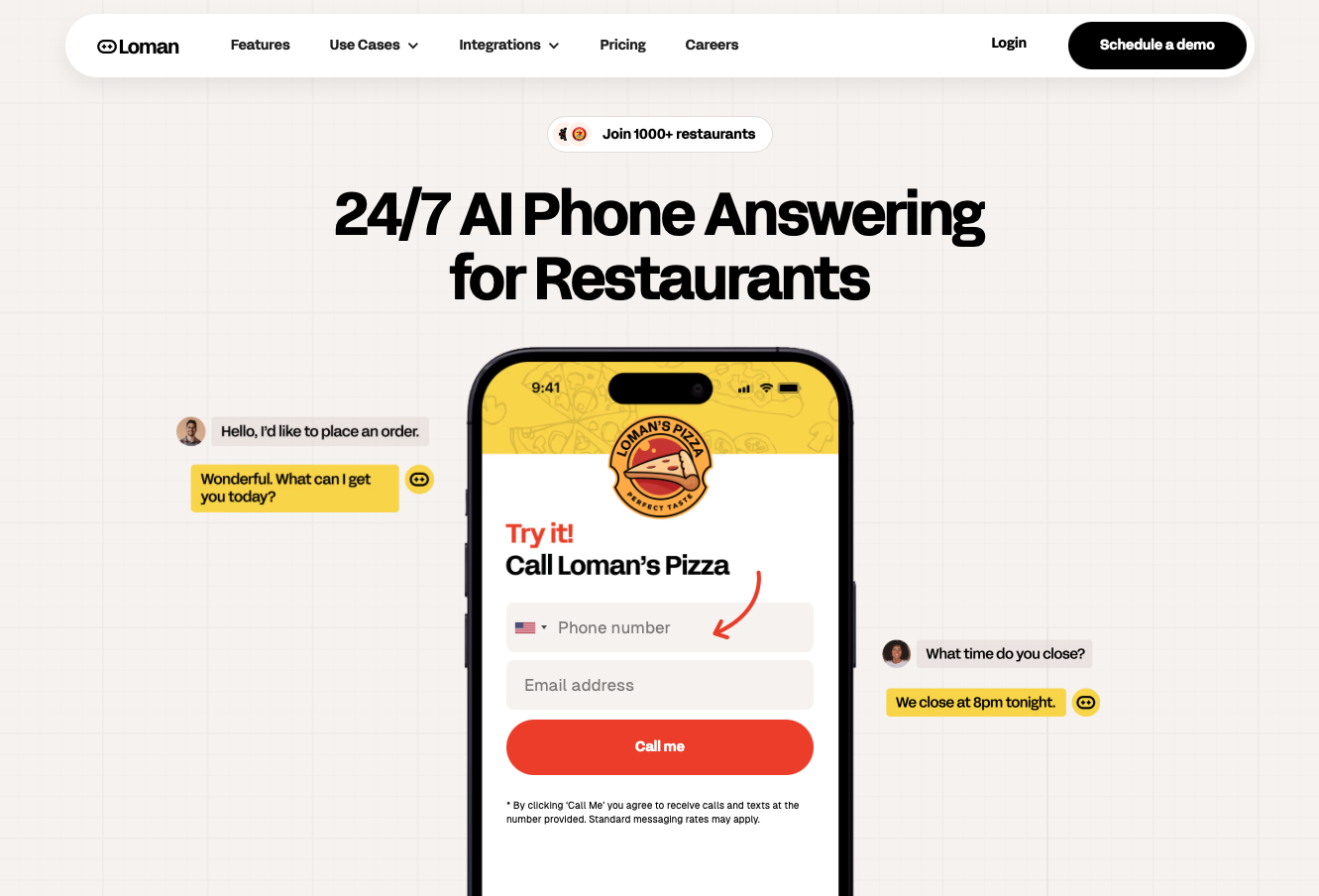
The phone channel doesn't have road noise, a blown speaker, or a customer leaning out a car window mid-sentence. That acoustic advantage is exactly why we built Loman around it.
Loman answers every call, 24/7, taking pickup and delivery orders, booking reservations, and handling customizations without the hardware constraints that trip up drive-thru systems. Orders sync directly to your POS: Toast, Square, Clover, SpotOn, SkyTab, Aloha by NCR, Olo, or Stream. Reservations go straight into OpenTable. No manual re-entry, no dropped tickets, and no limit on simultaneous calls.
Restaurants using Loman see up to 22% higher revenue from recaptured calls and cut labor costs by as much as 17%. The drive-thru is getting smarter. The phone line, with Loman, already is.
Taco Bell's AI went viral for order mishearing (adding Mountain Dew to every ticket), while Wendy's FreshAI focuses on speed and handles most orders without human intervention at pilot locations. Both are learning systems, but Wendy's has fewer public fails so far.
Yes. Phone-based voice AI like Loman answers calls, takes orders, and syncs to your POS without any drive-thru equipment, microphones, or lane setup. The phone channel avoids road noise and hardware constraints that cause most drive-thru AI fails.
McDonald’s ended the IBM AI drive-thru test in 2024 after mixed results and public complaints about order accuracy and interpretation issues across more than 100 locations. The tech worked in demos but couldn't handle real production lanes with regional speech patterns and acoustic pressure.
AI-powered drive-thru orders averaged 83% accuracy versus 87% for standard drive-thru orders; when employees supported AI orders, accuracy rose to 95%. Speed compensates for small errors. About 21% of AI-assisted drive-thru orders still need employee intervention to clarify customizations or fix mistakes.
Install a voice AI phone agent that answers 24/7, takes full orders, and syncs directly to your POS. Restaurants recapture the 30% of calls that go unanswered during peak hours and see up to 22% higher phone revenue without expanding headcount.
Artificial intelligence drive-thru systems will keep improving, but window tech still lags behind phone-based voice AI in accuracy and customer experience. The phone line doesn't fight road noise, doesn't blend orders from adjacent cars, and doesn't need expensive hardware at every lane. For restaurant operators looking to automate order-taking without the trial-and-error phase, the phone is the smarter starting point. Schedule a demo to see how Loman performs when the environment actually cooperates.
Enter your information in the form to receive a call from Loman and place an order like a customer would!

