
Pull up to the speaker at certain Taco Bell, McDonald's, Wendy's, or KFC locations and the voice confirming your order might be AI. The results so far are mixed. McDonald's ended its IBM partnership in 2024 after accuracy failures went viral. Taco Bell processed two million orders and then started reassessing. The question operators are asking in 2026 is not whether AI can take an order. It is whether AI drive-through ordering works when the environment is noisy, the menu is complex, and the customer just asked for no onions three different ways.
TLDR:
AI drive-through tech is a voice-based ordering system installed at the speaker post of a quick-service restaurant. When a customer pulls up and speaks their order, an AI agent interprets the request, displays it on a confirmation screen, and sends it directly to the kitchen. No human cashier takes the order.
The core components are a directional microphone array, a speech recognition engine trained on food ordering vocabulary, and a menu management layer that maps spoken phrases to POS line items. The system handles item customization, combo logic, and upsell prompts in real time.
Chains like Taco Bell, McDonald's, Wendy's, and KFC have each piloted versions of this setup, though rollout scope and current status vary by brand.
Fast food chains have led the way in testing AI drive-through ordering, with results ranging from genuinely impressive to publicly messy.
Taco Bell and its parent company Yum! Brands have moved furthest at scale. Taco Bell AI drive-through ordering rolled out across hundreds of locations, with the company continuing to refine the system as it gathers data and customer feedback. Wendy's drive-through AI, developed in partnership with Google, launched in select markets under the name "FreshAI." McDonald's AI drive-through, built with IBM, ran a multi-year pilot before McDonald's pulled the plug in 2024, citing order accuracy issues that were widely shared online and in meme format.
KFC has run AI drive-through pilots in select international markets, while smaller regional chains and independent QSRs have begun adopting third-party AI ordering systems as the tech matures and costs come down.
| Chain | Deployment Scale | Current Status | Key Challenges Reported |
|---|---|---|---|
| Taco Bell | Over 500 locations with more than two million orders processed | Reassessing approach after initial rollout | Edge case handling, accuracy with complex customizable menus, viral incidents including an 18,000-cup water order |
| McDonald's | Over 100 locations in three-year pilot with IBM | Partnership ended in June 2024 | Order accuracy failures in noisy environments, accent and dialect recognition gaps, viral videos of incorrect orders |
| Wendy's | Select markets testing FreshAI system developed with Google | Continuing refinement in pilot markets | Hybrid model development to balance AI intake with human review |
| KFC | Select international markets in pilot phase | Testing in limited international locations | Assessing performance across different market conditions and menu structures |
When a car pulls up, a microphone at the speaker captures the customer's voice, converts it to text, and an AI interprets the request, so "no onions" and "can you hold the onions" land the same way in the system.

The AI then matches the request against the live menu, applies any active promotions, and confirms the order back to the customer through a synthesized voice. The confirmed order pushes directly to the kitchen display or POS without a crew member in the loop.
In June 2024, McDonald's officially ended its partnership with IBM, removing the Automated Order Taker system from more than 100 restaurants after three years of testing.
McDonald's said the technology required further development before broader deployment. That said, the company has made clear it hasn't written off AI drive-throughs altogether. It's actively assessing other vendor options, treating the IBM pilot as a lesson instead of a final answer.
The McDonald's case became something of a stress test for the entire category. A few recurring failure patterns stood out:
The takeaway for the industry isn't that AI ordering doesn't work. It's that deploying it at drive-through scale requires a higher accuracy bar than many early systems could clear.
Taco Bell deployed AI drive-through ordering at more than 500 locations since 2024, and by the time the chain began reassessing its approach, the system had handled more than two million orders. That's a real track record, even if the road there wasn't clean.
Some of that friction became genuinely memorable. One widely shared incident involved a customer ordering 18,000 cups of water, which the AI processed without pushback. Clips like that spread fast on Reddit and social media, fueling a wave of AI drive-through pranks and memes that put the limitations of early voice ordering systems on full public display.
The chain hasn't walked away from AI ordering. The reassessment is about where the tech works best and where human oversight still needs to stay in the loop.
The Taco Bell story isn't a cautionary tale so much as what iterating on AI ordering at scale actually looks like.
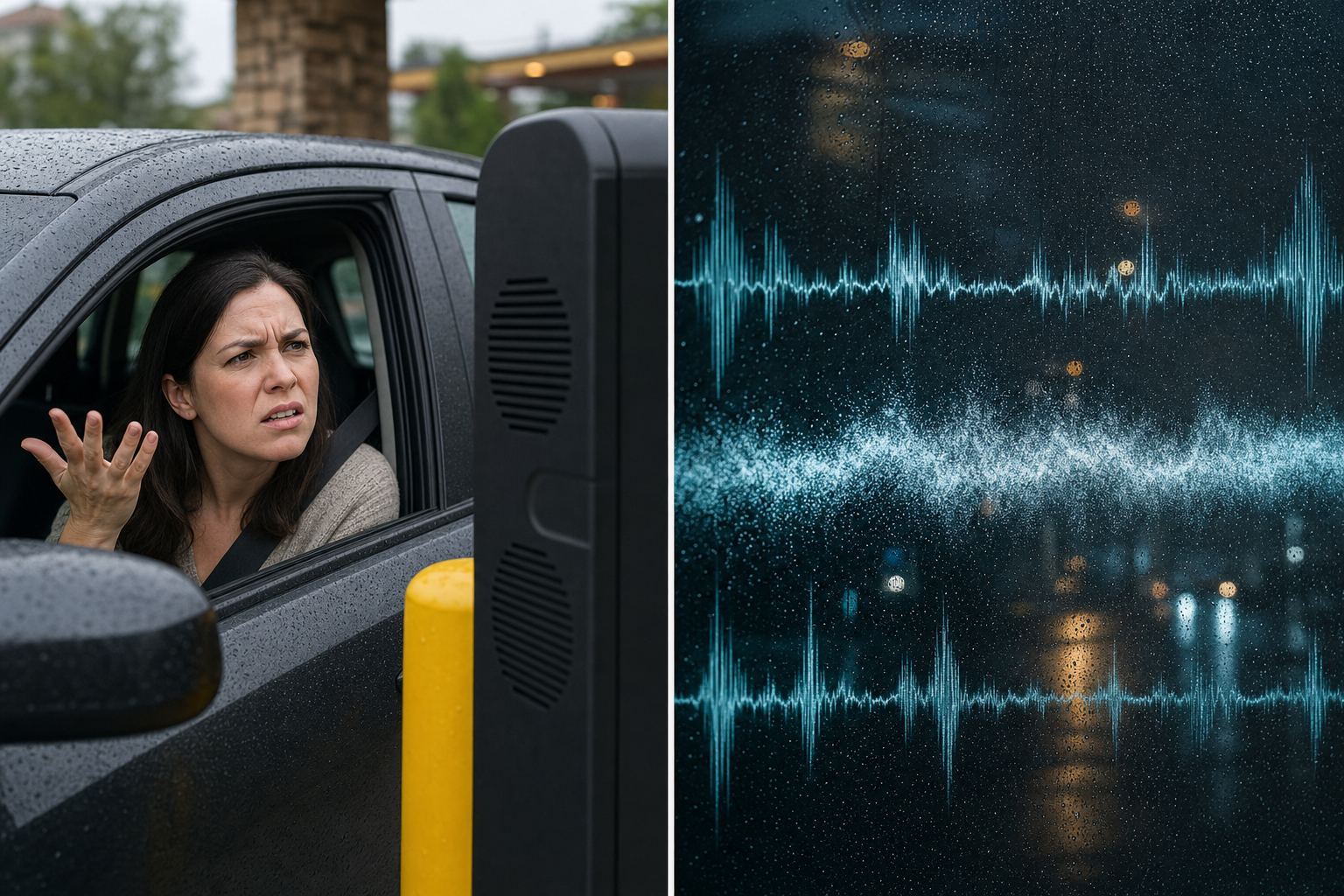
Drive-through lanes are loud. Engines idling, road noise, wind, and overlapping conversations all degrade speech recognition. Accent and dialect variation compounds the problem. McDonald's ended its IBM-partnered AI ordering pilot at over 100 locations in 2024 after reports of incorrect orders, including the widely circulated video of a customer receiving dozens of butter packets they never asked for.
Fast food menus are sprawling, and customers rarely order simply. Modifications, substitutions, combo swaps, and size changes create a high-stakes conversation tree. When the AI misreads a request or gets stuck, it often escalates to a human crew member anyway, which can offset the labor savings chains were targeting.
When orders go wrong repeatedly, customers stop trusting the system. Viral moments on Reddit and social media showing AI mishaps create reputational drag that slows adoption even when systems perform well in practice.
Taco Bell and Wendy's have both continued refining their AI drive-through programs instead of walking away. The general direction is hybrid models, where AI handles the intake and a human reviews or supplements when confidence is low, instead of full end-to-end automation.
Restaurants adopting AI drive-through systems report gains across three areas: speed, accuracy, and labor costs.
Labor costs have climbed steadily and menu prices have followed. Customer patience for slow service has not. Those pressures explain why the conversation about AI ordering shifted in 2026 from "should we test this?" to "when do we roll it out?" and why only 6% of operators currently using AI for customer orders represents a gap, not a ceiling.
While the drive-through gets most of the attention, phone ordering still drives a substantial share of restaurant revenue, and it has many of the same friction points. Calls go unanswered during the lunch rush, orders get misheard, and staff pulled from the floor to take a phone order slow down everyone else.
Voice AI built for restaurants handles inbound calls the same way drive-through AI handles the speaker: it listens, confirms, upsells, and sends a clean ticket to the kitchen. The difference is that it works across every restaurant format, from QSR lanes with dedicated hardware to independent operations. An independent pizza shop or a multi-unit taco concept gets the same accuracy and consistency without a drive-through ever being part of the picture.
The accuracy gap that tripped up McDonald's and Taco Bell at the speaker post shows up on the phone line too. Calls come in during the dinner rush, a crew member answers mid-ticket, and the order gets misheard or dropped entirely. Restaurants average around 150 missed calls a month, and only one in three callers tries again. That is the same friction point, just on a different channel.
Loman is a voice AI phone agent built for restaurants. It answers every call around the clock, takes the full order with all the modifications, and pushes a clean ticket straight into your POS, no crew member pulled from the floor, no hold music, no missed substitutions. It works with the system you already have, so there is no speaker hardware to install or drive-through lane to reconfigure. It goes live in under 24 hours.
Yes. Current systems layer on top of existing POS infrastructure. The AI handles voice capture and order confirmation at the speaker, then pushes the completed order directly into your POS and kitchen display. No rip-and-replace required.
McDonald's ended its IBM partnership in 2024 after accuracy issues made the pilot unviable, while Taco Bell processed over two million orders across 500+ locations before reassessing. Both faced similar challenges with accent recognition and edge cases, but Taco Bell continued refining instead of walking away.
Order accuracy under noisy conditions, handling of unusual or prank orders (like the widely shared 18,000-cup water request), and deciding where human oversight still needs to stay in the loop. Taco Bell hasn't abandoned the tech; it's recalibrating where AI works best and where fallback to staff makes sense.
The AI drive-through pilots proved the tech can work, but they also showed where it breaks under real conditions. If you're looking at AI ordering, the phone line is a cleaner entry point than the speaker box. See how Loman handles phone orders with the same accuracy McDonald's and Taco Bell were chasing, but without the drive-through infrastructure. The labor savings and upsell consistency work the same way, and your team stays focused on the floor instead of the phone.
Enter your information in the form to receive a call from Loman and place an order like a customer would!

