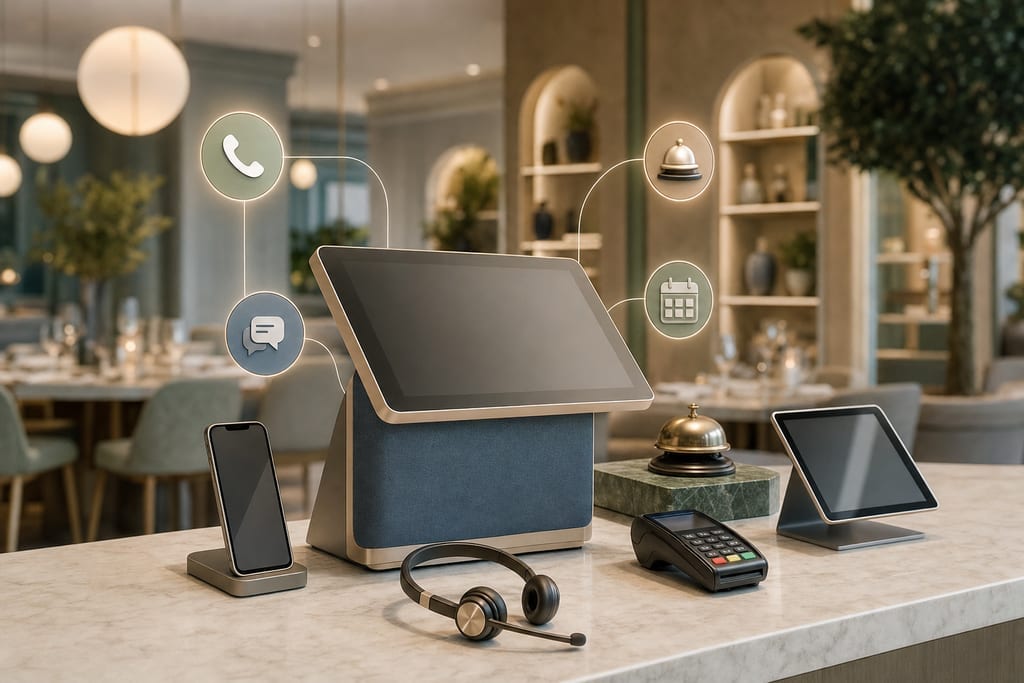
There is no single best restaurant answering service, because the right pick depends on your call volume, your POS, and whether you need phone payments or just reservations, but pricing today ranges from about $79 a month to over $450 a month depending on what the plan actually does. During a Friday dinner rush, a single host stand can miss a third or more of its incoming calls, and every one of those is a to-go order, a reservation, or a catering inquiry going to a competitor instead. Most owners searching for an answering service don't need another feature list. They need to know what a plan costs, what it connects to, and whether it writes orders straight into Toast, Square, Clover, or SpotOn without a manual re-entry step.
Named vendors in this space price and build things very differently. Loman AI starts at $199 a month with direct integrations into Toast, Square, Clover, and OpenTable, Maple splits its offering into a $150-a-month FAQ-only plan and a $350-a-month Pro plan that handles POS orders and reservations, and Kea AI charges a flat $450 a month for unlimited calls across 11-plus POS systems. Bitebuddy skips the subscription model entirely and charges $1.50 per completed order, while Slang.ai starts at $399 a month per location but requires you to bring your own phone system. Traditional human-operator services still exist too, usually starting around $500 a month and climbing past $1,500 for busier lines, which is the baseline every AI option below gets measured against.
A phone answering plan only matters if the words spoken on the call turn into a ticket your kitchen or your host stand can act on. For years, answering services just took a message and someone typed it in later, which meant double work and typos on a busy Friday night. Now the real split in this market is whether the order or reservation writes itself into your system, or whether a person still has to re-enter it by hand.
That split explains the wide cost range. Traditional live-operator services, the ones with a human picking up on your behalf, start around $500 a month for basic coverage and climb past $1,500 a month once call volume gets heavy, according to Ring Foods' 2026 cost breakdown. AI phone agents run cheaper, typically $100 to $300 a month, but the exact price inside that range depends on how many minutes you need and whether POS write-in is included or sold as an add-on.
Direct write-in to Toast, Square, Clover, or SpotOn is what separates a service that just answers calls from one that actually takes orders. If a plan can't push an order straight into your POS, someone on staff still has to copy it over by hand, which defeats the point of paying for automation. Reservation sync with OpenTable or Resy matters most for full-service and fine dining rooms that live and die by table turns, while a pickup-only counter spot may never need it at all.
Loman AI's own blog lists pricing starting at $199 a month, with Goodcall's comparison adding a $149 setup fee on top of that figure. Direct POS integrations include Toast, Square, Clover, SpotOn, Aloha, Olo, and Stream, confirmed across Goodcall and CloudTalk's vendor tables. Reservation sync with OpenTable shows up in every source checked, but Resy support is listed inconsistently, so confirm that one directly before signing.
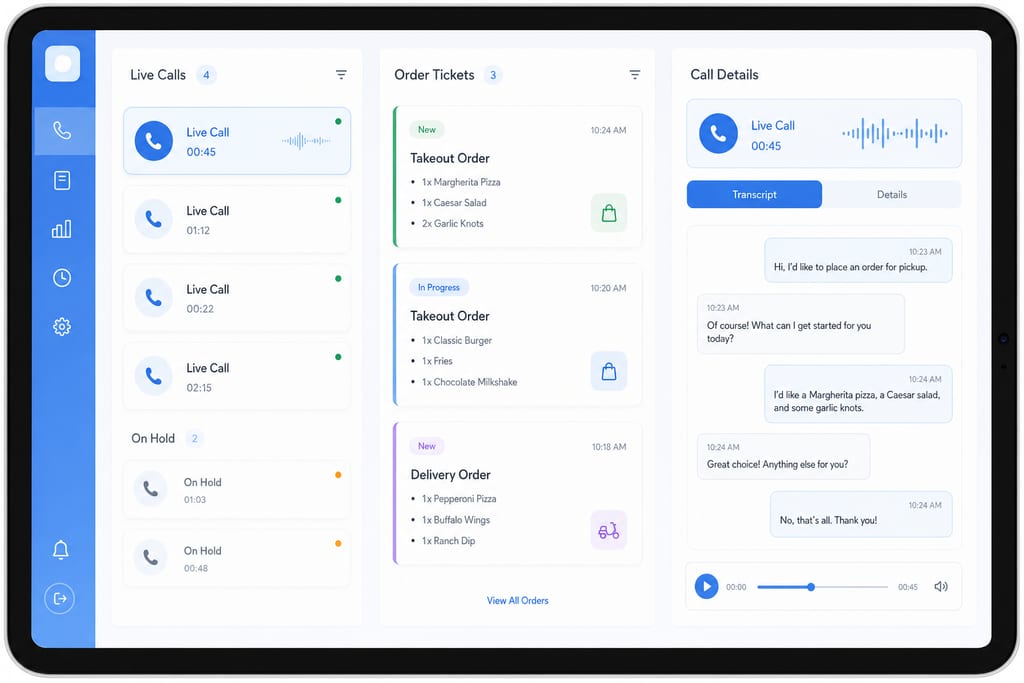
Beyond the connections, the service handles pickup and delivery orders, phone payments, and live menu or 86'd-item sync, so a sold-out special stops getting offered the moment the kitchen marks it off. It also supports unlimited simultaneous calls, which matters more than minutes included once your dinner rush hits three or four calls at once. Setup runs under 24 hours, and a dashboard shows live calls, transcripts, and outcomes as they happen.
These three price order-taking in three different ways, and the right one depends on how many calls you actually get. Maple's Voice plan runs $150 a month ($85 billed yearly) but only answers FAQs, no orders. Maple Pro jumps to $350 a month ($220 yearly) and writes orders into Toast, Square, Clover, and Shift4 Dine, plus OpenTable reservations and phone payments.
Kea AI charges a flat $15 a day, or $450 a month, for unlimited calls and orders across 11-plus POS systems including Toast, Square, Clover, and Olo. Bitebuddy flips the model entirely with usage-based pricing at $1.50 per completed order, connecting to Toast, Square, Clover, SpotOn, Olo, and NCR Aloha, with OpenTable and Resy on the reservation side.
A spot doing under 300 calls a month usually comes out ahead on Bitebuddy's per-order rate; past that, Kea AI's flat fee tends to win.
These three lean toward table bookings over pickup orders, which fits full-service dining rooms better than counter-service spots. Hostie.ai targets hospitality groups, pairing Square, Olo, and Stream for ordering with OpenTable, Resy, SevenRooms, Tock, and Yelp for reservations. Its pricing isn't published, but it offers a free trial and holds a 4.6/5 rating on G2 from 23 reviews.
Goodcall starts at $79 a month for 100 unique customers, connects to Resy and OpenTable through an API, and links to over 9,000 apps via Zapier, though it has no direct POS order integration. Slang.ai starts at $399 a month per location, with native OpenTable, SevenRooms, and Yelp integrations, but it requires a separate phone system to run on.
Fine dining and multi-concept groups get more value here than a high-volume pickup and delivery operation would.
Your call volume, not your restaurant's size on paper, should set your budget tier. Allo bundles a full phone system with unlimited AI answering starting at $64 a month billed yearly, with no per-call charges at all. Rosie goes lower still, at $49 a month for basic AI answering without a phone system, which fits a single-location spot with light call traffic.
Multi-location operators with heavy call volume need to weigh flat monthly plans against usage-based ones. Kea AI's $450-a-month flat rate beats Bitebuddy's $1.50-per-order fee once a location clears roughly 300 completed phone orders a month; below that line, usage-based pricing costs less. Enterprise brands running several locations generally do better on flat-rate, unlimited simultaneous call plans than on per-minute or per-order billing, since a busy night at one store won't spike the bill for the whole group.
Here's the full shortlist in one place, with starting price and the POS or reservation systems each one names.
Lay those nine out and one line splits them cleanly: does the order write straight into your POS, or does someone still retype it. Loman AI, Maple Pro, Kea AI, and Bitebuddy all push orders directly into named POS systems with no middleware step. Hostie.ai, Goodcall, Slang.ai, Allo, and Rosie are built around answering and reservations, not ticket injection, which is fine for a reservation-heavy dining room but leaves a pickup counter doing manual data entry anyway.
That split is also why pricing models look nothing alike across this list. Flat monthly fees, per-day billing, per-order charges, and tiered plans with separate FAQ and Pro versions all sit on the market at the same time in late 2026, and none of them is wrong, they're just built for different call volumes. A restaurant comparing two vendors on sticker price alone, without checking what each price actually includes, is comparing numbers that don't mean the same thing.
Integration lists also disagree across sources more than owners expect. Resy support is the clearest example: Bitebuddy and Hostie.ai both list it, Loman AI's own blog doesn't confirm it, and third-party tables split on the question. Call the vendor and get integration details in writing before you sign, since a missing Resy connection matters a lot to a full-service dining room and nothing at all to a counter-service spot.
Pick two or three vendors from the list above that already connect to your POS and reservation platform, and drop the rest, since a service that can't talk to Toast or Square directly puts you right back to manual re-entry. Call each one and ask for a live demo on your own menu, with a real call routed through it, before you sign anything. Ask what happens during a double-booked Saturday night or a ten-call rush, since that's the moment the plan either holds or doesn't. Get setup fees and contract length in writing, since those terms shift by vendor and sometimes by the month, and a verbal quote from a sales call is not the same as what lands on your first invoice. Confirm Resy or OpenTable support the same way, directly with the vendor, not from a comparison chart. Once those answers check out, the decision is just math on your own call volume.
A well-built AI agent routes the call to a staff member or takes a message when it hits a question it can't answer, instead of guessing at an order. Ask any vendor on your shortlist exactly how that handoff works, since some route to a live person and others just end the call with a callback promise. That difference matters more on a busy night than any feature list.
Most AI answering services work with the phone number you already have, since they sit on top of your existing line through call forwarding rather than requiring new hardware. A few, like Slang.ai, need you to bring your own phone system separately. Confirm this directly with the vendor before signing, since it changes how fast you can actually go live.
No, switching an answering service doesn't touch orders already closed out or sitting in your POS, since the new service only handles calls coming in after it goes live. The bigger risk is a gap in coverage during the switch itself, so ask your new vendor whether they can run alongside your old setup for a day or two before you cut over.
Yes, if the plan supports unlimited simultaneous calls rather than a fixed number of lines. A single host stand can only take one call at a time, which is exactly the bottleneck that turns a busy Friday into missed orders. Confirm the call limit on any plan you're considering, since some AI vendors cap simultaneous calls even though they're still cheaper than a human operator.
Enter your information in the form to receive a call from Loman and place an order like a customer would!

