Many restaurant operators researching voice AI for phones start by reading Slang.ai reviews because the brand is widely recognized in restaurant call automation. Slang.ai is known for handling reservation requests, menu questions, and general guest inquiries with a conversational voice assistant that answers calls around the clock. For restaurants where phone traffic mostly involves reservations or basic information, that coverage can work well. The challenge appears when callers want to place a takeout order during the conversation. Instead of completing the purchase on the call, Slang.ai redirects customers to online ordering systems, adding another step before the sale is finished. Restaurants that rely on phone orders as a revenue channel often begin comparing tools that can complete the full transaction during the call.
TLDR:
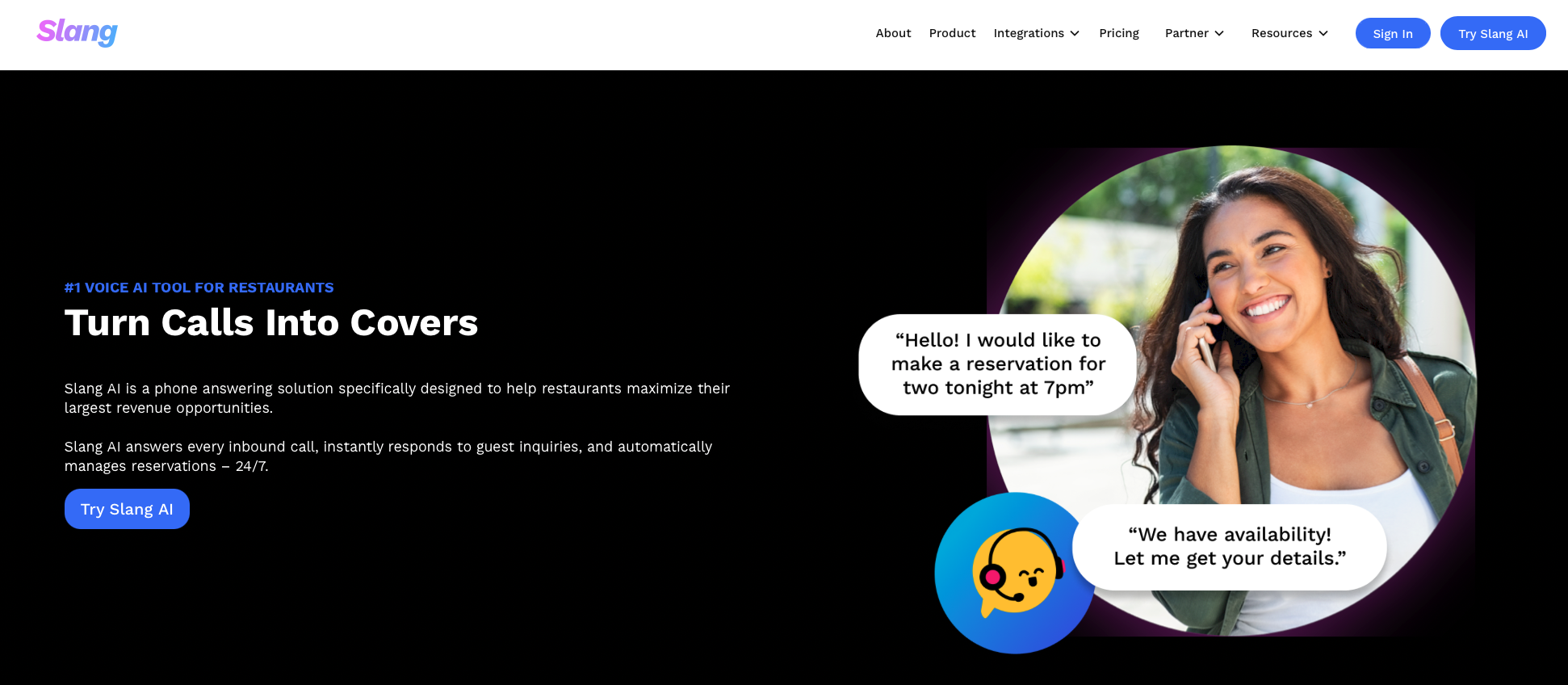
Slang.ai is a voice AI system built for restaurant calls around the clock. The service focuses on hospitality-driven conversations, handling common caller needs like reservation inquiries, menu questions, and basic restaurant information without requiring staff to pick up the phone.
The system works by letting callers speak naturally. When someone calls, Slang.ai responds with what the company positions as a warm, conversational tone instead of rigid automated prompts. If a guest wants to book a table or place an order, Slang.ai directs them to complete the transaction through online ordering or reservation systems like OpenTable, which integrates directly with the service.
Slang.ai targets full-service restaurants, upscale dining establishments, and multi-unit restaurant groups that depend heavily on reservations and want concierge-style phone coverage. The goal is to make sure no call goes unanswered, even during busy service periods or after hours, while keeping the phone experience friendly and helpful for guests who prefer calling over using apps or websites.

Slang.ai handles basic inquiries well, but it redirects customers to online ordering when they want to purchase food. This creates an extra step that can lose impatient customers who just want to place an order over the phone.
The system works best for restaurants receiving high volumes of informational calls about hours, location, menus, and reservation availability. If your primary goal is reducing staff interruptions and not converting phone traffic into completed sales, Slang.ai fits that need.
Pricing sits between $450 and $600 per month per location for the Superhost service. That's a premium price point, which makes sense for some operations but prompts others to shop around.
The bigger limitation? Slang.ai typically redirects callers to online ordering systems instead of completing full menu orders with payment directly during the call. Restaurants that process high volumes of phone orders as a primary revenue channel often need alternatives because of this gap. Catering operations, high-volume takeout spots, and any establishment where completing the full transaction matters will find this friction problematic.
If you're comparing Slang.ai to other options, several alternatives offer different approaches to restaurant call automation and order management.
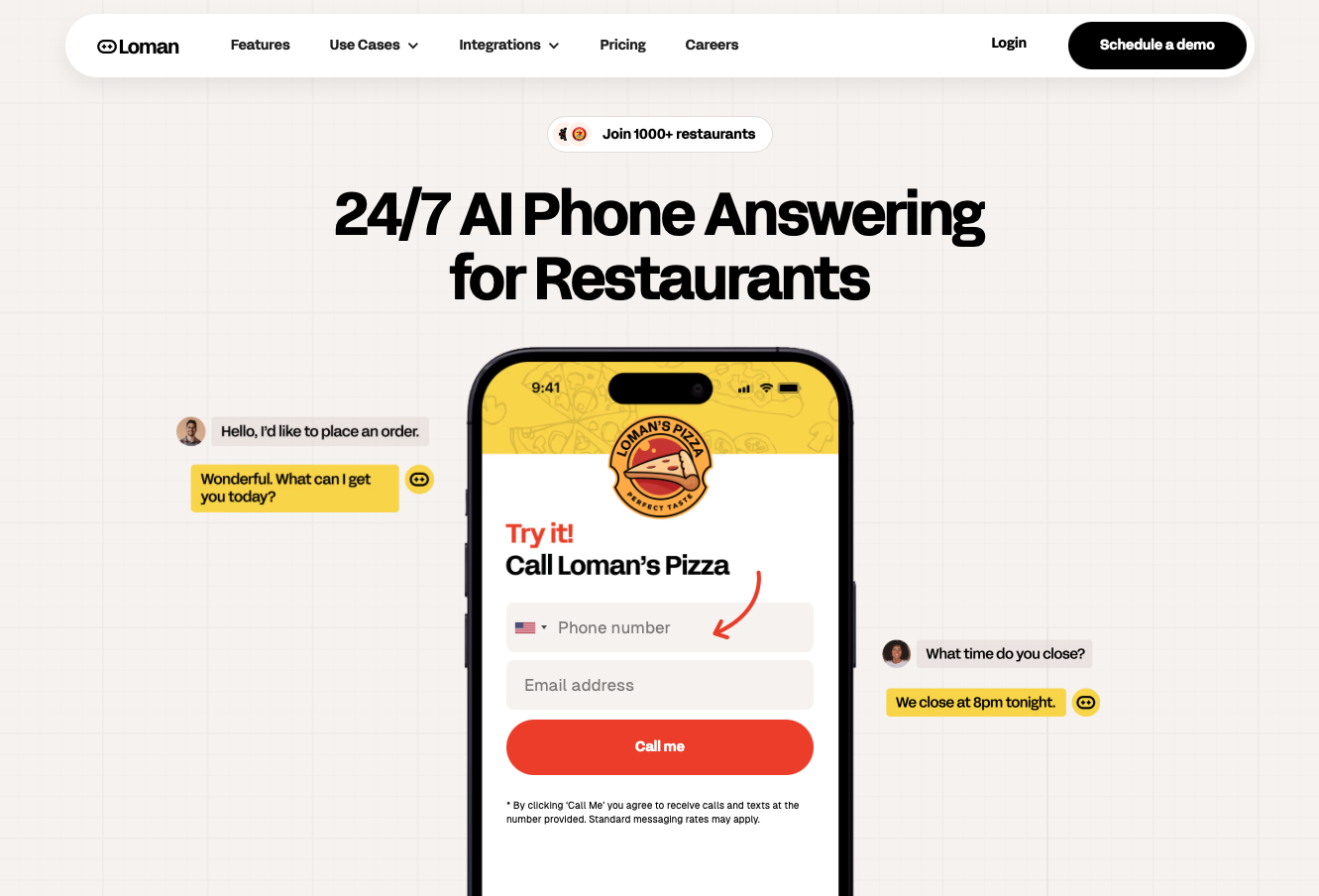
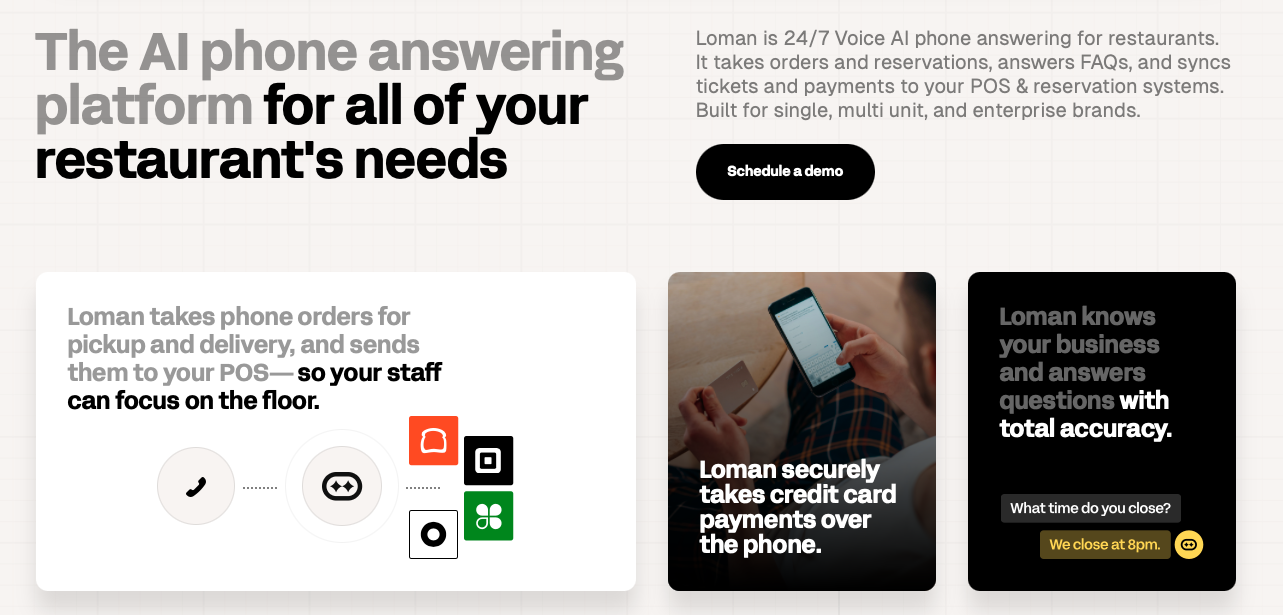
Loman is a 24/7 AI phone answering system built for restaurants that need complete order management through phone channels. The system answers unlimited simultaneous calls, takes full pickup and delivery orders with item modifications, processes secure credit card payments during the call, books OpenTable reservations, and sends completed orders directly into POS systems including Toast, Square, Clover, SpotOn, and Aloha without manual entry.
Loman handles unlimited concurrent calls with no capacity constraints during peak hours, processes complete transactions including secure payment collection, and sends tickets directly to kitchen displays with proper modifiers. The built-in upselling engine suggests relevant add-ons on every order. Best for independent restaurants, pizza shops, multi-location groups, and any operation where phone orders represent meaningful revenue and complete transaction handling matters more than basic call screening.

Maple positions itself as a reservation and basic order-handling solution for local restaurants, with recent strategic focus on OpenTable integration for reservation automation. The system targets independent restaurants and small chains that need dependable phone coverage while balancing dine-in reservations with moderate takeout volume.
Maple offers a 92% resolution rate without human intervention for standard call types, OpenTable integration for automated reservation management, and phone coverage across 1,000+ restaurant locations. Maple does not currently advertise native in-call payment processing, which means phone orders cannot be completed without additional steps or manual intervention.
Sadie is positioned as an AI receptionist service instead of a full ordering solution, focusing primarily on reservation management and answering calls around hours, location, and policies. Sadie offers 24/7 call answering for informational inquiries, reservation management and booking assistance, message taking and FAQ responses, and integration with restaurant systems through middleware layers.
Sadie lacks secure payment processing, creating a gap for complete catering order flows that require payment collection at the point of booking. Sadie supports up to 20 concurrent calls, a scalability constraint compared to competitors that handle unlimited concurrent calls.
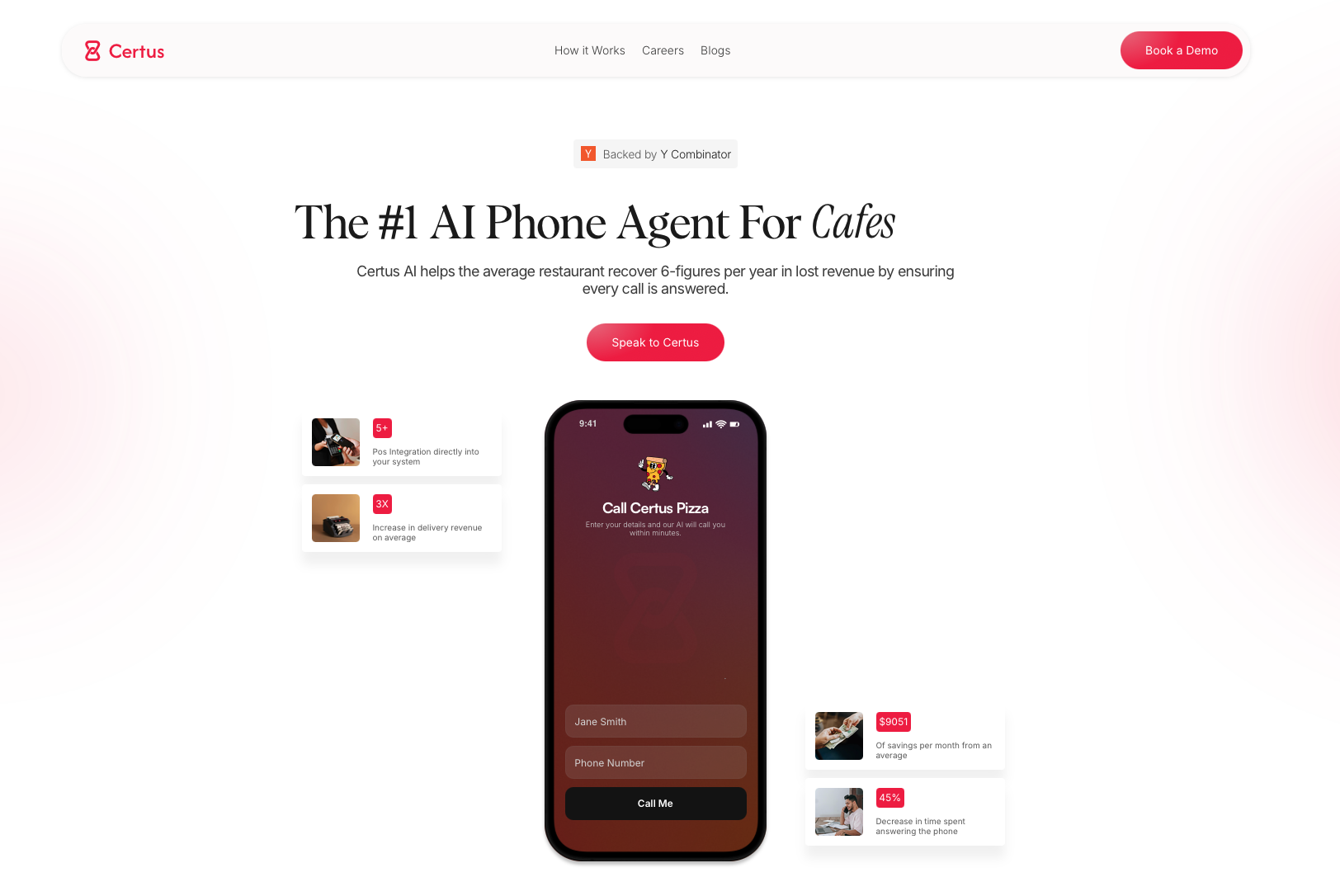
Certus AI is an AI voice agent built for restaurants that answers every call 24/7, taking orders, processing deliveries, booking reservations, upselling, and handling complaints in multiple languages including English, Spanish, and French. The system connects with restaurant POS systems to route orders directly into kitchen workflows.
Best for independent restaurants, multi-unit groups, and chains looking to capture revenue from unanswered calls without increasing headcount, especially those needing multilingual support and drive-thru capabilities. The catch? Certus AI is a newer Y Combinator-backed entrant with less market presence than the bigger names. While the system advertises payment processing, implementation complexity and multi-day setup timelines create longer paths to deployment compared to solutions that go live in under 24 hours.
VOICEplug handles order automation across phone, drive-thru, kiosk, and pizza-specific channels with 24/7 availability and personalized upselling built in. The system cuts order-related labor costs by 50-75% while increasing average check size by 12-25% through automated prompts.
Good for multi-channel QSR operations and pizza chains that want voice ordering across drive-thru, kiosk, and phone touchpoints, particularly larger operations with physical drive-thru infrastructure. The catch? VOICEplug relies on stored customer information instead of secure real-time payment processing, often using stored payment methods or POS-linked payment flows instead of collecting new card details directly during the call. The multi-channel focus spreads across drive-thru and kiosk hardware, adding complexity and cost that single-location restaurants without drive-thru lanes don't need.
Slang.ai handles reservation inquiries and menu questions effectively, making it a good fit for full-service restaurants where phone coverage matters more than transactional completion. But if phone orders represent actual revenue for your restaurant, the redirect-to-online approach creates friction that loses sales.
Loman closes the transaction during the call. When a customer calls to place an order, Loman takes the complete order with modifiers, processes secure payment, and sends the ticket directly to your POS and kitchen display. No redirects, no manual entry, no abandoned carts.
The system handles unlimited concurrent calls during your busiest hours, books OpenTable reservations, and upsells relevant add-ons that can increase average ticket sizes through automated suggestions. You capture revenue at the point of contact instead of hoping customers follow through on a separate ordering link. For restaurants where phone orders matter, Loman turns missed calls into completed sales without adding staff or extra hassle.
If phone orders represent a primary revenue channel for your restaurant, Slang.ai's redirect-to-online approach creates friction that loses sales. Restaurants processing high volumes of takeout orders, catering requests, or any operation needing complete transaction handling during calls should consider alternatives that process payments and complete orders without extra steps.
Look for secure in-call payment processing, native POS integration that sends orders directly to your kitchen, and unlimited concurrent call handling during peak hours. Built-in upselling capabilities and setup times under 24 hours separate revenue-generating systems from basic call-screening tools.
Yes, but this capability varies widely across providers. Loman, Certus AI, and VOICEplug AI take complete orders with modifiers and process payments during calls, while Slang.ai and Sadie redirect customers to online systems for order completion.
Setup ranges from under 30 minutes for Slang.ai to 5 days for Certus AI. Loman goes live in under 24 hours with direct POS integration, while Maple and Sadie require multiple days for configuration and testing.
Slang.ai charges $450-$600 per month for call screening and reservation handling. Full ordering systems like Loman that process payments and complete transactions typically deliver higher ROI by converting phone traffic into completed sales instead of only answering informational calls.
Restaurants comparing tools after reading Slang.ai reviews usually find a clear difference between systems that answer calls and systems that complete transactions. Slang.ai works well for handling reservations and guest questions, making it useful for restaurants where phone calls are mostly about booking tables or getting information. But restaurants that depend on phone orders often need software that finishes the sale during the call. That is where Loman comes in. Loman takes full menu orders with modifiers, collects secure payment, and sends tickets directly to the POS so kitchen staff can begin preparing the order immediately. For restaurants where phone ordering is an active revenue channel, tools like Loman’s restaurant phone ordering AI help convert incoming calls into completed orders instead of sending customers somewhere else to finish the purchase.
Enter your information in the form to receive a call from Loman and place an order like a customer would!

