
When your pizzeria's pizza phone is ringing during the dinner rush and your staff is buried, every missed call is revenue walking out the door. If you can't pick up, the customer calls another restaurant. Voice AI solves that by answering every call immediately, taking the full order end to end, and pushing it to your POS while your team stays focused on the counter.
TLDR:
Phone orders carry real weight on the ticket side. Phone orders often generate higher average ticket values than online orders because staff or AI can suggest add-ons during the conversation. Those larger ticket sizes can add up quickly across a busy week of calls. Phone order customers spend 18% more than online customers and are 2.3 times more likely to become repeat customers.
Part of that difference comes from conversation: callers can be asked about a two-liter, a larger size, or breadsticks, a moment online checkout flows rarely replicate. A customer on the phone can be asked if they want to add a two-liter, upgrade to a larger size, or add an order of breadsticks. Online checkout flows rarely replicate that moment as well. Voice naturally lends itself to upselling in a way that a static menu page does not.
Third-party delivery apps chip away at margins from the other direction. Fees typically run 15 to 30 percent per order, so a $48 ticket through a delivery app may net far less than a direct phone call. Keeping customers ordering direct protects margin without raising prices.
| Metric | Phone (Voice AI) | Online Order | Third-Party App |
|---|---|---|---|
| Avg. ticket size | ~$48 | ~$41 | ~$41 |
| Upsell potential | High | Low | Low |
| Fees per order | None | None | 15-30% per order |
| Missed order risk | None (answers every call) | N/A | N/A |
| Repeat customer rate | 2.3x higher vs. online | Moderate | Low |
Staff-answered phone
Voice AI phone
Third-party delivery apps
Pizza orders are among the most complex phone transactions in food service. A single call can involve multiple crust types, dozens of topping combinations, size variations, dietary substitutions, split orders for different household members, and real-time questions about specials or coupons. That complexity hits hardest exactly when call volume peaks.
Friday and Saturday evenings, lunch rushes, and game nights can push a pizzeria's phone lines past what any small staff can handle. Research suggests restaurants miss roughly 30% of incoming calls during peak hours, and for pizza shops where phone ordering still drives a large share of revenue, those missed calls translate directly to lost tickets.
There are a few reasons this hits pizzerias harder than other restaurant formats:
Voice AI built for restaurants handles this call volume without a hold queue, working through complex modifications the same way at 9 PM on a Saturday as it does at 2 PM on a Tuesday.
When the dinner rush hits and every staff member is buried, the phone becomes a liability. A Voice AI phone agent answers every call instantly, takes the full order, handles upsells, confirms details, and pushes the ticket directly to your POS without anyone on your team touching it.
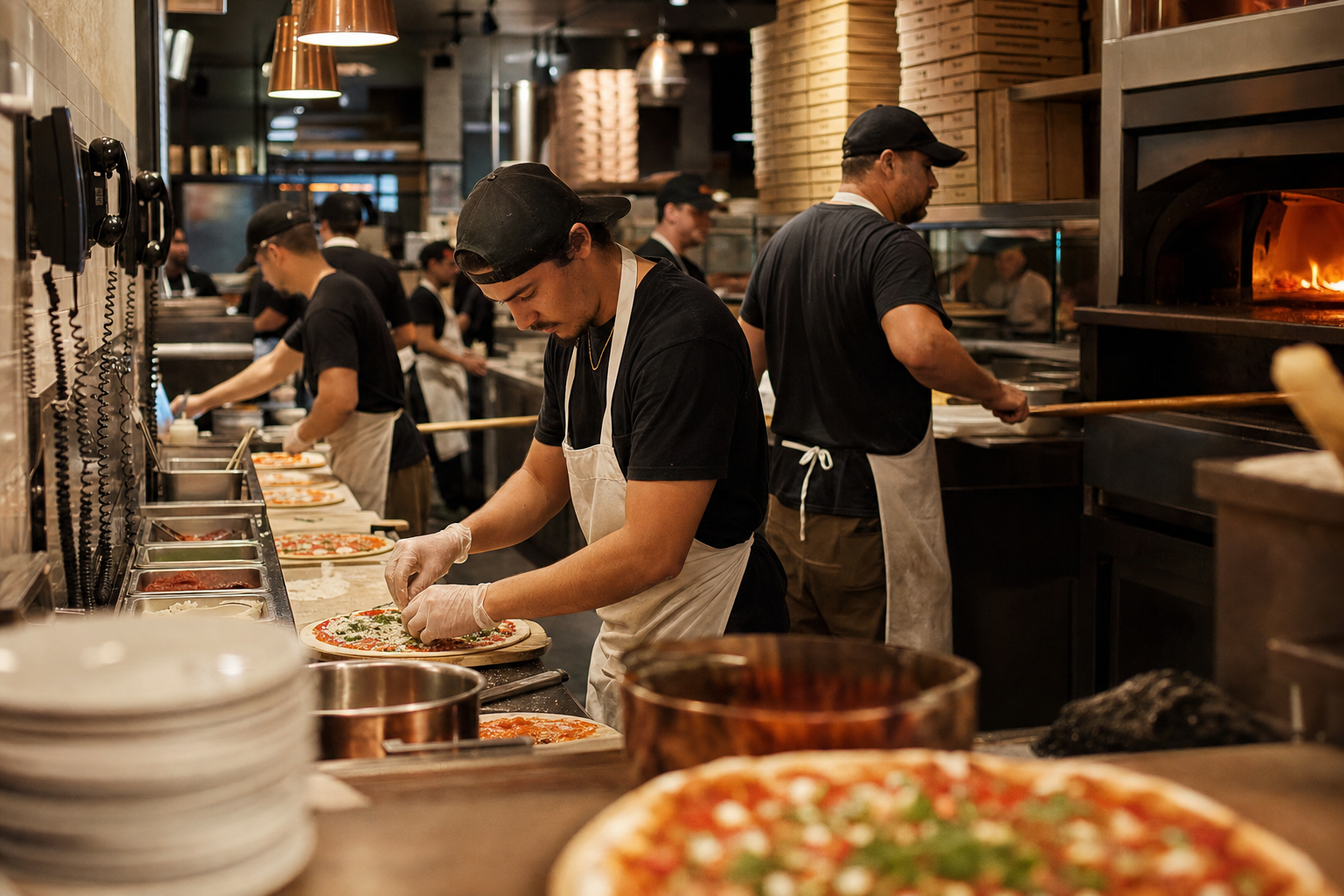
Here is how that plays out across the calls that cost pizzerias the most:
No dedicated call center or extra headcount is needed. Orders push straight to your POS, so staff stay focused on the counter and tables.
| Metric | Staff-only phone | Voice AI |
|---|---|---|
| Peak-hour calls missed (industry estimate) | Roughly 30% | None |
| Simultaneous calls | Limited to free staff | Unlimited |
| Callers on hold | Queue builds during rushes | No hold queue |
Voice AI captures the phone's ticket-size advantage in three ways. Industry data shows phone orders average $48 compared to $41 for online orders. Voice AI captures that gap in three specific ways.
A voice AI agent never forgets to ask if a customer wants to add breadsticks, upgrade to a large, or tack on a two-liter. Human staff skip upsells when the counter is busy or the line is long. Voice AI runs the same upsell script on every single call, consistently. Operators using Loman have reported up to 23% higher revenue per order from recaptured calls and automated upselling (operator-reported, not independently audited).
Order errors cost twice: once on the remake, once on the comp. Voice AI reads back the ticket before confirming, reducing the chance of a wrong pizza leaving the kitchen.
A caller who hits hold or a busy signal during the rush is gone. Industry research suggests roughly 85% of callers who can't reach a restaurant on the first try will not call back. Voice AI answers every call immediately, so those orders stay with you.
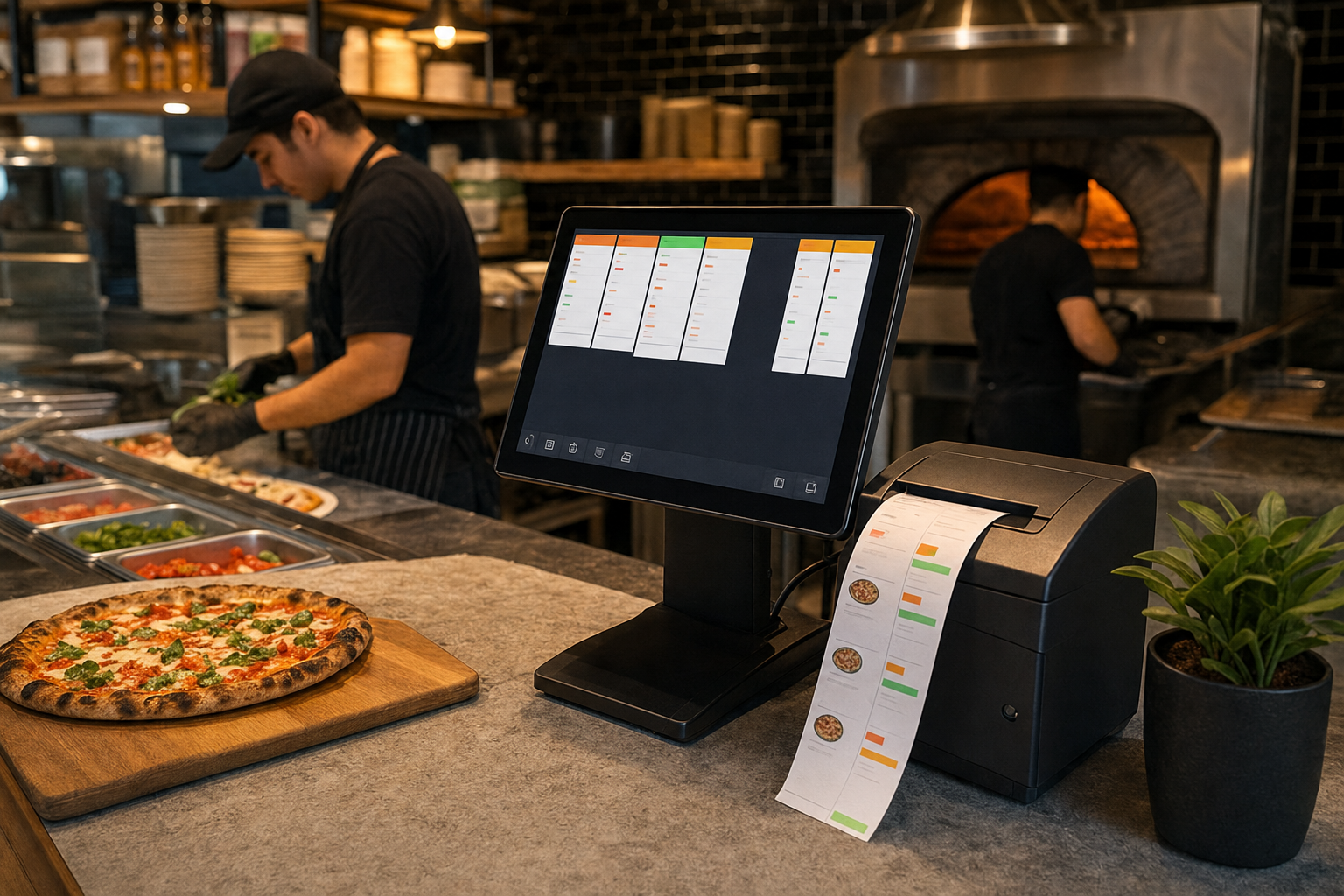
Voice AI handles that gap by pushing orders directly to your POS the moment a call ends. No one re-types the ticket. No one mishears "extra sauce" as "no sauce." The order lands clean, with the right items, the right modifiers, and the right delivery location attached.
Loman handles Spanish-language pizza orders natively, understanding modifiers like "sin cebolla" or "extra queso," confirming the order back in Spanish, and pushing a clean ticket to the POS without staff stepping in. As of 2019, nearly 68 million people in the US spoke a non-English language at home, so pizzerias in diverse communities can offer bilingual phone ordering to every caller without keeping bilingual staff on the phones. Generic AI phone systems not trained on restaurant vocabulary often stumble on these requests.
Loman works with POS systems like Toast, Square, Clover, SpotOn, and others so that phone orders flow into the same queue your in-store orders do. Your kitchen staff sees one stream of tickets, not two separate systems to manage.
The practical result:
What to look for in a pizza voice AI integration
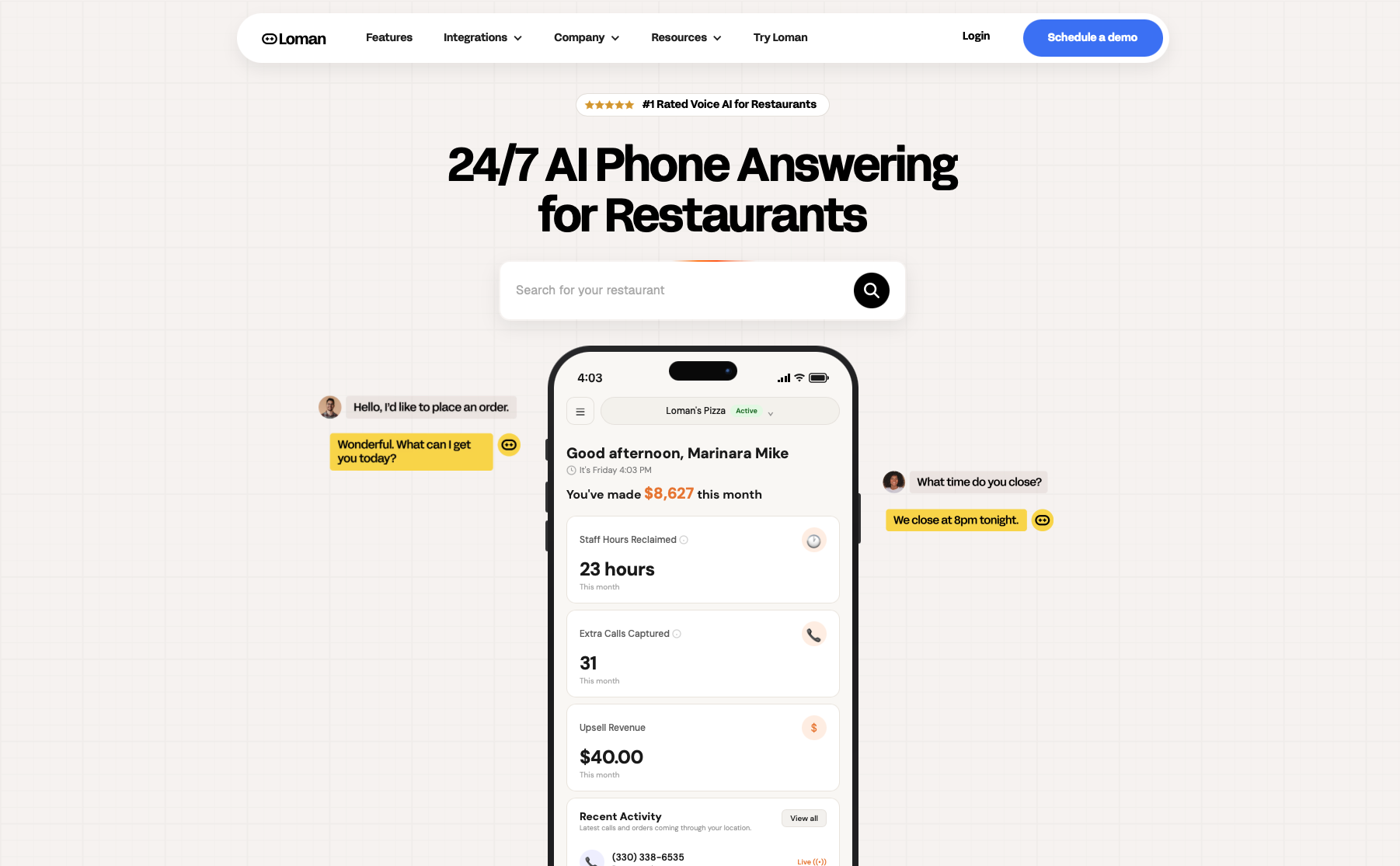
When your phone rings during a Friday dinner rush, every second of fumbling costs you. Loman's voice AI agent answers every call instantly, walks customers through your full menu, takes the complete order, and pushes it straight to your POS without a staff member touching the phone.
Here is what that looks like in practice:
These results are operator-reported, not audited figures. Nick Haselidis, owner of Crust Pizza, reports that Loman paid for itself in 10 days, with calmer phones and bigger tickets. DeCheco's Pizzeria reports running with one fewer front-of-house staff member while revenue keeps growing. Both outcomes line up with the up to 23% higher revenue per order that operators using Loman have reported, driven by consistent upsell prompts on every call.
Yes. Voice AI answers instantly, takes the full order with modifiers, and pushes it to your POS without staff touching the phone, so your team stays focused on the counter.
Loman picks up immediately, takes the full order with modifiers, confirms the details, and pushes a clean ticket to your POS. Multiple calls get answered simultaneously, so no one gets a busy signal when your counter is slammed.
Loman answers every call day or night and syncs orders to your POS, so late callers get a real answer instead of voicemail. Pricing starts at $199 a month with no per-minute charges, so there is no overnight payroll.
Payback comes from orders you stop losing. Restaurants miss roughly 30% of calls during peak hours, and phone tickets average around $48. Operators using Loman have reported up to a 23% increase in revenue per order (operator-reported), and Crust Pizza's owner reports Loman paid for itself in 10 days. Exact payback varies by call volume and ticket size.
The pizza phones will keep ringing during your busiest hours, and your staff will still have their hands full. The difference is whether those calls turn into tickets or walk to the next name on the search results. Voice AI picks up instantly, handles the complexity of half-pepperoni-half-veggie orders, and pushes everything to your POS so nothing gets lost. Try Loman with your actual menu and see what it feels like when every call closes.
Enter your information in the form to receive a call from Loman and place an order like a customer would!

