
You're looking at Kea reviews because something doesn't line up with what your restaurant needs right now. Maybe the four-week deployment pushes past your seasonal peak, or you're running a multi-location group and Kea's shift toward independents signals they're not building for enterprise scale anymore. Let's cut through the marketing and look at what Kea actually does, where the human-in-the-loop model helps versus when it slows you down, and which alternatives solve the specific problems that brought you here.
TLDR:
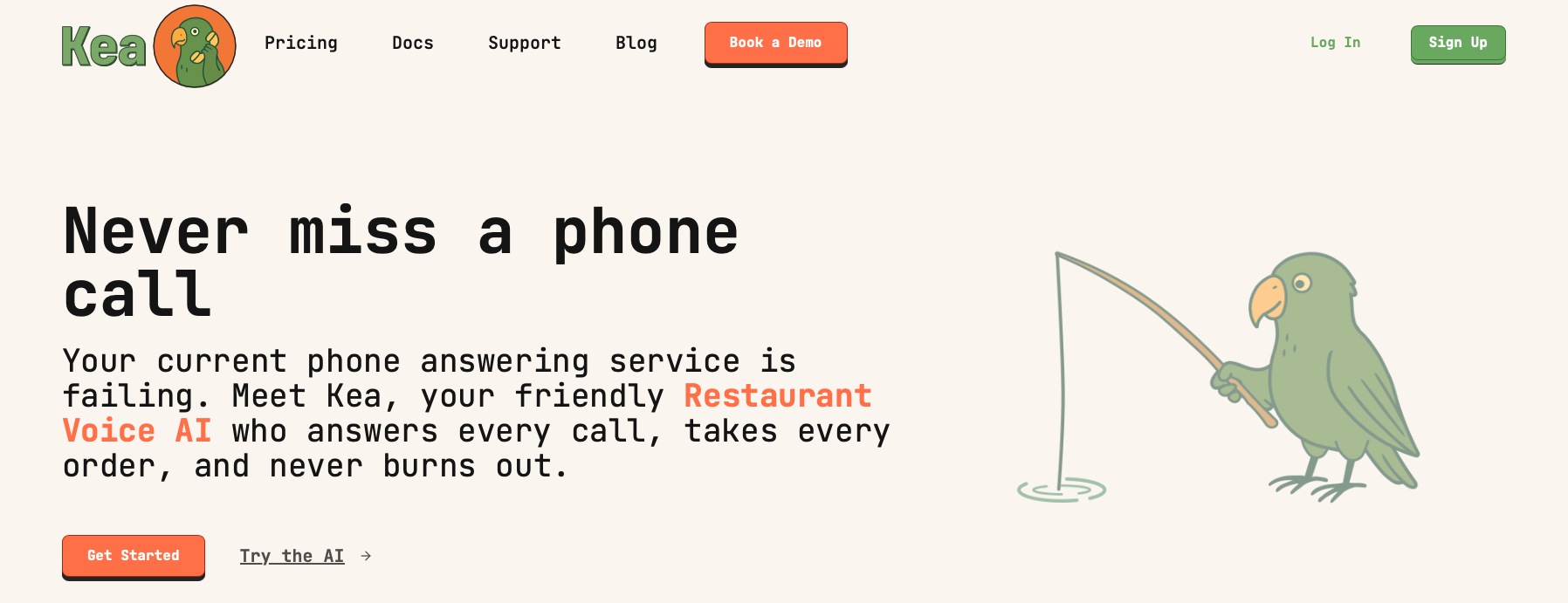
Kea is a voice AI phone ordering solution that automates incoming restaurant calls. The system answers customer questions, takes orders with customization options, processes upselling opportunities, and sends completed orders directly to kitchen POS systems. Founded in 2018, Kea has scaled to serve hundreds of restaurant brands including Rachel's Kitchen, Pincho, Blaze Pizza, Hopdoddy, and Via 313.
What sets Kea apart is its human-in-the-loop approach to voice AI. While AI handles most conversations, live customer service representatives can intervene in real-time if the system encounters confusion or complex requests. This hybrid model aims to balance automation with quality control.
Kea integrates with more than 10 POS systems including Olo and processes payments through PCI-compliant infrastructure. The company recently introduced a self-service setup model that lets restaurants implement AI phone ordering in about an hour, removing technical barriers for smaller operators.
Beyond voice calls, Kea expanded into text-based ordering. Kea Pay sends customers an instant checkout link via text message that supports Apple Pay, Google Pay, and browser autofill. The newer Text AI feature handles full two-way text conversations for placing orders, giving customers multiple ways to interact with the system.
Kea serves independent restaurants, regional chains, and enterprise brands that want to digitize phone operations without needing deep technical expertise or large development teams.
Kea works well for restaurants that want human oversight during AI calls and flexible text payment options. The self-service onboarding suits independent restaurants looking to automate phone handling without deep technical expertise.
Several factors push restaurants to look elsewhere. Kea's integration timeline can run four weeks from kickoff to full POS connection. If you need faster deployment during seasonal peaks or before a location opens, that window can stretch too long compared to competitors offering 24-hour setup.
The human-in-the-loop model provides quality control but creates dependencies. During peak hours, calls may queue while agents monitor transactions or handle complex requests. Fully autonomous systems process orders without waiting for human review, which matters when handling dozens of simultaneous calls during lunch or dinner service.
Kea has introduced self-service onboarding designed to make the platform easier for independent operators to adopt. Multi-location restaurant groups needing centralized menu controls, location-specific overrides, or consolidated reporting across dozens of sites may find the infrastructure less suited to that scale than purpose-built enterprise solutions.
Pricing details remain vague in public materials, making budget forecasting difficult. If you need transparent cost structures, guaranteed deployment timelines, or full autonomy without call center intervention, alternatives built for those requirements often make more sense.
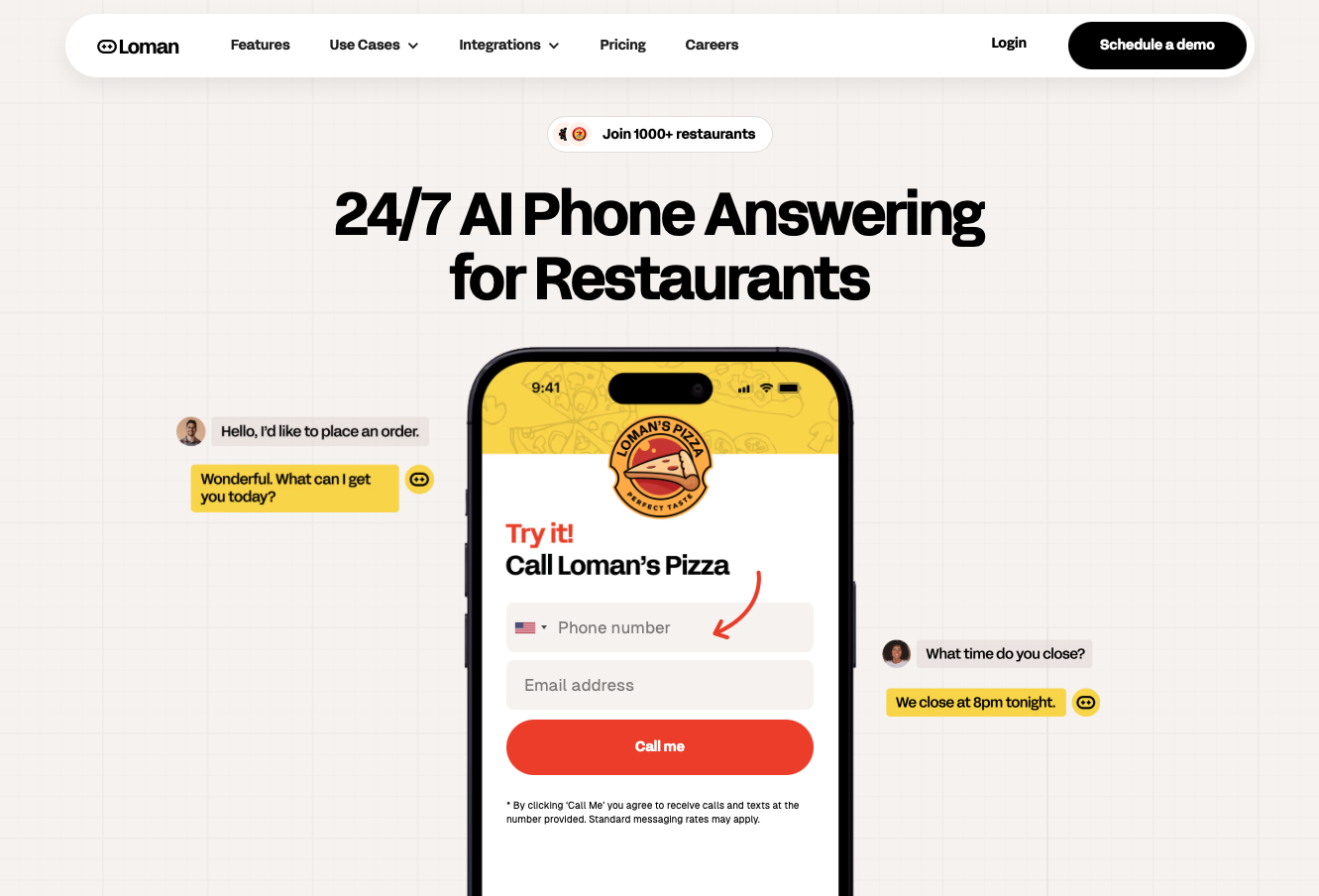
Loman is a 24/7 AI phone agent that answers every call, takes full pickup and delivery orders, books reservations, processes secure payments, and syncs directly with your POS system in under 24 hours. Built for restaurants that need complete phone automation without manual intervention or call center dependencies, Loman handles unlimited simultaneous calls and captures missed revenue while freeing staff to focus on in-person guests. Loman offers:
Loman is best for single-location restaurants, multi-unit groups, and national brands that rely on phone orders as a meaningful revenue channel and need full menu ordering, payment processing, reservation booking, and POS integration without human monitoring or extended implementation timelines.
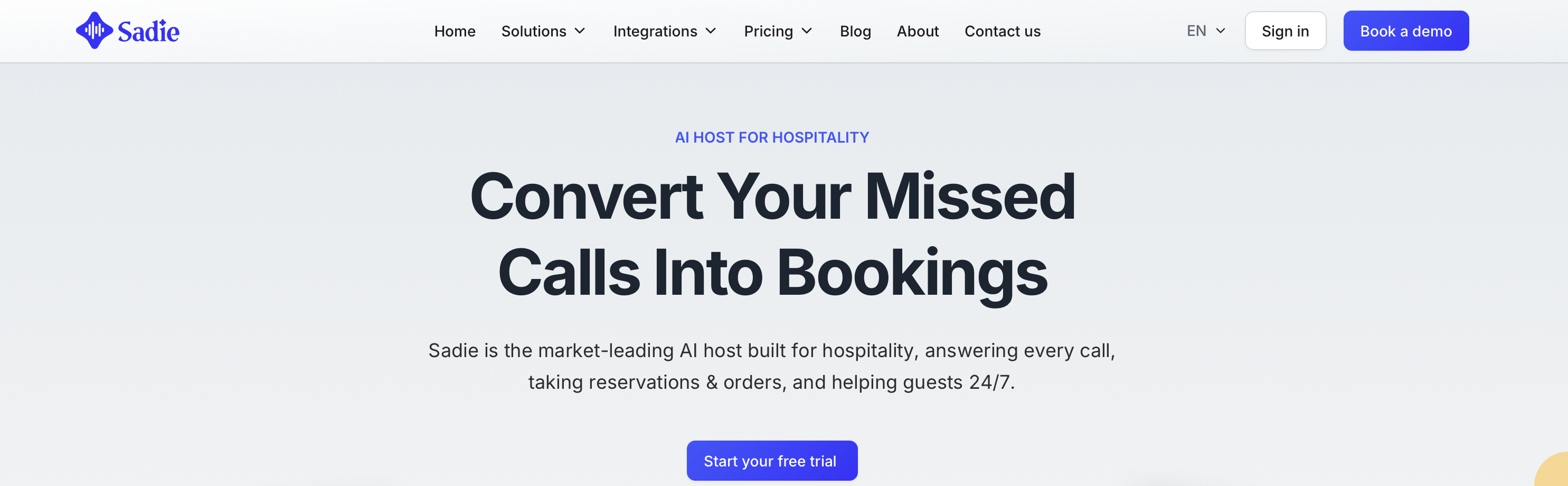
Sadie is positioned as an AI receptionist for restaurants that need help answering calls and managing reservations. The system focuses on handling guest questions about hours, location, menus, and policies while assisting with reservation bookings and message taking when staff are unavailable.
Sadie connects with restaurant systems through middleware integrations and supports up to 20 concurrent calls. The limitation is that Sadie does not process secure payments during calls, which creates a gap for restaurants that want to complete catering or takeout orders during the conversation.

Maple is an AI phone assistant built for restaurants that want help answering calls and managing reservations without staff picking up the phone. The system handles common guest requests such as reservation bookings, hours, location questions, and menu inquiries while integrating with OpenTable for reservation automation.
Maple reports a 92% resolution rate for typical call types and supports phone coverage across more than 1,000 restaurant locations. The limitation is that Maple does not advertise native in-call payment processing, which means phone orders often require another step or manual handling to complete the transaction.
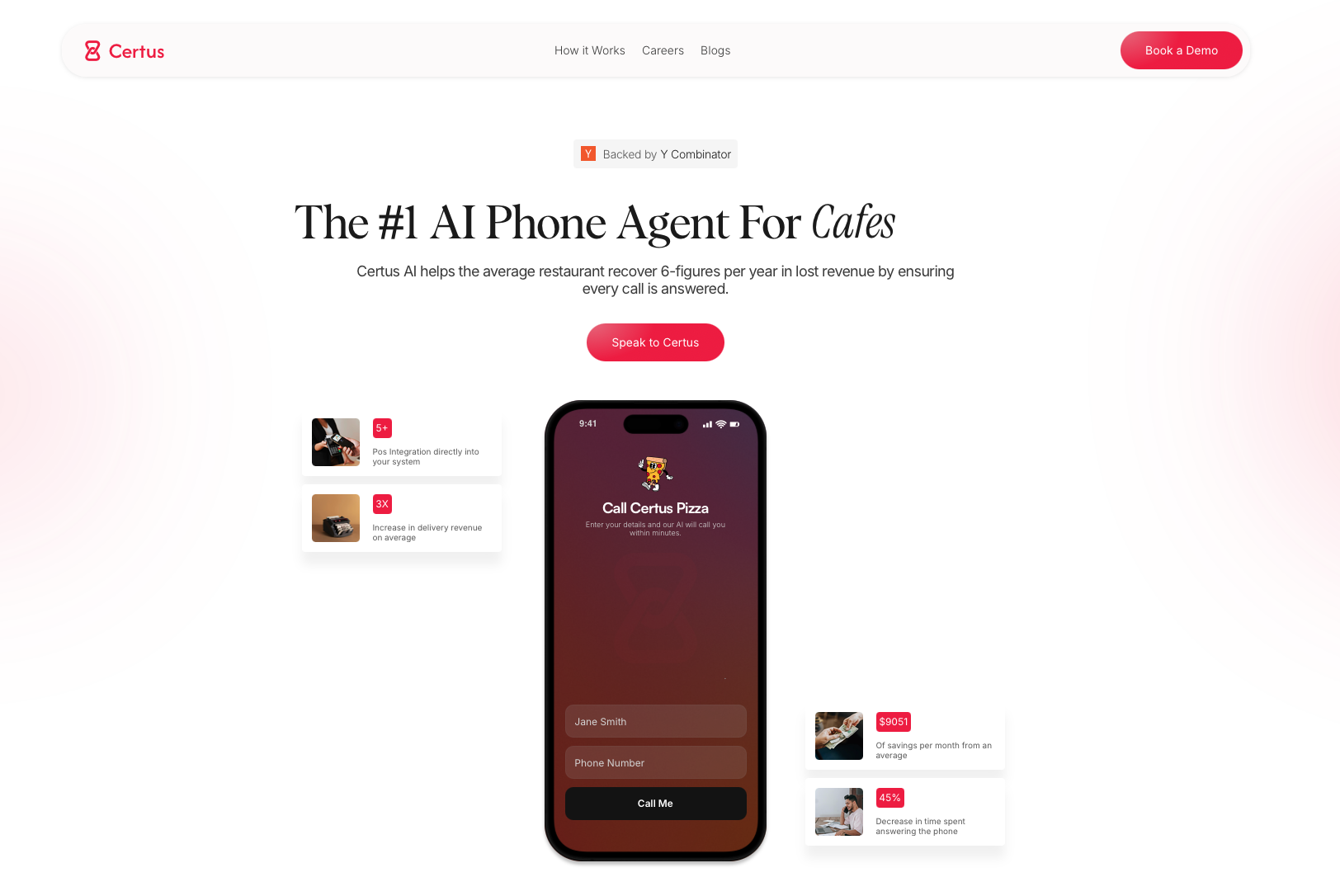
Certus AI is a voice ordering system designed for restaurants that want automated phone ordering alongside reservation handling and multilingual support. The system answers calls around the clock, takes menu orders with modifiers, books reservations, upsells add-ons, and sends completed orders directly to POS systems.
Certus AI integrates with more than 45 restaurant technology providers and supports conversations in several languages including English, Spanish, and French. Setup timelines can extend to several days depending on configuration and integrations.
VOICEplug AI provides voice automation across phone ordering, drive-thru systems, and kiosks for restaurants that want one ordering system across multiple channels. The software handles automated phone orders, personalized upselling prompts, and multilingual voice interactions while integrating with restaurant POS systems and reservation tools such as OpenTable.
VOICEplug is commonly used by pizza chains and QSR brands that operate drive-thru lanes. Payment capabilities depend on POS and payment integrations and may vary by deployment. The multi-channel setup can also add complexity for restaurants that only need phone ordering.
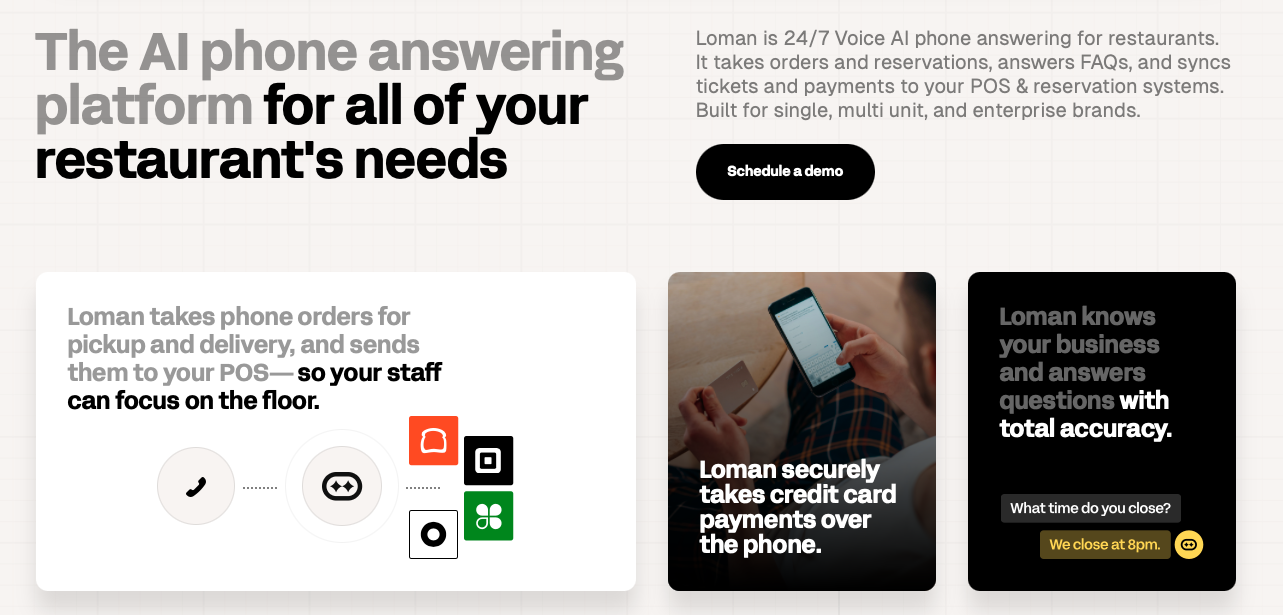
Loman solves the three biggest friction points that push restaurants away from Kea: deployment speed, call center dependencies, and multi-location complexity.
Where Kea requires up to four weeks for POS integration, Loman connects directly to Toast, Square, Clover, SpotOn, Aloha, and Olo in under 24 hours. If you're opening a new location, ramping up for seasonal traffic, or need immediate relief from missed calls, waiting a month for phone automation creates real revenue loss. We deploy same-day so you start capturing orders immediately.
Kea's human-in-the-loop model provides quality control but introduces bottlenecks during peak hours. Human agents can step in during complex interactions, adding an additional review layer compared to fully autonomous systems. Loman runs fully autonomous, handling unlimited concurrent calls without human intervention. Your team never monitors AI performance or coordinates with external call centers during lunch and dinner rushes.
For multi-location groups, Loman offers per-store menu overrides, location-specific settings, and consolidated analytics across every site. Kea's shift toward self-service and independent operators signals a move away from enterprise-scale infrastructure. We built our system for groups managing dozens of locations with centralized control and rollup reporting.
If phone orders drive meaningful revenue and you need automation live this week, Loman removes the integration lag and monitoring overhead that Kea's model requires.
Focus on deployment speed (days vs. weeks), concurrent call capacity during rush periods, direct POS integration, in-call payment processing, and whether the system runs autonomously or requires human monitoring. Multi-location groups should verify per-store menu overrides and consolidated reporting.
If your restaurant handles high call volume during lunch and dinner rushes, waiting for human agents to review transactions creates revenue loss from abandoned calls. Fully autonomous systems process unlimited simultaneous orders without intervention, which matters when every minute of delay costs sales.
Deployment ranges from under 24 hours for plug-and-play solutions like Loman to 4-5 weeks for systems requiring custom POS integrations or call center coordination. Restaurants opening new locations or facing seasonal traffic spikes should confirm exact timelines before committing.
Restaurants researching voice ordering tools often begin with Kea reviews to understand how AI phone systems handle order taking and call management. Kea offers a hybrid approach that includes human oversight, which can work for operators who prefer additional monitoring during calls. The trade-off is that this model can introduce delays or capacity limits when call volume spikes during busy service periods. Restaurants that want faster deployment and fully automated ordering often look at alternatives built for high call volume from day one. Loman is designed for that environment, connecting to restaurant POS systems in under 24 hours while answering unlimited simultaneous calls and completing full orders during the conversation. For operators who want a system that captures phone order revenue without call center dependencies, Loman’s restaurant phone ordering AI provides a direct path from incoming call to completed order.
Enter your information in the form to receive a call from Loman and place an order like a customer would!

