
The phone rings during peak service and nobody picks up because your team is buried on the floor. That's not a staffing problem; it's a booking bottleneck that restaurant reservation automation solves. Every missed call is a table that could have been filled, and every manual handoff between host stand and kitchen adds minutes you can't recover between covers. Below, we break down how automated reservation systems tighten your seating schedule, cut no-shows, and put more covers through every service window.
TLDR:
Table turnover is one of the clearest levers restaurants have for growing revenue without adding seats. Industry benchmarks show quick-service restaurants average 30-60 minutes per turn, while full-service operations typically run 75 minutes. When reservations are managed manually, gaps appear between seatings, walk-ins get turned away unnecessarily, and no-shows go unaddressed until it's too late to fill the table.
Automated reservation systems close those gaps in real time. They confirm bookings instantly, send reminder sequences that cut no-show rates, and surface open tables the moment a cancellation comes in. The result is a tighter seating schedule with fewer dead minutes between covers.
The math is straightforward. If your average cover takes 45 minutes and you're losing 15 minutes per turn to manual coordination, that's one full seating lost across a four-hour service window. Multiply that by your average ticket, and the cost of slow reservation handling becomes very concrete, very fast.
Manual reservation management carries a real price tag. Restaurants can miss an average of 150 calls per month. When 60% of those callers are trying to book a table at an average value of $45, that adds up to $4,050 in lost revenue every month, or $48,600 a year, just from phones that go unanswered.
No-shows compound the problem. A table sitting empty because someone forgot to cancel is a fixed cost with zero return. Double-bookings push the damage further, creating service chaos and guest frustration that rarely ends with a return visit.
Each failure traces back to the same root cause: a manual process that depends on staff being available, attentive, and error-free at all times, which simply is not sustainable during a busy dinner rush.
| Metric | Manual Reservation Management | Automated Reservation System | Revenue Impact |
|---|---|---|---|
| Missed Calls Per Month | 150 calls go unanswered during peak hours, staff occupied with floor service | Zero missed calls, AI answers 24/7 regardless of service volume | Recover $4,050 monthly in lost bookings |
| No-Show Rate | 3.5% no-show benchmark, with 11% cancellations | Under 2% with automated reminders at 24-hour and 2-hour intervals | 7-8 additional covers per 50-seat service |
| Table Turn Time | 60 minutes average including 15 minutes lost to manual coordination between systems | 45 minutes average with real-time POS integration and instant status updates | One additional full seating per 4-hour service window |
| Double-Booking Incidents | 2-3 per week during high-volume periods due to lag between phone and system entry | Zero double-bookings with real-time availability checking | Eliminates service disruption and guest compensation costs |
| Off-Hours Booking Capture | Zero reservations taken outside business hours, voicemail conversion under 20% | Full booking capability 24/7, immediate confirmation without staff intervention | 15-20% increase in total monthly reservations |
| Annual Revenue Recovery | Baseline with $48,600 yearly loss from missed calls alone | Combined recovery from missed calls, reduced no-shows, and improved turnover | $75,000-$95,000 additional annual revenue for 50-seat operation |
Every automated reservation system shares a few core capabilities that, used together, tighten the gap between covers.
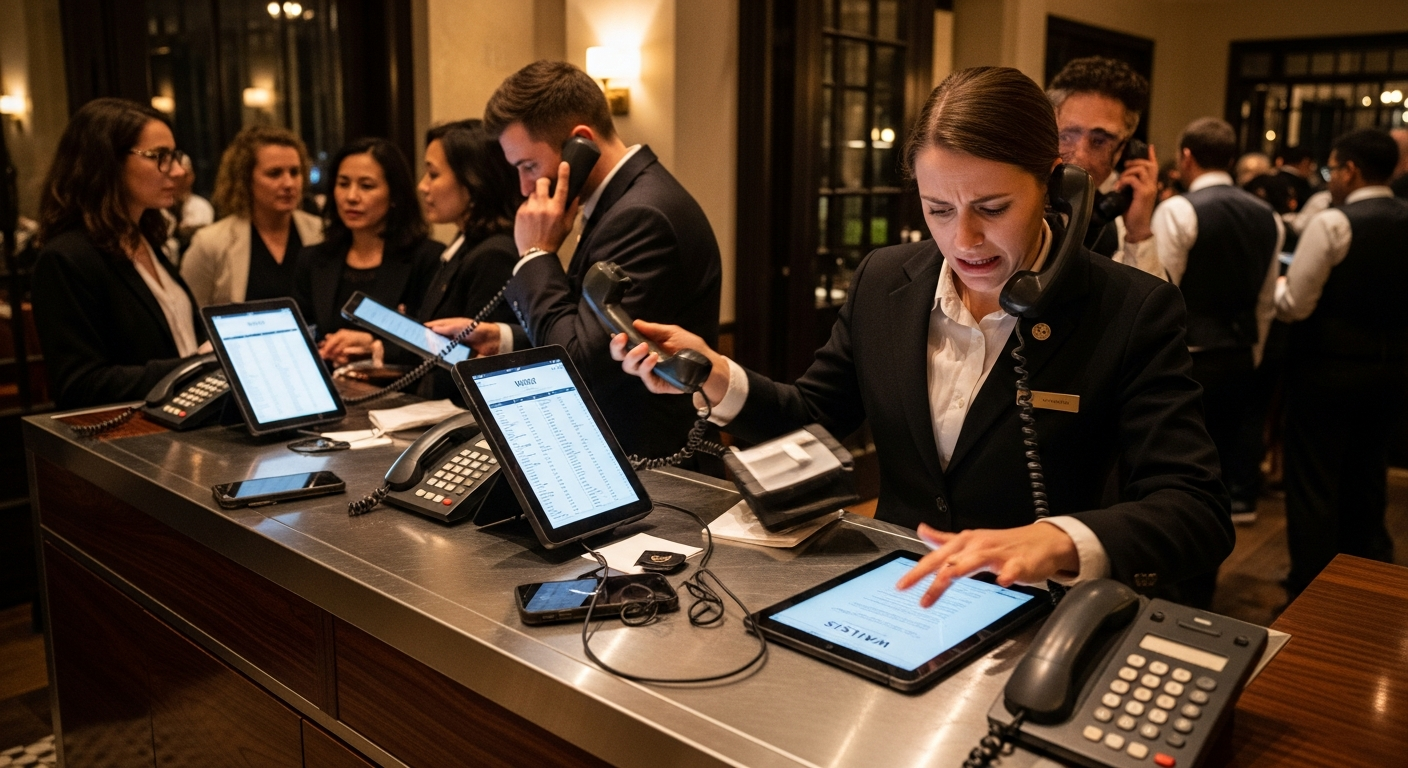
The busiest moment in any restaurant is exactly when the phone gets ignored. Staff are running food, taking orders, managing the floor. A ringing phone during Friday dinner service competes with everything else happening in the room, and guests who hit voicemail rarely call back.
AI voice agents remove that bottleneck entirely. They answer every call, regardless of how many come in at once, and walk guests through booking in real time. No hold music. No missed reservation because the host was occupied seating another party.
These systems check live availability, confirm party details, and sync bookings directly into OpenTable, all without a staff member touching the phone. Those are real bookings that would have otherwise gone to a competitor, now landing on your floor and contributing to your nightly cover count.
No-shows run at about 3.5% globally, with cancellations adding another 11%. On a 50-cover service, that is potentially 7 or 8 covers affected by no-shows or cancellations.
Automated reminders are the first line of defense. A well-timed sequence, 24 hours out then again 2 hours before, gives guests an easy way to confirm or cancel early enough for you to act on it. That window matters. A cancellation at 11am is a fillable slot. One at 7:05pm is just a loss.
For larger parties, confirmation requirements or credit card holds filter out casual bookings that were never serious. The friction is intentional, and it works.
The payoff is a seating schedule you can actually plan around. When no-shows drop, service pacing becomes more predictable and table turnover stays consistent across the full service window.

Reservation data in isolation only gets you so far. The real payoff comes when it talks to your POS and kitchen display systems in real time.
When a table clears in your POS, that status should immediately update your reservation software so hosts can seat the next party without a phone call or a walkthrough. When a large booking checks in, the kitchen knows before orders even arrive. Those handoffs, when broken, create the dead minutes between covers that quietly kill your turnover rate.
A well-connected reservation setup syncs across three layers:
OpenTable POS integration can keep table status, guest spend, and floor plan data more current. Bookings, changes, and cancellations sync to your reservation dashboard the moment they happen, so your floor plan reflects what is actually on the floor.
Tracking the right numbers turns reservation data into a real feedback loop for table turnover. Start by pulling these core metrics from your reservation system each week:
Before rolling out any automated reservation tools, record two to four weeks of manual data. This gives you a clean comparison point. Restaurants that do this tend to see clearer ROI within the first 60 days of automation, because they can tie specific changes directly to measurable changes in covers and turn times.
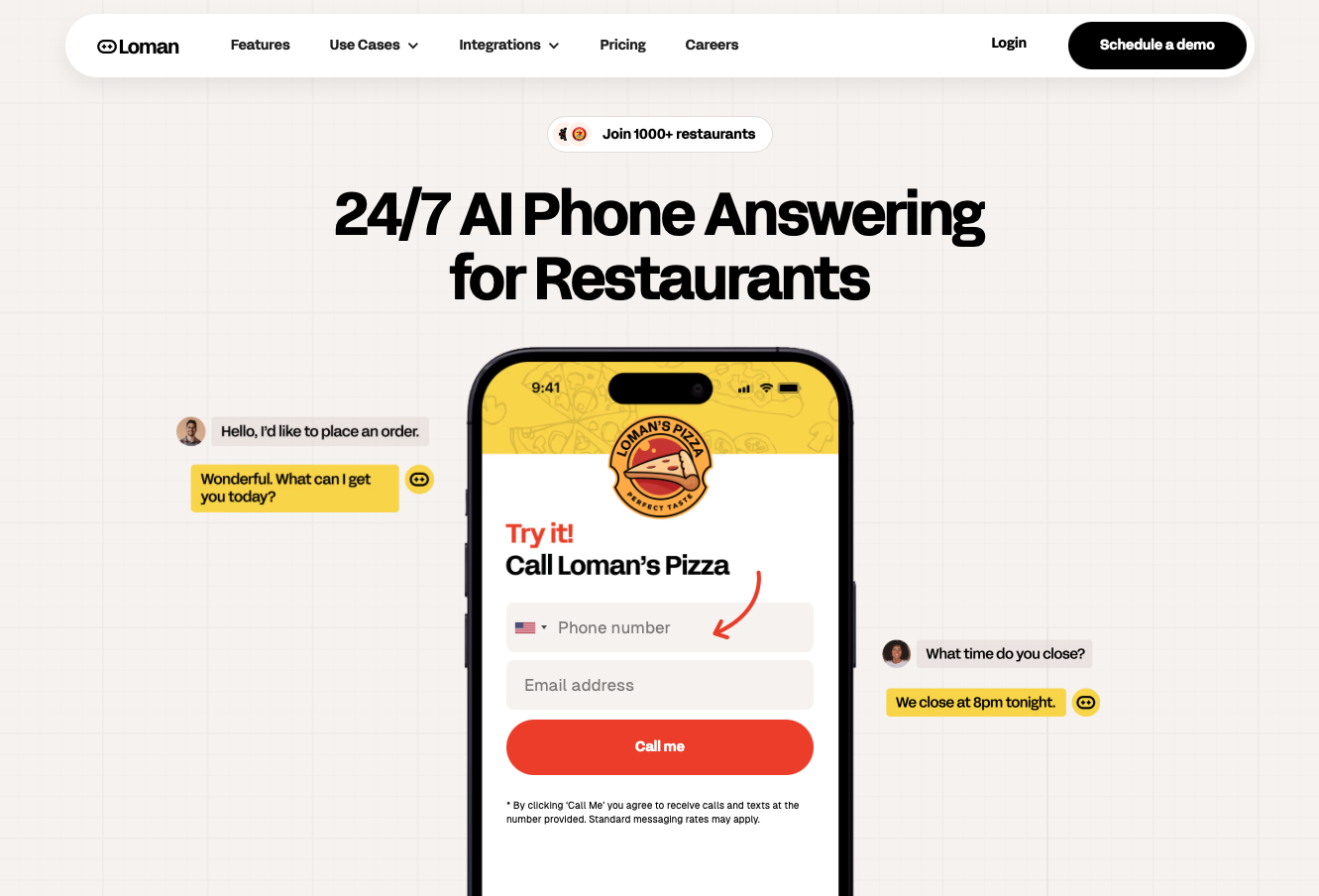
Loman answers every reservation call the moment it comes in, day or night, and books directly into OpenTable without any staff involvement. Party size, timing, dietary notes: all captured automatically and synced to your reservation dashboard in real time.
When guests call to modify or cancel, Loman handles it the same way. A cancellation that comes in at noon becomes a fillable slot. One that goes to voicemail at 7pm stays a gap.
With the phones handled, your team stays where table turnover actually happens: on the floor. Seating guests, clearing covers, managing pacing. That's where hospitality lives, and it's where your staff's attention should stay instead of bouncing between the host stand and a ringing phone.
Yes. AI voice agents like Loman answer every reservation call instantly and book directly into OpenTable without any staff involvement, so your team stays focused on seating and turning tables instead of managing the phone.
Automated confirmation sequences sent 24 hours and 2 hours before reservations give guests time to cancel early enough for you to fill the slot: a cancellation at 11am becomes bookable inventory, while one at 7pm stays a gap in your seating chart.
Track by party size. Average turn time varies considerably between two-tops and six-tops, and breaking it down reveals exactly where larger groups slow your floor so you can adjust booking intervals and table allocation.
Most restaurants see measurable ROI within 60 days when they baseline manual performance for 2-4 weeks first, then track no-show rates, covers per service, and booking-to-arrival conversion after automating.
You can't improve what you can't control, and manual reservation management leaves too many variables to chance. Restaurant reservation automation gives you predictable turn times, fewer no-shows, and a team that stays focused on guests instead of phones. Your seating schedule tightens, your revenue per service climbs, and you stop leaving money on the table because a call went unanswered during dinner rush. Watch a quick demo to see Loman answer calls and book directly into OpenTable.
Enter your information in the form to receive a call from Loman and place an order like a customer would!

