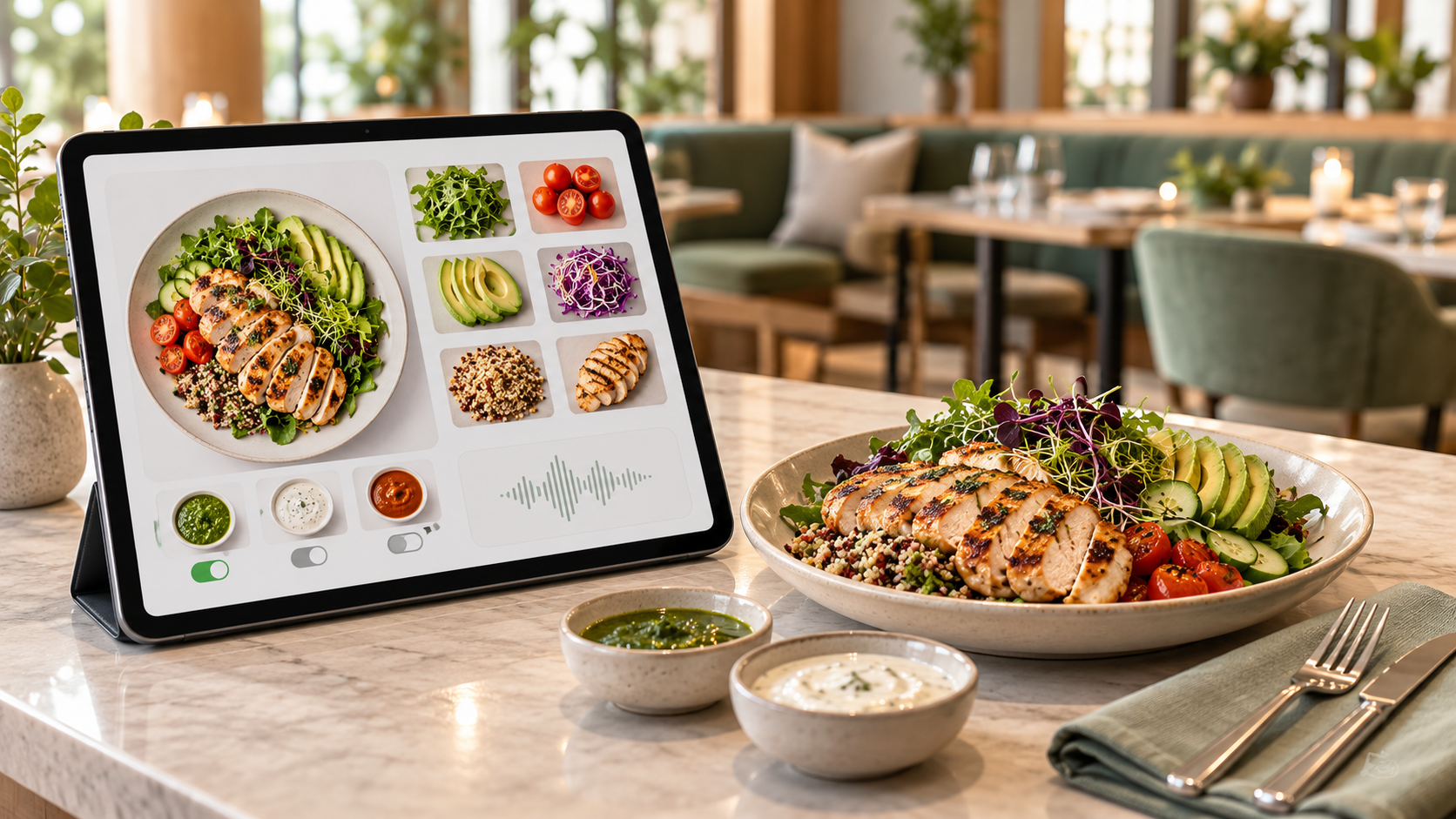
It's 7:14 on a Friday, the counter is three deep, and a caller wants a gluten-free crust, extra sauce on the side, and no onions. Every custom request like that either builds a bigger ticket or sends an order to the next restaurant on the list. Menu customization used to mean printed specialty menus and servers memorizing modifiers. Now AI reads what sells, suggests pairings, and handles modifiers in real time. This guide covers how AI menu customization works, from menu analysis and recommendations to pricing, and what it changes for restaurants.
TLDR:
Restaurants have long sought ways to tailor their menus to diners' preferences. In the past, this often meant printing separate menus for different dietary needs or having servers memorize a list of possible modifications. These methods were time-consuming and prone to errors.
The advent of digital menus marked a major shift in how restaurants approached customization. Touch-screen kiosks and tablet menus allowed for more flexible options, but still had limitations in truly understanding customer preferences.
As technology advanced, so did the possibilities for menu personalization. AI-driven systems began to appear, offering a new level of sophistication in menu customization.
This evolution has led to more efficient operations and improved dining experiences. Loman, a voice AI phone agent for restaurants, supplements your POS rather than replacing it, reads your live menu and modifiers, closes the full order, and pushes the ticket to your POS and KDS.

Here is how the three main approaches to menu customization compare in day-to-day use:
| Approach | How customization works | Where it falls short |
|---|---|---|
| Printed specialty menus | Separate menus for dietary needs, updated by reprinting | Slow to change and easy to get out of date |
| Digital menus and kiosks | Guests tap modifiers on a screen | Limited to the screen, with no help for callers on the phone |
| AI phone agent (such as Loman) | Reads your live POS menu on every call, including modifiers and 86'd items | Needs menu, hours, and call-flow setup before going live |
Restaurants are always looking for ways to improve their menus. AI can help by crunching the numbers on what's selling and what's not. It's like having a super-smart assistant that never sleeps, always watching how customers react to different dishes.
This tech can spot trends you might miss. Maybe your salmon dish does great on Fridays but not so hot on Mondays. AI notices these patterns and helps you adjust. It's not about guessing. It's about knowing.
With AI, you can stay ahead of the game. It's like having a crystal ball that tells you what customers will want next season. That lets you plan ahead, order the right ingredients, and create specials that are sure to be a hit.
Remember the last time a waiter suggested the perfect dish? AI can do that for every customer, every time. It's like having a mind-reading menu that knows exactly what each person wants.
Here's how it works:
This is good for customers and great for business too. When people get recommendations they like, they tend to order more and come back more often.
Loman, a voice AI phone agent for restaurants, uses a built-in upselling engine to suggest add-ons and popular combos on every phone order. Operators using Loman have reported up to 23% higher revenue per order. It's like having a top-notch salesperson on every call, without the extra payroll.
Menu prices and specials change more often than a printed menu can keep up with. Some restaurants test AI-powered flexible pricing on their digital menus, with discounts in slow hours and higher prices at peak times. Results vary by restaurant, and not every guest welcomes a price that moves.
On the phone, the bigger risk is a caller hearing the wrong price. Loman, a voice AI phone agent for restaurants, reads these from your POS on every call:
If you change a lunch special at 11 a.m., the next caller hears the new price. Loman supplements your POS and does not set or change prices.
AI-powered menu systems are changing how restaurants operate and serve customers. These smart tools list food items and create personalized experiences that keep diners coming back.
Let's look at some key benefits of AI menu customization:
But it's not all smooth sailing. Restaurants face some hurdles when adopting this tech:
Despite these challenges, the long-term gains often outweigh the short-term pains. Operators using Loman have reported up to 23% higher revenue per order. That lift comes from recaptured calls and the AI's ability to suggest pairings and upgrades based on each customer's preferences.
Beyond just boosting sales, AI menus help restaurants stay competitive. They can quickly update offerings, prices, and specials without reprinting physical menus. That flexibility matters when specials and 86'd items change mid-service.
For restaurant owners wondering about implementation, tools like Loman.ai make it easier. Loman, a voice AI phone agent for restaurants, answers menu questions, handles modifiers, and closes the full order with in-call payment. It supplements your POS and digital menu systems rather than replacing them, and goes live in under 24 hours with no coding or IT team.
As we look to the future, AI menu customization is set to become a standard feature in successful restaurants. Those who adapt early will likely see the biggest benefits in customer loyalty and smoother day-to-day service.
A year ago, AI phone ordering was mostly a bet for early adopters. That window has closed. The National Restaurant Association's State of the Restaurant Industry 2026 report puts AI use at 26% of operators, according to this restaurant AI adoption guide from The Hospitality Hangout. Among operators already using AI, 62% report lower labor costs and 88% say the tools save them time every week.
Phone ordering is part of that shift. On October 8, 2025, Square announced automated voice ordering for phone calls, so callers now expect the phone to handle customizations as cleanly as an online order does.
Menu customization is where that expectation gets tested. A caller who asks for a gluten-free crust, extra sauce on the side, and no onions needs a tool that reads your live POS menu, not a static script. Loman reads the live menu during each call, so an item you 86'd at 6 p.m. never gets offered at 7.
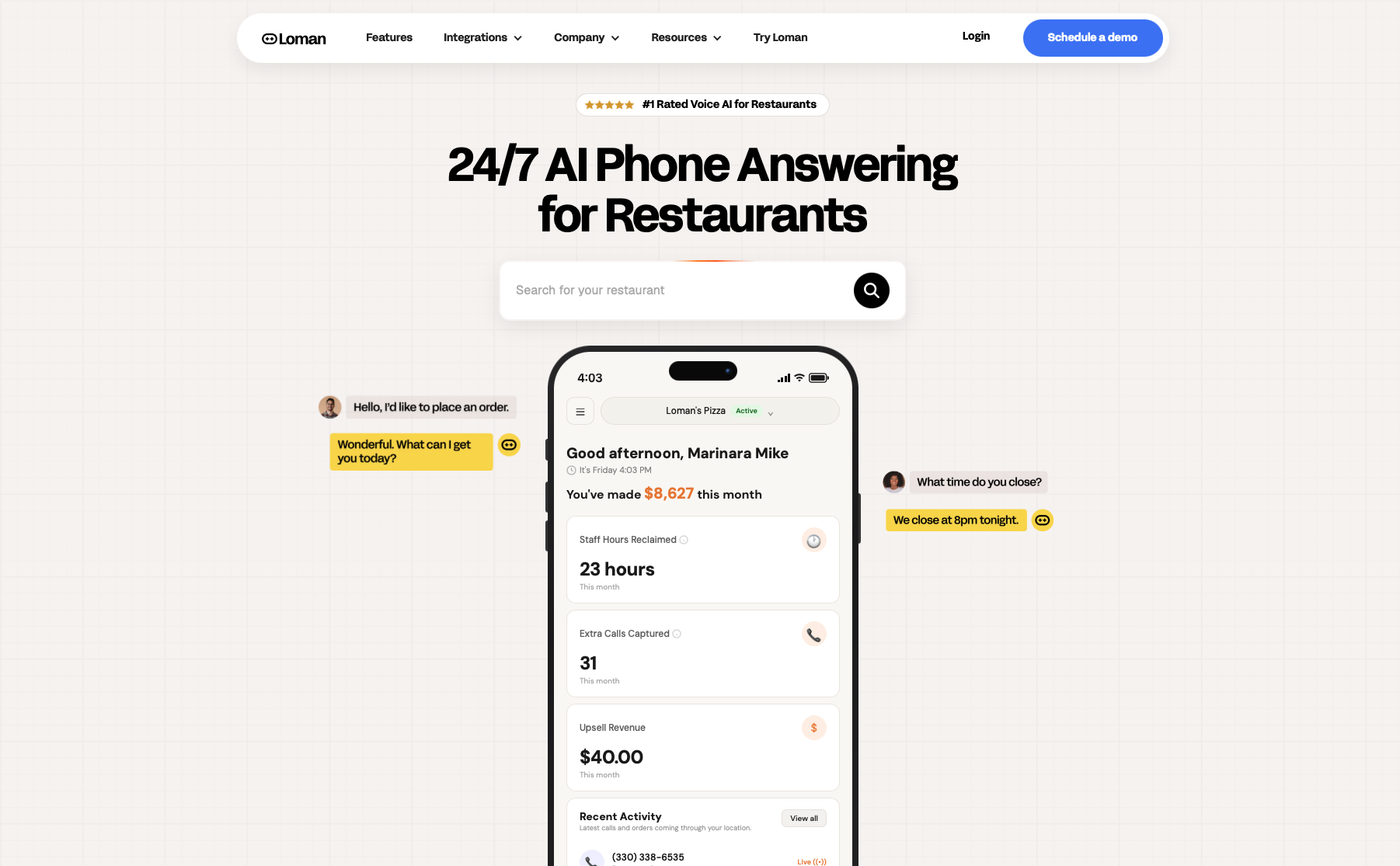
Menu customization breaks down fastest on the phone, where a caller can't tap a modifier on a screen. Loman, a voice AI phone agent for restaurants, reads your live POS menu on every call, so it knows your modifiers, your specials, and the item you 86'd an hour ago. It closes the full order, takes payment during the call, and pushes the ticket to your POS and KDS with no one re-keying anything.
A built-in upselling engine suggests add-ons and popular combos on each order. Operators using Loman have reported up to 23% higher revenue per order, and Tony Boloney's reports capturing 75 to 100 extra orders per month per location. Crust Pizza's owner, Nick Haselidis, says Loman paid for itself in 10 days.
Loman supplements your POS instead of replacing it, and it works with Toast, Square, Clover, SpotOn, SkyTab (Shift4), Aloha by NCR, Olo, and Stream. Most restaurants go live in under 24 hours with no coding or IT team, after uploading the menu and setting hours and call-flow rules. Pricing starts at $199 per month for unlimited calls, with no per-minute charges.
The cost varies by vendor, restaurant size, and call volume. Loman starts at $199 per month for unlimited calls, with no per-minute charges. Payback can come fast: Crust Pizza's owner says Loman paid for itself in 10 days.
Yes, most AI menu tools connect to popular POS systems. Loman works with Toast, Square, Clover, SpotOn, SkyTab (Shift4), Aloha by NCR, Olo, and Stream for orders, plus OpenTable, Resy, and SevenRooms for reservations. Orders push straight to your POS and KDS, so no one re-keys a ticket. Loman supplements your POS instead of replacing it.
Data handling varies by vendor, so ask any provider how it protects customer and payment information and whether it meets PCI DSS requirements for card payments. Loman takes card payments during the call through your POS integration. Confirm the security details with the Loman team in a demo before you sign.
No, AI menus are designed to assist, not replace staff. They handle routine tasks, freeing up employees to focus on providing better in-person service and tackling more complex customer needs.
AI menu customization pays off when it reaches every channel guests order from, including the phone. Menu analysis shows what sells, personalized recommendations lift tickets, and live menu data keeps 86'd items off the table. Loman brings that to your phone line: it reads your live POS menu, handles stacked modifiers, closes the order with payment, and keeps the phones calm so your staff stays on the floor with guests. The deciding factor is what you can verify before you commit, so hear it handle your own menu on a real call. Book a Loman demo and test it before your next dinner rush.
Enter your information in the form to receive a call from Loman and place an order like a customer would!

