
You've heard about ConverseNow and the numbers look impressive for enterprise QSR chains. But when you dig into the details, the gaps start showing up quickly for smaller operators: pricing isn't public, POS integrations aren't named upfront, and implementation can stretch into weeks or months. If you're losing revenue today from missed calls and need something live this week, not next quarter, there are alternatives worth considering that were built with your constraints in mind.
TLDR:
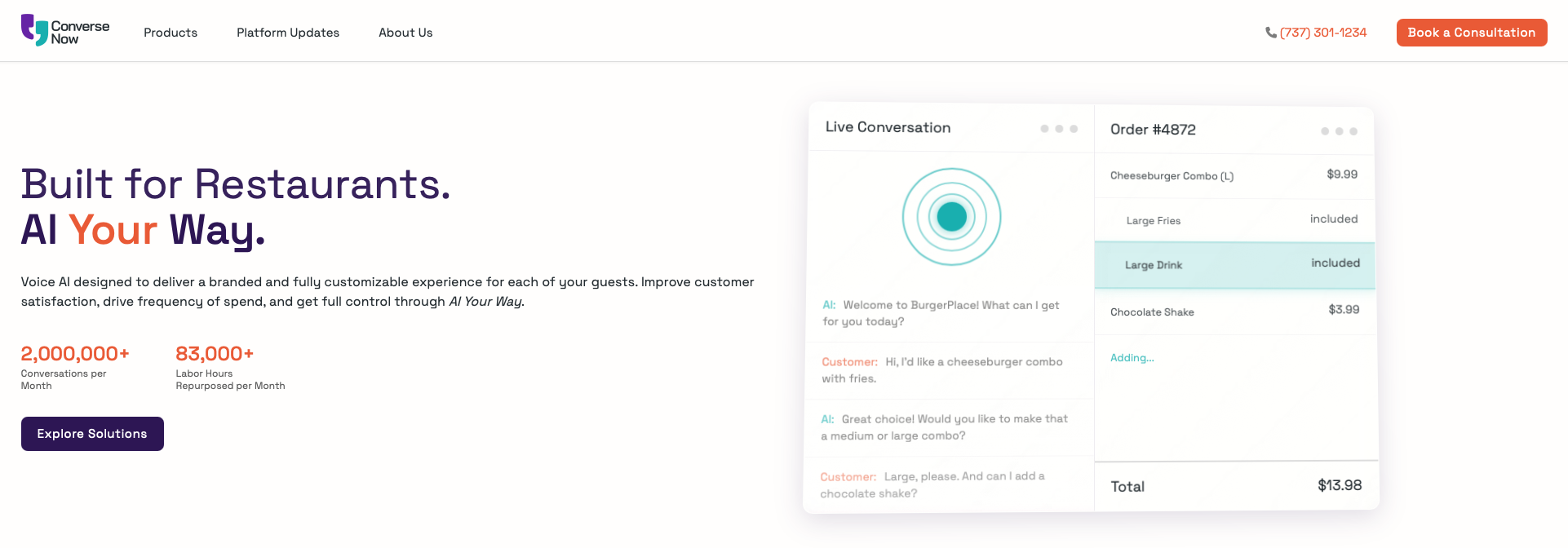
ConverseNow is a voice AI ordering solution built for restaurant drive-thrus and phone channels. The system handles customer orders in real time through conversational AI, then syncs with POS systems via integrations with Olo and Deliverect. No manual re-entry and no hold times.
Numbers back the pitch: partners report up to 31% same-store sales increases, 25% higher average tickets, and around 90 additional labor hours recovered per store each month. The company operates across more than 1,200 restaurants in 40 states, with its sights set on national QSR brands and enterprise multi-unit operators.
That laser focus on big chains is a genuine strength. It's also why smaller operators and independent restaurants often find themselves looking for something built for them instead.
ConverseNow thrives in enterprise QSR environments with standardized menus and drive-thru lanes. For chains in the 200 to 500 store range, that fit is real.

The gaps show up quickly outside that niche, though. Pricing and POS integration specifics are not publicly listed, which complicates vendor evaluation before you even get to a demo. The drive-thru focus leaves phone-first pickup and delivery restaurants underserved. Restaurants needing reservations alongside order-taking will need to bolt on extra tools. Implementation timelines also tend to run longer, which matters when you're losing calls today.
Independent operators and smaller multi-unit groups typically want transparent pricing, named customer references, and fast setup that takes hours instead of months. That's where purpose-built alternatives start looking far more relevant.
ConverseNow has carved out a space in restaurant voice AI, but it's far from the only option worth considering. Depending on your restaurant's size, call volume, and budget, other solutions may be a better fit. The alternatives below range from phone-first systems built for independent restaurants to multi-channel platforms targeting enterprise QSR chains. Some focus on fast deployment and transparent pricing, while others specialize in channels like reservations or drive-thru lanes. We've reviewed each based on POS integration clarity, concurrent call capacity, order-taking depth, payment handling, and how quickly you can go live. If you're losing revenue today from missed calls or long hold times, the deployment speed and named integrations matter more than feature lists that look good on paper but take months to implement.
| Provider | Best For | POS Integrations | Deployment | Phone Orders | In-Call Payments |
|---|---|---|---|---|---|
| Loman AI | Phone-first restaurants | 8 named | Under 24 hrs | Yes | Yes |
| Revmo | Franchise & mid-market | None named | 30 seconds (claimed) | Limited | Not confirmed |
| Sadie | Info-heavy call volume | Middleware only | Not listed | Partial | No |
| Maple | Independent restaurants | SkyTab, Quantic | Minutes to hours | Basic | No |
| Certus AI | Full-service restaurants | 45+ (none named) | ~5 days | Yes | Not confirmed |
| ConverseNow | Enterprise QSR phone and drive-thru ordering | Olo, Deliverect | Not publicly listed | Yes | Not publicly listed |
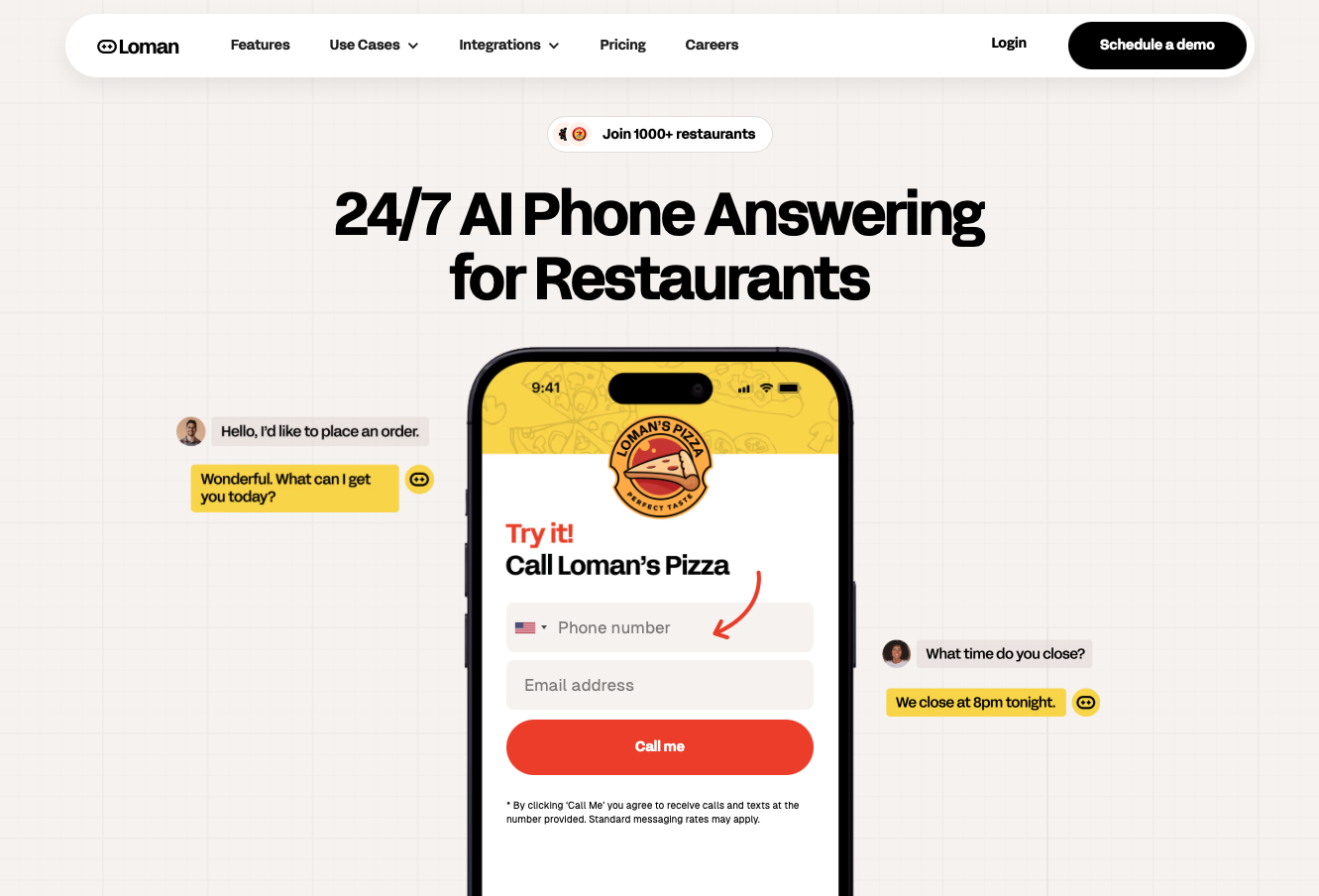
Loman is built from the ground up for restaurants that take most of their orders and reservations by phone. Unlike drive-thru-focused systems, Loman answers every inbound call 24/7, takes full pickup and delivery orders with modifiers, books reservations through OpenTable, and processes secure credit card payments without involving a staff member. The AI reads your live menu in real time, including 86'd items and price changes, so callers always hear accurate information. Setup takes under 24 hours with no hardware overhaul required, and Loman connects natively with eight named POS systems: Toast, SpotOn, Square, Clover, SkyTab, Aloha by NCR, Olo, and Stream. For multi-location operators, Loman supports per-store menu overrides, local phone numbers, and roll-up analytics. Restaurants report up to a 23% increase in phone revenue after going live.
Revmo is a voice AI system built for restaurant and multi-unit operators that handles inbound calls, reservations, and waitlists across voice, text, and email channels. The system supports 76 languages and targets franchise groups and mid-market operators looking for a single vendor to manage customer communications at scale. Revmo claims 30-second setup and reports over 100,000 calls handled. One limitation to note: no named POS integrations are listed on their site, so order flow into your kitchen system is not confirmed.
Sadie is positioned as an AI receptionist for restaurants and service businesses, built around managing high volumes of inbound calls instead of acting as a full ordering system. It handles common informational questions about hours, location, and policies, manages reservations through OpenTable, and routes calls that need human follow-up. Sadie's limitations are worth noting upfront: the system caps at 20 concurrent calls, does not include secure in-call payment processing, and relies on middleware instead of a direct POS connection to pass order data, adding technical complexity compared to native integrations. It fits best for restaurants where the primary call volume is informational, not order-driven.

Maple is a reservation and basic order-handling solution built for independent restaurants and small chains that need reliable phone coverage alongside dine-in reservation management. It claims a 92% resolution rate without human intervention across 1,000+ restaurants and integrates with OpenTable for reservation automation. Setup is fast. Maple can go live within minutes or hours. That speed comes with tradeoffs, though. Maple’s payment capabilities appear to depend on the integration; for example, its Quantic integration supports text-to-pay links instead of true native in-call card capture. There is no built-in upselling engine, and POS integrations are limited to SkyTab and Quantic, making it a poor fit for restaurants running Toast, Square, or Clover. It fits best for independent operators where the bulk of calls are reservations and basic FAQs, not high-volume phone orders.
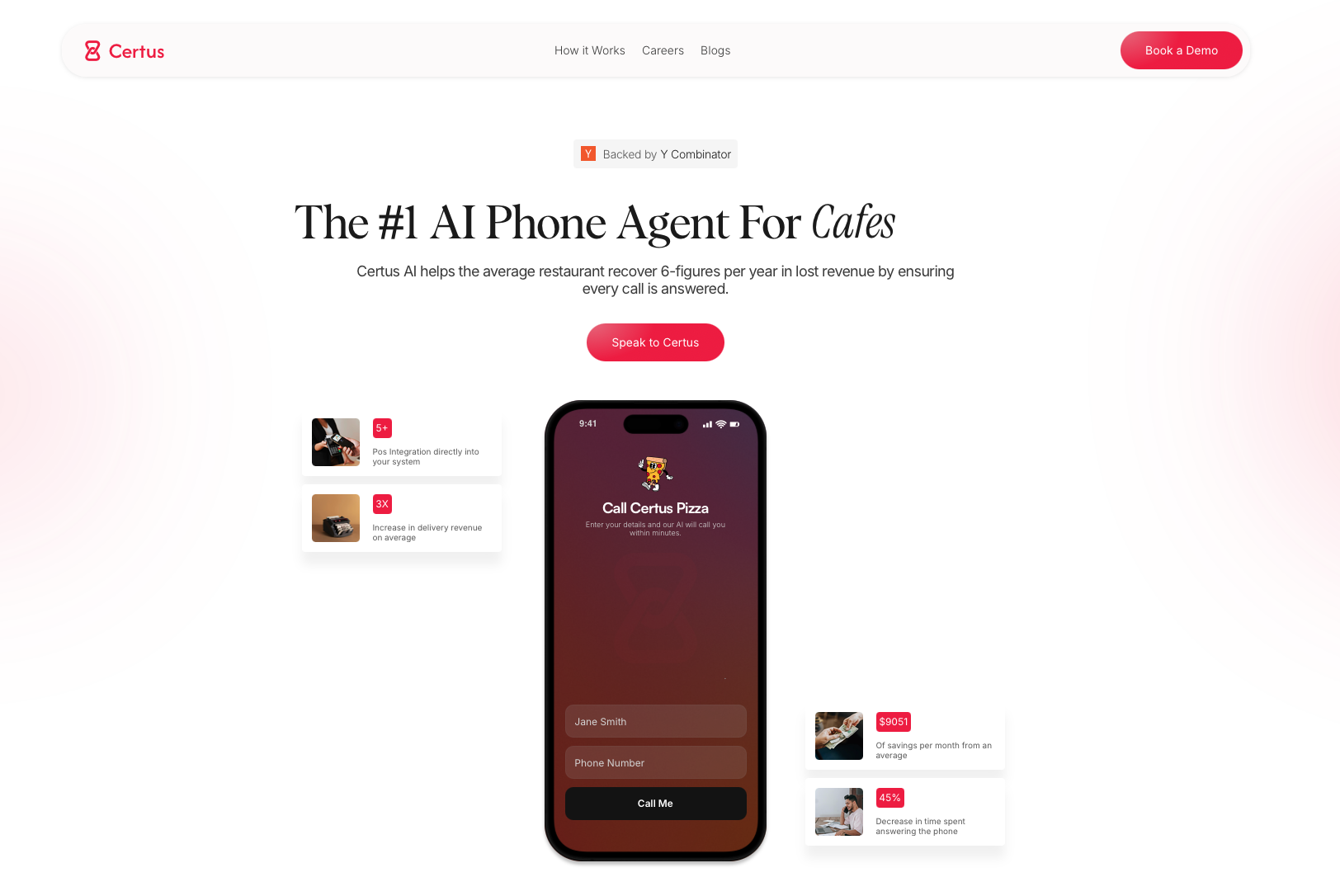
Certus AI is a YC-backed voice AI agent built for restaurants that handles inbound phone orders, reservations, catering inquiries, and common customer questions around the clock. The system takes full orders with modifiers, pushes tickets directly to your POS and KDS, and includes a smart upselling engine that suggests pairings and add-ons automatically. Certus claims 45+ POS integrations, though none are named publicly, so you'll need to confirm your specific system during a demo. Multilingual support, an analytics dashboard, and reservation triage round out the feature set. Deployment runs about 5 days, and the company reports restaurants recover $15K-$25K in missed revenue annually after going live.
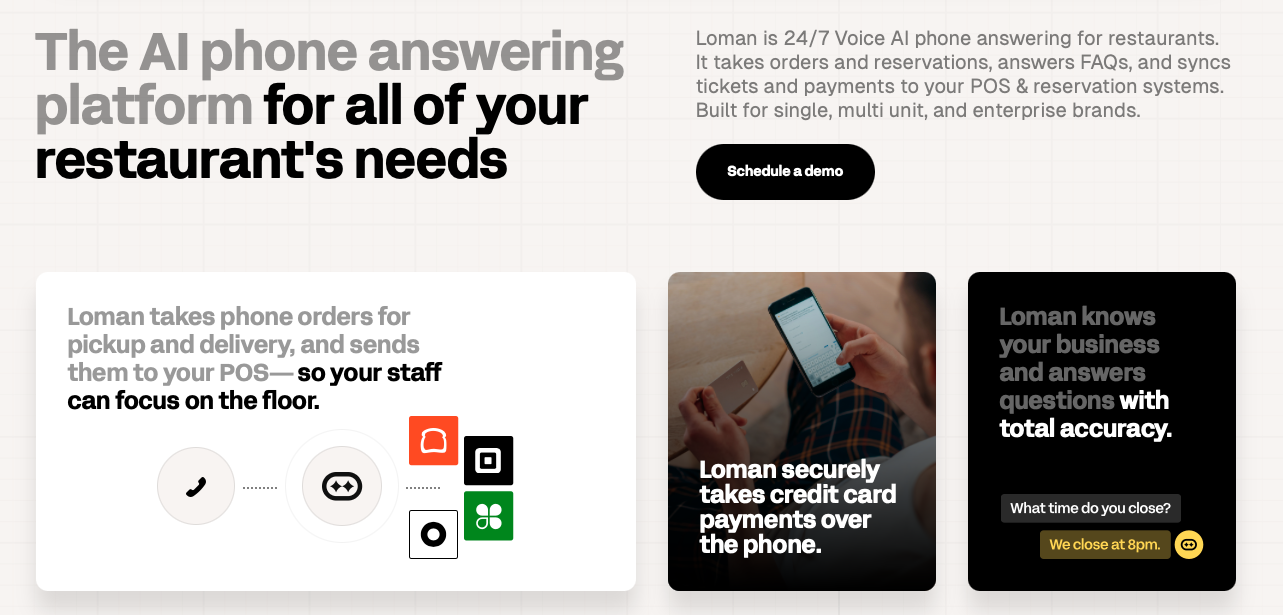
Loman is built for restaurants. While ConverseNow focuses on quick-service drive-thru and kiosk ordering, Loman handles your phones around the clock, takes orders, books reservations, and answers customer questions without pulling a single staff member away from the floor.
The cost of inaction is measurable. According to Yelp's research on restaurant operations, missed calls are one of the largest hidden revenue drains facing restaurants today, beyond just the immediate lost order.
A few reasons restaurants choose Loman over ConverseNow:
If your biggest headache is a ringing phone that your team cannot get to, Loman solves that problem directly.
Look for named POS integrations, deployment speed, concurrent call capacity, and clear pricing. If you take phone orders for pickup and delivery, verify that the system handles full order-taking with modifiers and secure in-call payments, beyond basic order capture or reservation routing.
Deployment timelines vary widely by provider. Loman goes live in under 24 hours with menu import and POS sync, while ConverseNow and similar enterprise-focused solutions typically take days to weeks. Faster deployment means you stop losing revenue from missed calls sooner.
Yes, but capabilities differ by provider. Loman, ConverseNow, Certus AI, and VOICEplug AI all handle full order-taking with modifiers and built-in upselling. Systems like Sadie and Maple focus more on reservations and basic inquiries, so they're better suited for restaurants that don't rely heavily on phone order volume.
About 30% of restaurant calls go unanswered when staff are focused on in-house guests, especially during lunch and dinner rushes. Voice AI answers every call instantly, takes complete orders, books reservations, and captures revenue you'd otherwise lose, without pulling anyone off the floor.
The best ConverseNow alternative depends on whether you run drive-thru lanes or take most orders by phone. If calls are your main channel, Loman goes live faster and handles reservations alongside orders without extra tools. Every missed call is a lost ticket, and with 30% of restaurant calls going unanswered at peak hours, that adds up fast. Loman answers every call around the clock, with no hardware changes or added headcount. Check out a demo to see how it syncs with your current setup.
Enter your information in the form to receive a call from Loman and place an order like a customer would!

