
The role of AI in enhancing restaurant customer interactions becomes clear during peak dinner rush, when phones ring nonstop, hosts manage growing waitlists, and missed calls quietly turn into lost revenue. Every unanswered ring is a guest who may book or order somewhere else, and asking staff to juggle calls while serving tables creates friction on both sides of the counter. AI phone agents step in to answer every call, take full orders, book reservations, and process payments while your team stays focused on in-house service. Some modern solutions show how restaurants can capture more orders, increase ticket sizes, and keep service steady without adding more people to stand by the phone.
TLDR:
Every missed call sends a customer to a competitor. Restaurants miss an average of 34% of incoming calls during peak periods, creating annual revenue losses between $27,000 and $52,000 per location. A restaurant receiving 50 daily calls that misses 10 during rush loses roughly 300 orders monthly. At $35 per ticket, that's about $10,500 in monthly revenue, or over $30,000 per quarter.
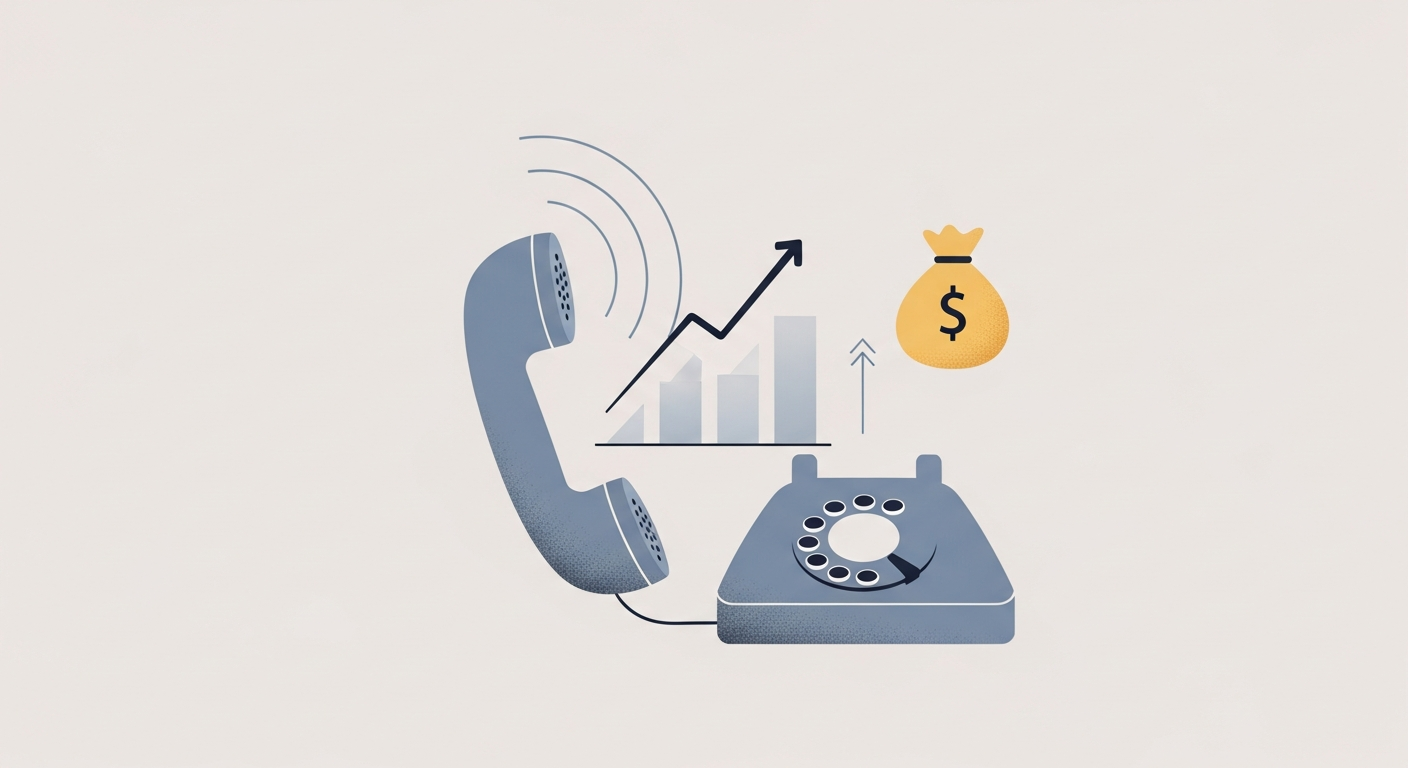
After-hours calls follow the same pattern. Customers planning tomorrow's lunch or weekend catering ring at 9 PM, reach voicemail, and call elsewhere. AI phone agents answer every call regardless of time, taking orders, booking reservations, and processing payments while staff serve in-house guests.
Phone orders during peak hours create backups. Staff split attention between in-house guests and callers, leading to errors when instructions get missed or misheard.
AI phone agents greet customers, walk through menus, capture modifications, and confirm details before moving to payment. Orders flow directly into your POS as structured tickets with all special requests intact. When multiple calls arrive at once, AI answers every line simultaneously. No hold times, no busy signals, and no lost orders to competitors.
AI phone agents recognize returning callers by phone number and recall past order history and saved preferences when customers opt in and data is available. This memory turns standard greetings into personalized exchanges where the system asks "Would you like your usual margherita with extra basil?" instead of starting from scratch.
Recognition can speed up ordering as regulars skip menu explanations and move directly to modifications. The AI can proactively suggest items based on past behavior, like alerting vegetarian customers to new plant-based specials before others hear about them.
When preferences persist across every interaction, customers feel valued. That familiarity drives higher visit frequency and larger lifetime value compared to one-off transactions.
AI reservation systems handle bookings 24/7 across phone, web, and partner channels. When guests call to reserve a table, the system checks real-time availability and logs the booking directly into OpenTable or similar software, preventing double-bookings while keeping availability current across all channels.
Automated confirmation calls and SMS reminders reduce no-show rates by prompting guests to confirm or cancel 24 hours ahead. When cancellations free up prime slots, the system updates availability instantly, letting walk-ins and late callers fill gaps that would otherwise sit empty.
Phone orders already deliver 17% higher average ticket values than online orders because real-time conversation creates natural upsell moments. AI phone agents apply this advantage to every call by prompting additions at exactly the right moment.
When a caller orders a pizza, the AI suggests garlic knots or a drink pairing before moving to checkout. These prompts follow proven combinations, like offering a side salad with pasta or dessert with family meals. The system tracks which suggestions convert best and refines its approach over time.
Human staff get busy, tired, or forget to ask. AI asks every caller, every time, without variation. Restaurants processing 200 weekly phone orders see consistent lift across all transactions instead of sporadic attempts during slow periods. That consistency turns occasional add-ons into predictable monthly revenue increases.
| AI Phone Agent Capability | Revenue Impact | Functional Benefit |
|---|---|---|
| Answers unlimited concurrent calls 24/7 without hold times or busy signals | Recovers $27,000-$52,000 annually from missed calls during peak hours and after-hours periods | Eliminates phone interruptions for hosts and servers, allowing full focus on in-house guests |
| Automated upselling prompts on every single call with proven item pairings | Drives 17% higher average ticket values compared to online orders through consistent add-on suggestions | Removes reliance on staff memory and initiative, applying upsells uniformly across all transactions |
| Real-time POS integration with Toast, Square, Clover, and reservation sync with OpenTable | Reduces labor costs up to 17% by eliminating dedicated phone coverage roles | Orders flow directly into the kitchen as structured tickets with all modifications captured accurately |
| Caller recognition by phone number with order history and dietary preference recall | Increases visit frequency and lifetime value through personalized greeting and faster checkout | Speeds up repeat customer ordering by skipping menu explanations and suggesting usual items |
| Call analytics capturing peak times, menu questions, and ordering patterns | Informs staffing decisions and inventory planning based on actual demand data | Reveals menu gaps and frequently asked questions that guide menu design improvements |
Labor accounts for 30% to 35% of total restaurant revenue, making payroll the largest controllable expense. Every hour staff spend answering phones pulls them from tables, slows service, and forces you to schedule extra coverage during peak periods.

AI phone agents handle all incoming calls without adding headcount. When your team stops juggling ringing lines and waiting guests, you can run leaner front-of-house schedules focused entirely on hospitality. Reducing one host per shift can save roughly $25,000 annually at typical hourly rates.
The cost structure moves from variable hourly wages to a fixed monthly fee that never calls in sick, takes breaks, or requires overtime pay.
Phone interruptions fragment service flow. A host answering calls mid-greeting loses eye contact with arriving guests. Servers taking to-go orders forget drink refills. Each ring forces a choice between the person in front of you and the voice on the line.
When AI handles incoming calls, teams work without disruption. Hosts greet guests, check tables, and manage waitlists with full attention. Servers focus on reading tables, timing courses, and building rapport that drives tips and repeat visits. This shift reduces friction that causes burnout, keeping staff longer while creating experiences that set restaurants apart.
Every phone call generates data that most restaurants lose. AI phone agents capture structured information from each conversation: what time customers call, which menu items get asked about most, what questions come up repeatedly, and how ordering patterns shift across days and seasons.
This intelligence lives in your dashboard as actionable reports. You might see that 40% of Thursday calls ask about gluten-free options, prompting you to add a dedicated section to your menu. Peak call volume hits between 6:15 and 7:30 PM, letting you schedule staff around actual demand instead of guesswork. Catering inquiries spike three weeks before major holidays, giving you lead time to prep inventory and staffing.
Managing phone operations across multiple locations requires brand consistency paired with local flexibility. AI phone systems centralize menu logic while allowing per-store customization for hours, specials, and regional preferences.
A three-location group maintains one core menu with location-specific overrides. Downtown locations operate until midnight while suburban stores close at 9 PM. Each location's AI responds with accurate hours, wait times, and inventory without manual updates. New menu items propagate across all locations instantly with a single update.
Roll-up analytics reveal performance by location and in aggregate. When Location A converts 80% of calls to orders while Location B reaches 60%, gaps in training or menu design become visible. Regional call patterns inform staffing decisions, concentrating resources where weekend lunch volume peaks instead of distributing coverage evenly.
This infrastructure supports expansion without proportional staffing increases at each site. New locations receive identical call-handling capacity from day one.
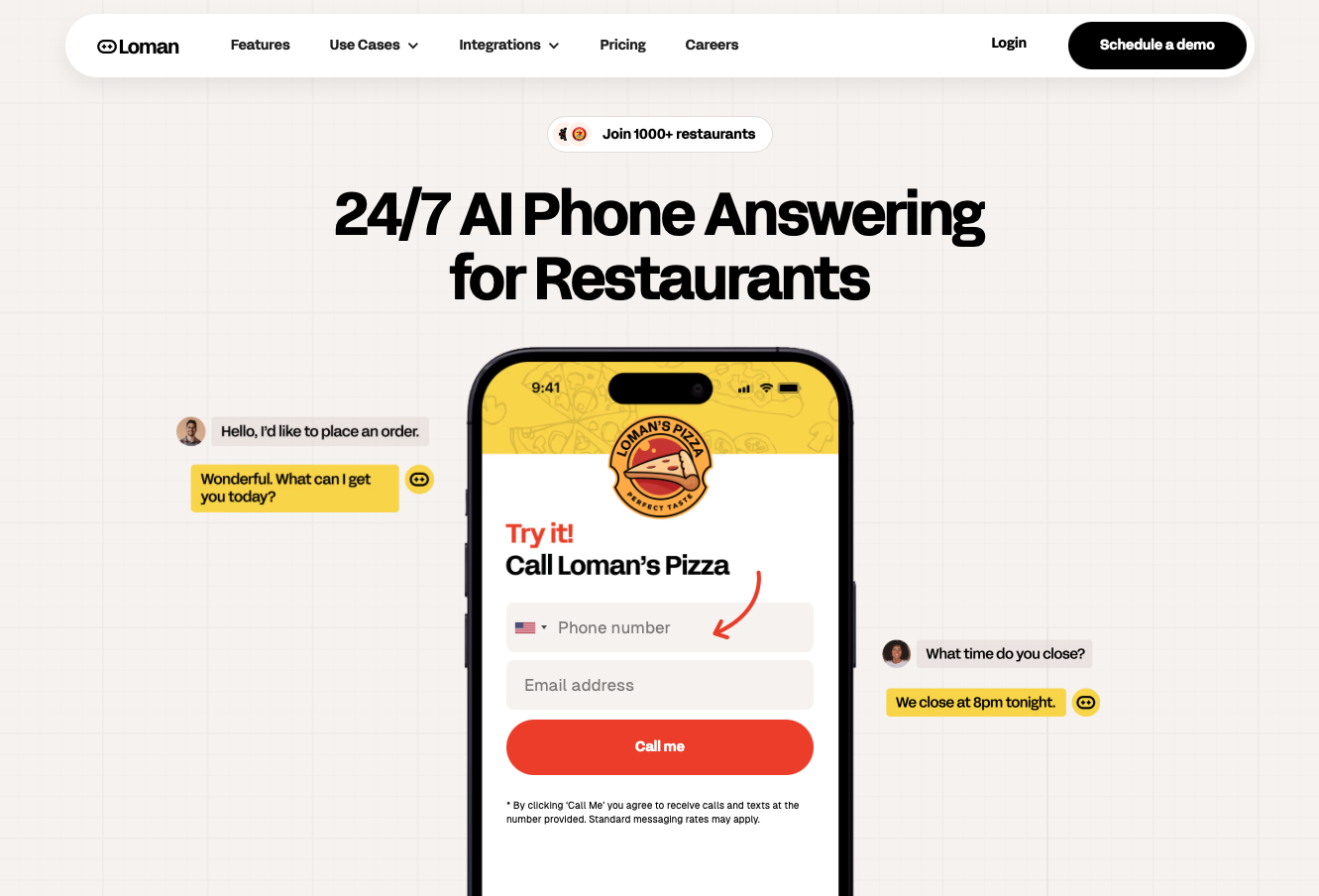
Loman answers unlimited concurrent calls around the clock, processes full menu orders with modifications, books reservations synced to OpenTable, and integrates directly with Toast, Square, Clover, Aloha, Olo, and Stream. Setup takes less than 24 hours: connect your POS, import your menu, set your greeting, and go live.
The system recognizes repeat callers, supports multiple languages, suggests upsells on every order, and routes complex requests to staff with full context. Restaurants report up to 22% revenue lifts from recovered calls and upsells, plus 17% labor cost reductions by eliminating phone interruptions.
Because Loman is designed only for restaurants, it goes deeper than generic voice tools. The AI understands complex menus, modifiers, catering requests, wait times, and location-specific rules, while applying smart upsell prompts that lift average ticket size on every call. It supports single operators and multi-location groups with shared logic and store-level controls, and it can be live in less than 24 hours with guided onboarding. For restaurants that want the role of AI in enhancing restaurant customer interactions to show up clearly in revenue, labor savings, and guest satisfaction, Loman connects every call directly to measurable results.
AI phone agents answer unlimited concurrent calls simultaneously, so every customer gets an immediate response even when ten people call at once. Each caller receives full attention while your staff stays focused on in-house guests.
The AI detects complex requests and transfers the call to your staff with full context about what the caller needs. You see a transcript of the conversation so far and can pick up exactly where the AI left off.
Most restaurants go live in under 24 hours by connecting their POS, importing their menu, and choosing a greeting. The system syncs with Toast, Square, Clover, and other major platforms without disrupting daily operations.
The role of AI in enhancing restaurant customer interactions goes beyond answering calls. It captures orders you would have missed, suggests add-ons consistently, books reservations instantly, and frees your team to focus on guests in front of them. When your phone line is handled by a system that works around the clock, revenue stops leaking during rushes and after hours. Loman brings this together with full order taking, in-call payment processing, POS and OpenTable integrations, and built-in upselling that drives measurable lifts in sales. The result is a calmer front of house, faster service for callers, and a phone channel that actively contributes to growth every single day.
Enter your information in the form to receive a call from Loman and place an order like a customer would!

