You’re comparing Loman vs SoundHound AI because unanswered calls turn into lost orders, frustrated guests, and overworked staff during peak hours. SoundHound is built for large QSR brands that rely on voice AI across drive-thru lanes, kiosks, and mobile ordering, while many restaurants simply need the phone handled every time it rings. One option offers a broad voice stack designed for enterprise rollouts; the other focuses on phone calls that convert into orders, reservations, and payments through an AI phone ordering system. The real decision is whether your restaurant needs voice coverage everywhere or a phone solution that starts working immediately, without changing how your team runs service or adding new layers of complexity during busy shifts.
TLDR:
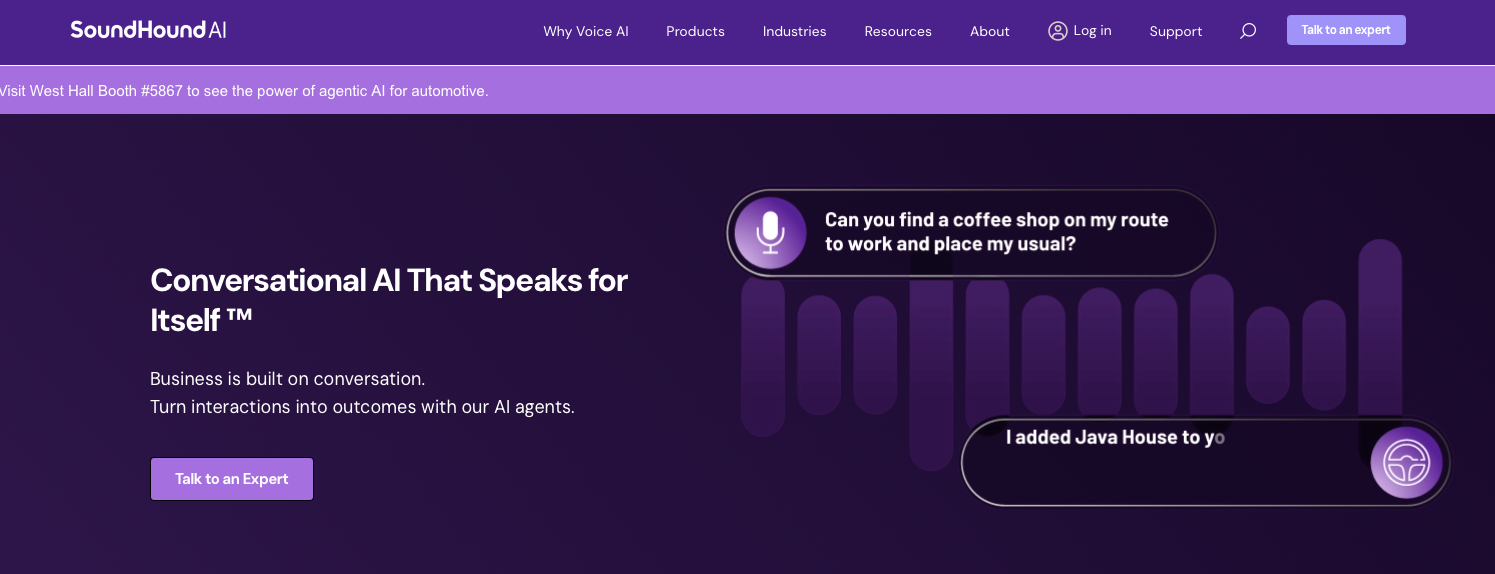
SoundHound AI delivers voice AI solutions for restaurants across drive-thru, phone ordering, kiosks, and in-car ordering. The company powers over 10,000 locations nationwide, with brands like Chipotle, Church's Texas Chicken, Jersey Mike's, and White Castle using its voice tech to automate customer interactions.
SoundHound's Smart Ordering product handles carryout, curbside, and delivery orders over the phone, while its Dynamic Drive-Thru solution focuses on quick-service restaurant automation. The company has built a reputation in the enterprise and QSR space as a voice AI layer that deploys across various customer touchpoints.
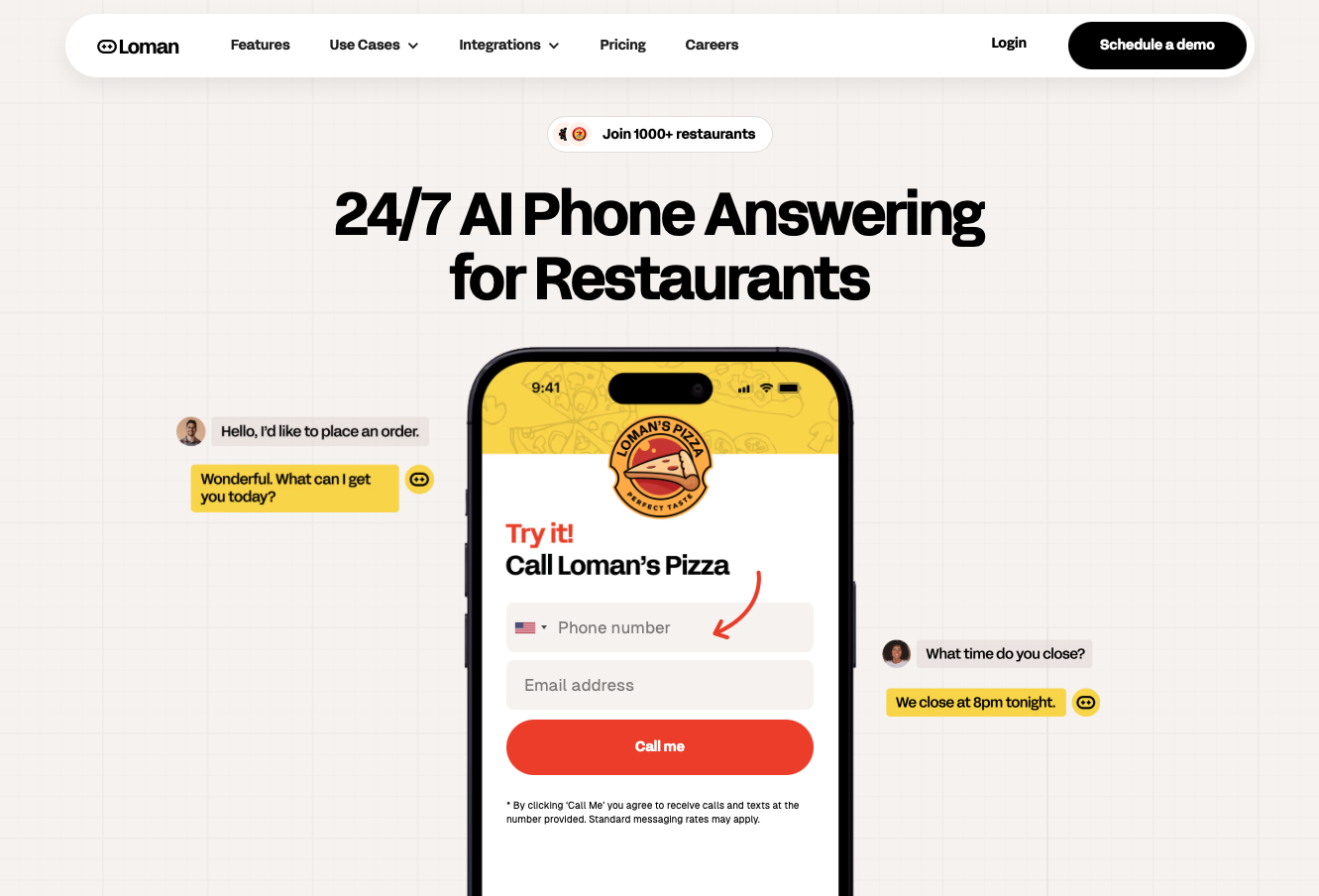
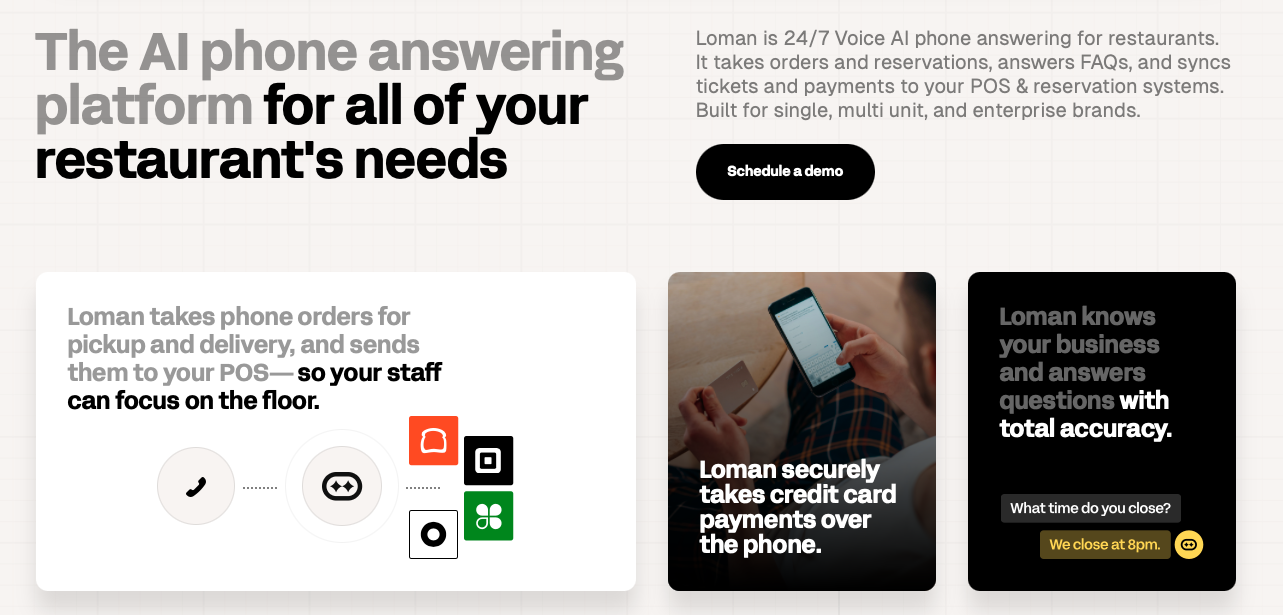
Loman answers every restaurant call 24/7, takes orders, books reservations, answers menu and allergen questions, and securely collects payments by phone (including credit card payments).
Orders and reservations sync into existing systems through native integrations with Toast, Square, Clover, SpotOn, Aloha, Olo, and OpenTable. Tickets arrive in the POS, payments can be captured automatically, and staff stay focused on in-house guests.
Setup takes less than a day. Restaurants connect their POS, upload their menu, set greetings and policies, and go live. The AI handles unlimited simultaneous calls, so customers never hear a busy signal or wait on hold. Loman also manages order changes, special requests, catering questions, and delivery status calls, giving guests clear answers without pulling staff away from service. When a call needs a human, it can transfer the call with relevant context so teams can step in quickly and confidently.
Both systems manage phone orders and payments with different areas of focus.
SoundHound's Smart Ordering handles carryout, curbside, and delivery orders while connecting to POS and loyalty programs. The company processed over 100 million interactions with restaurant customers as of October 2024. The system is designed to scale for high call volumes across enterprise deployments, multiple languages, and customizable FAQs for hours and parking. Phone ordering sits within their broader omnichannel offering across drive-thru, kiosks, and in-car ordering for enterprise QSR brands.
Loman focuses on phone interactions. The AI processes order modifications in real time, answers allergen and dietary questions, and routes complex requests with full context. When callers ask about gluten-free substitutions or split payments, the system either completes the transaction or transfers to staff with a transcript and context note.
Loman can identify complex or unusual requests and route them to staff with helpful context. The AI recognizes repeat callers and adjusts greetings to create continuity that generic voice systems miss.
For restaurants where phone orders drive revenue, specialization often outweighs channel breadth.
SoundHound's recent development targets drive-thru automation. In February 2025, the company announced its next generation Dynamic Drive-Thru solution, adding omnichannel ordering that extends beyond the drive-thru lane to include call-to-order, text-to-order, scan-to-order, and in-car voice ordering. Seven of the top 20 quick-service restaurants have deployed SoundHound's voice AI, primarily at large QSR chains with drive-thru operations.
The system works well for high-volume drive-thru lanes where speed and throughput matter most. Restaurants without drive-thru infrastructure may pay for features they cannot use.
Loman was built to support the full range of restaurant operations. The AI handles phone orders for pickup and delivery, manages reservations through direct OpenTable integration, shares estimated wait times for dine-in guests based on restaurant-provided guidance, answers catering inquiries, and tracks order status. It works for pizza shops, QSRs, casual dining, fine dining, and multi-location chains.
Restaurants without drive-thru lanes get a complete phone automation solution that supports their actual business model.
SoundHound connects to Square and Toast and supports most POS systems through a four-step setup process. The company primarily deploys with large QSR chains that maintain dedicated IT teams and coordinate rollouts across hundreds of locations over several months.
That implementation model works for enterprise customers but creates friction for independent operators who need to answer calls immediately.
Loman's integrations work for restaurants without IT departments. Native connections to Square, Toast, Clover, SpotOn, Aloha, Olo, Stream, and OpenTable let single-location operators go live in under 24 hours with white-glove setup included.
The difference matters when you're losing revenue to missed calls today. A system designed for enterprise coordination timelines won't solve an immediate staffing or call-volume problem.
SoundHound serves enterprise QSR brands with high transaction volumes across multiple channels. Some of the top 20 quick-service restaurants use SoundHound's voice AI for drive-thru, phone ordering, kiosks, or mobile apps.
Independent restaurants and regional groups that rely primarily on phone orders face a different calculation. Paying for drive-thru AI, in-car ordering, and scan-to-order capabilities makes sense only if you operate those channels.
Loman focuses on phone automation without enterprise overhead. The pricing replaces hourly front-of-house wages with a flat software fee and includes unlimited concurrent calls without per-minute charges. Single-location operators and multi-location brands, hometown pizza shops, and casual dining restaurants all can go live in under a day without large upfront costs or complex long-term contracts, giving teams immediate relief from missed calls.
SoundHound delivers value for enterprise QSR brands with drive-thru operations and IT teams that can manage longer, multi-phase deployments typical of enterprise QSR rollouts across hundreds of locations. If you operate at that scale with drive-thru lanes and need voice AI across every channel, SoundHound is worth consideration.
Most restaurants don't fit that profile. Independent operators, multi-location groups, and casual dining concepts need phone automation that works immediately without paying for drive-thru capabilities they won't use.
Loman solves several problems well: answering every phone call, taking orders, managing reservations, and processing payments. You get deployment in under 24 hours, integrations with your existing POS, and unlimited concurrent calls without per-minute fees.
The difference is specialization. If phone orders and reservations drive your business, you need a system designed for that purpose, one that fits how restaurants operate day to day without added setup time or unused features.
Choose SoundHound if you're a large QSR chain with drive-thru lanes and need voice AI across multiple channels like kiosks and in-car ordering. Pick Loman if you're an independent restaurant, multi-unit group, or casual dining concept that needs phone automation for orders and reservations without paying for drive-thru features you won't use.
SoundHound offers phone ordering as part of a broader omnichannel solution designed for enterprise QSR brands with drive-thru operations. Loman specializes exclusively in phone interactions, handling order modifications in real time, answering allergen questions, and routing complex requests with full caller context and transcripts.
Loman works best for pizza shops, QSRs, casual dining, fine dining, and multi-location chains that rely on phone orders, takeout, or reservations. It's designed for restaurants that need to answer every call immediately without drive-thru infrastructure or dedicated IT teams.
Most restaurants go live in under 24 hours with white-glove setup included. You connect your POS, upload your menu, set greetings and policies, and start answering calls. No multi-month deployment or IT coordination required.
No. Loman handles unlimited simultaneous calls without per-minute fees, replacing hourly front-of-house wages with a flat software cost so customers never get a busy signal.
The Loman vs. SoundHound AI choice comes down to how your restaurant actually takes orders. Enterprise QSR brands with drive-thru lanes, national rollouts, and multiple ordering surfaces align with SoundHound’s approach, but most restaurants operate on a different timeline and a different set of needs. Loman is built for operators who depend on the phone to capture revenue today, not after a long rollout. With same-day setup, unlimited call handling, direct POS and reservation sync, and no need for internal technical staff, Loman fits independent restaurants and growing groups that want calls answered and orders captured without added friction. If phone orders, reservations, and guest questions drive your business, an AI phone ordering system like Loman offers a clearer path forward.
Enter your information in the form to receive a call from Loman and place an order like a customer would!

