Noon hits, the phone goes to voicemail, and the line at the door is already costing you covers. The lunch rush is ninety minutes, the crowd wants speed and fair prices, and the operators who plan carefully for it pull real revenue while everyone else wonders why the numbers stay flat.
TLDR:

U.S. major-city office occupancy has climbed to an estimated 65 to 75% of pre-pandemic levels, and in-office workers are 29% more likely to buy a restaurant meal on weekdays than their remote counterparts. That foot traffic is pulling corporate catering with it: per the 2026 Fooda Workplace Food Trends report, 38% of restaurants plan to add catering this year. On the cost side, 91% of diners have noticed menu price increases and 73% say they order off value menus more often as a result, according to TouchBistro's 2026 restaurant data. Speed and value are the deciding factors, and the lunch crowd has a hard deadline to get back to their desks.
Who walks through your door at noon shapes your menu, marketing, and staffing.
Post your daily lunch specials on Instagram and Facebook around 10-11 a.m., when nearby workers are already deciding where to eat, and offer exclusive deals to followers who share or tag friends. The back-to-office trend continues to fuel midday demand: DoorDash's 2026 Workplace Meal Trends Report found team-sized workplace orders grew 30% faster year-over-year, with Thursday lunch orders running 20% higher than Mondays, a signal worth building promotions around.
A tight, fast-prep menu is the engine of a profitable lunch window. A well-designed menu can help you attract and retain customers, increase sales, and improve overall speed of service.
A tight menu of fast-prep dishes keeps wait times short and kitchen output high during peak hours. Consider simplifying your menu by offering a limited number of options that can be executed efficiently. This will help reduce wait times and allow your kitchen to maintain a high volume of orders during peak hours.
Balancing affordability with profitability is key to a successful lunch pricing strategy. Creating appealing offers that draw in more customers while protecting your margins starts with how you structure the menu and set price points.
Here are some tactics to reduce wait times:
The right technology can meaningfully improve the speed and output of your lunch service. Here are some tech solutions to consider:
In 2026, cloud-based POS platforms have become the industry standard: modern POS systems now unify in-person, online, kiosk, and delivery orders into a single workflow, while 60% of new North American restaurants launch with a kitchen display system over paper tickets.
Phone orders have always been a revenue lever that's easy to undervalue, at least until you see the numbers. Industry benchmarks put phone orders at around $48 per ticket versus $41 for online orders, meaning each call that goes unanswered or mis-taken is leaving more on the table than a digital order would.
| Order channel | Avg. ticket | Third-party fees | Staff time required |
|---|---|---|---|
| Phone (direct) | ~$48 | None | 1 staff member per call |
| Online (direct) | ~$41 | None | Minimal |
| Third-party delivery | Varies | 15-30% base; 30-40% all-in | Minimal |
Voice AI closes that gap in two ways: it captures every call, and it upsells on every order.
When a customer calls to place an order, a voice AI agent goes beyond transcribing the request; it actively works the ticket. After a customer orders a pizza, the system might prompt: "Would you like to add a two-liter for $3.99? It's our most popular add-on with that order." The suggestion is context-aware: it's based on your menu, your combo rules, and what pairs well with what was just ordered.
Unlike a staff member rushing through a peak-hour call, the AI never skips the upsell. It applies the same prompt consistently on the hundredth call as on the first. That consistency is where the ticket lift compounds, across every order, every shift, every week. For a deeper look at how this works, see how AI restaurant order processing increases upsells.
The most common source of missed restaurant phone orders isn't a broken system, it's a slammed one. During a dinner or lunch rush, a second call comes in while a staff member is already on the line. That call goes to voicemail. Industry research suggests roughly 85% of callers do not call back after an unanswered call; they move on to a competitor instead.
Voice AI eliminates that bottleneck entirely. Because the system handles concurrent calls without limit, every call that comes in during your peak window gets answered on the first ring, regardless of how many lines are active simultaneously. For high-volume periods, that concurrency alone can recover a meaningful share of orders that were previously lost to busy signals and voicemail.
To attract more customers during lunch hours, you need to promote your lunch offerings effectively. Here are some strategies to help you do that:
Use geofencing ads to reach nearby office workers at the moment they're deciding where to eat. Build relationships with local businesses to offer team-lunch deals that drive repeat midday volume. 2026 restaurant loyalty data shows loyalty members visit 2.5x more often than non-members, and 93% check for deals before choosing where to eat.
A voice AI phone agent answers every incoming call without putting anyone on hold or pulling a staff member off the floor. When a customer calls, the AI picks up instantly, takes the order item by item, confirms modifications, quotes the total, and pushes the completed ticket directly into your POS, with no re-keying and no dropped tickets. For a closer look at how AI order taking for restaurants works end-to-end, that detail is covered separately.
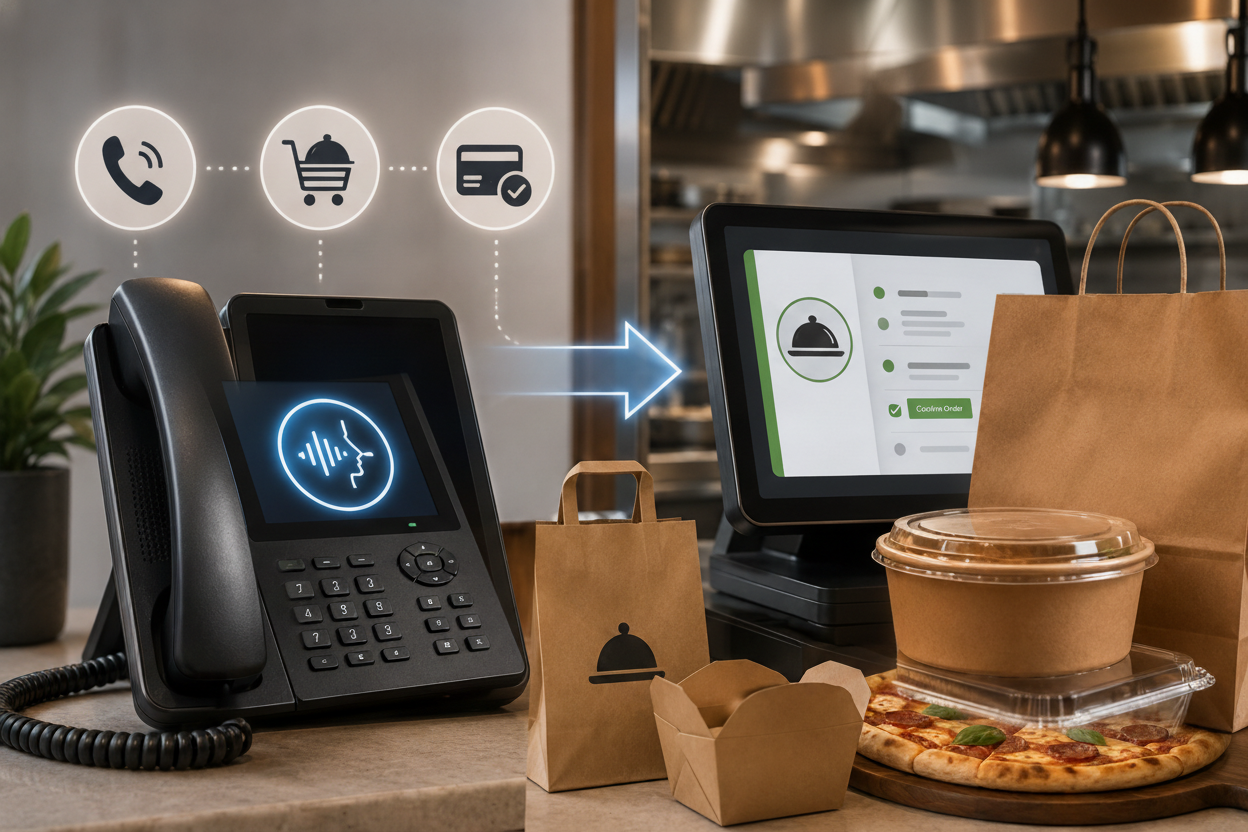
The system connects to your existing phone line with no new hardware, reads your live menu including modifiers and 86'd items, and fires completed orders to your kitchen display or POS in real time. During a lunch or dinner peak, it handles concurrent calls without limit, so the second line ringing while the first order is in progress never becomes a missed order.
The right staffing plan is what separates a smooth lunch service from a chaotic one. This section covers the essentials of planning and managing your team effectively to keep your lunch operation running cleanly.
The National Restaurant Association's 2026 State of the Restaurant Industry report notes that 42% of operators say their restaurants were not profitable in 2025, making under- and over-scheduling a direct hit to the bottom line. Pull your sales data by day and hour, then staff to your actual peak curve instead of a flat count. Operators looking to reduce restaurant labor costs with AI agents can reclaim hours without cutting headcount.
To maximize your restaurant's lunch rush, you need a solid plan. By following the strategies outlined in this article, you can increase sales, improve customer satisfaction, and outperform your competitors.
An AI voice phone agent like Loman answers every concurrent call on the first ring and pushes each completed order directly to your POS, so no order is lost to a busy signal while your staff is already on another line. That single change closes the gap between the calls you're taking and the calls you're actually capturing.
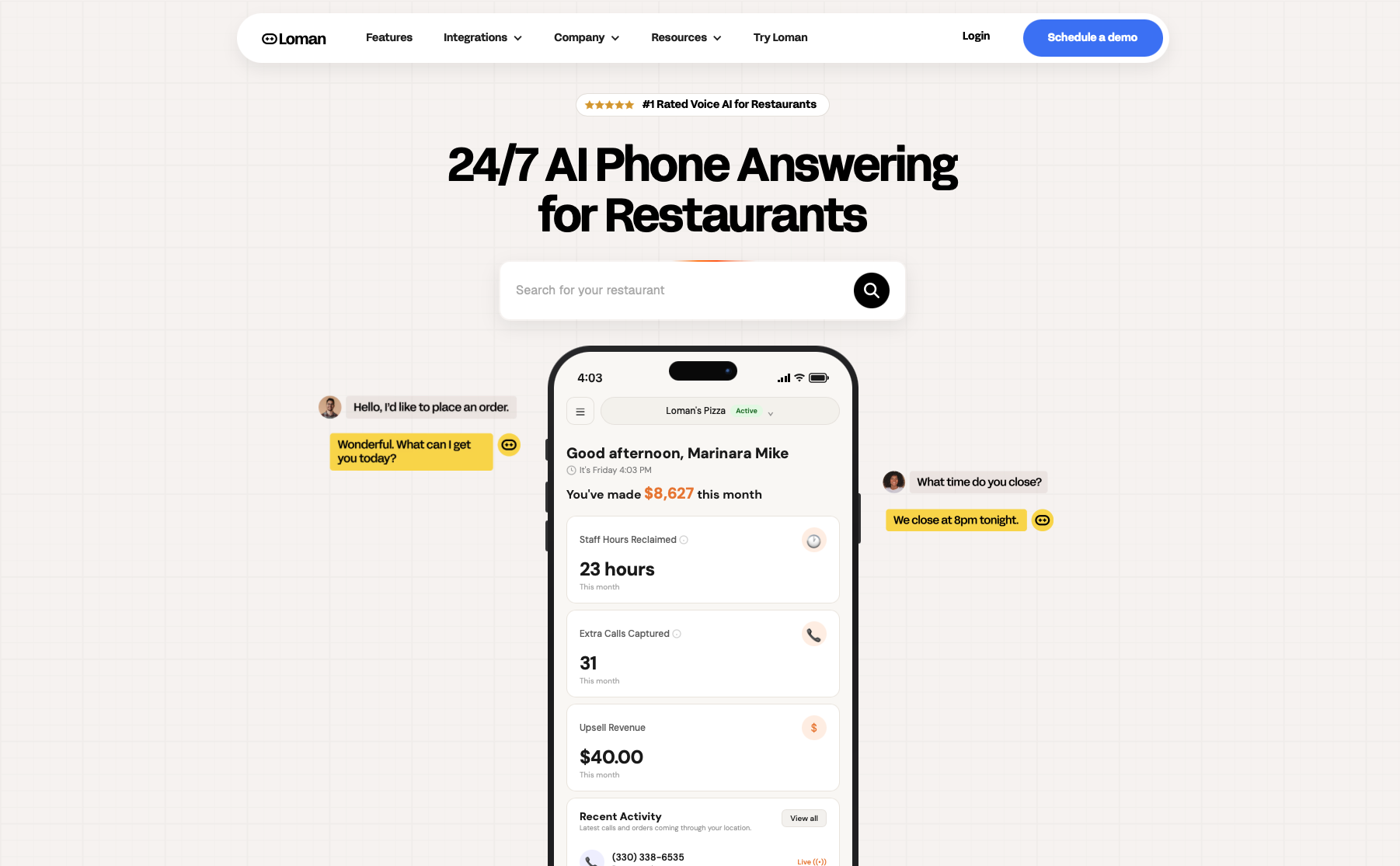
Two calls arrive at the same time during peak service and one goes to voicemail. Industry research puts the callback rate at roughly 15%, and the rest order from a competitor. Loman answers every call at once, takes the order item by item, and pushes the completed ticket to your POS in real time, with no staff pulled off the floor. Phone orders average around $48 per ticket versus $41 for online, so each missed call costs more than it looks.
Loman also upsells on every call, consistently. A staff member on a slammed lunch line sometimes skips the add-on prompt. Loman never does, and operators have reported up to 23% higher revenue per order as a result. Crust Pizza put it simply: "This paid for itself in 10 days. Phones are calm, tickets are bigger, and my team refuses to go back." Book a demo at loman.ai/demo.
The simplest fix is removing the single-line bottleneck. During a dinner rush, missed phone orders almost always happen because a staff member is already on one call when a second comes in, and that second caller hears a busy signal or voicemail and hangs up. A voice AI phone agent answers every incoming call simultaneously, so the second and third lines never go unanswered. Combined with online ordering as a parallel channel, you eliminate the busiest-hour dropout almost entirely.
A voice AI agent upsells the same way a well-trained staff member would, by offering a relevant add-on immediately after the main order is placed. The system knows your menu and your combo rules, so it can prompt a drink upgrade, a dessert add-on, or a size bump based on exactly what was just ordered. The advantage over a human caller is consistency: the AI never rushes past the upsell during a busy shift. That consistent prompt on every single call is where ticket averages move.
Start close to home. Drop menus and a discount offer at nearby offices, and follow up with a simple loyalty punch card or digital reward. Use Instagram and Facebook to post your daily specials around 10-11 a.m., when office workers are already thinking about where to eat. Partner with a nearby business to offer a recurring team-lunch deal. A flat rate for groups of six or more moves more volume than one-off coupons and builds a dependable midday revenue base.
A well-prepared restaurant with the right staffing, menu, and technology stack wins the midday window. The phone channel is often the last piece to get attention, yet it consistently delivers the highest per-ticket value. Closing that gap with a voice AI agent like Loman means every call during your lunch rush becomes a captured order, not a missed one. See how it works at Loman.
Enter your information in the form to receive a call from Loman and place an order like a customer would!

