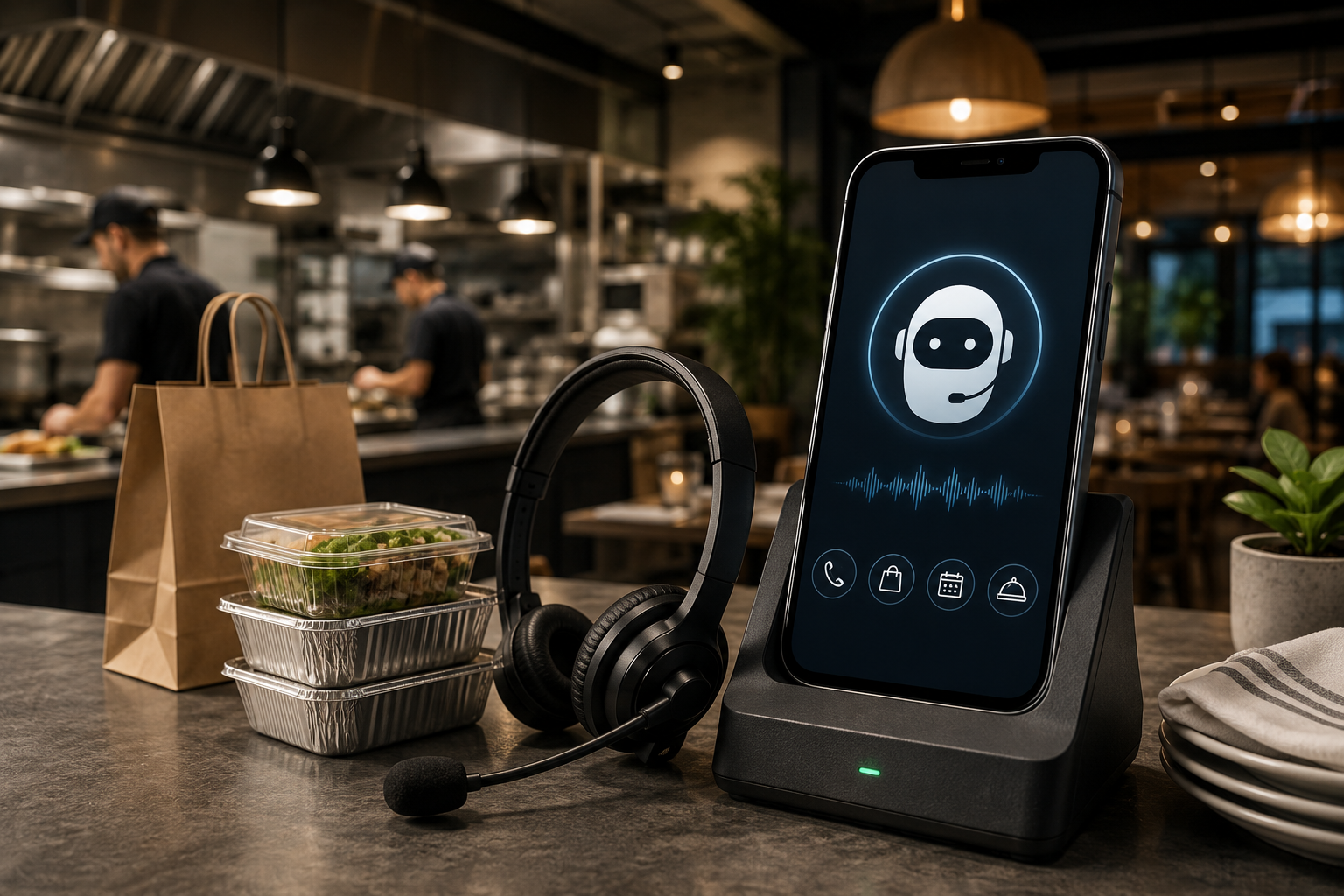
Your phone rings most when your staff is busiest, and that timing isn't an accident. 24/7 restaurant call answering solves the impossible choice between tending to guests at the table and picking up the ones calling in. Calls get answered instantly, orders push straight to your POS, and your team keeps their focus exactly where it counts.
TLDR:
Every missed call is a missed order. The average restaurant misses roughly 150 calls per month, adding up to $28,728 in lost revenue annually, a figure covered in depth in our analysis of missed calls draining restaurant revenue. That's real money leaving before anyone picks up.
The dinner rush makes it worse. Around 32% of incoming calls go unanswered between 5pm and 8pm, right when volume peaks and your staff has the least bandwidth to respond. Someone wants a pickup order. Someone's trying to book a table. If no one answers, they call somewhere else.
Automated call answering solves this directly by making sure every call gets picked up, every time.
| Benefit | Business Impact |
|---|---|
| Zero missed calls | Recaptures up to $28,728 in lost annual revenue |
| Staff stays on the floor | Fewer interruptions, better table service, reduced front-of-house headcount |
| Direct POS integration | Orders hit the kitchen with every modifier captured, no manual re-entry |
| Flat monthly fee | Replaces variable hourly wages; operators report up to 17% lower labor costs |
| After-hours coverage | Holiday bookings and late-night orders confirmed overnight without staff present |
The problem runs deeper than the missed call itself. When a server stops to answer the phone mid-service, they step away from a table that's waiting. Rhythms break. Guests notice.
Peak call volume and peak service hours overlap almost perfectly, so your staff faces a constant impossible choice: tend to the guests in front of them, or answer the ones calling in. Neither side should lose.
With calls handled automatically, your team stays focused where it counts. Decheco's was even able to run with one fewer person up front after adding an AI answering solution, with revenue going up at the same time.
Staffing a phone line around the clock means paying someone to be available even when calls are slow. That math gets harder every year. In 2026, 54% of operators cited a shrinking labor pool as their top concern for attracting and retaining talent.
Swapping unpredictable hourly wages for a flat software fee changes that equation: operators using AI phone agents to cut labor costs report savings of 17% or more. You get full coverage without scheduling gaps, sick days, or turnover to manage.
Customers don't grade your phone experience against other restaurants. They grade it against every digital interaction they've had today, the app that loaded instantly, the checkout that finished in two taps. That bar keeps rising.
94% of consumers say speed is critical, according to the National Restaurant Association's 2025 Off-Premises Restaurant Trends report. That same impatience carries straight into a phone call. Put someone on hold and they hang up. Make them wait through four rings and they move on. Worse, that friction often becomes a one-star review, not a second chance.
24/7 answering meets customers exactly where they are: expecting speed, every time they call.
When a server takes a phone order mid-rush, something almost always gets lost. A modifier skipped. A dietary note missed. By the time that ticket hits the kitchen, it's already incomplete.
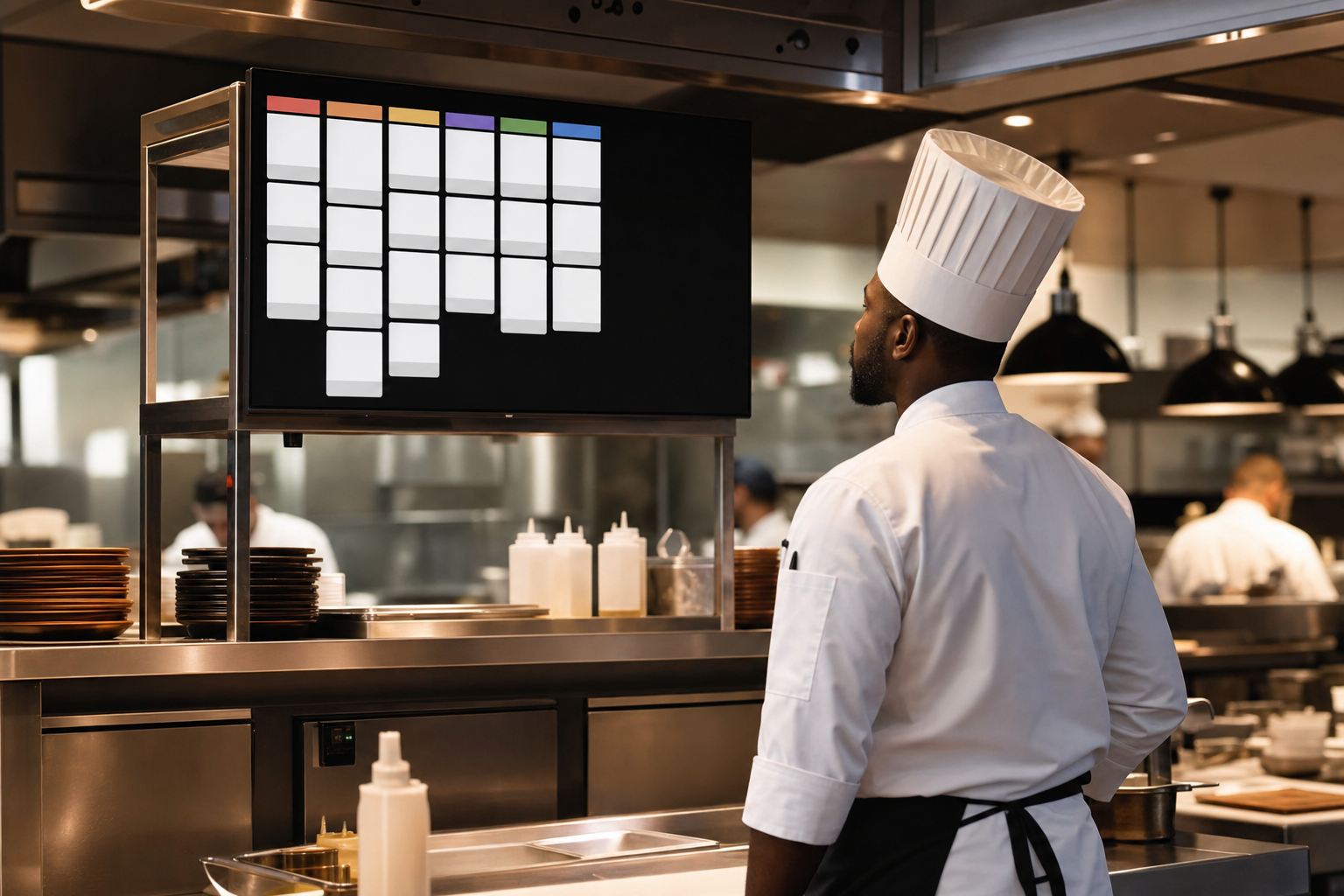
AI phone answering removes that transcription gap entirely. Orders go straight into the POS and kitchen display system with every modifier, allergy note, and special request captured exactly as the caller stated it. Vittorio's Pizza noted better accuracy on phone calls after switching, and that accuracy flows directly to the kitchen. Fewer remakes. Less wasted prep. A KDS that actually reflects what customers ordered instead of what someone scribbled down between tables.
Growing from one location to several multiplies more than revenue. Every challenge that comes with running a restaurant scales up with it, phone coverage included.
With AI call answering, adding a new store requires no new front-desk hire. The same system runs across every location, each configured with its own menu, hours, and local phone number. Rollup analytics give you a single view across the group without digging through each store's data separately.
For multi-unit operators like Tony Boloney's, that compound effect adds up fast. Michael Hauke captures an extra 75 to 100 orders per month per store. Across a multi-unit group, the recaptured revenue from each individual location stacks quickly into something that changes the entire business case for growth.
Labor cost reduction doesn't have to mean fewer people. In 2026, the operators holding their margins are doing it through automation and scheduling precision, not headcount cuts that hurt service.
The phone line is the highest-impact place to start. A single AI phone agent replaces a role that would otherwise require multiple shift employees to cover seven days a week, nights included, at a flat monthly fee with no overtime, no call-outs, and no turnover. Decheco's ran one fewer person up front after deploying Loman and saw revenue increase simultaneously.
Beyond phone coverage, the levers operators are pulling in 2026 include:
The 54% of operators who cited a shrinking labor pool as their top 2026 concern aren't going to solve it by hiring. The ones gaining ground are substituting fixed-cost automation for variable-cost coverage in every place the math makes sense, and the ROI of an AI phone agent is where that math works fastest.
Every call your AI answering system handles becomes a data point. Over time, those data points become genuinely useful: a clear picture of when customers call, what they order most, which menu items generate questions, and where your team's attention is actually needed.
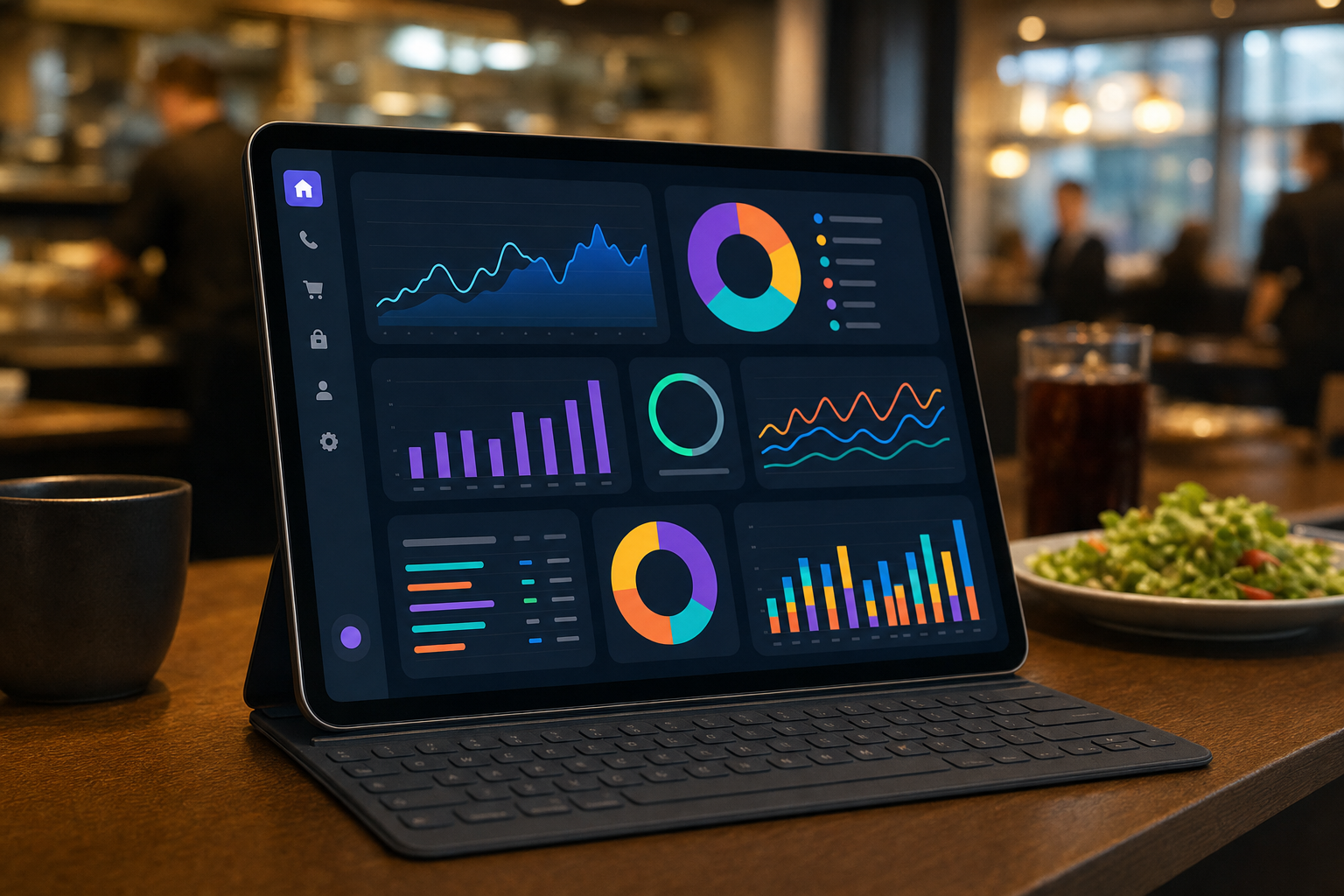
Most restaurants fly blind on this. With 24/7 call answering, you get call volume trends by hour and day, order patterns tied to specific menu items, and a log of every interaction your customers have over the phone.
That data feeds smarter staffing, better menu decisions, and sharper marketing timing.
After-hours calls carry real intent. Someone booking a holiday party, locking in a catering order, or reserving a table for a birthday isn't browsing. They're ready to commit. NRA's off-premises dining report shows nearly 75% of all restaurant orders now happen outside the dining room, making the phone a revenue channel that never truly closes. Voicemail rarely converts that kind of demand into a confirmed booking.
The person planning Sunday dinner doesn't decide on Friday afternoon. They think about it Thursday night, after your doors are closed. That's exactly where traditional coverage falls short. With 24/7 answering, calls get handled at 11pm the same way they do at noon, so tomorrow's business gets booked tonight without anyone staying late to make it happen.
A phone answer means nothing if the order still has to be typed in by hand. Direct POS integration is what makes 24/7 call answering actually work at scale, and restaurant AI POS integration has its own setup considerations worth understanding.
Loman connects natively with Toast, Square, Clover, SpotOn, SkyTab, and Aloha by NCR. Orders push straight to the POS and KDS with no manual re-entry. Menus sync in real time, so 86'd items never get offered and price changes reflect immediately.
Reservations flow directly into OpenTable. Delivery orders route through Stream to connected DSPs. Every system talks to each other, so your staff just sees a clean ticket.
A year ago, AI phone answering was a "maybe next year" experiment for most independent operators. That window has closed. A 2026 industry survey found that 18% of full-service restaurants had deployed some form of AI phone automation by the end of 2025, up from just 4% in 2023, with projections pointing to 35% by year's end. The adoption curve has gone vertical.
The labor picture is accelerating that shift. As of July 2026, total restaurant employment sits only 0.5% above pre-pandemic levels, meaning operators are running near-full volume on a workforce that never fully recovered. A separate survey of franchise operators found 54% still cite a shrinking labor pool as their top concern, matching the same number from late 2025. The shortage isn't easing; restaurants are just getting better at working around it.
Meanwhile, SevenRooms' latest data puts 64% of diners still preferring to call when booking, with 75% reporting they're comfortable with AI handling that call. The gap between what customers are ready for and what operators have deployed is exactly where missed revenue lives right now.
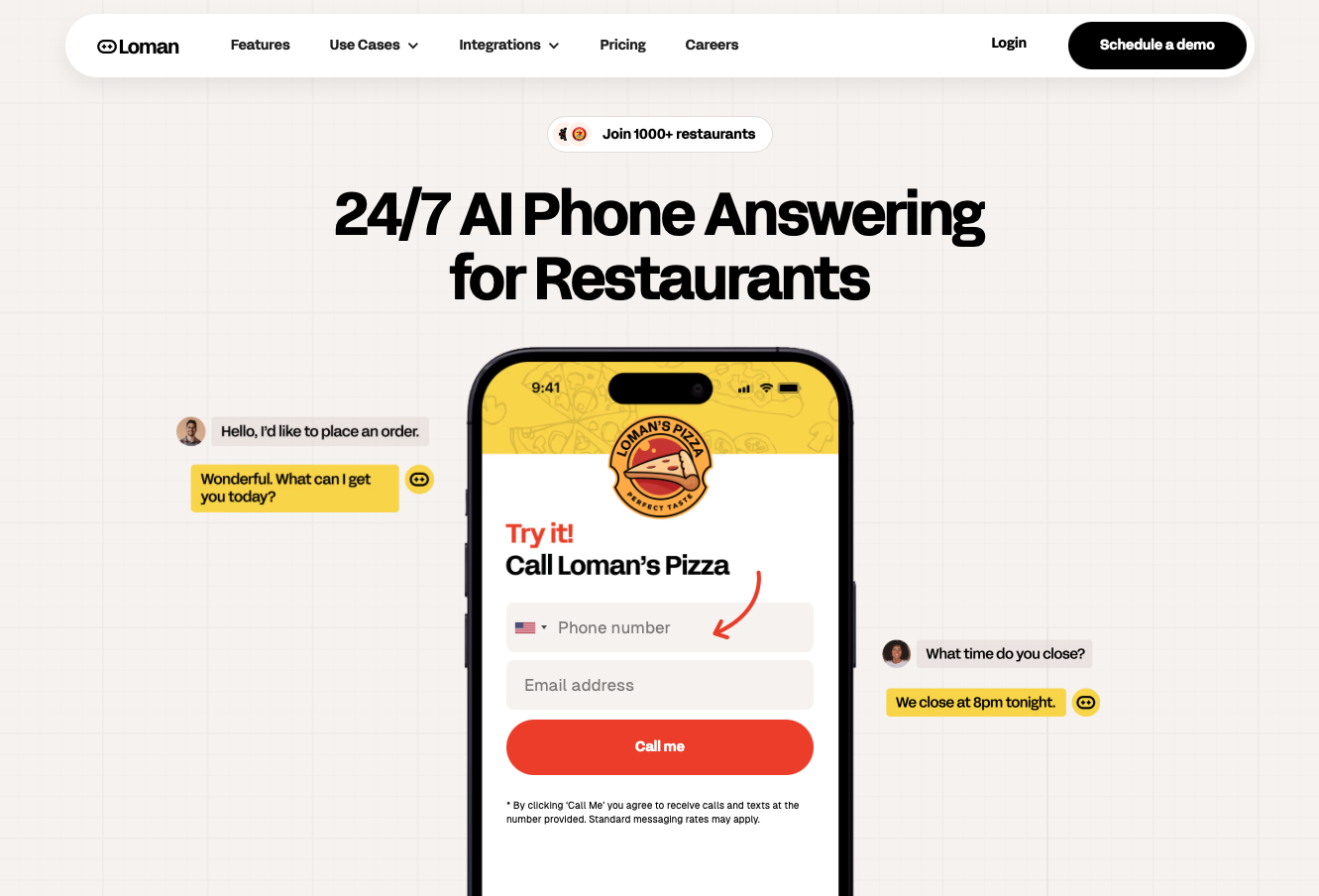
Loman is a voice AI built especially for restaurants, handling inbound calls around the clock without pulling staff off the floor. When a customer calls to place an order, ask about hours, or check on a reservation, Loman picks up instantly and responds in natural conversation.
Setup takes about 24 hours. You connect Loman to your existing phone number, feed it your menu, and it starts answering calls the same day. No hardware swaps, no lengthy onboarding.
Loman routes complex requests to staff only when needed, keeping your team focused on the dining room while every call gets answered.
Yes. Setup connects Loman to your existing phone number and syncs with your current POS in about 24 hours, no hardware swaps or system replacements needed.
AI answering costs a flat monthly fee and never calls in sick, takes breaks, or needs scheduling, while a dedicated hire requires hourly wages, benefits, and backup coverage. For most restaurants, AI answering pays for itself in under two weeks through recaptured orders alone.
The system answers unlimited simultaneous calls, so every customer gets picked up instantly even when your phones would normally be ringing off the hook between 5pm and 8pm.
Your phones should work as hard as your kitchen does. Loman's 24/7 restaurant call answering means no more choosing between the guest at table five and the one calling in for pickup. Orders hit your KDS exactly as spoken, staff stays focused, and after-hours calls turn into tomorrow's confirmed bookings instead of voicemails that never convert. Book a quick demo to see Loman handle your actual menu.
Enter your information in the form to receive a call from Loman and place an order like a customer would!

